iod preloader logo
IOD Quick Links Quick Links IOD Contact US Connect us

Connect with us Close

Cancel
 

CORPORATE GOVERNANCE

DRIVING VALUE CREATION IN ASIA-PACIFIC

Corporate Governance in India:
REGULATORY PUSH FOR ECONOMIC GROWTH

By Institute of Directors, India
IN COLLABORATION WITH
alt
alt
Download Full Report
KMP Evaluation
alt
alt
alt

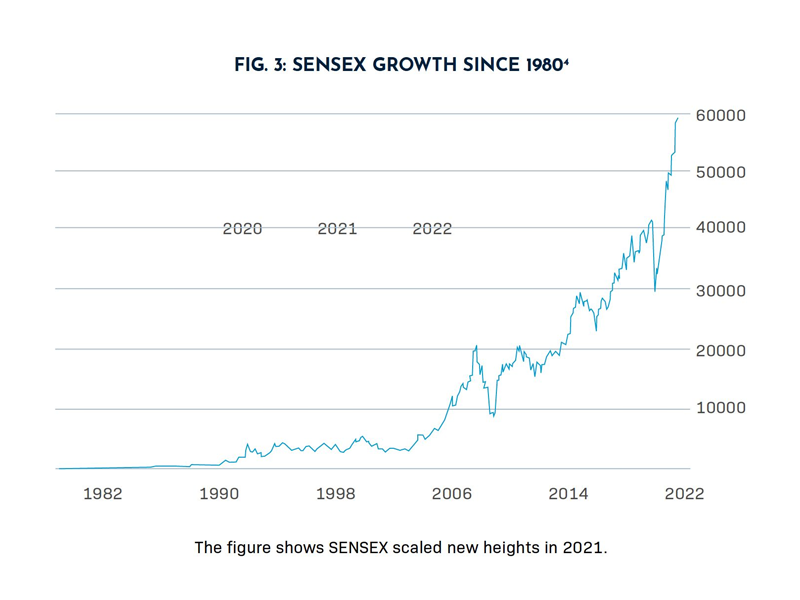
Equity markets in India have witnessed phenomenal growth in the last one year.

Good governance pivots around culture and values. The board’s role and responsibility need to permeate every aspect of its operations.

alt

To improve the quality of corporate governance, we need to redefine and enhance the role of IDs.

The success of the board is largely a function of quality, diversity, skill and experience.

AS PER THE COMPANY’S ACT, EVERY COMPANY SHALL HAVE A BOARD OF DIRECTORS, HAVING:

  • Minimum three directors for a public company, two directors for a private company. SEBI’s Listing Obligations and Disclosure Requirement (LODR)
  • Regulation 2015 states that the top 1,000 companies shall comprise not less than six directors. As of March 31, 2020, 70% of boards had seven to 13 directors, and 14% had 14 or more directors
  • Every listed public company shall have at least a third of directors as IDs. SEBI LODR 2015 states that listed companies will have more than 50% as IDs, one of which has to be a woman
  • 34% boards are required to separate Chairman and MD roles
  • As of March 31, 2020, of the 279 IDs, only 14 were less than 50 years of age
  • Six Board meetings in a year of sufficiently long duration are considered adequate to discharge its duties satisfactorily
  • In 2020 - about 50% of IDs were in all board committees, while the other half were not in any committee
  • 25% of A/L Board evaluations were done by a third party

AN ON-GOING IOD ‘BOARD SURVEY’, REVEALED THE FOLLOWING:

  • Indian boards are preparing for the future
  • Strategy, innovation, ethics, orientation and people power are the critical levers of sustainable competitive advantage’ and these are hardly discussed by the Indian boards
  • Inward orientation hampers organizational effectiveness and growth. Boards monitor performance, IT and audit results to a high extent, on a periodic basis
  • By not giving enough attention to human resources issues for developing future leaders and evolving a future-focused business strategy, boards are doing a disservice to the companies they help govern
  • Static and incremental improvements can no longer give companies a higher competitive advantage
  • IDs require industry knowledge, integrity and reputation, strategic thinking with a growth mindset, and capabilities to work with other board members
  • Owing not asking questions in board meetings, IDs are often giving tacit support to the promoters
  • The focus of board members is more on routine processes and compliance. Boards need to devote more time to assess the quality of company management

“Purpose-driven businesses are likely to be more resilient than those that do not embrace people and the planet. Investors recognize that. We support the World Economic Forum’s effort to standardize reporting through the development of comprehensive ESG metrics and believe that this will be a step forward for a sustainable world.”

~ Mr. Anand Mahindra, Group Chairman,
  Mahindra Group

alt