 Quick Links
 Connect us

 Directors Databank (Empannel Yourself)
 Become a
  Become a
  Blog
Blog
 Become an Awards Assessor
 Publications
 Contact Us







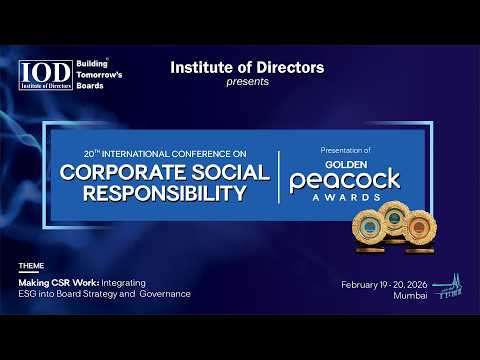
February 19th - 20th
2026

Hotel Taj Lands End
Mumbai (INDIA)

Making CSR Work:
Integrating ESG into Board Strategy and Governance


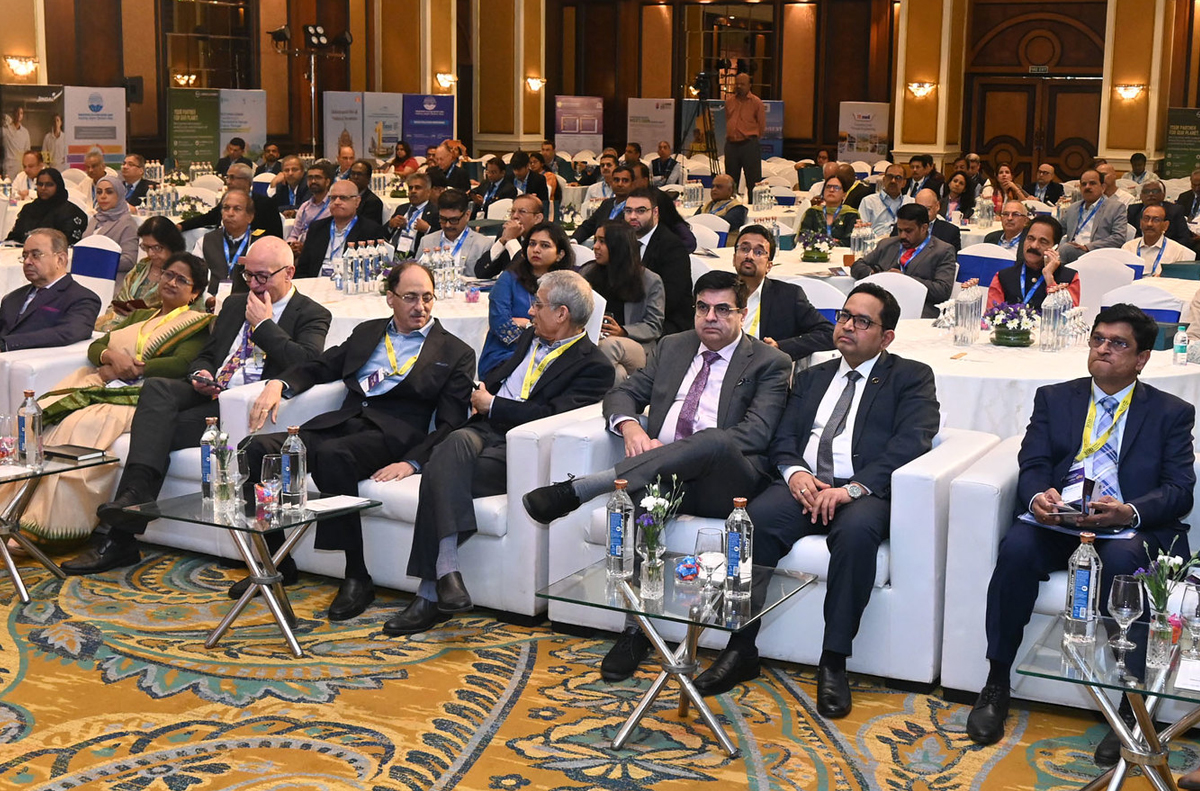


The 20th International Conference on Corporate Social Responsibility is a flagship global forum organised by the Institute of Directors (IOD), India, taking place on 19–20 February 2026 at the prestigious Hotel Taj Lands End, Mumbai, India. This annual conference brings together distinguished leaders from business, government, civil society, and academia to advance critical thinking and practical strategies in responsible corporate leadership.
Under the theme “Making CSR Work: Integrating ESG into Board Strategy and Governance”, the conference explores how boards can strategically embed Environmental, Social, and Governance (ESG) priorities into corporate purpose, performance, and long-term value creation. Across plenary sessions, high-level discussions, and expert panels, participants will explore emerging CSR frameworks, stakeholder expectations, evolving regulatory landscapes, and real-world governance practices that drive sustainable impact.
The event attracts leading policymakers, corporate directors, CEOs, ESG practitioners, and thought leaders from across India and around the world, fostering collaboration, shared insights, and actionable solutions for today’s most pressing social and environmental challenges. Beyond dialogue, the conference also recognises excellence through the Golden Peacock Awards and other honours that showcase transformative leadership in CSR and sustainability.
This conference is an essential platform for organisations seeking to elevate their CSR and ESG commitments from compliance to competitive advantage.

former Chief Justice of India
President
Institute of Directors
former Chairman, UPSC
former Vice Chief of Army Staff

Vice-Chairman
Institute of Directors
Judicial Member
Lokpal of India
former Chairperson
Law Commission of India

Over the Years

based on
Golden Peacock
Excellence Model 2025

Chief Economic Advisor to
Hon. CM Maharashtra &
Chief Executive Officer
Maharashtra Institution for Transformation (MITRA)
India

former Chairman
State Bank of India
& Independent Director on
Multiple Boards

Director
Strategy & External Relations
Jindal Steel and
former Secretary
Ministry of Steel
Govt. of India

Vice-Chancellor & President
University of York
UK

Chairman
Indian Institute of Public Administration
Maharashtra Regional Branch
former Chief Secretary of Maharashtra

Additional Chief Secretary to Hon. CM of Maharashtra
& Managing Director
Mumbai Metro Rail Corporation Limited

Additional Chief Secretary
Department of Higher and
Technical Education
Govt. of Maharashtra

Chief Executive Officer
Bisleri International Pvt. Ltd.

Chief Executive Officer
Khadi and Village Industries Commission
Managing Director
Maharashtra Tourism Development
Corporation (MTDC)
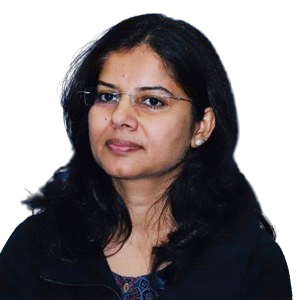
Advisor Science & Standards
and Regulations Food Safety and
Standards Authority of India (FSSAI)

Chairperson
Maharashtra Water Resources Regulatory Authority

Vice-Chairman & MD
City and Industrial Development Corporation Of Maharashtra Ltd. (CIDCO)

Dy. Chief Executive Officer
Maharashtra Housing and
Area Development Authority (MHADA)

Joint Metropolitan Commissioner
Mumbai Metropolitan Region Development (MMRDA)

Chief of UNICEF State Office
Maharashtra

Director (Finance)
Mazagon Dock Shipbuilders Ltd.
Ministry of Defence
Government of India

Chief Operating Officer - CSR
Essar Foundation

Textiles Commissioner
Ministry of Textiles
Govt. Of India

Chief Operating Officer
TATA Indian Institute of Skills

Board Director, CEO
Financial Strategist
USA

Chairman & MD
Ravin Group of Companies

Chairman & MD
EKI Energy Services Ltd.
(EnKing International)

Chief Financial Officer
Star Agriwarehousing &
Collateral Management Ltd.

Independent Woman Director
Retas (SBI ventures NEEV fund Co)
and Sustainability Board Advisor

Chief Financial Officer
& Head - Advisory
SICOM Ltd. (State Industrial
& Investment Corporation of Maharashtra)

International Motivational Speaker
UK

Additional Development Commissioner
Directorate of Industries
Maharashtra Industry, Trade and
Investment Facilitation (MAITRI)

Additional Chief Secretary
Department of Home
(Appeals and Security)
Govt. of Maharashtra

Secretary to the Governor of Maharashtra

Managing Director
Gujarat Mineral Development Corporation Ltd. (GMDC)

Chief Risk Officer
& Head CSR
Central Depository Services (India) Limited (CDSL)

Acting Director
Corporate Communication Department
Dubai Customs
UAE

Independent Board Member
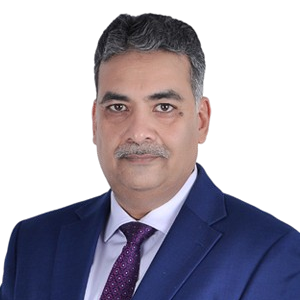
Chief Sustainability Officer
Larsen & Toubro Limited

Additional Collector
Maharashtra Industry, Trade, and
Investment Facilitation (MAITRI)
Government of Maharashtra
Principal Partner

Knowledge Partners

Platinum Partner

Gold Partners


Silver Partners

Bronze Partners








Strategic Partner


Edition

Attendees

Speakers

Board & Director-Level Audience

Universal
| Non-Residential Registration Fee (Exclusive of all taxes) | Indian | Overseas |
| IOD Members | Complimentary for IOD Members (Active) | |
| Non IOD Members | Rs. 15,000 + Taxes | US$ 200 |
| NGO's | Rs. 10,000 + Taxes | US$ 150 |
Increase Your Reach and Exposure
Generate Strong Leads
Networking and Relationship Building

Deliver Great ROI
Enhance Business Opportunities
Long Term Collaboration Opportunities


The IOD, India has been a champion for what I describe as responsible capitalism over many years. And what you have done is champion issues such as corporate social responsibility, minority shareholding, sustainability, and all of this before it became either fashionable or indeed became a must for corporate leaders to talk about.”
The Rt. Hon. Alok Sharma, MP
(the then) Hon’ble Minister of State for Employment at the Department of Work and Pensions Govt. of UK

IOD has really been very instrumental in enhancing the trade and investment between India and UK.
Every year, what they do here is remarkable.
Gopichand P. Hinduja
Co-Chairman
Hinduja Group, UK

I think I have to compliment IOD because they started talking about governance and
role of directors from 1990 onwards which was not as fashionable as it is today.
Ajay Piramal
Chairman
Piramal Group & Shriram Group

I extend my heartfelt gratitude to the Institute of Directors (IOD) for this esteemed opportunity. I commend the IOD for organizing such a prestigious event in the UAE, a hub of innovation and business excellence, and for their valuable partnership with the Ministry of Economy.
His Excellency Abdullah Ahmed Al Saleh
Undersecretary of the Ministry of Economy, Government of UAE

The Institute of Directors has played a crucial role in shaping the corporate landscape in India. Their leadership and vision in organising this conference underscore the importance of addressing climate change and environmental risk.
Hon’ble Justice Ritu Raj Awasthi
Judicial Member, Lokpal of India
former Chairperson, Law Commission of India
former Chief Justice, Karnataka High Court

Institutions like IOD see to it that perhaps a lot of encouragement can be given to
the corporate sector to mend its ways and to be on the right side of everything.
Hon’ble Justice U. U. Lalit
former Chief Justice of India
The IOD, India has been a champion for what I describe as responsible capitalism over many years. And what you have done is champion issues such as corporate social responsibility, minority shareholding, sustainability, and all of this before it became either fashionable or indeed became a must for corporate leaders to talk about.”
The Rt. Hon. Alok Sharma, MP
(the then) Hon’ble Minister of State for Employment at the Department of Work and Pensions Govt. of UK
IOD has really been very instrumental in enhancing the trade and investment between India and UK.
Every year, what they do here is remarkable.
Gopichand P. Hinduja
Co-Chairman
Hinduja Group, UK
I think I have to compliment IOD because they started talking about governance and
role of directors from 1990 onwards which was not as fashionable as it is today.
Ajay Piramal
Chairman
Piramal Group & Shriram Group
I extend my heartfelt gratitude to the Institute of Directors (IOD) for this esteemed opportunity. I commend the IOD for organizing such a prestigious event in the UAE, a hub of innovation and business excellence, and for their valuable partnership with the Ministry of Economy.
His Excellency Abdullah Ahmed Al Saleh
Undersecretary of the Ministry of Economy, Government of UAE
The Institute of Directors has played a crucial role in shaping the corporate landscape in India. Their leadership and vision in organising this conference underscore the importance of addressing climate change and environmental risk.
Hon’ble Justice Ritu Raj Awasthi
Judicial Member, Lokpal of India
former Chairperson, Law Commission of India
former Chief Justice, Karnataka High Court
Institutions like IOD see to it that perhaps a lot of encouragement can be given to
the corporate sector to mend its ways and to be on the right side of everything.
Hon’ble Justice U. U. Lalit
former Chief Justice of India


































Ms. Anood Abdulla is a strategic communication and branding leader with over a decade of experience across federal and local government entities in the UAE. She currently serves as Acting Director of the Communication Department at Dubai Customs, where she leads corporate communication strategy, major events, media campaigns, and cross-government partnerships. Previously, she spent ten years at the Prime Minister’s Office within the Ministry of Cabinet Affairs, contributing to the branding and execution of high-impact national initiatives including the World Government Summit, UAE Government Annual Meetings, and the Mohammed Bin Rashid Government Excellence Award. Ms. Anood Abdulla is an IRCA Certified ISO 9001:2015 Lead Auditor and Certified Brand Manager, with a strong focus on strategic planning, governance alignment, and creative execution at scale.
Mr. Om Bhatt is the former Executive Chairman of the State Bank of India and one of India’s most respected banking leaders. Born and raised in the scenic Doon Valley, he qualified early for the National Science Talent Scholarship in Physics before pursuing a postgraduate degree in English Literature—an academic breadth that would later shape his leadership approach. He joined the State Bank of India in 1972 as a Probationary Officer and built a distinguished career over more than three decades, holding a wide range of senior roles, including overseas assignments in the United Kingdom and the United States. He was appointed Executive Chairman in 2006. During his tenure, SBI emerged as the largest bank in India by market capitalisation and ranked among the top three listed companies in the country. The Bank entered and advanced steadily in the Fortune Global 500 rankings, strengthened market share and global credit ratings, and received extensive international media coverage, including an exclusive Discovery Channel documentary. SBI’s transformation during this period also became the subject of a Harvard Business School case study. For over fifteen years, Mr. Bhatt has served as an Independent Director on the boards of leading multinational companies across sectors including banking, leadership development, automotive, steel, IT services, consumer goods, energy, shipping, and healthcare. He is married, has two children and three grandchildren, and divides his time between India and the United States.
Ms. Ashwini Bhide IAS is the Managing Director at Mumbai Metro Rail Corporation (MMRC), a 50:50 joint venture between the Government of India (GOI) and the Government of Maharashtra (GOM). She has been instrumental in troubleshooting various challenges in the execution of the Colaba-Bandra-SEEPZ Metro Line 3 project. Currently, Ms. Bhide is entrusted with the crucial responsibility of serving as the Principal Secretary to the Hon’ble Chief Minister of Maharashtra, overseeing key administrative and strategic matters. She is IAS officer from the batch of 1995 of Maharashtra cadre and is a post-graduate in English Literature from Pune University. She was ranked first among women candidates in the Civil Service Examination in 1995. Ms. Ashwini Bhide has helmed some of the most ambitious, complex and mega urban infrastructure projects in the city of Mumbai - Coastal Road project as AMC of BMC, Mumbai Metro Line 3 as MD of MMRC, Eastern Freeway, the elevated road to International Airport, several flyovers on major arterial roads and rail over bridges including Milan ROB as well as the first phase of Mumbai Monorail in her stint with MMRDA.
Mr. Manish Dabkara is the Chairman and Managing Director of EKI Energy Services Ltd., a leading global carbon credit developer and supplier. He founded the company in 2008 with a vision to help organizations transition towards net-zero emissions through strategic carbon asset management, including carbon credit generation, supply, and offsetting. Under his leadership, EKI has emerged as a global catalyst in climate action, supplying over 200 million carbon offsets and serving more than 3,500 clients across 40+ countries. A recognized expert in energy and climate change, he holds a Master’s degree in Energy Management and is a Certified Energy Auditor and Manager accredited by the Bureau of Energy Efficiency, Government of India. He has also received executive certifications from premier institutions including IIM Ahmedabad, IIM Indore, CII, and GIZ. Mr. Dabkara has received numerous accolades, including Fortune India’s 40 Under 40 (2022 and 2023), Environmental Finance’s ‘Global Net Zero Champion of the Year’ (2023), and Hurun India Impact Entrepreneur of the Year (2022). He ranks among India’s top self-made entrepreneurs in the IIFL Wealth Hurun India Rich List and serves as President-elect of the Carbon Markets Association of India. He also holds leadership roles with FICCI and CII, contributing to national policy and industry advancement in climate and carbon markets
Mr. Kaizad Dastur is the Chief Financial Officer of StarAgri, an integrated agritech solutions group building institutional-grade infrastructure across India’s agricultural value chain. He is a Chartered Accountant and B.Com graduate with over 13 years of experience across audit, assurance, risk management, and finance leadership roles. Prior to joining StarAgri, Kaizad served as Vice President – Finance & CFO at Artisan Spirits, a division of Sula Vineyards Ltd, and has worked with professional services firms including Mazars, EY, and Kalyaniwalla & Mistry LLP. His experience spans governance, internal controls, and financial reporting across Indian and global organisations. At StarAgri, Kaizad leads the finance function across group entities, with a focus on governance strengthening, financial discipline, and institutional readiness. From a CSR perspective, he works closely with leadership teams to ensure that growth, farmer impact, and infrastructure development are aligned with responsible capital allocation, compliance, and long-term value creation, particularly in areas such as financial inclusion, access to formal credit, and reduction of post-harvest losses. He brings a practitioner-led perspective on embedding responsibility and sustainability into core business operations, rather than treating CSR as a standalone function.
Ms. Vrunda Manohar Desai is an Indian Revenue Service (Income Tax) officer with over two decades of experience across taxation, regulatory, and policy domains. She holds a Bachelor’s degree in Electronics Engineering and a Bachelor’s degree in Hindustani Classical Vocal Music, and is an accomplished Air Pistol and Sports Pistol shooter. During her service with the Income Tax Department, she worked in Corporate Charge, the Investigation Wing, Central Ranges for Search Assessments, and International Taxation, building expertise in tax administration and policy. She also handled regulatory work relating to private satellite television channels, contributing to the framing and implementation of Uplinking and Downlinking Policy guidelines and monitoring content in line with Programme and Advertising Codes. As Joint Secretary (Films), Ministry of Information and Broadcasting, she promoted Indian cinema at international festivals including Cannes, Annecy, and Toronto, played a key role in organising the 55th International Film Festival of India at Goa, and contributed to the AVGC-XR policy and revisions to Film Certification Rules. As Additional Director General of Foreign Trade (North), she implemented foreign trade policy, facilitated export promotion, conducted Free Trade Agreement outreach, streamlined licensing processes, and strengthened stakeholder engagement. Since January 2026, as Textile Commissioner, she oversees fibre production enhancement, technology upgradation schemes, export promotion, and the modernization of India’s textile sector. Her career spans taxation, broadcasting, cinema, international trade, and textiles.
Mr. Dominic D’Souza is the Chief Operating Officer – CSR of Essar Foundation, the corporate social responsibility arm of the Essar Group. He brings over four decades of professional experience across Corporate Affairs, Corporate Social Responsibility (CSR), Corporate Communications, Public Relations, Brand Management, Crisis Management, Employee Engagement, Administration, and stakeholder liaison. His career has involved extensive engagement with government bodies, foreign missions and consular corps, international commercial services, joint business councils, the World Economic Forum, apex industry bodies such as FICCI, CII, and ASSOCHAM, chambers of commerce, and trade and industry associations in India and abroad. Over the course of his career, Mr. D’Souza has led teams across Corporate Affairs, Corporate Communications, CSR, OHSE, and Administration at organisations including Wockhardt Ltd, Raymond Ltd, J. Ray McDermott Inc. (Dubai), NZ Telecom, Savioray Petrochemicals Ltd, and Cambatta Aviation. He is a former state-level footballer, having represented Maharashtra at senior, junior, sub-junior, and school national levels, and is a qualified football coach who has coached the Maharashtra football team. He also serves as a music conductor and is in-charge of a church choir. Mr. D’Souza has received several recognitions, including the Governor’s Award for COVID Relief work and the World CSR “Impactful Leader” Award. He has been a member of the Governing Council, College Development Committee, and Local Management Committee of St. Francis Institute of Management & Research (SFIMAR), Mumbai, for several years.
Mr. Angelo George, CEO of Bisleri International, brings over three decades of leadership experience from renowned organisations including Hindustan Unilever, EID Parry, and Dabur India. A transformational leader known for his market insight, innovation, and brand-building expertise, he has driven Bisleri’s record growth, refreshed its brand image, strengthened market leadership, and expanded globally with entry into the UAE. Deeply committed to sustainability, Angelo has positioned Bisleri as an industry pioneer—one of India’s first companies to achieve plastic-neutral and water-positive status, recycling more plastic than it uses and replenishing more water than it extracts. Under his stewardship, initiatives such as Responsible Use of Plastic and Water Credits have set new benchmarks for corporate responsibility. An alumnus of Madras Christian College and Bangalore University, he has also attended Advanced Management Programs at ISB Hyderabad and the Kellogg School of Management, Chicago. Beyond his corporate role, he serves as an Independent Director, an executive member of CII and ICC committees on Water and Food Processing, and as an Honorary Professor mentoring future leaders. He is a Distinguished Fellow of the Institute of Directors and was honoured at The Economic Times CEO Conclave as one of the ‘Inspiring CEOs’
Ms. Nidhi Goyal is the Chief Operating Officer at Tata Indian Institute of Skills, bringing over 20 years of experience across Financial Services, IT, and Higher Education. She began her career at American Express, where she led internal consulting projects in strategy and business transformation, and later became the India Head for premium charge card products, new product development, and strategic partnerships. She was recognised as an Economic Times Young Leader, the only woman featured in the inaugural list. In 2017, she transitioned from the corporate sector to institution building, playing a key role in establishing Anant National University in Ahmedabad under the leadership of Dr. Ajay Piramal. She helped develop a multidisciplinary curriculum, introduced a choice-based credit system, and was instrumental in setting up the Centre for Sustainability, while strengthening marketing, admissions, and corporate engagement. She has since led the establishment and launch of Tata Indian Institute of Skills campuses in Mumbai and Ahmedabad, designing industry-aligned skills programs to meet evolving workforce needs. She is also an advisor and mentor to social enterprises and startups. Ms. Goyal holds a Mechanical Engineering degree from NIT Allahabad and an MBA from IIM Calcutta.
Professor Charlie Jeffery is the Vice-Chancellor and President of the University of York. He joined the University in September 2019, from the University of Edinburgh where he had been Senior Vice-Principal. Prof. Jeffery is Chair of the N8 Research Partnership (a collaboration of the eight most research intensive universities in the North of England); a member of the Partnership Board of key organisations in the City of York; the York Central Steering Board, and the Humber and North Yorkshire Integrated Care Board. He was a Member of Council of the Economic and Social Research Council from 2006-12 and Chair of the Political Studies Association of the UK from 2009-12. Prof. Jeffery is committed to sustainability, in particular, harnessing the expertise and passion of the university sector to respond to the climate crisis. He has a deep-rooted interest in how university research and education can serve the general benefit of society, or public good. At York he has worked to bring together the University with local authorities, businesses, other universities and colleges to promote inclusive economic development, and to open up access to university study and economic opportunity to people from disadvantaged backgrounds - both in the UK and internationally.
Mr. Vijay Karia, is the Chairman and MD of Ravin Group of Companies. Ravin group is a leading player in Indian power and energy. He has been Chairman of the Cable Division of IEEMA. As Chairman and Managing Director of Ravin Group, he has been instrumental in leading the electrical cable segment in many ways by launching new and improved products from time to time, and has been a pioneer and largest exporter of cables from India. His is the first Indian cable manufacturing company to set up its manufacturing facility overseas in UAE. He was recently awarded as India's Most Inspiring Entrepreneur by the Economic Times, and is considered as one among the top 50 Entrepreneurs by ET today.
Ms. Chandni Khosla is a sustainability and sustainable finance leader with 25+ years of experience across the financial sector in emerging and frontier markets. She serves as an Independent Director at Retas Water Solutions (an SBI Ventures NEEV Fund company) and advises trust boards and institutions across Asia and the Middle East. She was recognised as BusinessWorld’s Most Influential Sustainability Leader (2025) and has served on the BusinessWorld Sustainability Advisory Council for three consecutive years. Previously, she has been associated with Singapore Exchange, HDFC Ltd., National Stock Exchange of India, Natixis Investment Managers, and ICICI Bank. Her work contributed to HDFC being ranked No. 1 as India’s most sustainable BFSI company by BusinessWorld (2021). During her tenure at SGX, she supported the development of carbon market initiatives. Ms. Khosla is a Climate Safe Lending Network Fellow, a Senior Executive Fellow at Harvard Kennedy School, and a Lifetime Fellow of the Institute of Directors.
Mr. Swadheen S. Kshatriya is a senior Indian Administrative Service officer of the 1980 batch with a distinguished career in public administration. In the early years of his service, he held key field and district-level assignments including Assistant Collector at Pusad and Washim, Chief Executive Officer of Zilla Parishad, Ahmednagar, and Collector of Nanded. He later served on deputation to the Government of India in the Ministries of Steel, Power, and Home Affairs. On his return to Maharashtra, he held several important positions such as Vice Chairman and CEO of MHADA, Commissioner of Sales Tax, General Manager of BEST, Principal Secretary (Housing), Principal Secretary to the Chief Minister, Municipal Commissioner of Mumbai, and Additional Chief Secretary (Revenue). As Commissioner of Sales Tax, he chaired the committee on classification of commodities and played a key role in drafting the VAT legislation. As Principal Secretary, Housing, he authored the State Housing Policy with a focus on affordable housing. Mr. Kshatriya served as Chief Secretary to the Government of Maharashtra from August 2014 to February 2017, during which he played a pivotal role in implementing the Right to Services Act, promoting Ease of Doing Business through single-window clearances, managing drought mitigation initiatives, and advancing major infrastructure projects including the Navi Mumbai International Airport, Mumbai Trans Harbour Link, and metro projects. In March 2017, he was appointed the first State Chief Commissioner for Right to Service, where he established a transparent and time-bound public service delivery system. He is presently the Honorary Chairman of IIPA, Maharashtra Regional Branch.
Mr. Vinay Madan is a seasoned Risk Management professional with more than two decades of deep and diverse experience across the financial services sector. His expertise spans Risk Advisory, Enterprise Risk Management, Operational and Fraud Risk, IT and Cyber Security Risk, Credit Risk, Regulatory Risk, as well as Market and Liquidity Risk. Over the years, he has worked across a wide range of business lines, including Corporate and Investment Banking, Retail and Business Banking, Wealth Management, Mutual Funds, Custodian Services, Retail and Institutional Brokerage, NBFCs, Global Captive Centres, Market Infrastructure Institutions and the Credit Card business. A Chartered Accountant from the Institute of Chartered Accountants of India, Vinay began his professional journey with KPMG Risk Advisory, where he worked with clients across the globe on business process enhancement, internal controls frameworks, enterprise risk management, internal audit, and large transformation programmes. He later contributed to several leading global organisations such as American Express, Barclays and the BNP Paribas Group, delivering strategic value across their risk and governance frameworks. He currently serves as the Chief Risk Officer at CDSL, where he leads the organisation’s overall risk management strategy and governance architecture. In addition, Vinay also heads CSR and ESG at CDSL. In this capacity, he drives the organisation’s sustainability agenda, strengthens social impact initiatives, and ensures environmental, social and governance priorities are embedded into the company’s long-term vision and responsible corporate conduct.
Mr. Ruchir Agrawal serves as the Director (Finance) of Mazagon Dock Shipbuilders Limited (MDL), one of India’s premier Defence Public Sector Undertakings. His appointment approved by the Appointments Committee of the Cabinet (ACC) stands as a testament to his exceptional professional credibility and the Government of India’s confidence in his financial leadership. He also functions as the Chief Financial Officer (CFO) and Chief Information & Security Officer (CISO) of the company, shaping MDL’s strategic direction through his active role in several Board-level committees, including the CSR, Stakeholder relationship and the Risk Management Committee. A Fellow Member of both the Institute of Cost and Works Accountants of India (ICWAI) and the Institute of Chartered Shipbrokers, London, Mr. Agrawal brings a rare blend of financial expertise, maritime knowledge, and strategic foresight. With over three decades of diverse experience across the Oil & Gas and Defence sectors, he has built a distinguished career spanning International Trade, Treasury, Business Development, R&D, Corporate Audit, Shipping, Gas Operations, Corporate Finance, and Exploration & Production. His comprehensive exposure has equipped him with deep insight into complex commercial operations, risk management, regulatory frameworks, internal controls, and financial governance.
Mr. Nitin Mahajan is the Deputy Managing Director and Chief Financial Officer at SICOM Limited, a Government of Maharashtra undertaking, with over 30 years of diverse experience in project management, accounts, finance, and investment advisory. He has played a key role in strengthening SICOM’s operations and supporting industrial growth, including audit and financial oversight, resolution of tax matters, and facilitating project investments through coordination between government and private sector stakeholders. He has also contributed to funding technology incubators at SINE, IIT Bombay, and Sardar Patel Institute of Technology through CSR initiatives, promoting innovation and employment generation. Earlier, as Assistant Vice President at Tata Economic Consultancy Services (TECS), a division of Tata Sons Ltd., he led investment advisory assignments for manufacturing and infrastructure projects in India and abroad. His work involved project planning, feasibility analysis, structuring, and public-private partnership frameworks, with exposure across India, the Middle East, Europe, and South Asia, including engagements with multilateral institutions such as the Asian Development Bank.
Dr. Prashant B. Narnaware, IAS (2009 batch), is currently serving as Secretary to the Hon’ble Governor of Maharashtra, where he functions as the principal administrative officer, managing constitutional responsibilities and coordinating between the Governor’s office and the State Government. A distinguished civil servant with a strong academic foundation, he holds a PhD in Public Administration, along with degrees in Law, Public Policy, Public Administration, and Dental Surgery. Over his career, Dr. Narnaware has held several key leadership positions across Maharashtra, including Commissioner, Women and Child Development, where he conceptualized and implemented the landmark “Mukhyamantri Mazi Ladki Bahin Yojana,” benefiting over 2.6 crore women through direct financial support. He has also served as Joint Managing Director of CIDCO, Commissioner of Social Welfare, and Collector and District Magistrate of Palghar and Dharashiv (Osmanabad), where he led impactful initiatives in rural development, social welfare, and administrative reforms. In addition to his administrative roles, Dr. Narnaware is an Adjunct Professor at the Tata Institute of Social Sciences (TISS), Mumbai, and a published researcher in governance and public policy. His contributions have earned him several prestigious honours, including the Indian Express Excellence in Governance Award and the Best Collector Award, reflecting his commitment to inclusive, citizen-centric governance.
Mr. Astik Kumar Pandey, IAS (2011 batch, Maharashtra cadre), is currently serving as Joint Metropolitan Commissioner at the Mumbai Metropolitan Region Development Authority (MMRDA). A distinguished civil servant with over a decade of administrative experience, he has held several key leadership positions including District Magistrate and Collector of Akola, Beed, and Chhatrapati Sambhajinagar, Municipal Commissioner of Aurangabad, and Commissioner & CEO of ESIS, Maharashtra. Throughout his career, Mr. Pandey has led transformative governance and development initiatives across urban and rural sectors. As Municipal Commissioner and CEO of Aurangabad Smart City, he successfully organized international events including the G20-W20 meetings and led major urban renewal projects such as the Kham River Rejuvenation Mission, which received recognition from the World Resources Institute. His flagship initiatives include Mission Clean Morna River, contract farming programs benefiting farmers, and large-scale implementation of housing, sanitation, and water conservation schemes. Mr. Pandey holds a Master’s degree in Medieval History from the University of Allahabad and is a UGC-NET and JRF qualifier. His outstanding public service has earned him multiple honours, including Best Collector Awards, the Best Municipal Commissioner Award, and the prestigious Ross Center Prize for Cities. He is widely respected for his innovative leadership and commitment to sustainable urban and regional development.
Mr. Praveen Pardeshi is a retired Indian Administrative Service (IAS) officer of the 1985 Maharashtra cadre with over 34 years of distinguished service. He has served as Additional Secretary to the Chief Minister of Maharashtra, Principal Secretary of the Revenue and Forest Department, and Municipal Commissioner of Greater Mumbai. He was Member (Administration) at the Capacity Building Commission, Government of India, overseeing the Hon’ble Prime Minister Shri Narendra Modi’s flagship initiative Mission Karmayogi. He led the training of over 100,000 citizen-facing railway staff and 400 UT police personnel to promote citizen-centric values. Since July 2023, he has been the Chief Executive Officer of MITRA, a policy think tank under the Hon’ble Chief Minister of Maharashtra, driving the state’s mission to become a USD 1 trillion economy by FY 2028. Mr. Pardeshi secured the All-India First Rank in the 1985 Civil Services Examination. He has also served in senior roles with the United Nations, including UNDP Geneva and UNITAR, and led the acclaimed post-earthquake reconstruction in Latur. He holds advanced degrees from LSE and the Delhi School of Economics.
Ms. Roop Rashi is a senior officer of the Indian Audit and Accounts Service (1994 batch) and currently serves as Chief Executive Officer of the Khadi and Village Industries Commission (KVIC). She earlier served as Textile Commissioner to the Government of India under the Ministry of Textiles and was Director General (Audit) in the Office of the Comptroller and Auditor General of India prior to joining the Ministry. As Secretary (Finance – Fiscal Reforms), Government of Karnataka, Bengaluru, she played a key role in facilitating externally aided projects of the World Bank and Asian Development Bank, advancing financial inclusion and Direct Benefit Transfer initiatives, and strengthening engagement with public sector financial institutions to improve credit flow for beneficiaries of central and state schemes. She also contributed to the establishment of the Integrated Financial Management System (Khajanell) and, as Director, commissioned the activities of the Fiscal Policy Institute, Bengaluru. In the commodity-specific domain, Ms. Rashi served as a Board Director of the Coffee Board of India under the Ministry of Commerce and Industry. In this role, she led initiatives to strengthen the coffee value chain across domestic and export markets and coordinated closely with international specialty coffee associations in the United States, Europe, Japan, Australia, and South Korea to promote direct farm-to-foreign market linkages and position Indian specialty coffees globally.
Mrs. Radhika Rastogi, IAS, is the Additional Chief Secretary, Department of Home (Appeals and Security), Government of Maharashtra. A senior and highly respected officer of the Indian Administrative Service, she brings extensive experience in public administration, governance, and policy implementation across key sectors of the state government. In her current role, she oversees critical functions relating to internal security, appellate matters, and coordination of law and order administration, contributing to the strengthening of institutional systems and ensuring responsive governance. Her work involves close engagement with senior government authorities, law enforcement agencies, and key stakeholders to support effective decision-making and public safety. Over the course of her distinguished career, Mrs. Rastogi has held several important leadership positions across Maharashtra, where she has been instrumental in advancing administrative reforms, enhancing service delivery, and promoting efficient and transparent governance. She is widely recognised for her strategic insight, administrative acumen, and commitment to public service. Her leadership continues to contribute significantly to strengthening governance frameworks and advancing the Government of Maharashtra’s efforts towards security, institutional effectiveness, and citizen-centric administration.
Mr. B. Venugopal Reddy is the Additional Chief Secretary, Higher & Technical Education, Government of Maharashtra. He is a distinguished Indian Administrative Service (IAS) officer with a wealth of experience in public administration and governance. He plays a critical role in shaping the state’s education policies and driving initiatives to enhance the quality and accessibility of higher and technical education. With a career spanning several decades, Mr. Reddy has held key positions across various departments, demonstrating exceptional leadership and a commitment to public service. His focus on innovation, inclusivity, and excellence in education aligns with Maharashtra’s vision of fostering a skilled and knowledge-driven society. Mr. Reddy’s strategic insights and administrative acumen continue to contribute significantly to the advancement of Maharashtra’s education sector.
Mr. Paresh Rughani is UK based, award winning motivational speaker and visiting professor in executive leadership and management programmes. His profession is in accountancy and finance but he has been following his passion of public speaking-empowering, educating & entertaining global corporate clients. With his humorous personality and unique delivery style, he is a lively and amusing presenter and also very popular “Master Of ceremony” in British parliament and House of Lords. Audiences benefit highly from his motivational mantras, management nuggets and ‘Words Of Wisdom’ (WOW), resulting in “Added Value” and increased profitability, productivity and performance. After the loss of his 4 day old nephew on his birthday in 1990, he has been devoting his time and talent, by volunteering and serving communities, in partnership with BAPS charities and the Prince’s Trust, set up by His Royal Highness The Prince of Wales, to help disadvantaged young people. He has shared some of his “Secrets Of Success”, to Government Presidents, Prime Ministers, CEO’s, Bollywood celebrities, Philanthropists and Sports Superstars within the world of International Cricket and Football. Some of his global client portfolio includes TATA, Reliance Industries, Bank of Baroda, Maruti Suzuki, Indian Institute of Technology (IIT), University of London & Marriot Hotels.
Mr. Sanjay Singh is the Chief of UNICEF Maharashtra, bringing over 26 years of leadership experience in humanitarian and development programming across India, South Asia, and West Africa. He has led some of UNICEF’s largest and most complex portfolios, advancing equity, systems strengthening, and results for children in highly dynamic and resource-constrained contexts. A seasoned strategic leader, he has deep expertise in child-focused policy, governance, social protection, and results-based management, with a strong track record in driving large-scale programmes, institutional reform, and innovative delivery models. A key pillar of his work is building high-impact partnerships with the private sector, aligning corporate capabilities, innovation, and financing with public systems to deliver sustainable and scalable outcomes for children. He has led and supported strategic collaborations with corporates, foundations, financial institutions, and global platforms, translating CSR investments into measurable social impact through co-creation, catalytic funding, and shared-value approaches. During his UNICEF career, Mr. Singh has served across five offices in roles spanning Social and Behaviour Change, WASH, Emergencies, and Gender. As an emergency specialist, he has led disaster risk reduction and response efforts during major crises including Ebola, the tsunami, and COVID-19, and contributed to the global Minimum Standards for Education in Emergencies. Widely recognised for building trusted partnerships, he also contributes to global discourse through publications in reputed international journals. He holds a Master’s degree from Xavier Institute of Social Service, Ranchi, and is currently pursuing a PhD at IIT Delhi.
Mr. Roopwant Singh, IAS, a 2003 batch officer of the Indian Administrative Service, is the Managing Director of Gujarat Mineral Development Corporation Ltd. (GMDC). With over two decades of distinguished public service, he has held key leadership roles across geology and mining, public finance, general administration, development administration, and regulatory governance. He brings extensive expertise in the mining sector, having served as Commissioner of Geology and Mining, Government of Gujarat, where he spearheaded transformative reforms. Under his leadership, mining revenues increased significantly from ?922 crore to ?1,568 crore within three years. He played a pivotal role in introducing auction-based mineral concession frameworks, strengthening measures to curb illegal mining through initiatives such as drone-based monitoring, and advancing scientific exploration strategies to establish quantifiable mineral resources. Prior to his current role, Shri Singh served as Secretary (Expenditure), Finance Department, Government of Gujarat, overseeing state expenditure, budget preparation, procurement, and resource allocation. He also served as Additional Secretary (Budget), contributing to the formulation of the State Budget. His field experience includes serving as District Collector of Ahmedabad, Valsad, and Bharuch. He currently also holds additional responsibilities as Commissioner of Geology and Mining and Secretary, Gujarat Electricity Regulatory Commission.
Mr. Sanjay Singh is the Director, Strategy and External Relations at Jindal Steel. He brings in more than 36 years of professional experience in Policy, Management, Administration, Project Implementation and Strategic Planning from the Government as an Indian Administrative Service Officer in the Central Government and State Government at implementation level and top level. His noteworthy work has been in the sectors of Steel, Telecommunication, Research Management, Human Resource Development, Information Technology. During his tenure in Steel Sector as Secretary, Government of India he worked towards formulation and preparing the implementation roadmap of medium and long term vision of the Sector with particular emphasis on sustainability in the sector and adoption of Industry 4.0. In the Telecom Sector he was instrumental in implementing a country-wide Broadband project; BharatNet to connect all 2.5 lakh Gram Panchayats in the country by Broadband.
Mr. Vijay Singhal is the Vice Chairman & Managing Director of the City and Industrial Development Corporation of Maharashtra Ltd (CIDCO). He is an Indian Administrative Service officer from the 1997 batch. He has held various positions in the Government of Maharashtra, serving as Assistant Collector, Municipal Commissioner, Commissioner of Sugar, Commissioner of State Excise, Commissioner of Industries, Additional Municipal Commissioner, Municipal Commissioner, Chairman & Managing Director of Maharashtra State Electricity Distribution Company Ltd, and General Manager of the BEST Undertaking. Mr. Singhal holds a graduate degree in Civil Engineering from IIT Roorkee, where he was a Gold Medalist, an M.Tech from IIT Delhi, and an M.Sc. from King’s College London. During his tenure in municipal bodies in Kolhapur and Mumbai, he oversaw the Integrated Road Development Project in Kolhapur district and implemented solid waste management initiatives, reducing waste from 9,000 tonnes to 7,000 tonnes in just two and a half months while cutting government expenses by 25%.
Ms. Shwetali Thakare is a distinguished finance and economics professional with over 25 years of experience, including more than 15 years at board and senior government levels across India, Canada, and Africa. She currently serves as Chairman, Maharashtra Water Resources Regulatory Authority (MWRRA), Government of Maharashtra, a constitutional position equivalent to the rank of Chief Secretary, and also holds charge as Member (Economics). Her career spans leadership roles such as Chief Financial Officer, Maharashtra Airport Development Company Ltd.; Director, Nagpur Metro and Pune International Airport Ltd.; and CFO of a listed ITES company. She has also practiced as a Chartered Accountant and worked internationally as an auditor in Canada. Her expertise covers economic and regulatory leadership, corporate finance and strategy, taxation and compliance, and infrastructure development. At MWRRA, she has led the design and implementation of state water tariff frameworks, reviewed high-value infrastructure projects, and functioned as a quasi-judicial authority in water-related disputes. Ms. Thakare has played a key role in major infrastructure initiatives, including the operationalisation of Shirdi International Airport. Her contributions have been recognised through multiple honours, including the Kamala Power Women Award, Women of the Year Award (Nagpur), commendations from the Ministry of Civil Aviation and the Government of Maharashtra, and inclusion in the Limca Book of Records. She is the author of How India Will Surpass the $30 Trillion Economy, which presents a forward-looking economic vision integrating sustainability, technology, and Indic economic thought. Alongside her professional work, she is also an accomplished poet, writing in Marathi and English.
Ms. Kalpana Unadkat is an accomplished Independent Director with over 25 years of international legal, governance, and board advisory experience, including more than a decade in boardroom leadership. A dual-qualified solicitor, she is the Founder of Ethira, a boutique legal and governance advisory platform, and has previously served as Senior Partner at Khaitan & Co., Mumbai, and Co-Head of Ashurst’s India Practice in London. She specialises in cross-border mergers and acquisitions, joint ventures, corporate governance, and board advisory, and is widely respected for delivering strategic, commercially sound solutions in complex regulatory and capital environments. Ms. Unadkat currently serves as an Independent Director on the boards of Avenue Supermarts Ltd. (DMart), TVS Motor Company Ltd., TVS Credit Services Ltd., and Eris Lifesciences Ltd. She chairs the Audit Committees at DMart and Eris Lifesciences and the Nomination and Remuneration Committee, and is an active member of Risk Management and CSR Committees. A strong advocate of board effectiveness and leadership development, she has trained over 200 directors and contributed to research on women in board leadership. Her contributions have earned her numerous accolades, including the Trailblazer Award (FICCI FLO), Corporate Governance Lawyer of the Year, and Rising Woman of the Year by The Economic Times and Spencer Stuart.
Mr. Vaibhav Waghmare is an IAS officer of the 2019 batch and is currently serving as the Additional Development Commissioner in the Directorate of Industries, Government of Maharashtra. In this capacity, he oversees the Maharashtra Industry, Trade & Investment Facilitation Cell (MAITRI), the state’s single-window platform for facilitating investments, ensuring timely approvals, and providing end-to-end support to domestic and global investors. He also leads key initiatives under the Maharashtra State Export Promotion Policy 2023 and serves as the nodal officer for Export Promotion and One District One Product (ODOP), working to strengthen district-level export ecosystems and enhance market access. An officer of the Maharashtra cadre, Mr. Waghmare holds a degree in Computer Science and Information Technology from Shivaji University, Kolhapur, and a Master of Laws (LL.M.) in Criminal Laws from National Law University, Delhi. Since joining the Indian Administrative Service in 2019, he has served in diverse administrative and development roles, including Assistant Collector, Dharni (Melghat), and Project Officer, ITDP Aheri, Gadchiroli, where he contributed to tribal development initiatives. He also served as Chief Executive Officer, Zilla Parishad, Washim (2024–2025), where he strengthened rural governance and improved service delivery across health, education, sanitation, and district development programmes. Mr. Waghmare brings a multidisciplinary perspective to governance, combining administrative leadership, legal expertise, and a strong focus on investment facilitation, industrial growth, and inclusive economic development.
Mr. Anil Wankhede serves as the Deputy Chief Executive Officer of the Maharashtra Housing and Area Development Authority (MHADA), where he plays a key role in advancing affordable housing and urban redevelopment across Maharashtra. With over two decades of distinguished service in public administration and urban infrastructure, he has contributed significantly to housing delivery, land management, and large-scale redevelopment initiatives. At MHADA, he oversees affordable housing projects for economically weaker and low-income groups, major redevelopment initiatives including BDD Chawls and MHADA colonies, and coordinates with regional boards across Nashik, Pune, Aurangabad, Nagpur, and Amravati. He also supervises revenue management, IT systems, and public relations to enhance operational efficiency and transparency. Previously, as Director, Land Acquisition at the Municipal Corporation of Greater Mumbai, he facilitated land acquisition for critical infrastructure projects, including the Coastal Road Project, and played a vital role in emergency operations during the COVID-19 pandemic. During his tenure at the Mumbai Metropolitan Region Development Authority, he led major land and housing initiatives, contributing to the delivery of over 25,000 housing units and generating substantial public revenue. He holds degrees in Personnel Management, Law, and Commerce, reflecting his strong academic foundation in governance and public administration.
Mr. Peter Waziri is a board director with over 30 years of experience in corporate/investment banking, private equity, investment management, health care management, and strategy consulting. He is the Founder and CEO of Warspite Capital Advisors, a financial advisory firm with a history of advising clients on emerging market investment strategies, health care financial operations/management, commercial real estate investment, and franchise financing. He sits on the board of Xpress Wellness Urgent Care, a Goldman Sachs-backed company in the US, and on the Governing Council of Bangor University in the UK. He is a current member of the Private Directors Association (PDA) and the National Association of Corporate Directors (NACD) in the US.
Born on 26th June 1937, Commissioned into the Regiment of Artillery in June 1957. Took active part in 1971 Indo-Pak war in Jammu- Samba sector. On promotion as Lieutenant General in 1991. Commanded all troops in Kashmir and Ladakh Sector which was actively involved in combating militancy in the valley and intense operations in Siachen Glacier. Appointed as Vice Chief of the Army Staff on 1st July 1993. Here he was deeply involved in strategic planning, procurement of equipment and armament, and transfer of technology. For his outstanding professional competence, able leadership and exceptional devotion to duty, was awarded Param Vishist Sewa Medal (Highest award for distinguished service and extreme devotion to duty) and Ati Vishist Sewa Medal by the President of India in 1993 and 1991 respectively. After rendering 38 years of Army service retired on 30th June 1995. Was appointed as Member, Union Public Service Commission (UPSC) on 20th September 1995. Served as Chairman UPSC from December 1998 to June 2002. Served as Vice Chairman of the Institute of Directors, New Delhi from March 2011 to November 2022. He has compiled two handbooks for IOD i.e. Handbook for Independent Directors and a Handbook on Corporate Leadership. He is currently the President of the Institute of Directors,(India) with effect from 02 December, 2022.
Dr. Jayashree L. Katare is a senior administrative officer and public health professional currently serving as Additional Collector, MAITRI. A medical graduate with a postgraduate qualification in Public Health, she brings a rare and impactful combination of clinical understanding and administrative leadership to governance. A native of Sangli, she has held several key assignments including Sub-Divisional Officer (Haveli), Resident Deputy Collector / Additional District Magistrate, Pune, and Collector of Stamps, Andheri. She possesses extensive knowledge of land revenue administration, regulatory processes, and district governance. During her tenure with the Maharashtra Airport Development Company, she contributed significantly to the successful execution of Shirdi Airport and laid foundational groundwork that supported the development of regional airports such as Solapur Airport and Kolhapur Airport, strengthening regional connectivity and economic growth. During the COVID-19 pandemic, she served as a District Coordinating Authority in Pune, effectively leveraging her medical and public health background to support crisis management and coordinated district-level response. Her career reflects commitment, competence, and impactful public service across infrastructure, revenue administration, and public health governance.
TOUCHING LIVES THROUGH ENGINEERING
Vision and leadership
“What sets us apart is not scale alone, but the philosophy guiding every step. We view technology as a tool for human progress, and each decision prioritises lasting impact over short-term gains. New technologies excite us not as an end in themselves, but as a means to empower people, address real-world challenges, and create sustainable change. This proactive mind set and readiness to embrace opportunities fuel our journey toward a meaningful and sustainable future.”
– P.V. Krishna Reddy, Managing Director, MEIL Group
Who we are
MEIL Group has evolved into a diversified infrastructure and engineering company with a significant global presence, boasting a portfolio exceeding $30 billion across more than 20 countries. Our expertise spans tunnels, ports, highways, water systems, renewable and thermal power, heavy engineering, and hydrocarbons, creating a footprint that links remote villages to thriving cities while fuelling inclusive growth. Group companies such as Olectra Greentech Limited and EveyTrans manufacture and operate electric buses that reduce carbon emissions, while Megha Gas lays natural gas networks that fuel vehicles, homes, and factories. Drillmec supplies drilling rigs to global oil fields, and ICOMM delivers strategic communications systems.
A workforce of more than 40,000 people is directly employed across our projects and offices, while our extended ecosystem of vendors, partners, and service providers supports the livelihoods of nearly half a million individuals. Quality certifications anchor our commitment to flawless execution, on-time delivery drives economic progress, and environmental responsibility is embedded in our DNA, ensuring that every project not only meets today’s needs but also builds sustainable infrastructure that serves communities for generations to come.
MEIL Group’s journey began in 1989 with a modest fabrication unit in Balanagar, Hyderabad, and has since expanded into a diversified infrastructure and engineering company. Over the past 36 years, our growth has been driven by rigorous project management and a culture that values collaboration and flat organisational structures. Throughout this journey, a strong “one family” spirit has emerged, bringing together colleagues at different life stages, from young professionals to experienced seniors, so that guidance, energy, and fresh ideas work in a balanced and unified manner. This approach has enabled the company to achieve every milestone by prioritising teamwork and shared responsibility over hierarchy, laying the foundation for a diversified global infrastructure leader.
The University of York was founded in 1963 and is a member of the esteemed Russell Group of Universities - which brings together 24 of the UK’s most prestigious research intensive universities. York is recognised as one of the leading universities in the UK and globally renowned for its excellence in teaching, research, and innovation.
York's global reputation rests on its outstanding achievements in teaching and research and is one of only four universities in the UK - alongside Oxford, Cambridge and Imperial College London - which is both in the top 10 in the UK for the quality of its research and has a gold ranking for the quality of its teaching.
Since its inception, the University has consistently ranked among the top 150 universities worldwide (Times Higher Education World University Rankings), renowned for its pioneering work across the sciences, humanities and social sciences, and globally renowned for its excellence in teaching, research, and innovation. With Nobel Prize-winning alumni, award-winning faculty, and interdisciplinary research centers tackling global challenges – from sustainability and digital futures to public health and conflict resolution – York is uniquely positioned to offer Indian students a transformative learning experience aligned with the needs of the 21st century.
With over 600 courses across 40 Schools, Departments and Centres, the University proudly serves a diverse community of more than 20,000 students from over 150 countries. Its vision is clear: to be a world leader in transforming education, delivering impactful research, and shaping positive change on a global scale.
What truly sets York apart is its unwavering commitment to being a ‘University for public good’ with a focus on advancing human life and conditions-a mission that has been at the heart of the University since its inception.
The University of York has strong and enduring ties with India through a vibrant alumni network, academic collaborations, and joint research initiatives. These collaborations with India have led to enhancement of talent in conservation, better allocation of health resources, improvements to resilience of edible crops, among others.
Marking a bold new chapter in UK-India higher educational opportunities, the University of York-one of the UK’s most prestigious research-intensive institutions and a member of the elite Russell Group-has announced plans to open a new campus in Mumbai. It will initially offer undergraduate and postgraduate courses in computer science with AI and cyber security, business, economics and creative industries.
A distinctive feature will be a strong emphasis on research from the outset. This commitment to research will underpin teaching and the student experience, but also contribute significantly to India’s growing demand and drive for research development and innovation in areas such as food security, environmental change and future technologies.
Vice-Chancellor of the University of York, Professor Charlie Jeffery, who also met with Narendra Modi, the Indian Prime Minister, to discuss York’s vision, said:
“The quality of what we do here in York, and our purposes as a university for public good, will be critical to the future success of this venture in India. We’re taking our values-driven approach to education and research, working with a country that has an ambitious drive for global influence, skills development and economic growth.
“This is a really exciting venture and we are committed to building and strengthening our connections in India and contributing to the education of its future leaders and entrepreneurs.”
The Mumbai campus intends to extend the University’s focus on India further, as York actively engages with Indian academic partners, regulators, and industry leaders to shape a campus that meets national and global standards of excellence.
Quality and purpose for public good
York's global reputation rests on its outstanding achievements in teaching and research, and it is one of only four universities in the UK - alongside Oxford, Cambridge and Imperial College London - which is both in the top ten in the UK for the quality of its research and has a gold ranking for the quality of its teaching.
It will initially open its doors in an existing building in Powai, Mumbai, with plans to develop a full campus complex over the coming years. The campus in Mumbai will have its own dedicated staff, underpinned by the University of York’s curriculum and quality assurance framework. All programmes will be delivered in line with York’s academic standards, with students graduating with a University of York degree, enabling York to bring its world-class academic model directly to one of the fastest-growing education markets in the world.
Building on strengths
The University of York has strong and enduring ties with India through a vibrant alumni network, academic collaborations, and joint research initiatives. The Mumbai campus intends to be a natural extension of this relationship, reflecting the University’s commitment to accessible, inclusive and globally relevant higher education, and through actively engaging with Indian academic partners, regulators and industry leaders to shape a campus that meets national and global standards of excellence.
Alongside academic excellence, employability and industry engagement will be embedded into the DNA of the Mumbai campus from day one. As part of this vision, the University of York is exploring a strategic Memorandum of Understanding with the Institute of Directors (IoD) to create a two-campus industry engagement platform connecting York in the UK with York Mumbai. The ambition is to work with IoD’s extensive director and corporate network to help create new pathways for executive education, boardroom capability development, and thought leadership collaboration. By aligning university talent pipelines with director-level industry insight across both countries, the partnership aims to create a distinctive employability ecosystem that benefits students, employers, and the wider economy.
Maharashtra, located in western India, is a vibrant state renowned for its rich cultural heritage, diverse natural landscapes, and dynamic urban centres. As one of India’s leading states, Maharashtra offers a compelling blend of history, spirituality, adventure, and modernity, making it a prime destination for global tourists. With a vision to establish Maharashtra as a sustainable, world-class tourism destination, the state is committed to leveraging its cultural, historical, and natural assets to create unforgettable experiences for visitors while fostering inclusive and sustainable development.
Maharashtra, a vibrant state in western India, aspires to become a globally recognized, sustainable tourism destination by showcasing its rich cultural heritage, diverse natural landscapes, and dynamic urban centers. The state is committed to leveraging its historical, spiritual, and natural assets to offer unforgettable experiences while fostering inclusive and eco-friendly development.
The vision is to establish Maharashtra as a premier tourism hub, celebrated for its heritage, biodiversity, and cultural vibrancy. The mission focuses on strategic promotion to position the state as a top national and international destination through innovative, sustainable practices. This includes developing eco-conscious tourism models, enhancing infrastructure, and integrating advanced technology to deliver world-class experiences. Maharashtra aims to create employment opportunities and promote inclusive tourism by engaging local communities, particularly tribal and rural populations, while preserving and promoting its cultural, historical, and natural heritage. Maharashtra’s tourism offerings are diverse and captivating. Its cultural and historical legacy includes UNESCO World Heritage Sites like the Ajanta and Ellora Caves, Elephanta Caves, and Chhatrapati Shivaji Maharaj Terminus, alongside over 350 historic forts narrating the Maratha Empire’s legacy. Vibrant festivals like Ganesh Chaturthi and traditional arts such as Warli painting and Lavani dance enrich the cultural tapestry. The state’s natural beauty spans the Western Ghats, a UNESCO site with lush hill stations, a 720-km coastline with pristine beaches, and wildlife sanctuaries like Tadoba-Andhari Tiger Reserve. Spiritual tourism thrives with sacred sites like Shirdi and Nashik, complemented by wellness retreats offering Ayurveda and yoga. Adventure enthusiasts can explore trekking trails, water sports, and eco-tourism initiatives, while urban centers like Mumbai and Pune blend modernity with historical charm. Agro-tourism and GI-tagged products like Paithani sarees and Alphonso mangoes further enhance rural experiences.
To elevate the tourist experience, Maharashtra is upgrading infrastructure, improving connectivity, and adopting digital tools like AI-enabled itinerary planners and online booking systems. Sustainable practices, including waste management and community empowerment, ensure environmental and social benefits. The state promotes its destinations through global marketing campaigns, digital platforms, and participation in international tourism events, fostering partnerships with global tourism boards and embassies. Maharashtra invites international collaboration through tourism exchange programs, investment in infrastructure, and cultural initiatives. By integrating innovation, preserving heritage, and empowering communities, the state offers a unique blend of tradition and modernity.
Email id – diot@maharashtratourism.gov.in
Web: www.maharashtratourism.gov.in
Booking Portal: - mahabooking.com
Larsen & Toubro is an Indian multinational engaged in EPC Projects, Hi-Tech Manufacturing and Services. It operates in over 50 countries worldwide. A strong, customer-focused approach and the constant quest for top-class quality have enabled L&T to attain and sustain leadership in its major lines of business for over eight decades.
We are engaged in core, high impact sectors of the economy and our integrated capabilities span the entire spectrum of ‘design to delivery’. Every aspect of L&T’s businesses is characterised by professionalism and high standards of corporate governance.
Sustainability is embedded into our long-term strategy for growth. The Company’s manufacturing footprint extends across eight countries in addition to India. L&T has several international offices and a supply chain that extends around the globe.
Jindal Steel is one of India’s foremost integrated steel producers, renowned for its scale, efficiency, and commitment to excellence. Operating on a robust mine-to-metal model, the Company leverages captive resources, advanced manufacturing capabilities, and a global distribution network to deliver high-performance steel solutions. With an investment footprint exceeding USD 12 billion, Jindal Steel runs state-of-the-art facilities in Angul, Raigarh, and Patratu, and maintains strategic operations across India and Africa. Its diversified and future-ready product portfolio underpins core sectors such as infrastructure, construction, and manufacturing, powering progress through strength and sustainability.
Gujarat Mineral Development Corporation Ltd. (GMDC) is one of India’s leading mining and mineral processing companies. For more than five decades, we have been engaged in the development of the ample mineral resources of the state. A zero-debt company, we’re ranked 469th among India's Fortune 500 Companies (2023) and among the Top-5 organisations by market capitalisation in the mining sector.
GMDC is India's second largest Lignite-producing company. We’re the leaders in Lignite exploration and supply in Gujarat. Mining lignite from deposit-rich areas across the state, we market it to various high-growth industries, including textiles, chemicals, ceramics, bricks and captive power.
We’re also involved in the exploration of Bauxite, Fluorspar, Manganese, Silica Sand, Limestone, Bentonite and Ball Clay. They find application across diverse industries, from manufacturing of hydrofluoric acid and purifying water to manufacturing glass and ceramic ware, and drilling oil.
GMDC has a sizeable presence in the energy sector. We have a diversified portfolio of Thermal power projects and renewable power generation projects comprising wind and solar power. We ventured into harnessing renewable sources of energy more than a decade ago and are readying for a sustainable future. Over the years, we’ve generated 2522416+ MWhr of Green Energy.
GMDC has embarked on a journey of transformation. GMDC has a huge stock of mined out Silica Sand and similar in-situ deposits in one of its upcoming projects. As a part of forward integration, GMDC is seeking to explore new avenues in diversified sector in silica sand as well as other allied industries by value addition for manufacturing of float glass, solar panels, etc. Envisaging suitable market potential, we’re investigating new avenues in diversified sector in bauxite and other allied industries by value addition of plant and non-plant grades of bauxite.
As a high demand is being forecast for cement, we’re exploring new opportunities for utilisation of cement grade Limestone for cement industry and focusing on capacity augmentation, introduction of alternate market structures, possible diversification prospects, value additions and opportunities that the industry might require.
Our sustained efforts at consolidating our leadership position are complemented by appointing professionals with proven expertise. Additionally, there is an increased focus on working with strategies advisory consultancies and project management consultants. Combined with initiatives in value addition, forward integration and portfolio expansion, they will help augment our financial standing as befitting a stalwart in mining and mineral processing.
CIDCO is an acronym of the City and Industrial Development Corporation of Maharashtra Limited (CIDCO). Completely owned by the State Government incorporated as a company on 17th march 1970 it is a public sector undertaking of the Government. CIDCO is notified by the State Government as the New Town Development Authority (NTDA). The Government later widened the scope of CIDCO’s activities delegating the responsibility as the Special Development Authority (SPA). Today CIDCO has earned a reputation as the premier town planning and development agency in the country.
Need for a New City
Mumbai’s increasing industrial and commercial importance attracted the people coming here from other parts of the county in search of livelihood. Due to insular nature, the city grew up vertically taking the natural diversion since it had horizontally reached to a dead-end. This gave rise to suburbs. The haphazard growth of residential units resulted in meagre civic amenities such as good drainage, recreation and playground facilities for children, school facilities, hospital and other medical facilities. Industrial and residential areas sprung up mingling with each other resulting in certain health problems. Slums like Dharavi, tagged as the largest slums in Asia, had sprung by this time.
The idea of a new city adjacent to Mumbai is the brainchild of Mr. H. Foster King, an architect and planner of the Gregson, Batley and King Company. He was also a partner of the company. On 14th June 1945 in his speech at the Indian Institute of Architects he asserted, “It is the time to think of setting up a city on the East of Bombay across the (Thane) harbour”.
In 1947, an American Architect and Town Planning Consultant Mr. Albert Mayer and the then engineer of Bombay Municipal Corporation Mr. N. V. Modak, published a paper ‘A Master Plan in Outline’ for the new city. Mr.Mayer-Modak focused sharply on the issue of population congestion, with the major concern being traffic flow. They suggested moving industries to the peripheries of Greater Bombay and the creation of a new township at Bassein (Vasai). The writers admitted that “it is just an envelope to be filled with details and not a final blueprint”. They also recommended connecting the hinterland at Uran via a bridge from Trombay, implying East-West extension of the city instead of South-North.
In 1948, Renowned Economist and Social Thinker Prof. Dhananjay Ramchandra Gadgil, in his paper on the future of Mumbai City, highlighted the problems of rising population and its fallout on city’s infrastructure. He recommended curbing industrialization in Mumbai setting 1941 as the cut-off year. The industries set up thereafter should be shifted beyond the limits of Ambarnath suburb, he suggested.
On realising the emerging problems of population boom and consequent health hazards, the then Government of Bombay appointed a study group chaired by the then Secretary of the Public Works Department, Mr. Sadashiv Govind Barve in 1958 to consider the problems of traffic congestion, deficiency of open spaces and play fields, shortage of housing and over-concentration of industry in the metropolitan and suburban areas of the city; and to recommend specific measures to deal with them.
The Barve Group submitted its report in February 1959. One of its major recommendations was that a rail-cum-road bridge be built across the Thane Creek to connect peninsular Bombay with the mainland. The Group felt that the bridge would accelerate development across the creek, relieve pressure on the city's railways and roadways, and draw away industrial and residential concentrations eastward to the mainland. The Group emphasized on the orderly and planned development.
On 1st May 1960, the State of Maharashtra was born. The census of 1961 found 38.66% rise in population. Migrants in Mumbai were 64%. Employees in the State Government offices rose to 35% between 1961 and 1967. In 1964, percentage of industrial workers was 13.3. Pondering over the grave situation arising out of the population explosion and taking a serious cognizance of the Barve Panel Report, the government in March 1964 appointed a well-known socio-economist, Prof. D. R. Gadgil, who had dealt with urban issues. The task given to the committee was to formulate broad principles of planning for the metropolitan regions of Bombay (now Mumbai), Panvel and Pune.
He recommended decentralization of industries in the State so that Mumbai’s history should not be repeated elsewhere. The panel also recommended the creation of Regional Planning Boards for notified regions, initially for Bombay and Pune regions for preparation and execution of such plans. To establish such boards, it also suggested Regional Planning Act.
In the meantime in 1965, Modern Architectural Research Group (MARG) journal published an article, ‘Bombay – Planning and Dreaming’ jointly written by Mr. Shirish Patel, Mr. Charles Correa and Mrs. Pravina Mehta. They showcased a plan for the new city in their well-drafted article.
The Gadgil Committee submitted its report in March 1966. On receiving the report, the government passed Maharashtra Regional and Town Planning Act in the same year. The Act was brought into force in January 1967 notifying the Bombay Metropolitan Region. In June 1967, Bombay Metropolitan Region Planning Board was constituted under the chairmanship of an ICS officer, Mr. L. G. Rajwade.
The board outlined the draft Regional Plan in January 1970 and endorsed the earlier recommendations that the new metro-centre, New Bombay, as it was then called, be developed across the harbour. This alternative growth pole, as a counter-magnet to the office concentration taking place at the Southern tip of Bombay, would siphon off the over-concentration of jobs and population re-allocating them on the mainland, it opined.
In the state of Maharashtra, the Maharashtra Pollution Control Board (MPCB) is implementing various laws, mainly the Water (Prevention and Control of Pollution) Act, 1974, the Air (Prevention and Control of Pollution) Act, 1981 along with some provisions under the Environment (Protection) Act, 1986 and the rules made thereunder like Bio-Medical Waste (M&H) Rules, 1998, Hazardous Waste (M&H) Rules, 2000, Municipal Solid Waste Rules, 2000 etc. The Maharashtra Pollution Control Board is functioning under the administrative control of the Environment Department, Government of Maharashtra. Some of the important functions of the Maharashtra Pollution Control Board are as follows.
Some important functions of the MPRA:
(1.) To plan comprehensive programs for the prevention, control or prohibition of pollution and its safety.
(2.) Collecting and disseminating information on pollution and its prevention, control and abatement.
(3.) Inspecting wastewater or commercial wastewater and solid waste disposal facilities as well as air pollution control systems and reviewing plans, specifications or other information regarding treatment plants, disposal systems and air pollution control systems.
(4.) To support and encourage development in the areas of pollution control, recycling and reuse of waste materials, environmentally friendly practices, etc.
(5.) Educating and guiding entrepreneurs for environmental improvement through appropriate pollution control technologies and practices.
(6.) To create public awareness about a clean and healthy environment and to address public complaints regarding pollution.
GAIL (India) Limited is India’s leading natural gas company, with a robust and diversified presence across the entire natural gas value chain and beyond. Its operations encompass the transmission and marketing of Natural Gas, production of Liquefied Petroleum Gas (LPG) and other liquid hydrocarbons, LPG transmission, Polymer production and marketing, City Gas Distribution, LNG sourcing, shipping and regasification, renewable energy initiatives and upstream exploration and production activities.
GAIL owns and operates an extensive network of approximately 18001 km of natural gas pipelines, spanning the length and breadth of India. The company is actively engaged in the execution of multiple pipeline projects aimed at further expanding its nationwide coverage, commanding approximately 65% of the natural gas transmission market in India.
Natural Gas trading is GAIL’s core business, and the company holds a significant ~47% share of the domestic natural gas market. GAIL supplies approximately two-thirds of the gas consumed by the fertilizer sector and around 45% of the gas used by gas-based power plants across India.
In Liquified Petroleum Gas (LPG) and other Liquid Hydrocarbons (LHC) portfolio, GAIL has five Gas Processing Units (GPUs) at four locations in the country i.e. Vijaipur (2 Units), Pata, Gandhar & Vaghodia, to extract higher fractions from natural gas, having a total LPG & LHC production capacity of 1425 KTA.
GAIL owns and operates 2,040 km of LPG pipeline network for LPG transmission consisting mainly of 1,427 km Jamnagar-Loni Pipeline (JLPL) which connects the western and northern parts of India and 610 km Vizag-Secunderabad Pipeline (VSPL) which is in the southern part of the country connecting the Eastern Coast. GAIL is augmenting Jamnagar- Loni Pipeline capacity from 3.25 MMTPA to 6.5 MMTPA. GAIL is also executing Uran- Usar Propane Pipeline and Vijaipur- Pata C2/C3 pipeline.
GAIL is also a pioneer in using natural gas for producing petrochemicals, with a total polymer capacity of 810 KTA at its Pata complex. Its subsidiary, Brahmaputra Cracker & Polymer Limited (BCPL), adds another 280 KTA. GAIL will soon be producing Polypropylene products at its upcoming PP Plants at Usar & Pata under the brand name ‘G-Pro’ and will soon diversify its product range in Polyester value chain through production of Pure Terephthalic Acid (PTA) which is branded as ‘G- Tex‘ at its wholly owned subsidiary, GAIL Mangalore Petrochemicals Limited (GMPL).
In the Liquefied Natural Gas (LNG) market, GAIL has significantly large portfolio of around 16.57 MMTPA from USA, Qatar, Australia etc., GAIL has emerged as one of the leading global LNG players and is actively involved in the LNG trading business in the international market. GAIL strengthens its LNG sourcing portfolio by securing several long-term deals, importing LNG cargoes to meet its demand, and expanding LNG infrastructure from import terminals to transportation and city gas distribution network. GAIL has also expanded its LNG shipping capacity by bringing 6 LNG vessels namely: GAIL Bhuwan, GAIL Sagar, GAIL Urja, Grace Emilia, Maran Gas Pericles & Maran Gas Ulysses, and through number of spots. Company also operates LNG Terminal at Dabhol through its subsidiary Konkan LNG Limited. The terminal is designated an all-weather port.
GAIL has participating interest in 10 E&P blocks of which 8 are in India, 2 blocks in Myanmar) and additionally in 1 Shale Gas acreage in Eagle Ford Basin, Texas, USA through wholly owned subsidiary – GAIL Global (USA) Inc.
GAIL is a pioneer in City Gas Distribution business in India with 8 JVs and 3 subsidiaries in India for its CGD business. GAIL group companies are authorized in 72 GAs across the nation, catering to ~10.1 million PNG customers and 3165+ CNG stations across the country.
GAIL has a strong international presence through its overseas business operations. In the USA, GAIL operates through GAIL Global (USA) Inc., GAIL Global (USA) LNG LLC and Eagle Ford Shale Acreage. In Singapore, its presence is established through GAIL Global (Singapore) Pte. Limited. GAIL also has strategic participation in China Gas Holding Limited in China and operates in Russia through LLC Bharat Energy Office. In Egypt, GAIL is associated with Fayum Gas and Natgas, while in Myanmar, it is involved in the A1 and A3 E&P Blocks through SEAGP Co. Ltd. Additionally, GAIL has a presence in Cyprus through LNG Japonica Shipping Corporation Limited.
In the Renewable Segment, GAIL focuses on developing captive RE Power projects and enhancing in-house competencies to meet its internal consumption targets. GAIL has a total installed capacity of 145 MW of Renewable Energy, out of which ~118 MW is from wind energy and ~27 MW is from solar energy. As part of its foray into alternate energy and aligned with the National Green Hydrogen Mission, GAIL has commissioned its first Green Hydrogen Plant at Vijaipur, Madhya Pradesh, with a 10 MW PEM electrolyser producing 4.3 TPD of high-purity hydrogen using renewable power.
GAIL is advancing the CBG-CGD Synchronisation scheme to supply biogas to the City Gas Distribution (CGD) sector across India. The company has initiated biogas supplies in 86 geographical areas and commissioned its first Compressed Biogas (CBG) plant with a 5 TPD production capacity at Ranchi.
GAIL has set an ambitious Net Zero target, aiming to achieve 100% reduction in Scope I and Scope 2 by 2035, and 35% reduction in Scope 3 emission by 2040. The company has developed a robust roadmap for execution, focusing on multiple decarbonization strategies. These include electrification of natural gas-based equipment, integration of renewable energy, deployment of compressed biogas (CBG), green hydrogen initiatives, CO2 vaporization, energy efficiency improvements, and carbon offsetting through afforestation and first-generation ethanol.
The KVIC is charged with the planning, promotion, organisation and implementation of programs for the development of Khadi and other village industries in the rural areas in coordination with other agencies engaged in rural development wherever necessary.
Its functions also comprise building up of a reserve of raw materials and implements for supply to producers, creation of common service facilities for processing of raw materials as semi-finished goods and provisions of facilities for marketing of KVI products apart from organisation of training of artisans engaged in these industries and encouragement of co-operative efforts amongst them. To promote the sale and marketing of khadi and/or products of village industries or handicrafts, the KVIC may forge linkages with established marketing agencies wherever feasible and necessary.
The KVIC is also charged with the responsibility of encouraging and promoting research in the production techniques and equipment employed in the Khadi and Village Industries sector and providing facilities for the study of the problems relating to it, including the use of non-conventional energy and electric power with a view to increasing productivity, eliminating drudgery and otherwise enhancing their competitive capacity and arranging for dissemination of salient results obtained from such research. Further, the KVIC is entrusted with the task of providing financial assistance to institutions and individuals for development and operation of Khadi and village industries and guiding them through supply of designs, prototypes and other technical information. In implementing KVI activities, the KVIC may take such steps as to ensure genuineness of the products and to set standards of quality and ensure that the products of Khadi and village industries do conform to the standards.
The KVIC may also undertake directly or through other agencies studies concerning the problems of Khadi and/or village industries besides research or establishing pilot projects for the development of Khadi and village industries.
The KVIC is authorized to establish and maintain separate organisations for the purpose of carrying out any or all of the above matters besides carrying out any other matters incidental to its activities.
MAITRI: Empowering Maharashtra’s Investment Landscape
MAITRI is Maharashtra’s dedicated agency for driving economic growth, fostering innovation, and simplifying the investment process in the state. Established by the Government of Maharashtra, it plays a key role in making Maharashtra a preferred destination for investors.
Key Features of MAITRI:
(1.) Strategic Investment Facilitation: MAITRI actively works to position Maharashtra as a top investment destination by offering investors a clear, efficient, and transparent process to set up and expand their businesses.
(2.) Collaborative Ecosystem: Works closely with government bodies, industry associations, and investors to create a supportive environment for business growth.
(3.) Seamless Investment Process: Provides investors with essential information, guides them through regulatory requirements, and accelerates approvals for timely project execution.
(4.) Focus on Sustainable Growth: Prioritizes long-term value creation, fostering innovation, and ensuring the state remains competitive in key sectors like manufacturing, IT, infrastructure, and services.
(5.) Global Market Engagement: Positions Maharashtra as a leader in global business by adapting to emerging market trends and offering businesses new opportunities for growth.
Maharashtra offers world-class infrastructure, a skilled workforce, and access to a vast consumer market, making it an ideal state for business expansion and innovation.
EKI Energy Services Ltd. (EKI), erstwhile EnKing International in the climate sector globally, is a leading Carbon Credit Developer & Supplier across the globe. The Indore head quartered company is listed on the Bombay Stock Exchange (BSE).
EKI is 15+ years old and is global market leader with its deep expertise. The company works in the realm of climate change, carbon offset solutions and carbon asset management. The company is today present in 16+ countries and has 3500+ clients across 40+ countries worldwide. As on date, EKI has supplied over 200+ million offsets.
Founded in 2008, EKI has been passionately working towards rehabilitating the planet to a future of net-zero carbon emissions. The company offers sustainable solutions for climate change and carbon offsets with global standards like CDM, VCS, Gold Standard, GCC, IREC, TIGR and others.
With an aim to contribute to the development of a climate-resilient global economy, the company offers strategic solutions to businesses and organizations globally to achieve their climate ambition. EKI offerings span across Carbon Credit/Asset Management, Carbon Credit Generation, Carbon Credit Supply, Carbon Credit Offsetting, Carbon Footprint Management, Sustainability Audits, as well as Carbon Neutrality and Climate Positive initiatives.
We are commitment to become net-zero by year 2030 in addition to defining a target to mobilize up to 1 billion credits within the next 5 years (by 2027). As part of this renewed vision, the company also embraced a new brand identity that brings together the sky, nature and oceans to Steer the Planet to a net-zero future.
EKI is the first ever company to lists a Plastic Project from India with Verra – a global accreditation standard located in Washington, USA. The company also specialises in driving community-based projects like green cooking for efficient cook stoves in rural homes and nature inspired solutions (NBS) for climate action.
SICOM: Catalyzing industry for over three decades
Since its inception in 1966, SICOM has dedicated itself to providing entrepreneurs with a range of fund-based and non fund-based products and services. For more than 5 decades SICOM has been responsible for catalyzing the development of infrastructure and industry in the State of Maharashtra.
After 1994 SICOM has been offering its services for projects located anywhere in India.
SICOM has regional offices at Delhi and Nagpur, in addition to the HO at Mumbai. SICOM's belief in continuously upgrading it's products and providing a wide range of financial and advisory services to Indian and international investors is reflected in its vision.
Our Vision
(1.) To emerge as a leading public financial institution in the country devoted to achieving sustainable and balanced economic development through value based financial services
(2.) To excel on the strength of professional competence, innovation, customer orientation, enrichment of all stakeholders and empowerment of employees
(3.) To set an example of enlightened Corporate Governance and Citizenship.
An Institution with a Glorious Track Record
(1.) SICOM was the first State Industrial Development Corporation (SIDC) in the country to introduce the marketing concept in development banking. The backward regions of the State were actively marketed to the established industrialists and the new entrepreneurs, using a bouquet of Industrial Escort Services apart from financial assistance.
(2.) SICOM helped Maharashtra achieve "The Most Industrialized State" status by adopting "Growth Centre" concept in attracting Industries to the backward regions, thereby transforming cities like Nashik, Aurangabad, Nagpur, Mahad and several other areas of the State into booming industrial centers.
(3.) SICOM actively participated in the formulation and implementation of policies of the State pertaining to Industrialisation such as the Package Scheme of Incentives, which continues to act as an incentive for Industrial Investment.
(4.) Several established industrialists in the State owe their success to the hand holding done by SICOM in their initial years in the selection of project idea, preparation of project report, site and machinery supplier selection and financial assistance by way of the term loan, seed capital / venture capital assistance.
(5.) SICOM promoted projects in the remote areas of the State to create employment and to better utilise the natural resources available locally, at a time when private entrepreneurs were reluctant to establish projects in such areas.
(6.) SICOM also co-promoted several projects by joining hands with private entrepreneurs in diverse industries.
(8.) SICOM promoted The City and Industrial Development Corporation (CIDCO) and set the ball rolling for development of the city of Navi Mumbai.
(9.) SICOM pioneered financing of Roads and Bridges on Build Operate and Transfer (BOT) model in mid-nineties. Several large companies in the Road Development Sector were benefited from loans extended by SICOM in their initial years when Banks were yet to adopt road financing in a big way.
NLCIL is one of India's most respected Public sector company engaged in lignite mining and power generation. Established in 1956, its operations are spreading throughout the country. In all its years service to the Nation, this brown Coal Company has been a pioneer and trend-setter for breaking its achievements in lignite mining and power generation year by year. Keeping face with the changing business trends, NLCIL has diversified into renewable energy and coal mining business in India and abroad.NLCIL has included its commitment to environment protection and Sustainable development as its corporate objective since inception. NLCIL undertakes wide range of Sustainability development projects and Corporate Social Responsibility measures for the environment protection and community and rural development thus ensuring the sustainable development of the company. NLCIL, Neyveli is a Navratna Company which believes that “Community is not another entity but it is part and parcel of its very existence.”
NLCIL does not believe in profit alone as its prime objective but follows the policy of integrating People, Planet and Profit. Corporate Sustainability vision addresses Society, Environment, and Economy for the success of the company and for the well being of the various stakeholders. Its philosophy on sustainability is to contribute for a greener and healthier planet and hand it over to the future generations. NLCIL maintains a strong focus on sustainable development with conservation of natural resources being integrated into all activities. NLCIL's strategy is to have minimum impact on environment and fulfil the aspirations of various stakeholders. Thrust areas include environment improvement programme such as eco restoration in mines, massive afforestation programmes, rainwater harvesting, waste utilization, and conservation of bio-diversity, effective water and energy management, pollution control, mitigating the impact of climate change. NLCIL is proactive in training its employees in Environment Management.
The company also pursues appropriate standards in safety, quality, energy efficiency, clean mining techniques, emission controls and environment management Further to NLCIL's implementation of the philosophy on sustainability, NLCIL also meets the statutory requirement as stipulated by the Department of Public Enterprises (DPE) over its Guidelines on Sustainable Development for Central Public Sector Enterprises (CPSE).
The Jawaharlal Nehru Port Authority (JNPA) in Navi Mumbai is India's Best-performing port, accounting for around 50% of the total containerised cargo volume across the major ports of the country. Commissioned on 26 May 1989, JNPA transformed from a bulk cargo terminal to the leading container port in India in less than three decades. It is the country’s first 100% Landlord Major Port. Ranked 23rd among the top 100 container ports in the world, JNPA is connected to over 200 ports globally.
Currently, five container terminals operate at JNPA: Nhava Sheva Free Port Terminals (NSFT), Nhava Sheva International Container Terminal (NSICT), Gateway Terminals India Pvt. Ltd. (GTIPL), Nhava Sheva International Gateway Terminal (NSIGT), and the newly commissioned Bharat Mumbai Container Terminals Private Limited (BMCT). The port also features a coastal berth to facilitate coastal cargo, a shallow water berth for general cargo operated by Nhava Sheva Distribution Terminal Pvt. Ltd. (NSDT), and a liquid cargo terminal managed by the BPCL-IOCL consortium. Another liquid cargo terminal developed by JNPA will be operated by M/s JSW - JNPT Liquid Terminal Pvt. Ltd. The second phase of the Fourth Container Terminal is under development and is expected to be fully operational by April 2025, adding an additional quay length of 1,000 meters and an annual capacity of 2.4 million TEUs.
To meet the increasing demand from EXIM trade, JNPA is continuously upgrading its capabilities to offer cost-effective, integrated logistics solutions through infrastructure expansion plans and the implementation of several ‘Ease of Doing Business’ initiatives. These steps include gate automation, an inter-terminal transfer system linking all terminals, Direct Port Delivery (DPD) services for faster delivery of import consignments at reduced costs, the creation of a logistics data bank to track container movements, and the introduction of new tariff incentives for rail cargo to promote modal shift.
In addition, JNPA has also developed a multi-product SEZ in its owned freehold land of 277 hectares to attract international capital and global giants in manufacturing. In addition, the JNPA is also developing a satellite port at Vadhvan and Dry Ports at Jalna and Wardha, to promote the industrialization of the hinterland.
These expansion plans are being developed in an eco-friendly manner and adequate measures are being taken to maintain ecological balance. Today nearly 34% of the port area is under green cover including mangroves and the Port has taken up various other initiatives as a Green Port. JNPA has also undertaken various social initiatives to develop a healthy relationship with the port and the local population. With a view to improving the employable abilities of the local PAPs and other local population, JNPA is in the process of developing – JNPA CIDCO Multi-Skill Development Center to provide and impart proper technical training in different disciplines to PAPs and local persons in order to create suitable skilled labour force by improving/imparting necessary skill to cater to diverse requirements of labour for maritime logistics in Port terminals, requirements of Maritime and other industries, Port Users, Airports and Service Sector.
As India’s leading container port, JNPA is constantly upscaling its operations to provide state-of-the-art technology, efficiency and manpower which comply with international standards. JNPA has firmly anchored itself as the major catalyst for trade and commerce in the country and is strongly committed to providing seamless services to the world that docks here.
The Corporation was established on 13.3.1974 vide Government Resolution, Home Department No. CRP 0174/XV dt. 14.2.1974. It is registered under the Companies Act 1956 vide Registration No. 17281/1973-74. The authorized share capital is Rs. 10.00 crores and paid up capital of 7.96 crores. The Main objective of the Corporation is to construct houses & administrative buildings and to formulate & execute welfare schemes for constituent and affiliated offices of Home Department, Government of Maharashtra including, but not limited to Police and Prison Departments.
Mumbai Metro Rail Corporation Limited (MMRC) is the nodal agency responsible for the implementation of Mumbai Metro Line–3(MML-3) project. Mumbai Metro Line - 3 (MML - 3) is one of such key projects to improve the transportation scenario in the financial capital of India i.e., Mumbai. MML-3 project - 33.5Km. a long corridor running along Colaba-Bandra-SEEPZ, envisages to decongest the traffic situation in Greater Mumbai. It has been constituted as a JV of the Govt. of India (GOI) and the Government of Maharashtra(GOM). It aims to provide a Mass Rapid Transit System that would supplement the inadequate suburban railway system of Mumbai by bringing the metro closer to the doorsteps of the people. With full-scale operations of MML-3, the city would witness significant reduction in traffic volumes and the local transit facility would get a boost. The MML-3 would bring multiple benefits such as comfortable Air-conditioned travel for more than 16 lakh commuters daily, reduction in travel time, reduction in air & noise pollution, improving safety & security of the citizens etc. Upon completion, this fully underground corridor with 27 stations would connect Six business districts, 30 educational institutes, 30 recreational facilities and domestic as well as international airport terminals. It will have five interchange points for suburban railway and one each for Monorail and ‘Versova-Andheri-Ghatkopar’ Metro-1.
Essar Foundation: Empowering Communities, Transforming Lives
At Essar, growth has never been measured by business alone. For decades, the company has paired its commercial success with a deep commitment to creating lasting social impact. Through the Essar Foundation, its social development arm, Essar has worked quietly yet consistently to uplift communities across India, providing tools, skills, and opportunities that empower individuals to shape their own futures. From education and healthcare to women’s empowerment, livelihoods, sports, and disaster relief, the Foundation’s initiatives are diverse-but the goal is singular: inclusive, sustainable development that transforms lives.
Education is the cornerstone of Essar Foundation’s mission. Recognising that learning builds confidence as much as it builds skills, the Foundation works with schools, local institutions, and community organisations to strengthen teaching, enhance learning environments, and introduce digital literacy programs. Scholarships for underprivileged children and vocational training for young adults open doors that were once closed, giving them the confidence and competence to dream bigger and pursue their ambitions.
Good health is another foundation for thriving communities. Essar Foundation’s initiatives span maternal and child health, nutrition awareness, hygiene education, and disease prevention, bringing essential services to regions that are often underserved. Medical camps, health drives, and collaborations with local healthcare providers ensure that healthcare is not a privilege but a shared right, because resilient communities begin with healthy individuals.
Youth empowerment extends beyond the classroom and the clinic. Through sports, Essar Foundation nurtures discipline, teamwork, and perseverance. Coaching camps, tournaments, and talent scouting initiatives help young people discover hidden potential while building leadership skills and self-confidence. Similarly, women’s empowerment remains a critical focus. Programs like Sahej provide skill training, financial and digital literacy, and support for micro-enterprises, enabling women in rural and semi-urban areas to achieve independence, lead initiatives, and contribute meaningfully to their communities.
Livelihood and skill development initiatives complement these efforts, creating sustainable income opportunities for families. Vocational training, entrepreneurship programs, and digital literacy initiatives ensure that communities can achieve financial stability and long-term resilience. The Foundation’s work also extends to urgent crisis response. From natural disasters to the COVID-19 pandemic, Essar Foundation has mobilised resources for immediate relief and long-term rehabilitation. Initiatives such as Essar Cares delivered over two million meals and thousands of PPE kits, while innovations like the Walk-in Sample Kiosk in Chennai ensured safe, contactless testing for frontline workers.
Through all these programs, one thing is clear: Essar Foundation measures impact not by one-off gestures, but by sustained engagement and commitment. Its initiatives empower communities to take charge of their own development, creating lasting change that touches every facet of life. As Essar continues to grow, its legacy of compassion, empowerment, and community partnership stands as a testament to what responsible corporate citizenship can achieve-turning opportunity into transformation for generations to come.
We're the world's most forward-thinking professional accountancy body.
We are ACCA (the Association of Chartered Certified Accountants), a globally recognised professional accountancy body providing qualifications and advancing standards in accountancy worldwide.
Founded in 1904 to widen access to the accountancy profession, we’ve long championed inclusion and today proudly support a diverse community of over 252,500 members and 526,000 future members in 180 countries.
Our forward-looking qualifications, continuous learning and insights are respected and valued by employers in every sector. They equip individuals with the business and finance expertise and ethical judgment to create, protect, and report the sustainable value delivered by organisations and economies.
Guided by our purpose and values, our vision is to develop the accountancy profession the world needs. Partnering with policymakers, standard setters, the donor community, educators and other accountancy bodies, we’re strengthening and building a profession that drives a sustainable future for all.
Find out more at: www.accaglobal.com
Mr. Santosh Kumar Singh is the Chief Sustainability Officer at Larsen & Toubro Limited. He a seasoned sustainability leader with a proven track record of driving impactful environmental, social, and governance (ESG) initiatives within prominent organizations. As the Chief Sustainability Officer at Larsen & Toubro Limited (L&T), a global conglomerate, he spearheads the company's sustainability strategy across diverse sectors, including engineering, construction, manufacturing, and technology services. Prior to joining L&T, Mr. Singh served as the Chief Sustainability Officer for three energy companies within the Adani Group: Adani Power, Adani Green Energy, and Adani Energy Solutions. In this role, he played a pivotal role in integrating sustainability into the core business operations, focusing on areas such as water positivity, waste reduction, and community engagement. Mr. Singh's expertise in sustainability spans a wide range of areas, including ESG framework development, stakeholder engagement, materiality assessment, and sustainability reporting. He is a strong advocate for integrating sustainability into core business strategy, recognizing its potential to drive long-term value creation and mitigate risks.