 Quick Links
 Connect us

 Directors Databank (Empannel Yourself)
 Become a
  Become a
  Blog
Blog
 Become an Awards Assessor
 Publications
 Contact Us







A Report on 20th International Conference on CSR in Mumbai, 2026


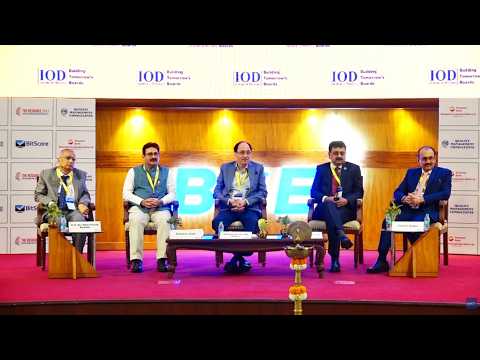
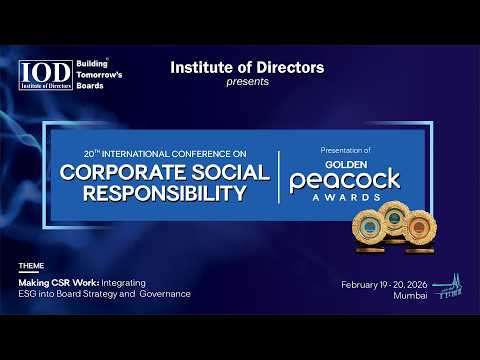
The Institute of Directors (IOD), India hosted the 20th International Conference on Corporate Social Responsibility (CSR) during February 19-20, 2026, at Hotel Taj Lands End, Mumbai, on the theme "Making CSR work: Integrating ESG into Board Strategy and Governance."
The two-day gathering brought together around 500 leaders, board members, regulators, policymakers, and members of IOD, offering a high-level platform to examine the evolving contours of corporate responsibility at a time when business is increasingly expected to play a proactive role in advancing societal progress. Discussions explored the changing landscape of corporate contribution, the growing interface between technology and CSR, and the implications of emerging regulatory frameworks, reflecting the rising expectation that organisations integrate sustainability and responsible governance into their core strategic priorities.
Speakers emphasised that CSR in India has steadily moved beyond a compliance-driven approach to emerge as a powerful instrument for fostering inclusive growth, ethical leadership, and long-term corporate resilience. The conference thus provided a timely platform for deliberations on how Boards can meaningfully integrate ESG considerations into routine governance frameworks and steer CSR initiatives toward deeper, measurable social impact.
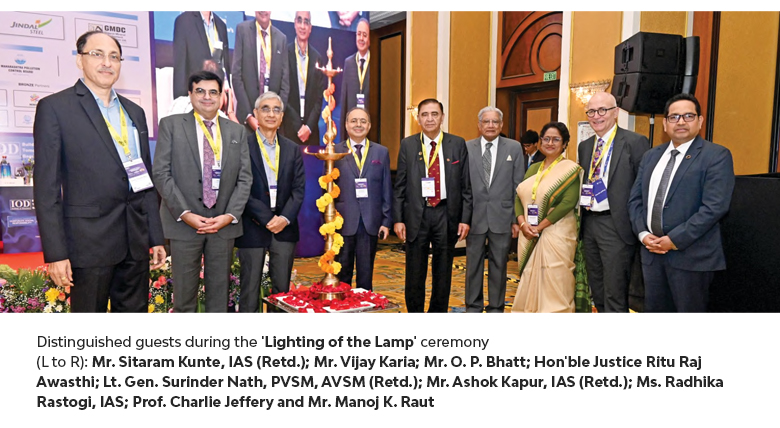
The Convention commenced with the traditional lighting of the ceremonial lamp symbolising knowledge, wisdom, and enlightened leadership; setting the stage for a series of high-level deliberations that followed.
The Event witnessed an illustrious line-up of eminent thinkers, including:
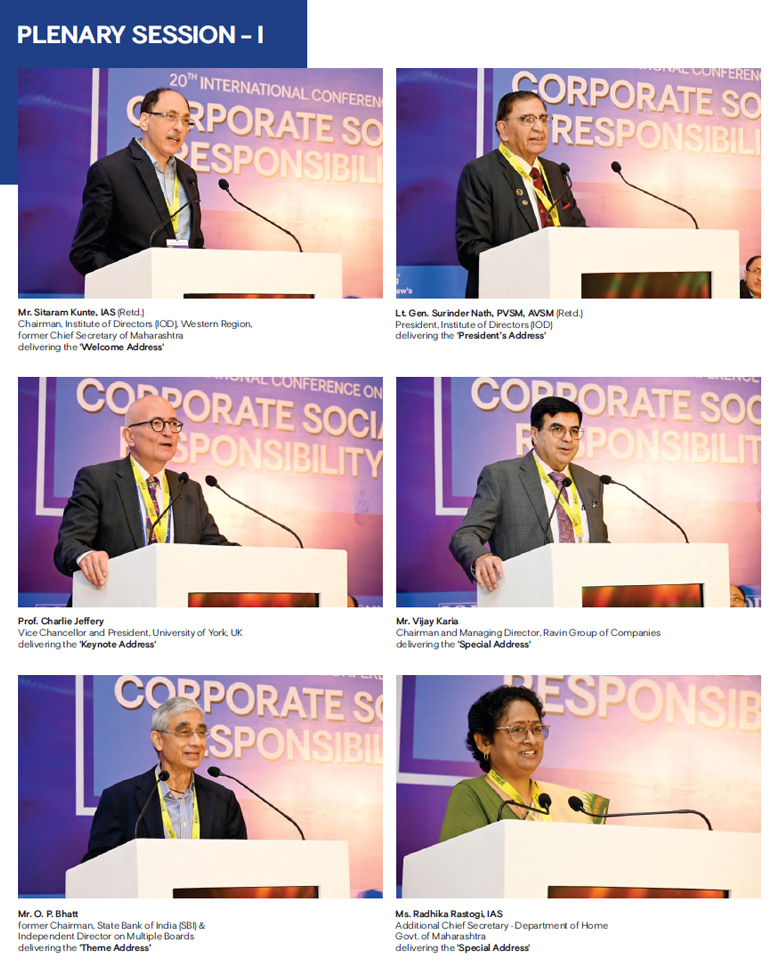
• Prof. Charlie Jeffery
Vice Chancellor & President
University of York, UK
• Mr. Vijay Karia
Chairman & Managing Director
Ravin Group of Companies
• Mr. O. P. Bhatt
former Chairman
State Bank of India (SBI) & Independent Director on Multiple Boards
• Ms. Radhika Rastogi, IAS
Additional Chief Secretary - Department of Home
Govt. of Maharashtra
• Mr. Sanjay Singh, IAS (Retd.)
Director - Strategy & External Relations,
Jindal Steel Limited;
former Secretary, Ministry of Steel, Govt. of India
• Dr. Ashwini Bhide, IAS
Additional Chief Secretary to the Chief Minister of Maharashtra & MD, Mumbai Metro Rail Corp. Ltd. (MMRC)
• Dr. Angelo George
Chief Executive Officer
Bisleri International Pvt. Ltd.
• Ms. Anood Abdulla
Acting Director
Corporate Communication Department
Dubai Customs, UAE
• Mr. Ruchir Agrawal
Director (Finance)
Mazagon Dock Shipbuilders Ltd.
Ministry of Defence, Govt. of India
• Mr. Kaizad Dastur
Chief Financial Officer
Star Agriwarehousing & Collateral Management Ltd.
• Mr. Manish Dabkara
Chairman & MD
EKI Energy Services Ltd.
• Mr. Sanjay Singh
Chief of UNICEF State Office
Maharashtra
• Ms. Kalpana Unadkat
Independent Board Member
• Mr. Peter Waziri
Board Director, CEO
Financial Strategist, USA
• Mr. Vinay Madan
Chief Risk Officer & Head CSR
Central Depository Services (India) Limited (CDSL)
• Ms. Shwetali Thakare
Chairperson
Maharashtra Water Resources Regulation Authority
• Mr. Anil Wankhede
Deputy Chief Executive Officer
Maharashtra Housing and Area Development Authority (MHADA)
• Mr. Dominic Dsouza
Chief Operating Officer – CSR
Essar Foundation
• Mr. Nitin Mahajan
CFO & Head – Advisory & CSR
SICOM Ltd.
• Ms. Chandni Khosla
Independent Woman Director
Retas (SBI ventures NEEV fund Co), and
Sustainability Board Advisor
• Mr. Roopwant Singh, IAS
Managing Director
Gujarat Mineral Development Corporation Ltd. (GMDC)
• Mr. Swadheen S. Kshatriya, IAS (Retd.)
Honorary Chairman, IIPA Maharashtra Branch
former Chief Secretary of Maharashtra
• Mr. Santosh Kumar Singh
Chief Sustainability Officer
Larsen & Toubro Limited
• Dr. Jayashree L. Katare, MBBS, DPH
Additional Collector
Maharashtra Industry, Trade, and Investment
Facilitation (MAITRI), Govt. of Maharashtra
• Mr. Paresh Rughani
International Motivational Speaker, UK
• Mr. Shourya K. Chakravarty
Chief Human Resources Officer & Head - Career
Services & Development Aptech Limited
• Ms. Roop Rashi, IA&AS
Chief Executive Officer
Khadi and Village Industries Commission (KVIC)
• Dr. Prashant Narnaware, IAS
Secretary to the Governor of Maharashtra
• Ms. Nidhi Goyal
Chief Operating Officer
TATA Indian Institute of Skills
DAY 1: FEBRUARY 19, 2026
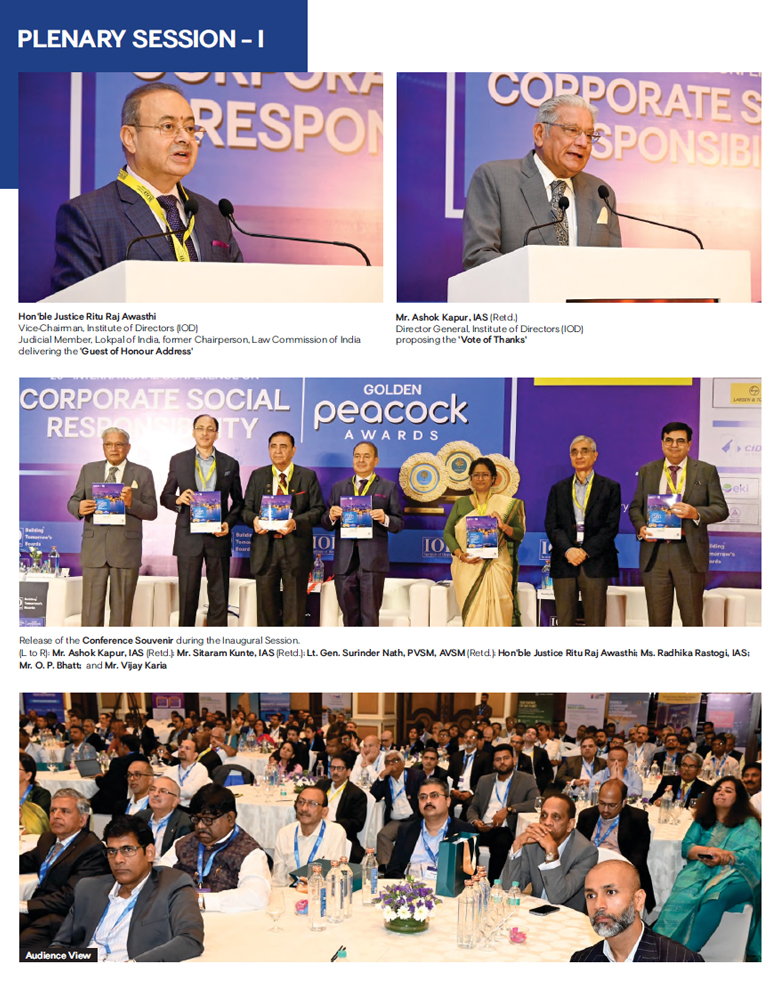
PLENARY SESSION I: INAUGURAL SESSION
The 'Welcome Address' was delivered by:
Mr. Sitaram Kunte, IAS (Retd.)
Chairman
Institute of Directors (IOD), Western Region
former Chief Secretary, Maharashtra
Mr. Kunte emphasised India's pioneering role in establishing a formal framework for Corporate Social Responsibility, and highlighting the decisive shift in corporate thinking driven by the expansion of sustainability disclosure mandates, enhanced board accountability, supply-chain security analysis, and growing attention to climate resilience. He noted the increasing significance of capital flows directed towards governance initiatives, environmental stewardship, and the broader social responsibility demonstrated by organisations. He further underscored the importance of embedding ESG principles into board strategy, corporate structures, and supply–chains; observing a clear transition from “narrativebased commitments” to a more “data-driven approach” to measuring impact.
It was followed by the 'President's Address' delivered by:
Lt. Gen. Surinder Nath, PVSM, AVSM (Retd.)
President
Institute of Directors (IOD), India
Lt. Gen. Nath reflected on the scale of philanthropic engagement and economic participation that has expanded since the implementation of the CSR mandate under the Indian Companies Act, 2013. He observed that CSR initiatives are increasingly reaching remote and tribal regions, reflecting a growing commitment to balanced regional development and a broader recognition of stakeholder impact. Encouraging a forward-looking approach, he called upon companies to move beyond the statutory requirement of allocating 2% of net profits towards CSR activities, describing this as part of a deeper governance shift towards long-term value creation. He urged organisations to move beyond isolated interventions and adopt a more collaborative, missionoriented approach aligned with the national vision of Viksit Bharat. Highlighting the role of technological innovation and evolving regulatory frameworks, he emphasised that CSR must be viewed as a long-term strategic commitment within boardrooms and across organisations, one that ultimately contributes to a net positive social impact.
This was followed by the 'Keynote Address' delivered by:
Prof. Charlie Jeffery
Vice Chancellor & President
University of York, UK
Prof. Jeffery emphasised the need for organisations to adopt a generational perspective, planning for decades ahead rather than just quarters, in order to deliver meaningful and measurable impact. He observed that CSR and ESG, while distinct, are complementary in nature, where CSR is serving as a clear expression of corporate values and priorities in advancing overall social good. He highlighted the role of CSR as a pipeline to ESG, supporting risk management and analytical decisionmaking, while ESG functions as a performance-driven operating model focused on sustainability outcomes. Drawing on insights from the recent MoU between University of York and Institute of Directors (IOD), India, he underlined how ESG can be institutionalised through strong governance frameworks, rigorous due diligence, lifecycle procurement footprint assessments, and the observance of academic standards. He further underscored the need to move from narrative-based disclosures towards more data-driven practices, noting that India's policy choices and leadership in CSR continue to shape the global sustainability discourse. Prof. Jeffery also cautioned against what he termed “ESG theatre,” advocating instead for evidence-based and measurable outcomes.
This was followed by the 'Special Address' delivered by:
Mr. Vijay Karia
Chairman & Managing Director
Ravin Group of Companies
Mr. Karia highlighted a gradual yet unmistakable evolution in boardroom expectations, reflected in the changing tenor of national budget presentations and policy frameworks. He noted that customers are increasingly placing their trust in companies that offer environmentally responsible products, with retail organisations actively communicating their environmental impact as a point of differentiation. Consequently, he observed that CSR is no longer regarded as a discretionary expense but as an accountability-driven framework that reduces waste, optimises expenditure, and enhances energy efficiency, delivering both financial and environmental returns. He further stressed the importance of effective board-level communications to ensure that ESG priorities are clearly articulated, measured, and embedded within regular governance structures.
The 'Theme Address' of the Convention was delivered by:
Mr. O. P. Bhatt
former Chairman, State Bank of India (SBI), and Independent Director on Multiple Boards
Mr. Bhatt observed that 'Development' and 'Pollution' often advance simultaneously, describing them as two sides of the same coin. He emphasised that CSR plays a crucial role in bridging the gap between economic growth and environmental sustainability. In his view, responsible corporate initiatives can help balance development priorities with ecological preservation. He further noted that well-designed CSR practices strengthen public trust and enhance the credibility of organisations in the eyes of stakeholders. At the same time, he drew attention to the environmental debt accumulated over time, stressing that it must be responsibly repaid to society and the environment through conscious, accountable, and sustainable corporate actions.
The 'Special Address' of the event was delivered by:
Ms. Radhika Rastogi, IAS
Additional Chief Secretary
Department of Home, Govt. of Maharashtra
Ms. Rastogi examined the role of civil services, grassroots institutions, and social enterprises in advancing equitable ESG outcomes, emphasising that effective systems require the “software” of values, skills, and governance culture to align with the “hardware” of policy frameworks, financial capital, and institutional infrastructure. She referred to the Institute of Rural Management Anand and its support through CSR funding from Life Insurance Corporation of India, highlighting it as a model for building leadership capacity in rural management and social enterprise. With over 10 crore women mobilised into selfhelp groups under initiatives such as the National Rural Livelihoods Mission, she described the emergence of community led institutions at the village level delivering doorstep services through initiatives such as Krishi Sakhi and Bank Sakhi. She cited several examples, including members of the Irula tribe of Tamil Nadu assisting in managing invasive Burmese python populations in Florida, and environmental stewardship championed by Tulsi Gowda in Karnataka, underscoring the strength of indigenous knowledge and grassroots leadership.
The 'Guest of Honour Address' was delivered by:
Hon'ble Justice Ritu Raj Awasthi
Vice-Chairman, Institute of Directors (IOD)
Judicial Member, Lokpal of India
former Chairperson, Law Commission of India
Justice Awasthi reflected on India's evolving discourse on CSR and ESG, noting a clear maturation in understanding marked by greater clarity, accountability, and strategic intent. He observed that Sustainability is no longer viewed as a discrete function or a peripheral compliance obligation. Instead, it is increasingly being institutionalised at the board level as an integral element of governance, risk management, and long-term value creation. He noted that these developments position India's CSR and ESG framework as an emerging benchmark, demonstrating how corporate governance, national priorities, and legal accountability can converge to create a credible and impact driven sustainability ecosystem.
The 'Vote of Thanks' was proposed by:
Mr. Ashok Kapur, IAS (Retd.)
Director General
Institute of Directors (IOD)
Mr. Kapur delivered a reflective address, expressing sincere appreciation to the eminent guests and speakers who contributed to the deliberations. He recalled a resonant remark shared by Mr. Bhatt that highlighted the moral and strategic imperative of embedding responsibility within institutional decision making, while acknowledging the demanding role of the judiciary in strengthening environmental and social accountability frameworks. He also referred to emerging economic precursors to free trade engagement between India and the United Arab Emirates, citing the participation of Ravin Group as an example of industry support in advancing cross border partnerships. He concluded by reinforcing the conference's central message that sustainable governance requires ethical conviction, measurable action, and multi stakeholder collaboration. He added that CSR is still an evolving concept.
PLENARY SESSION II:
BOARD LEADERSHIP IN A PURPOSE DRIVEN ECONOMYTURNING CSR INTO A STRATEGIC ASSET
The Session was Chaired by:
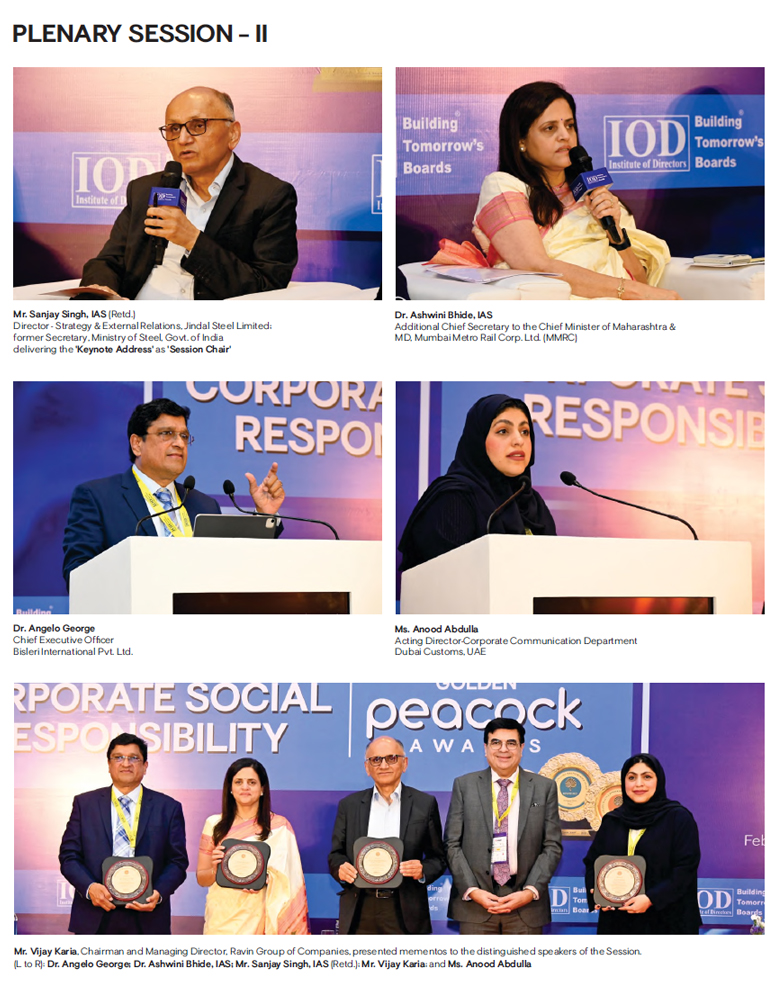
Mr. Sanjay Singh, IAS (Retd.)
Director - Strategy & External Relations,
Jindal Steel Limited
former Secretary, Ministry of Steel
Govt. of India
Mr. Singh traced the evolution of CSR from a philanthropic obligation to a structured governance mandate increasingly aligned with ESG performance metrics. He noted that the statutory linkage of CSR expenditure to Profit After Tax has further institutionalised responsibility within corporate financial planning, reinforcing the principle, rooted in social contract theory, that an organisation functions as a trustee of its workforce, resources, and infrastructure rather than merely as a profit generating entity. He acknowledged the persistent challenge of greenwashing, where the absence of credible and verifiable data undermines stakeholder trust. Reiterating the 'triple bottom line' of People, Planet, and Production, he emphasised the need to balance social equity, environmental stewardship, and economic viability. He also highlighted hard to emissions-intensive sectors such as steel manufacturing, citing Jindal Steel and Power in discussions on decarbonisation pathways and operational transformation.
The Session had the following distinguished Speakers:
1. Dr. Ashwini Bhide, IAS
Additional Chief Secretary to the Chief Minister of Maharashtra & Managing Director
Mumbai Metro Rail Corp. Ltd. (MMRC)
2. Dr. Angelo George
Chief Executive Officer
Bisleri International Pvt. Ltd.
3. Ms. Anood Abdulla
Acting Director-Corporate Communication
Department
Dubai Customs, UAE
Dr. Bhide reaffirmed the philosophy of trusteeship as a foundational principle for both corporate and public governance, emphasising that institutions act as custodians of societal and environmental resources in pursuit of the larger common good. She emphasised that every government activity inherently carries a dimension of social responsibility and, when aligned with corporate initiatives, can generate transformative impact. Citing the example of Mumbai Metro Rail Corporation Limited, she illustrated how large infrastructure projects, when guided by sustainability and stakeholder sensitivity, can move beyond mechanical execution to deliver wider socioeconomic value. She further called for active liaison with the private sector, convergence with existing government schemes, and targeted interventions to reach villages and underserved regions that remain beyond the scope of mainstream development initiatives.
Dr. George drew attention to the escalating water crisis, noting that nearly 54% of India's land area is experiencing varying degrees of water stress, compounded by reduced snowfall patterns in regions such as Arunachal Pradesh. With approximately 85% of water consumption attributed to agriculture, 8% to industry, and 7% to domestic use, he framed water scarcity not merely as an environmental concern but as a strategic risk with significant economic and social implications. He described water as a “future currency,” requiring 'end to end' accountability across value chains and governance systems. Referring to corporate responses such as the “Greener Promise” initiative of Bisleri International, he highlighted the importance of responsible labelling, lifecycle assessments comparing material footprints, and adaptable ESG toolkits. He also cited Lifestyle for Environment (LiFE) as an important shift towards sustainable consumption patterns.
Ms. Abdulla emphasised that sustainability initiatives are systematically aligned with the UNSDGs, ensuring programmes are need based, measurable, and designed through structured community assessments rather than ad-hoc interventions. She cited Dubai Customs as an example, noting its recognition as the first customs entity to publish an annual sustainability report in accordance with Global Reporting Initiative standards for more than 16 consecutive years now. She also highlighted the deployment of AI powered monitoring systems to detect hazardous materials, thereby demonstrating how technology can strengthen safety, compliance, and supply chain integrity. Continuous improvement, integrated governance, and 'end to end' supply chain integration, she noted, remain defining features of Dubai's Sustainability Model.
This was followed by an Interactive Q&A Session with the large audience.
PLENARY SESSION III:
ESG & BOARDROOM LEADERSHIP FOR COMPETITIVE ADVANTAGE AND LONG-TERM VALUE
The Session was Chaired by:
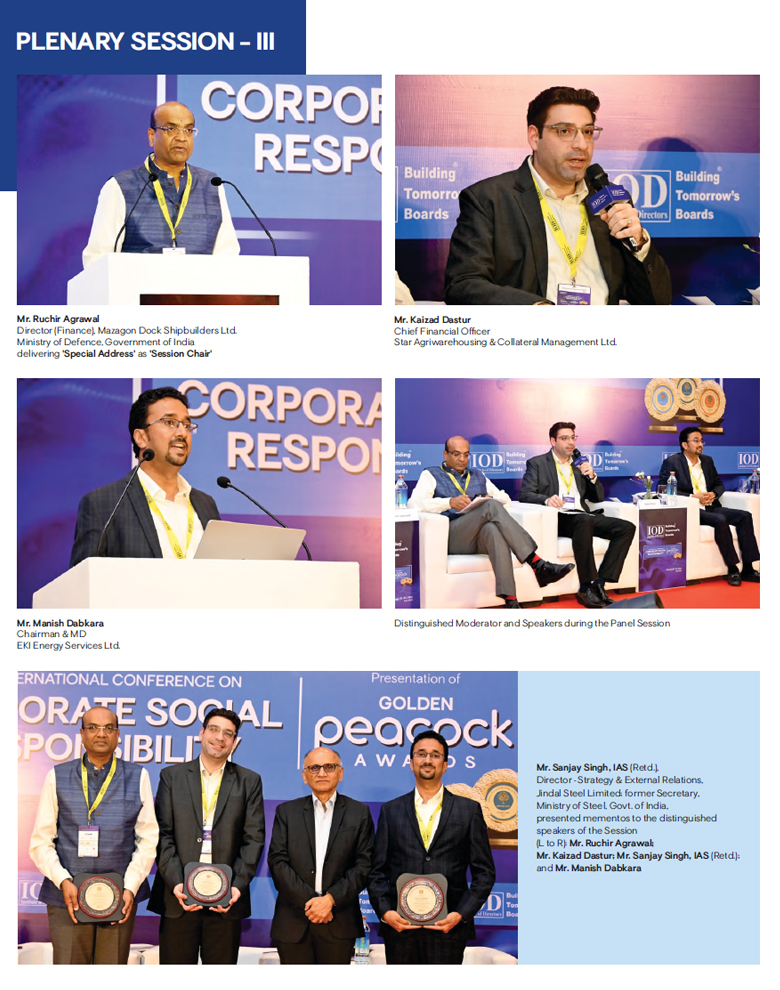
Mr. Ruchir Agarwal
Director (Finance)
Mazagon Dock Shipbuilders Ltd.
Ministry of Defence, Govt. of India
Mr. Agarwal outlined six key dimensions that define the integration of ESG within the overall boardroom strategy:
• a strengthened governance framework,
• robust internal controls,
• ethical accountability,
• performance-linked measurement systems,
• integrated reporting cycles, and
• strategic stakeholder collaboration.
He noted that at a strategic level, ESG integration enhances traceability across supply chains, enforces vendor discipline, and strengthens joint ventures and partnerships through shared standards and frameworks.
He also emphasised the importance of aligning the Sustainable Development Goals with materiality assessments to ensure that organisations prioritise issues with both societal relevance and financial impact.
The Session had the following distinguished Speakers:
1. Mr. Kaizad Dastur
Chief Financial Officer
Star Agriwarehousing & Collateral Management Ltd.
2. Mr. Manish Dabkara
Chairman & Managing Director
EKI Energy Services Ltd.
Mr. Dastur highlighted the responsibility of directors to recognise sustainability risks as core enterprise risks, integrating ESG parameters within Enterprise Risk Management frameworks to address climate exposure, regulatory compliance, reputational vulnerabilities, and supply chain disruptions. He emphasised that responsible procurement practices and supply chain due diligence are essential components of governance, ensuring alignment with ethical principles and sustainability standards across the value chain. He also referred to the allocation of over USD 1 billion towards ESG and impact focused funds, noting that governance credibility now directly influences investment flows, cost of capital, and sustainable branding in an increasingly responsible investment environment.
Mr. Dabkara examined the accelerating evolution of the carbon economy, noting the emergence of specialized carbon credit players commanding nearly 15% of the voluntary carbon market share and offering integrated sustainability and net zero advisory services. The session outlined the evolution of CSR across three eras:
Era :1 (pre-2015) focused on the charity model, where CSR was largely philanthropic.
Era: 2 (2015–2023) emphasized compliance and reporting, driven by regulatory requirements.
Era :3 (Current) represents the 'evidence economy', where impact is measurable, auditable, and outcome-oriented.
The dialogue further highlighted improved cookstove initiatives as a case in point-addressing health hazards associated with traditional cooking methods while replacing assumed emissions reductions with measurable data-based verification.
This was followed by an Interactive Q&A Session with the audience.
PLENARY SESSION IV:
BOARD LEADERSHIP IN IMPACT FINANCING: STEERING CAPITAL, POLICY AND PARTNERSHIPS FOR SCALABLE CSR
The Session was Chaired by:
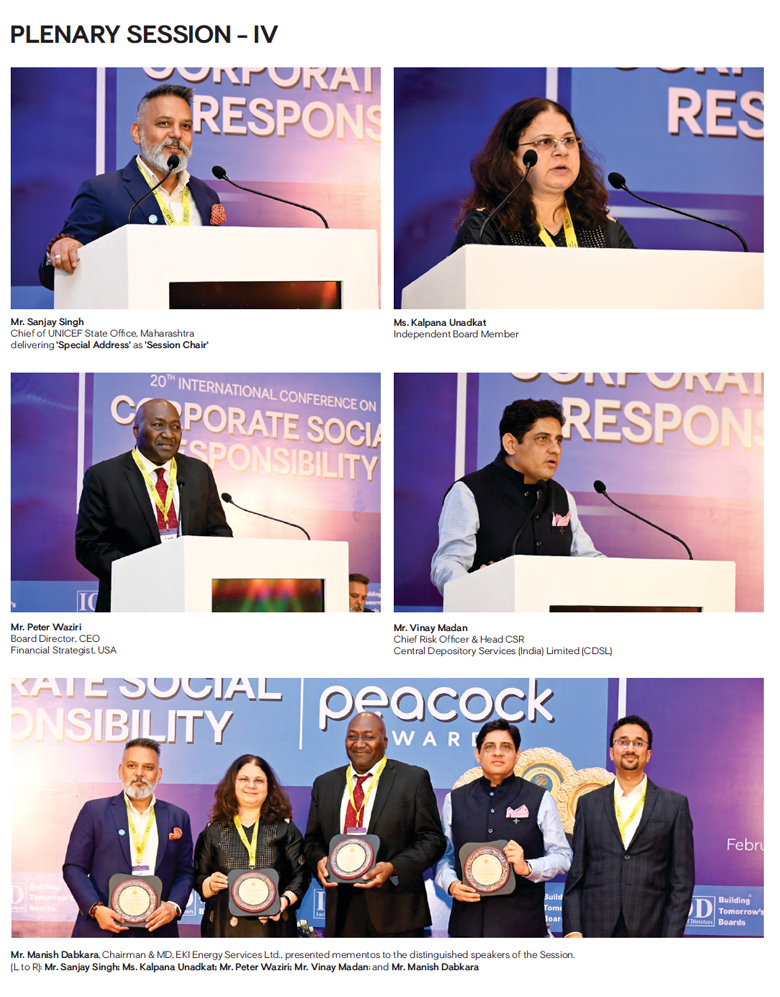
Mr. Sanjay Singh
Chief of UNICEF State Office
Maharashtra
Mr. Singh underscored the urgent need to shift from isolated interventions to comprehensive system strengthening, ensuring that development initiatives continue to create value long after project lifecycles conclude. He noted that meaningful CSR impact requires moving beyond fragmented funding patterns towards outcome-based financing models that prioritize measurable results over dispersed expenditure. Illustrating the power of convergence, he cited initiatives such as the Swachh Bharat Abhiyan, where public finance, corporate partnerships and community participation have collectively driven behavioural and infrastructural transformation at scale. He further highlighted the growing role of AI as a transformative enabler, supporting predictive risk assessment, real time monitoring, beneficiary tracking, supply chain transparency and robust outcome verification.
The Session had the following distinguished Speakers:
1. Ms. Kalpana Unadkat
Independent Board Member
2. Mr. Peter Waziri
Board Director, CEO
Financial Strategist, USA
3. Mr. Vinay Madan
Chief Risk Officer & Head CSR
Central Depository Services (India) Limited (CDSL)
Ms. Unadkat highlighted the operational realities of CSR implementation within urban governance, citing the Ghatkopar railway platform sanitation facility as an example of how well designed and maintained interventions can create visible public value.
She emphasised that the statutory 2 per cent minimum CSR allocation represents stakeholder capital rather than discretionary surplus, and therefore requires a clear articulation of return on investment in both social and reputational terms. She noted that functioning in silos across departments, corporations and civic bodies remains a key barrier to scalable impact. To address this, she advocated coordinated funding allocation, cross sector partnerships and measurable performance indicators to ensure community acceptance, operational continuity and sustained public usage of such facilities.
Mr. Waziri reflected on the role of education within the broader CSR ecosystem, underscoring the importance of universities in nurturing sustainability leadership across emerging economies and key geographies. He highlighted the work of the School of Environmental and Natural Sciences, whose interdisciplinary research advances sustainable water management, biofilm studies, wetland restoration, marine science and ecosystem resilience. His remarks underscored that education must be viewed not as a peripheral element of CSR or ESG strategy, but as a foundational pillar. By cultivating expertise, enabling innovation and supporting evidence-based solutions, academic institutions play a critical role in strengthening long term environmental stewardship and socioeconomic resilience.
Mr. Madan noted that CSR expenditure has risen steadily from C2.55 crore in 2021 to C8.36 crore in the financial year 2025–26, reflecting a significant expansion in the scale of interventions. He added that CDSL has consistently spent above the statutory requirement of 2 per cent over the past three years, signalling a sustained commitment to social responsibility. Emphasising accountability, he highlighted the importance of strong monitoring and evaluation frameworks, supported by periodic field visits, to ensure effective implementation and credible impact assessment of CSR projects. He further noted that CDSL's CSR initiatives have reached all 28 States and 8 Union Territories during the past three years. Key interventions include the provision of ambulances in Ladakh, support for cancer treatment funds, assistance to old age homes, afforestation initiatives, and the establishment of schools for tribal girls. The company, he said, seeks to address multiple sectors while reaching diverse sections of society through its CSR programmes.
This was followed by an Interactive Q&A Session with the audience.
PLENARY SESSION V:
POLICY, COMPLIANCE & NEXT- GEN REGULATION: NAVIGATING AN EVOLVING CSR AND ESG GOVERNANCE LANDSCAPE
The Session was Chaired by:
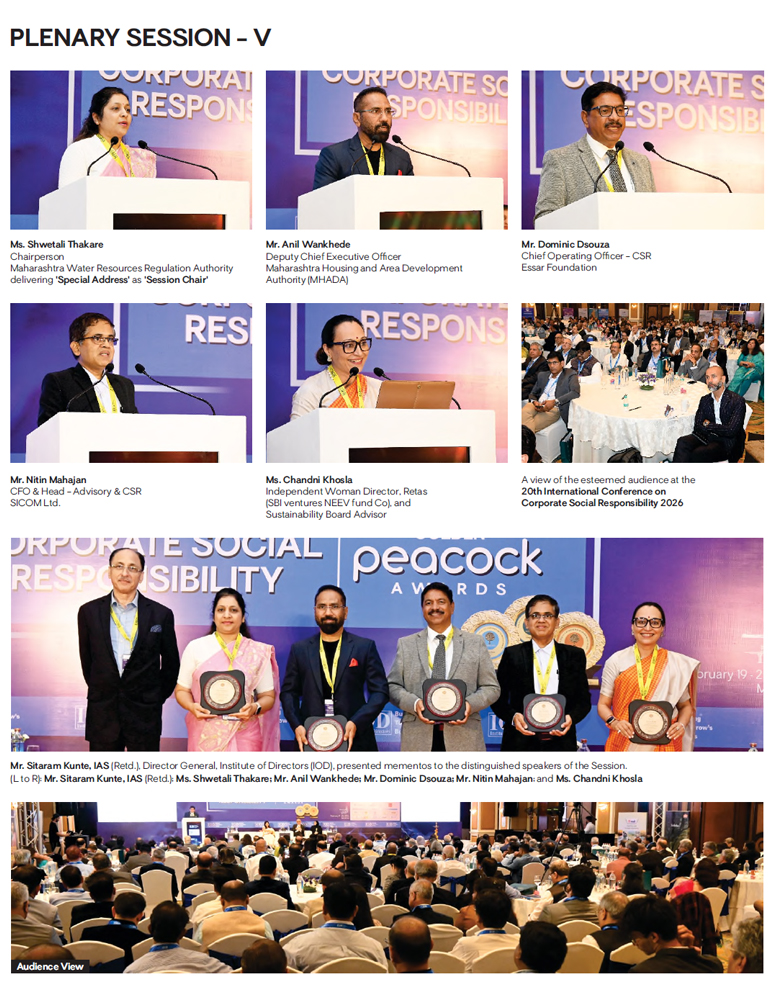
Ms. Shwetali Thakare
Chairperson
Maharashtra Water Resources Regulation Authority
Ms. Thakare opened her remarks by drawing on governance principles rooted in ancient Indian thought, citing Kautilya's philosophy of “trust first, scrutiny later,” and his analogy of taxation as a bee drawing nectar without harming the flower. She emphasised that resources must be deployed responsibly rather than merely to satisfy compliance requirements, with laws acting as guiding systems that shape institutional behaviour. Turning to contemporary challenges, she pointed to persistent concerns such as environmental law violations and inequitable profit sharing. In this context, she observed that modern corporations, given their scale, reach and economic influence, increasingly operate with the power and responsibility of nation states, making their obligations extend well beyond the balance sheet and into the broader social and environmental domain.
The Session had the following distinguished Speakers:
1. Mr. Anil Wankhede
Deputy Chief Executive Officer
Maharashtra Housing and Area Development Authority (MHADA)
2. Mr. Dominic Dsouza
Chief Operating Officer – CSR
Essar Foundation
3. Mr. Nitin Mahajan
CFO & Head – Advisory & CSR
SICOM Ltd.
4. Ms. Chandni Khosla
Independent Woman Director
Retas (SBI ventures NEEV fund Co) and
Sustainability Board Advisor
Mr. Wankhede raised concerns over the acute shortage of affordable rental housing for students, working women and the labour class, particularly across expanding urban and peri-urban corridors. He underscored the need for safe, accessible and well managed accommodation to support a rapidly mobile workforce and student population. As a practical solution, he proposed the development of a rental housing portal that could consolidate verified listings, thereby improving accessibility, transparency and accountability in the sector. He also suggested encouraging structured private sector participation in the rental housing ecosystem, supported by impact-oriented CSR capital during the early stages. Such convergence, he noted, could help bridge immediate housing gaps while contributing to safer urbanisation, greater social inclusion and enhanced economic productivity.
Mr. Dsouza raised a fundamental question during the discussions: whether the current momentum around ESG is driven largely by regulatory compliance or by a genuine commitment to meaningful impact?
He urged institutions to assess whether their governance structures are adequately prepared to respond to evolving sustainability expectations, particularly in the context of sustainability finance and emerging climate risk disclosure norms introduced by the Securities and Exchange Board of India (SEBI). He observed that heightened scrutiny on greenwashing, stronger disclosure requirements and increasing regulatory alignment with global benchmarks in the EU and the US are steadily reshaping corporate behaviour. In this evolving landscape, he noted that sustainability linked finance and long- term infrastructure investments will play a critical role in future proofing enterprises, strengthening resilience and enabling firms to remain competitive in global markets.
Mr. Mahajan reflected on CSR's evolution from a largely voluntary commitment to a structured regulatory framework, observing that it has significantly reshaped corporate resource allocation and utilisation strategies across sectors. He noted that financial services institutions rank among the largest contributors to CSR spending, with organisations such as SICOM Limited illustrating how development-oriented finance entities can align statutory obligations with broader socio-economic goals. He cautioned that disruptions in corporate CSR policies, particularly in budgeting cycles, strategic planning, and ESG integration pose material risks requiring strong governance oversight and long-term strategic alignment. Looking ahead, he observed that emerging regulatory trends are likely to sharpen the focus on impact evaluation, enhanced disclosures, digital transparency, performance-linked compensation, and standardised operating procedures (SOPs), fostering a more datadriven and accountable CSR ecosystem.
Ms. Khosla noted that investors are increasingly directing capital towards jurisdictions and enterprises that demonstrate regulatory clarity, transparency, and credible ESG oversight. In this context, she identified blended finance, growing at an estimated annual rate of 18.5 per cent, as a critical mechanism for de-risking climate investments and mobilising private capital. While current financial flows stand at approximately USD 2.6 billion, global climate adaptation needs are projected to approach USD 1 trillion, with around USD 4.4 billion required by 2030 in key priority sectors. She proposed initiatives such as a national C-ESG guarantee facility and a C-ESG Deal Exchange as innovative platforms to improve project viability, standardise disclosures, and enable transparent capital matching. She also recommended introducing mandatory, outcome-based incentives to ensure that financing frameworks reward measurable environmental and social performance rather than stated intent.
This was followed by an Interactive Q&A Session with the audience.
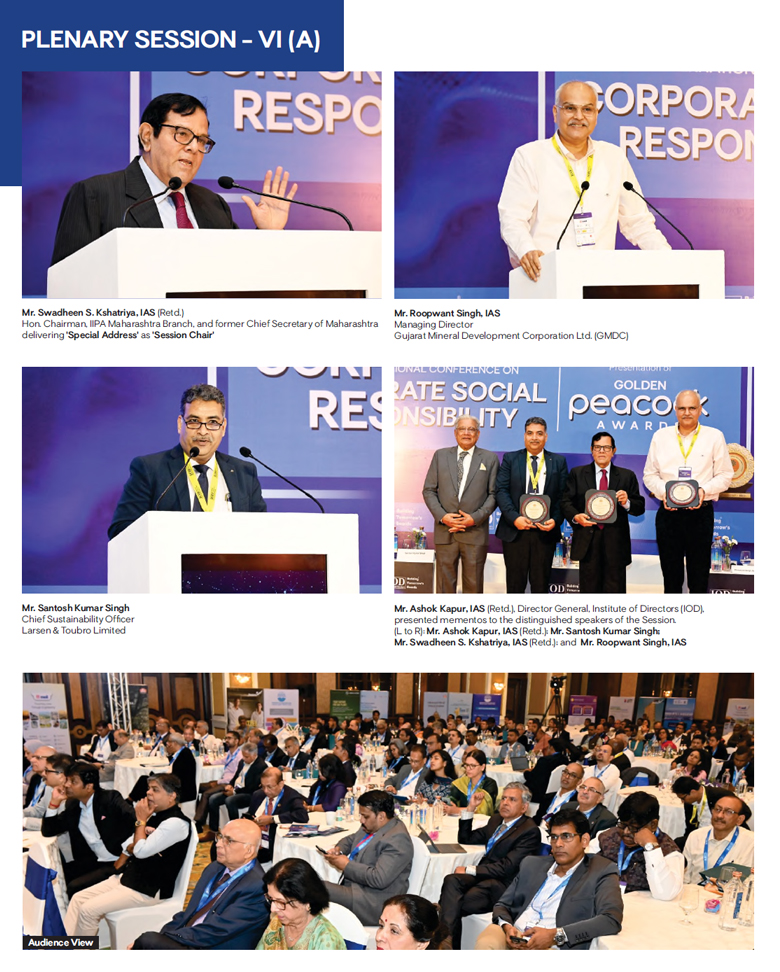
PLENARY SESSION VI (A):
BOARD STRATEGY FOR RESOURCE OPTIMISATION AND OPERATIONAL EFFICIENCY: RESOURCE EFFICIENCY AND CLIMATE LEADERSHIP
The Session was Chaired by:
Mr. Swadheen S. Kshatriya, IAS (Retd.)
Honorary Chairman
IIPA Maharashtra Branch
former Chief Secretary of Maharashtra
Mr. Kshatriya emphasized that while profit remains essential for sustainability and growth, it cannot be the sole objective; corporations must function within a framework that balances commercial performance with public welfare. He outlined CSR activities across a broad spectrum, including structured donations and contributions to national causes such as the Prime Minister's National Relief Fund during times of crisis; provision of pro bono professional services; financial decisions designed to support broader social groups; and investments aligned with the organization's mission and core values. He recognized enabling access to basic connection facilities such as utilities and essential public services as a critical domain for corporate collaboration with public institutions.
The Session had the following distinguished Speakers:
1. Mr. Roopwant Singh, IAS
Managing Director
Gujarat Mineral Development Corporation Ltd. (GMDC)
2. Mr. Santosh Kumar Singh
Chief Sustainability Officer
Larsen & Toubro Limited
Mr. Singh highlighted Project Shikhar, a strategic roadmap initiative aimed at institutionalizing sustainability within the corporation's core business transformation. Through benchmarking exercises such as Total Shareholder Return (TSR) analysis, he noted that the initiative seeks to establish a correlation between governance quality, sustainability metrics, and financial performance, demonstrating that ESG maturity directly influences enterprise valuation and investor confidence. He highlighted how responsible mining practices, land reclamation, renewable energy integration, and carbon credits can be structured as value-generating instruments rather than viewed merely as compliance obligations. He concluded that for listed entities, ESG is no longer peripheral; it is intrinsically linked to financial resilience, access to capital markets, and the sustained creation of shareholder value.
Mr. Singh asserted that sustainability initiatives are no longer peripheral philanthropic efforts; rather, they function as strategic levers that reduce waste, shield businesses from supply chain volatility, and enable organizations to achieve defined sustainability objectives aligned with stakeholder expectations. He further highlighted initiatives such as construction and demolition (C&D) waste crushing and reuse as aggregates, along with the adoption of eco-friendly materials including fly ash bricks, blast furnace slag, and recycled steel, as practical demonstrations of a circular economy principle. Innovation was also underscored through landmark initiatives such as the 3D-printed post office in Bengaluru, which he cited as an example of how sustainable materials and advanced construction technologies can reduce resource intensity while establishing replicable models for infrastructure development. Additionally, he recognized that investments in green spaces and environmental restoration strengthen urban resilience and enhance community well-being.
This was followed by an Interactive Q&A Session with the audience.
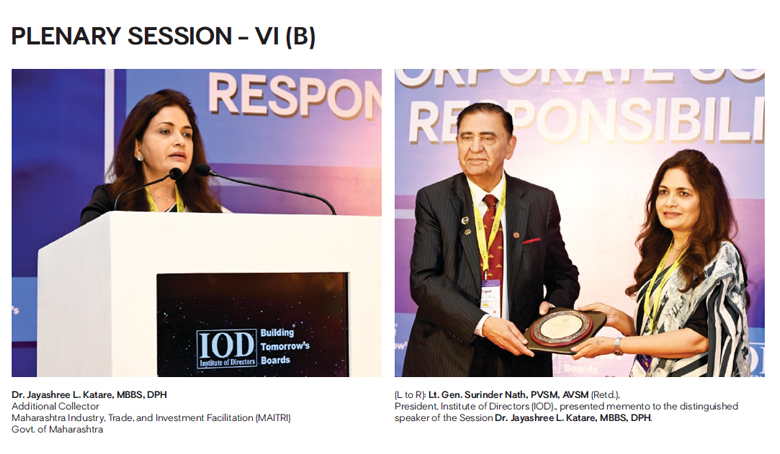
PLENARY SESSION VI (B):
EASE OF DOING BUSINESS: MAKING MAHARASHTRA AN INDUSTRIAL INVESTMENT MAGNET
The 'Keynote Speaker' of the Session was:
Dr. Jayashree L. Katare, MBBS, DPH
Additional Collector
Maharashtra Industry, Trade, and Investment Facilitation
(MAITRI), Govt. of Maharashtra
Dr. Katare underscored Maharashtra's strategic push to strengthen 'ease of doing business' as part of its ambition to emerge as a premier industrial investment destination. Central to this effort, she noted, is the role of the Maharashtra Industrial Development Corporation (MIDC), which has streamlined land allocation and utility provisioning through a consolidated single window mechanism, significantly improving investor convenience and speed to market. She highlighted several key reforms, including transparent e-bidding systems for land allotment, round the clock permissions under the Shops and Establishments framework to enable operational flexibility, and the extension of Consent to Operate validity to five years, enhancing regulatory predictability. The MAITRI platform, she added, functions as an integrated digital interface that brings multiple approvals onto a single platform, reducing procedural delays. Taken together, these measures reflect a governance driven approach in which regulatory efficiency, sustainability compliance, and digital transparency converge to foster a competitive and globally aligned investment ecosystem.
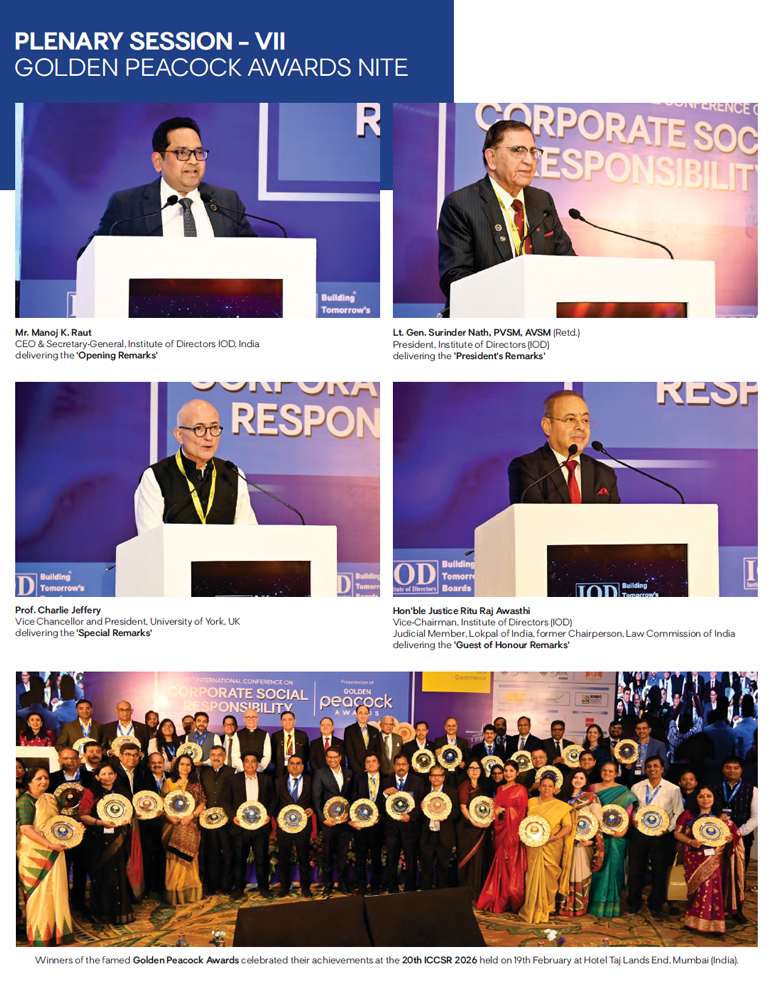
PLENARY SESSION VII:
GOLDEN PEACOCK AWARDS NITE
The 'Opening Remarks' of the Session was delivered by:
Mr. Manoj K. Raut
CEO & Secretary-General
Institute of Directors (IOD)
Mr. Raut noted that the scale and competitiveness of this year's awards underscored their significance- out of 447 applications received, only 165 were shortlisted, and 40 companies ultimately emerged as winners. He emphasized that quality must prevail over quantitywhether in sustainability disclosures, stakeholder engagement, or impact delivery. The celebration held today forms part of this long-standing legacy, serving as a benchmark for organizational commitment to sustainability and ethical business practices.
He articulated that success in sustainability is not an event but a way of life anchored in accountability, innovation, and an unwavering commitment to long-term value creation.
This was followed by 'President's Remarks', delivered by:
Lt. Gen. Surinder Nath, PVSM, AVSM (Retd.)
President
Institute of Directors (IOD)
Lt. Gen. Nath highlighted the impactful role of CSR initiatives in regions such as Ladakh, noting that CSR is increasingly reaching areas where support across 16 distinct domains, including global participation from companies engaged in CSR. He observed that many companies are now spending beyond the mandated 2% CSR requirement, with some contributing over C100 crore, and are actively expanding their efforts on a pan-India basis by identifying and addressing underserved areas. He aligned these efforts with the national mission of becoming the world's third-largest economy by 2030, noting that the Institute of Directors (IOD) has played a significant role in this onward journey. He concluded by highlighting that even companies not selected as winners benefit from detailed feedbacks, reinforcing a culture of continual improvement.
The 'Special Remarks' were delivered by:
Prof. Charlie Jeffery
Vice Chancellor and President
University of York, UK
Prof. Jeffery observed that in an era characterized by rapid advancements in biotechnology, quantum science, renewable energy, and advanced materials, the opportunities before industry are vast yet accompanied by significant risks. He underlined the role of CSR in providing clarity and direction during this transition and emphasized that HR excellence is critical to managing change and accessing new market opportunities. In his closing remarks, he reaffirmed the foundational values that define an enduring enterprise: integrity, accountability, innovation, and an unwavering commitment to societal responsibility. He extended heartfelt congratulations to all the GP Award winners, acknowledging that their achievements exemplify institutionalized accountability across governance, CSR, HR excellence, and innovation.
The 'Guest of Honour Remarks' were delivered by:
Hon'ble Justice Ritu Raj Awasthi
Vice-Chairman, Institute of Directors (IOD)
Judicial Member, Lokpal of India
former Chairperson, Law Commission of India
Justice Awasthi emphasized that responsible environmental action demands clear standards, structured governance, and ethical practices across all CSR domains. He noted that by setting high benchmarks and demonstrating tangible impact, the awardees are establishing standards that others can aspire to emulate. He congratulated all the GP Award recipients and highlighted the importance of domain leadership, senior management involvement, and regular scrutiny to ensure consistency and credibility in CSR and ESG initiatives. He noted that such practices also serve as strong signals for future recognition and long-term sustainability. He appreciated the Institute of Directors, India for its excellent work in recognizing both domestic and global companies, thereby setting benchmarks that influence others to evolve and improve. He concluded by observing that these awards help institutions shape their own unique paths while contributing meaningfully to responsible and sustainable development.
This was followed by the Presentation of Golden Peacock Awards for 'Corporate Social Responsibility' (Global and National) 'HR Excellence' and 'Innovation Management' for the year - 2025
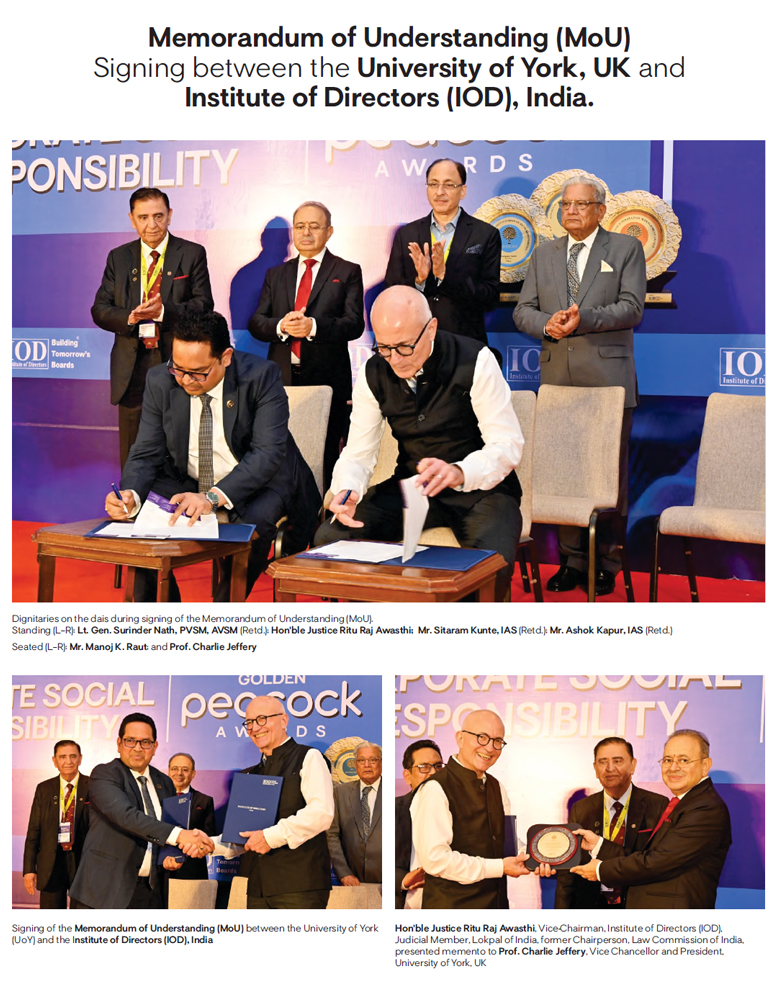
This was then followed by a Memorandum of Understanding (MoU) Signing between the University of York, UK and Institute of Directors (IOD), India.
DAY 2: FEBRUARY 20, 2026
PLENARY SESSION VIII:
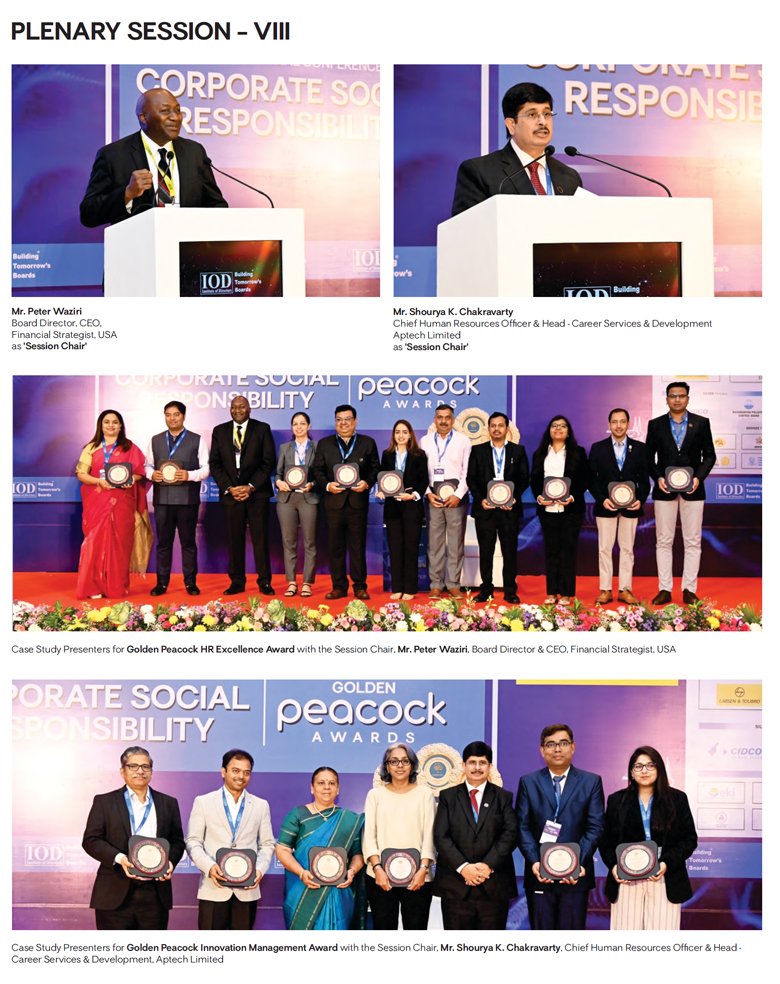
BENCHMARKING HR PRACTICES FOR ORGANIZATIONAL EXCELLENCE CASE STUDIES OF HR EXCELLENCE & INNOVATION MANAGEMENT
The Session on 'HR Excellence' was Chaired by:
Mr. Peter Waziri
Board Director, CEO
Financial Strategist, USA
Mr. Waziri emphasized the importance of recognizing organizations that bring out the best in their workforce through effective human resource practices, thoughtful people management, and strong leadership strategies. Such recognition, he noted, celebrates institutions that foster inclusive, high performing workplaces while demonstrating a sustained commitment to investing in their people. He further observed that the selection process places significant emphasis on understanding the distinctive practices adopted by awardees. By closely examining what sets these organizations apart, the evaluation seeks to identify the leadership approaches, cultural values, and management frameworks that truly define them as exemplary institutions.
This was followed by Presentations of the Case Studies on 'HR Excellence' by:
1. Coromandel International Limited
2. Maruti Suzuki India Limited
3. Engineers India Limited
4. Aptech Limited
5. Kirloskar Pneumatic Company Limited
6. Siemens Limited
7. Odisha Mining Corporation Limited, Bhubaneshwar
8. BSES Yamuna Power Limited
9. Goa Shipyard Limited
The Session on 'Innovation Management' was Chaired by:
Mr. Shourya K. Chakravarty
Chief Human Resources Officer & Head - Career Services & Development
Aptech Limited
Mr. Chakravarty emphasized that in today's rapidly evolving business environment, innovation must be practical, workable, scalable, and sustainable to create real value. Only when innovation translates into viable applications and long-term impact, he noted, does it truly make business sense. Illustrating this shift, he referred to the example of sensor technologies. Two decades ago, the concept of sensors was largely unfamiliar and often perceived as a luxury. Today, however, sensor-based systems have seamlessly integrated into everyday life, transforming industries and consumer experiences alike. He observed that organizations capable of nurturing innovation and translating it effectively into products, processes, and services will be the ones that define the competitive landscape of the future.
This was followed by Presentations of the Case Studies on 'Innovation Management' by:
1. Tata Motors Limited-Engineering Research Centre
2. JSW Cement Limited
3. OpenText India Private Limited
4. Power Grid Corporation of India Limited
PLENARY SESSION IX:
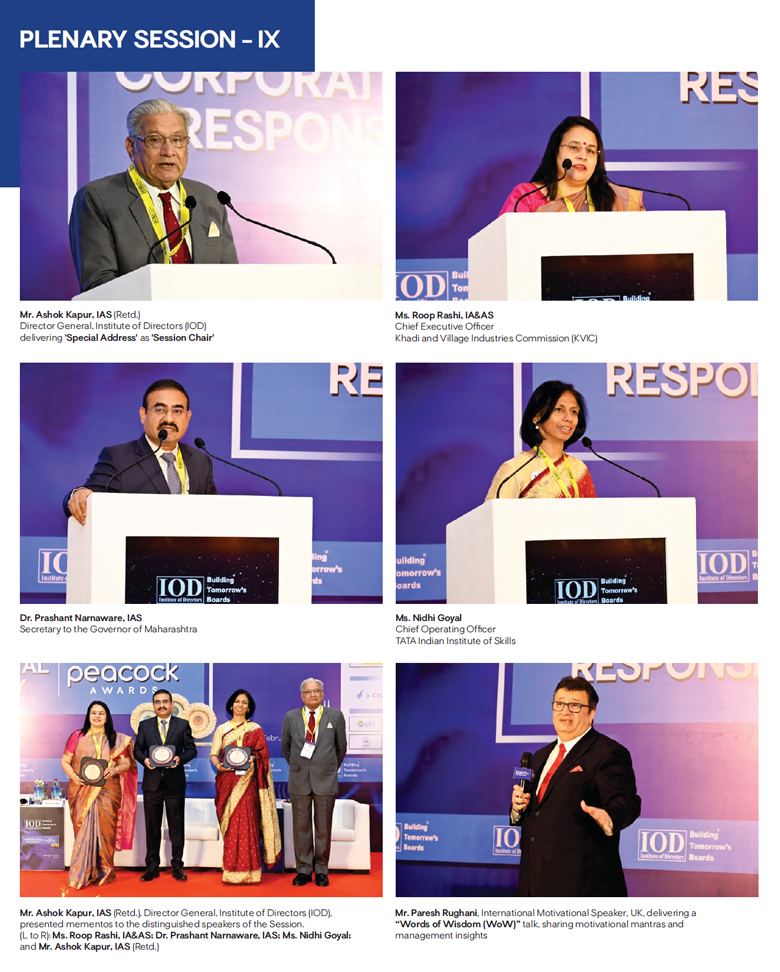
PEOPLE, INNOVATION & INCLUSION: BUILDING FUTUREREADY CSR STRATEGIES
The Session was Chaired by:
Mr. Ashok Kapur
Director General
Institute of Directors (IOD)
Mr. Kapur began by noting that Corporate Social Responsibility (CSR) is mandated under Section 135 of the Companies Act, 2013, requiring eligible companies to allocate at least 2 percent of their profits toward socially responsible initiatives. He emphasized that investments in rural education and vocational training represent critical pathways for strengthening human capital and ensuring development outcomes that are inclusive, scalable, and future ready. He further highlighted the growing convergence of CSR, global trade policy, and sustainability standards. As Free Trade Agreements reshape international commerce, he observed, companies must ensure that competitive, high-quality goods are aligned with emerging carbon accountability frameworks such as the Carbon Border Adjustment Mechanism. Invoking Mahatma Gandhi's enduring observation that “the soul of India lives in its villages,” Mr. Kapur stressed that the foundations of national progress lie in the advancement of rural India, making targeted CSR interventions in villages essential for achieving balanced and inclusive growth. He underscored that addressing rural poverty in India will depend not on mass production, but on fostering production by the masses.
The Session had the following distinguished Speakers:
1. Ms. Roop Rashi, IA&AS
Chief Executive Officer
Khadi and Village Industries Commission (KVIC)
2. Dr. Prashant Narnaware, IAS
Secretary to the Governor of Maharashtra
3. Ms. Nidhi Goyal
Chief Operating Officer
TATA Indian Institute of Skills
Ms. Rashi observed that the MSME sector continues to serve as a cornerstone of India's economic architecture, contributing approximately 30–31 percent to GDP, over 45 percent to exports, and nearly 35 percent to manufacturing output. As of 2025–26, the sector encompasses more than 6.3 crore enterprises and generates employment for over 28 million people, making it the country's second largest employer after agriculture.
This sustained contribution underscores the sector's pivotal role in driving inclusive growth, industrial diversification, and foreign exchange generation. She traced the philosophical roots of this movement to Mahatma Gandhi's vision of economic self-reliance by repeating that “production by the masses, not mass production,” noting its enduring relevance in contemporary sustainability discourse. Within this ecosystem, programmes & products such as Khadi play a vital role in leveraging local resources, strengthening indigenous products, and promoting decentralized production. The path forward, she emphasized, must prioritize sustainability through efficient resource use, quality assurance, gender inclusion, and climate conscious production practices.
Dr. Narnaware reflected on the enduring influence of traders and business communities in shaping world history, noting that historic trade routes were forged through collaboration among diverse societies. Drawing on this legacy, he emphasized the importance of aligning education with industry as a strategic priority under the National Education Policy. Strengthening employable skills, fostering continuous learning pathways, and embedding industry relevant competencies within academic curricula, he noted, are essential to harnessing India's demographic dividend. He further identified policy convergence and coordinated government action as critical enablers of transformative outcomes. By integrating skilled manpower into emerging growth sectors while promoting mobility, resilience, and inclusion, India can effectively convert its demographic advantage into long term economic strength. Dr. Narnaware concluded that collaborative governance, sustained investment in human capital, and stronger academics industry linkages will be central to shaping the next phase of sustainable and inclusive development.
Ms. Goyal framed her remarks around three interlinked pillars: people, inclusion, and innovation, against the backdrop of India's position as home to the world's largest working age population. While this demographic dividend offers immense potential, she cautioned that widening inequality and the concentration of wealth among the top one percent underscore the urgency of a more inclusive development agenda. She noted that individual philanthropy in India, estimated at approximately C54,000 crore (PPP equivalent), reflects a strong culture of philanthropy that can meaningfully complement institutional CSR efforts. Structured volunteer engagement, she observed, has also yielded encouraging outcomes, with nearly 30 percent of volunteers returning to mentor and inspire others. Ms. Goyal further highlighted Tata's continued focus on creating employment pathways for individuals who are 10th or 12th pass or school dropouts, particularly in emerging sectors such as EV manufacturing and innovation. She concluded that patient, long term investment in skills, coupled with stronger communication and adaptability, is essential to address the risks of 'jobless growth'.
This was followed by a 'Special TALK' on 'Words of Wisdom' (WOW): Lenaring Motivational Mantras, Management Nuggets, delivered by:
Mr. Paresh Rughani
International Motivational Speaker, UK
Mr. Rughani introduced a leadership framework he termed PLC, centred on two core competencies: public speaking and listening. Under the “P” pillar, he emphasised the importance of effective communication, presenting the “Peacock” model as a practical tool to help individuals overcome stage anxiety and speak with clarity, confidence, and presence. Addressing the “L” component, he underscored the critical role of listening in leadership, illustrating through the “Ladder” model how structured and attentive listening fosters deeper understanding, builds trust, and strengthens decision-making. Together, he noted, these capabilities form the bedrock of impactful leadership and meaningful engagement. Expanding further, Mr. Rughani reflected on the “A to Z” of global success, outlining principles rooted in authenticity, integrity, and purposeful action. He stressed the importance of choosing a constructive attitude, leading with causes rather than seeking applause, and anchoring leadership in devotion, discipline, and execution. He highlighted the value of gratitude, forgiveness, and resilience, while reaffirming that true leadership lies in the ability to influence and uplift others. Concluding on a philosophical note, he observed that thoughts shape words, words shape actions, actions build habits, and ultimately, character defines destiny.
PLENARY SESSION X:
BENCHMARKING CSR CASE STUDIES: LESSON LEARNT
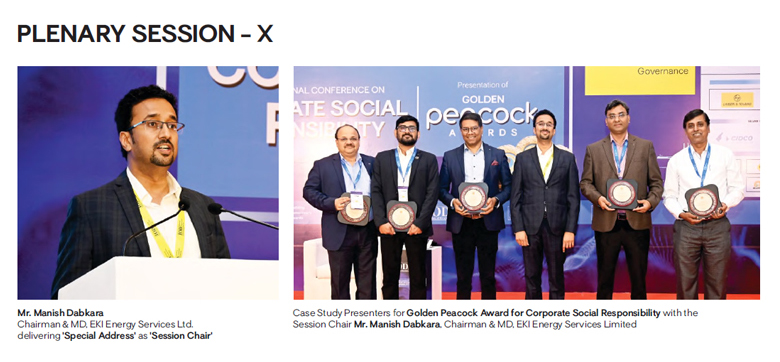
The 'Special Address' of the Session on Case Study Presentation of CSR was delivered by:
Mr. Manish Dabkara
Chairman & Managing Director
EKI Energy Services Limited
Mr. Dabkara presented EKI's Clean Cooking Stove initiative as a benchmark case study demonstrating the intersection of CSR, carbon markets, and climate commitments under the Paris Agreement. Implemented in partnership with rural communities across India, the initiative deploys improved cookstoves through CSR funding to enhance energy access while reducing household emissions. The project, he noted, aligns closely with the United Nations Sustainable Development Goals, particularly those relating to clean energy and climate action. Each cookstove contributes to measurable carbon dioxide reductions, supported by rigorous monitoring, reporting, and verification processes over a period of five to seven years. Revenues generated through carbon credits are subsequently reinvested into community development funds, strengthening local impact. Mr. Dabkara also addressed a common misconception within the CSR ecosystem that such initiatives should not generate revenue. Citing guidance from the Ministry of Corporate Affairs, he clarified that CSR projects can and should aim for financial sustainability so that operational and maintenance costs can be effectively supported over the long term.
This was followed by Presentations of the Case Studies on 'CSR' by:
1. PT Pertamina Internasional Eksplorasi dan Produksi, Indonesia
2. Tata Communications Limited
3. Bisleri International Private Limited
4. Hindustan Colas Private Limited
5. Grant Thornton Bharat LLP
6. Bajaj Consumer Care Limited
7. Jubilant FoodWorks Limited
8. D.B. Corp Limited
9. Northern Coalfields Limited
10. Gujarat Mineral Development Corporation Limited
11. Adani Electricity Mumbai Limited
12. TRL Krosaki Refractories Limited
13. ArcelorMittal Nippon Steel India Private Limited
14. Balrampur Chini Mills Limited
15. Ericsson India Private Limited
PLENARY SESSION XI:
CLOSING REMARKS
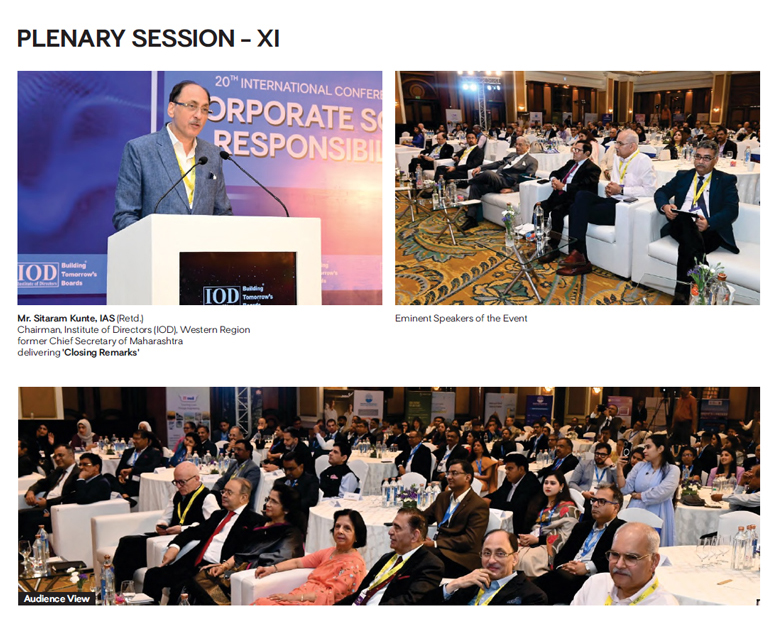
The 'Closing Remarks' were delivered by:
Mr. Sitaram Kunte, IAS (Retd.)
Chairman
Institute of Directors (IOD), Western Region
former Chief Secretary of Maharashtra
Mr. Kunte observed that the deliberations reaffirmed a critical reality: environmental, social, and ethical responsibilities are no longer optional but integral to building institutional trust, ensuring legitimacy and strengthening risk management frameworks. A key takeaway from this year's discussions, he noted, is the imperative to embed ethical leadership and credible CSR practices at the core of governance systems. Looking ahead, he emphasized that the insights emerging from the session call for collective action and sustained commitment across sectors. The conclusion, he suggested, should not mark an end, but rather a renewed resolve to integrate ESG considerations into core strategies, advance responsible growth, and contribute to a more sustainable and inclusive future. Ultimately, Mr. Kunte affirmed that sustainable leadership is defined not only by strategic vision, but by the capacity to inspire, guide, and empower the next generation.
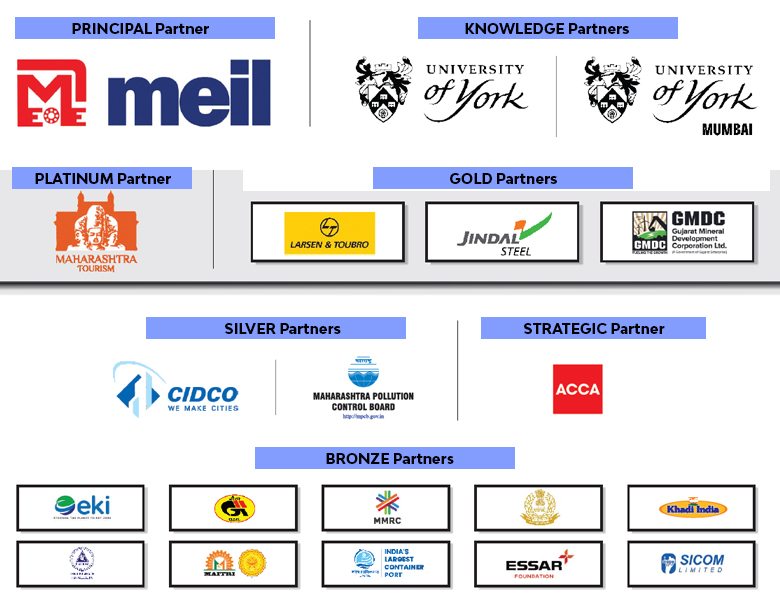
IOD, India is especially grateful to all its Event Partners:
Our Principal Partners:
Megha Engineering & Infrastructure Limited
Our Knowledge Partners:
1. University of York, UK
2. University of York, Mumbai, India
Our Platinum Partner:
Maharashtra Tourism
Our Gold Partners:
1. Gujarat Mineral Development Corporation Limited (GMDC)
2. Larsen & Turbo (L&T)
3. Jindal Steel Ltd.
Our Silver Partners:
1. City and Industrial Development Corporation of Maharashtra Limited (CIDCO)
2. Maharashtra Pollution Control Board (MPCB)
Our Bronze Partners:
1. GAIL (India) Limited
2. Khadi & Village Industries Commission
3. Maharashtra Industry Trade and Investment Facilitation (MAITRI)
4. EKI Energy Services Ltd. (EnKing nternational)
5. SICOM Ltd.
6. NLC India Ltd.
7. The Jawaharlal Nehru Port Authority (JNPA)
8. Maharashtra State Police Housing Corporation Ltd.
9. Mumbai Metro Rail Corporation Limited (MMRC)
10. Essar Foundation
Our Strategic Partner
Association of Chartered Certified Accountants (ACCA)
This Report is compiled by:
Mr. Ashok Kapur, IAS (Retd.)
Director General
Institute of Directors (IOD)
&
Ms. Violina Das
Assistant Editor- Director Today
Institute of Directors (IOD)
 Back to Home
Author
Institute of Directors India
Bringing a Silent Revolution through the Boardroom
Institute of Directors (IOD) is an apex national association of Corporate Directors under the India's 'Societies Registration Act XXI of 1860'. Currently it is associated with over 31,000 senior executives from Govt, PSU and Private organizations of India and abroad.
Owned by: Institute of Directors, India
Disclaimer: The opinions expressed in the articles/ stories are the personal opinions of the author. IOD/ Editor is not responsible for the accuracy, completeness, suitability, or validity of any information in those articles. The information, facts or opinions expressed in the articles/ speeches do not reflect the views of IOD/ Editor and IOD/ Editor does not assume any responsibility or liability for the same.