 Quick Links
 Connect us

 Directors Databank (Empannel Yourself)
 Become a
  Become a
  Blog
Blog
 Become an Awards Assessor
 Publications
 Contact Us






Aligning Regulations, Market Forces and Board Practices - How Morocco's Governance Ecosystem is Evolving Through Law, Markets and Leadership

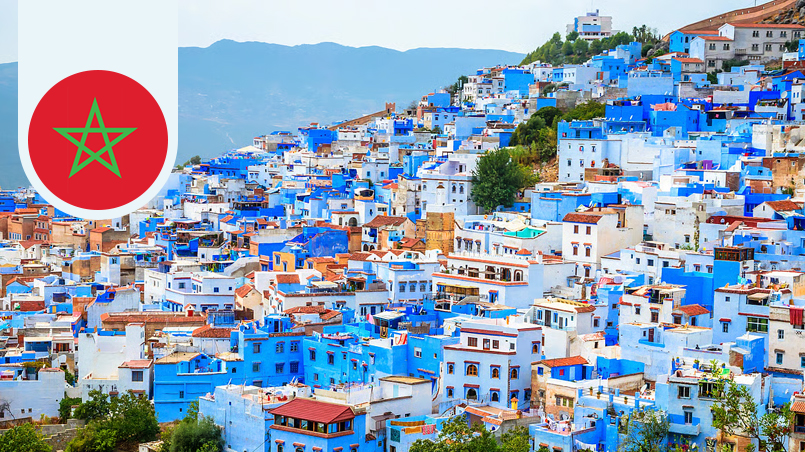
Insights from the
Institut Marocain des Administrateurs (IMA)
The corporate governance landscape in Morocco has evolved significantly from a system primarily driven by legal prescription to one increasingly influenced by market initiatives and investor expectations. While the launch of the Institut Marocain des Administrateurs (IMA) training program in 2013 framed the strengthening of corporate governance as an aspirational goal, market momentum has since accelerated change.
Morocco has indeed issued its first Code of Good Governance practices in 2008, supplemented by guidelines for Small and Medium-sized Enterprises (SMEs) and banks and followed by a separate Governance Code for State-Owned Enterprise (SOEs). However, the capital market regulator did not require extra-financial information for listed companies and the Joint-Stock Company Law (Law 17-95) that applies to publicly traded companies did not mandate governance practices such as independent directors or specific board committees. Despite the lack of mandatory governance rules, more than half of listed companies have at least one independent board member in 2015 and two-third had already set up an audit committee (IMA, 2016). This occurred even though the law mandating audit committee was enacted in 2015 and the integration of independent board members was not mandatory until 2021 (Law 20-19).
Morocco is a civil law jurisdiction, and it is fair to say that governance practices' changes are mostly spearheaded by legal and regulatory rules. The banking regulation, which previously imposed stricter rules, can certainly explain the evolving practices of listed companies (especially banks), ahead of the general regulatory framework.
IMA, established as a market initiative in June 2009 and championed by institutional investors, large SOEs, banks, professional associations, the Stock Exchange, and the business confederation, has certainly played a role in fostering dialogue among market players regarding corporate governance practices. The certificate training programs launched as the flagship program in 2013 have trained over 900 professionals (CEOS, managing directors, executives of which 25% are nonexecutive board members) through general and specific programs tailored to banks and SOEs. In 2025, 30% of certified members are women and the cohorts are composed of representatives of institutional investors (26%); state-owned companies (17%) and private companies (57%) of which 9% are family-owned companies.
In addition to its training programs, IMA published corporate governance practices annual surveys of publicly traded companies since 2013 and provide a platform for companies, institutional investors, financial analysts and external auditors to discuss the results and reflect on their own practices. These surveys were conducted using direct questionnaires and in 2019 a pivotal change occurred when the capital market regulator first mandated the inclusion of extra-financial information specifically ESG data-in the Annual Financial Report (Circular 03/19-AMMC). In the last five years, we can acknowledge through exhaustive access to the annual reports of publicly traded companies that both disclosure and governance practices made significant headway.
As of 2024, 90% of companies have at least one independent board member (and 33% have a third of independent board members), they nearly all set up an audit committee, 60% have a nomination and remuneration committee (which is not required by Law) and more than half comply with the obligation to include 30% of women in their boards. The Law 19-20 (2021) establishes gender parity quotas on the boards of directors of publicly traded companies, targeting 30% of women by January 2024, and then 40% by 2027. Sanctions are planned for non- compliant companies (freezing of board fees, invalidation of appointments).
Governance of SOEs is poised to integrate the same governance requirements as those imposed to listed companies with the creation of a state ownership agency since 2021 that supervises their enforcement and ensures a level playing field between private companies and SOEs in the marketplace. The most significant change in the past two years is the increasing level of granularity in sustainability disclosure. The capital markets regulator is currently working on the potential adoption of ISSB standards (International Sustainability Standard Board) and despite the lack of regulatory obligation to disclose climate transition plans, 14% of publicly traded companies are disclosing their greenhouse gas emissions (all three scopes), which compares to a global average of 27% (by number of companies-OECD, 2025). Furthermore, 11% of publicly traded companies set up a sustainability board committee, which compares to 15% at the global level by number of companies (and 70% by market capitalization, OECD, 2025) and 6% by number of companies in the Middle East and North Africa (MENA) region (46% by market capitalization, OECD, 2025), which firmly places Morocco's disclosure practices within the advanced range for the MENA region.
In 2025, 30% of certified members are women.
Governance practices are not only enforced by regulatory changes, but they are also the result of a convergence of market dynamics. The ecosystem of governance in Morocco has certainly been enriched with the emergence of governance associations. In addition to IMA that was established in 2009, Morocco account today a women board association (since 2012) an association of publicly traded companies and an association of family-owned businesses. All share a common goal to promote and enhance “responsible governance practices”.
Despite Moroccan institutional investors holding a significant portion of listed companies (around 20% compared to 16% in emerging markets), they have not yet coalesced to exercise a unified and systematic approach to active ownership. This collective action gap-the absence of a formal mechanism, such as a Stewardship Code, that encourages investors to monitor and engage with investee companies remains a key enforcement challenge. Implementing a “stewardship framework” would activate institutional investors, transforming them into a crucial disciplinary force within the Moroccan capital market. This shift from passive to active ownership would directly help mainstream governance and sustainability requirements and reinforce the legal framework, by ensuring accountability for both listed and non-listed companies.
 Back to Home
Author
Ms. Lamia El Bouanani
Managing Director - Institut Marocain des Administrateurs (IMA)
Owned by: Institute of Directors, India
Disclaimer: The opinions expressed in the articles/ stories are the personal opinions of the author. IOD/ Editor is not responsible for the accuracy, completeness, suitability, or validity of any information in those articles. The information, facts or opinions expressed in the articles/ speeches do not reflect the views of IOD/ Editor and IOD/ Editor does not assume any responsibility or liability for the same.