 Quick Links
 Connect us

 Directors Databank (Empannel Yourself)
 Become a
  Become a
  Blog
Blog
 Become an Awards Assessor
 Publications
 Contact Us







A Report on 2025 Annual London Global Convention


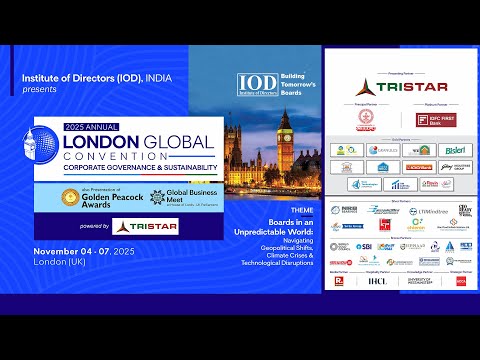
The Institute of Directors (IOD), India, organized its flagship annual event, the London Global Convention on 'Corporate Governance & Sustainability' in London, UK from November 04 to 07, 2025. The theme of this year's Annual Convention was 'Boards in an Unpredictable World: Navigating Geopolitical Shifts, Climate Crises & Technological Disruptions'.
The four-day Convention commenced with the ceremonial lighting of the lamp, at Hotel The Montcalm Mayfair, London, on November 04. The deliberations continued on November 05. On November 06, the prestigious Global Business Meet was hosted by IOD at the House of Lords, UK Parliament, for a session that imbued the proceedings with a profound sense of gravitas. The august hall provided a fitting backdrop for a high-level global discourse. The last day of the Convention was marked by a Special Session on the theme, “Cultivating Innovation and Sustainability as core Boardroom priorities,” held at 'The Pavilion' in The University of Westminster.
The famed Golden Peacock Awards, instituted by the Institute of Directors (IOD), India in 1991, were conferred during the Golden Peacock Awards Nite Ceremony. Winners across the categories of Corporate Governance, Sustainability & ESG (National and Global), and Risk Management were present to receive the honour in person from the Chief Guest, Hon'ble Chief Minister of Andhra Pradesh, Govt. of India, Mr. N. Chandrababu Naidu.
This year's Global Business Meet and the Convention hosted over 450 delegates from across borders, including board members, policymakers, prominent industrialists, distinguished domain experts, and renowned speakers. The Convention saw participation from over 15 countries including the United Kingdom, USA, France, UAE, Spain, Saudi Arabia, Sweden, Maldives, Oman, Nepal, Belgium, South Africa, Bahrain, Qatar, and Netherlands, besides India.


DAY 1: NOVEMBER 04, 2025
HOTEL THE MONTCALM MAYFAIR, LONDON
The event also saw enthusiastic participation by many leading members of the Indian diaspora in the UK, contributing to its international depth and diversity. A truly global event was further reinforced through the extensive network of international, strategic, and institutional partners supporting the Convention. The Association of Chartered Certified Accountants (ACCA), UK served as the Strategic Partner, bringing a worldwide perspective on finance and governance. The global theme was complemented by the Indian Hotel Company Limited as the Hospitality Partner and Signature Hospitality Group as an additional Supporting entity. A high level consortium of supporting partners also broadened the reach and collaboration of the event, including the London Chamber of Commerce and Industry (UK), Lalcap Limited (UK), FICCI FLO (India), The Institute of Company Secretaries of India (ICSI), The Institute of Cost Accountants of India (ICMAI), the Banking, Finance and Insurance Institute of Nepal (Nepal), Dubai Quality Group (UAE), Maldives Capacity Development and Governance Institute (Maldives), Vietnam Independent Directors Association (Vietnam), and the Institute of Corporate Governance of Kenya (Kenya). The University of Westminster as the Knowledge Partner provided intellectual rigour and expansive visibility, strengthening the event's global-local resonance.
Equally noteworthy was the prominent participation by India's public sector, underscoring the strategic alignment of government-owned enterprises with the event's objectives. Leading this sector was the Maharashtra Industrial Development Corporation (MIDC) as the Principal Partner, reflecting the State's proactive approach to industrial growth and development. This was supported by a broad group of Gold, Silver, and Bronze partners, including NBCC (India) Limited, Bharat Petroleum Corporation Limited, Maharashtra Housing and Development Authority, Granules India Limited, Bharat Electronics Limited, Indian Railway Catering and Tourism Corporation Limited (IRCTC), Punjab National Bank, State Bank of India, New India Assurance Company Limited, Hindustan Aeronautics Limited, India Infrastructure Finance Company Limited, and many others. This prominence was a powerful statement of the public sector's leading role in driving India's economic ambitions and upholding the highest benchmarks of Good Corporate Governance.
PLENARY SESSION I
Inaugural Session
Dr. Graham Wilson
Psychology & Counselling
University of Oxford, UK
Dr. Wilson opened the Convention with a warm and thoughtful introduction, welcoming delegates and setting an engaging tone for the proceedings. He underscored the significance of the Golden Peacock Awards in recognising excellence in governance and expressed appreciation for the vital support of IOD partners and sponsors in bringing the Convention and business meet to fruition. He noted that such global gatherings play an essential role in shaping the boardrooms of the future, fostering dialogue, strengthening governance practices, and equipping leaders to navigate an increasingly complex global corporate landscape.
This was followed by the virtual 'President Address' delivered by:
Lt. Gen. Surinder Nath, PVSM, AVSM (Retd.) President
Institute of Directors (IOD), India
Lt. Gen. Nath highlighted IOD, India's pivotal role in advancing strategic cooperation between India and the UK, positioning the London Convention as a catalyst for translating frameworks such as the FTA and CETA into tangible commercial partnerships. Against a backdrop of geopolitical volatility, climate pressures, and accelerating technological disruption, he underscored the imperative for boards to transform into centres of strategic foresight, sustainability, and ethical leadership. He outlined key priorities, including digital governance, strengthened cybersecurity, climate-aligned strategy, and purpose-driven decision-making rooted in long-term value creation. Lt. Gen. Nath further emphasised the importance of diversity in board composition and the need for collective global responsibility, with businesses expected to lead on innovation and inclusion. He concluded by noting that the Golden Peacock Awards recognises organisations setting new benchmarks in governance and sustainability, inspiring higher standards across the corporate landscape.

The 'Welcome Address' was delivered by:
Mr. Ashok Kapur, IAS (Retd.)
Director General
Institute of Directors (IOD), India
Mr. Kapur, on behalf of IOD, India, extended a warm welcome to the distinguished & august gathering at the event. He stressed that the Board's role is now more critical than ever, describing it as the “Custodian of the Organisation's Compass,” and urged leaders to move beyond compliance, to genuine strategic foresight. Central to his address was the assertion that ESG must serve as both the moral and strategic anchor of modern governance, encompassing environmental responsibility, cultural respect, and uncompromising integrity. He invited participants to engage deeply with the Convention's deliberations, particularly on the responsible adoption of transformative technologies such as AI and Web 3.0. Drawing inspiration from figures as diverse as the resolute Winston Churchill and the transformative Mahatma Gandhi, Mr. Kapur concluded by calling for Leadership defined by Clarity, Courage, and Conviction, shaping boards that are Resilient, Responsible, and Purpose driven.
This was followed by the 'Chair Address' delivered by:
The Baroness Verma Global Chair, Advisory Council
Institute of Directors (IOD), India
Member, House of Lords
former UK Minister for International Development and
Energy & Climate Change
Gov. of UK
Baroness Verma commended the remarkable growth of IOD over the years and recognised its evolution from modest beginnings into a globally influential organisation. Addressing the delegates, she underscored the pivotal role of business leaders in strengthening board decisionmaking in an era marked by geopolitical conflict, mounting climate pressures, and the growing aspirations of the developing nations. She underscored the need for Boardrooms to adopt a truly global outlook, integrating AI, digital inclusion, and emerging technologies into strategic deliberations. Baroness Verma reiterated that diverse boardrooms are inherently stronger, enabling critical reflection on past approaches while driving futurefocused solutions. Highlighting UK's longstanding global partnerships, she urged leaders to prioritise equitable and inclusive growth over narrow short-term financial gains. Concluding with a call to collective responsibility, she urged the delegates to ask: “How do we work better as partners, as collaborators, and through relationships?” and further affirmed the fact that, “Each of us present here today is a decision-maker, let us make the best decisions for everyone.”
The 'Chairman Remarks' were delivered by:
Dr. Tayeb Kamali
Chairman-UAE, Institute of Directors (IOD), India
Chairman of the Board of Trustees
Abu Dhabi School of Management, UAE
Dr. Kamali began by expressing his appreciation at seeing colleagues and partners come together for the Global Convention hosted by IOD, noting that “we are all building tomorrow's worlds,” and stressing that there could be no moment more urgent than the Present, given the profound unpredictability of our times. He highlighted that many of the questions faced by leaders today remain unanswered, particularly “as we swim in the sea of AI,” where every organisation is navigating with differing perspectives on governance, ethical use, and strategic integration. Dr Kamali emphasised that the Convention offers a valuable opportunity for collective reflection, enabling participants over the next two days "to make an unpredictable situation a little more predictable", a challenge, he observed, made harder by the accelerating pace of technological change and the fast-paced rise of AI.
The 'Keynote Address' was delivered by:
Mr. Eugene Mayne
Founder and Group CEO
Tristar Group, UAE
Mr. Mayne, in his address, highlighted the enduring influence of fear and greed in boardrooms, arguing that morality remains as the most reliable stabiliser in an unpredictable governance landscape. He cited the Johnson & Johnson Tylenol crisis as a defining example of ethical leadership, where the board chose transparency and customer safety over market pressures, transforming potential reputational ruins into long-term public trust. In contrast, he referenced the Olympus scandal to illustrate how governance can deteriorate when moral vigilance falters. Mr. Mayne emphasised that ethical judgement ultimately rests with the individual directors whose values shape collective decisions, especially when legality and morality may diverge. Drawing on his own experience of building the Tristar, he reflected that integrity exercised in difficult moments becomes a company's true long-term foundation. He concluded by emphasising that moral clarity is not merely aspirational, but essential. He reiterated that trust, though never listed on the balance sheets, remains the board's most valuable asset. Ultimately, he reminded leaders that true stewardship is judged not only by organisational performance, but by the principles that guide it.

This was followed by the 'Theme Address' delivered by:
Prof. Sir Andrew Likierman
Professor of Management Practice & Executive Dean
London Business School, UK
Prof. Likierman emphasised London Business School's longstanding ties with India, noting the significant contributions of its Indian alumni to both nations. Speaking on the role of learning in enhancing board effectiveness, he observed that his experience across both functional and dysfunctional boards confirms that improvement is always possible. He also urged delegates to reflect deeply on where such learnings should originate, stressing that management is not innate but teachable, and that boards must consciously invest in strengthening this capability. Highlighting two essential areas, he underscored the legal requirement for directors to exercise independent judgement, an often-undefined responsibility that calls for clearer frameworks and more structured development. He also drew attention to the rising need for 'sound judgement' amid geopolitical and ESG-related uncertainties. For an informed decisionmaking, he emphasized on evaluating the credibility of forecasters rather than the forecasts themselves. He concluded that while judgement alone does not determine governance quality, board members have a continuing duty to refine and reinforce it.
This was followed by the 'Special Address' delivered by:
Mr. Vijay Karia
Chairman & Managing Director
Ravin Group of Companies, India
Mr. Karia delivered a compelling, values-centred address to an international audience, warmly welcoming delegates from India, the UK, and across the globe. He noted the deepening relevance of this global gathering, particularly as the world navigates an increasingly volatile environment. Once described simply as “VUCA” (Volatility, Uncertainty, Complexity, and Ambiguity), he observed that today's uncertainties have taken on harsher dimensions, marked by vindictiveness, vulnerability, unethical conduct, and geopolitical aggression. Against this backdrop, he expressed pride in the strengthened India-UK relationship and the promising expansion of bilateral trade built on historic ties. He shared three key insights that resonated strongly with the audience:
• AI will enforce transparency
• Values will define sustainability
• Boards that uphold integrity and honesty will outlast everything else
Describing integrity as “the diamond that never loses value,” Mr. Karia reminded the international gathering that India's enduring purpose has always been to unite, not divide. As the world continues to debate power, capital, artificial intelligence, borders, and influence, he asserted that true leadership will ultimately be measured by unity, sustainability, integrity, and character. Illustrating these principles, he highlighted the Ravin Group's 75-year legacy of zero cable failure as a values-driven achievement built entirely in India. Reaffirming the ancient India's ethos of Vasudhaiva Kutumbakam, he urged global leaders to shape a future anchored in unity, character, and a shared purpose.
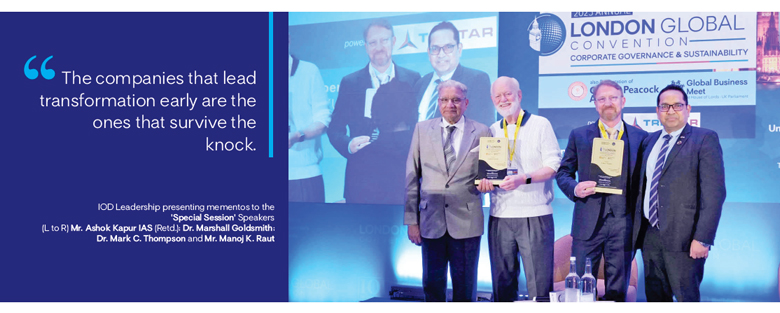
This was followed by the formal release of the Convention Souvenir 2025, after which IOD presented commemorative mementos to the distinguished speakers.
PLENARY SESSION II
Keynote Session
Redefining Board Priorities for Resilience and Agility in a Transforming World
The Session was Chaired by:
Sir John Anderson Kay, CBE
Author, Columnist, and British's Leading Management Thinker & Economist, UK
Sir Anderson Kay, in his opening address urged the delegates to rethink how modern business functions in a rapidly transforming world. Citing the aviation industry as a compelling example, he explained how airlines now operate aircraft and engines they do not own, with key assets held instead by global financial entities such as Aercap and GATX. This marked shift, he noted, reflects a broader departure from the traditional capitalist model exemplified a century ago by Henry Ford's fully integrated River Rouge complex. Today, capital ownership is fragmented, opaque, and often disconnected from dayto- day operations. Companies like Amazon and Apple illustrate this evolution: they own few physical assets yet create immense value through the capabilities they curate, from logistics and cloud infrastructure to design and customer experience. He emphasised that modern firms are no longer defined by capital and labour, but by knowledge, skill, and creativity they assemble. Urging boards to move beyond outdated economic language, he called for a deeper understanding of capabilities-driven enterprise as the foundation of true resilience and agility in the contemporary economy.

The Session had the following distinguished speakers:
1. Lord Clement-Jones CBE
Liberal Democrat House of Lords Spokesperson
for Science, Innovation, and Technology, UK
2. Professor Mark E. Smith CBE
Vice Chancellor & President
University of Southampton, UK
Lord Clement's address underscored a pivotal moment in UK-India relations, delivered just as both nations concluded a landmark trade agreement placing trust, transparency and accountability in artificial intelligence at its core. Highlighting the agreement's recognition of AI and Machine Learning as emerging technologies requiring dedicated governance, the speaker noted the significance of 'Chapter Twelve', which advances ethical AI, diversity, bias mitigation, technical standards and algorithmic transparency. The transformative potential of AI, illustrated through breakthroughs such as DeepMind's progress in protein prediction and its implications for personalised medicine, was set against pressing concerns including misinformation, harmful deepfake content, employment disruption and the warnings of pioneers such as Geoffrey Hinton. Emphasising global divergence in regulatory approaches, the address called for convergence on shared standards through OECD, G20, UNESCO and ISO frameworks. The UK India pact was presented as a model for future cooperation, supported by mechanisms such as the Innovation Working Group. His remarks concluded by stressing Intellectual Property Protections and affirming regulation as an essential enabler of innovation.
Prof. Smith, in an engaging and wide-ranging address, reflected on the transformative impact of the UK-India comprehensive trade agreement, describing it as a historic milestone that will unlock significant opportunities for the future generations. He commended India's sweeping higher education reforms, particularly the 2023 policy changes that have enabled foreign universities to establish a meaningful presence in the country. Drawing on a first-hand experience of opening a new campus in India, he emphasised the constructive and forwardlooking approach of Indian partners in strengthening the sector. Transitioning to broader governance themes, he offered a candid account of how volatility has reshaped UK's higher education since the removal of student number controls in 2011. Once predictable admissions cycles have given way to fluctuations measured in thousands, driven by shifting geopolitics, immigration policy and increased student mobility. This environment, he noted, demands boards that can navigate short-term shocks, manage information overload and make timely decisions. He concluded that resilient governance, diversified expertise and adaptive strategies such as transnational education are now essential for institutions to thrive in an increasingly complex world.
This was followed by an interactive Q&A session.
PLENARY SESSION III
Transforming Corporate Governance in a Multipolar World
The Session was Chaired by:
Dr. Sergei Guriev
Dean
London Business School, UK
Dr. Guriev, highlighted the exceptional complexities faced by the contemporary corporate leadership. Drawing on his experience, he observed that global uncertainty has reached its highest level since formal measurement began in 1997. He attributed this rise to the geopolitical fragmentation, expanding fiscal deficits outside traditional recessionary periods, and unprecedented volatility in financial markets. He noted that rapid technological disruption, particularly in artificial intelligence, is a major driver of this uncertainty. He explained AI as a general-purpose technology capable of developing its own successive iterations, it presents both transformative opportunities and unpredictable risks. He noted that divergent global perspectives on its long-term impact make it difficult for organisations to assess corporate valuations and chart strategic directions with confidence. The speaker further emphasised that businesses must also contend with ongoing climate and biodiversity crises, differing national sustainability agendas, and the operational challenges created by increased global fragmentation. In addition he added that heightened digital transparency and the viral nature of social media have amplified reputational risks, making leadership more demanding than ever before. Overall, his address underscored that the current environment requires leaders who can demonstrate resilience, adaptability, and foresight while navigating the accelerated pace of global change.

The Session had the following distinguished speakers:
1. Mr. Sanjeev Jaiswal, IAS
Vice President & Chief Executive Officer
Maharashtra Housing and Area Development Authority (MHADA), India
2. Mr. Manoj Jain Chairman & Managing Director
Bharat Electronics Limited
Ministry of Defence, Govt. of India
3. Mr. Mark Babington
Executive Director- Regulatory Statistics
Financial Reporting Council, UK
Mr. Jaiswal highlighted how geopolitical shifts, economic transitions, and technological disruption are redefining trust, accountability, and value creation. He emphasised that governance now extends far beyond boardrooms, shaping systems that enable societies to thrive, from cities and businesses to digital platforms and housing ecosystems. Focusing on India's urban housing challenge, he noted that housing is not merely a shelter but a driver of economic opportunity and inclusive growth. As the head of MHADA, Maharashtra's pioneering housing authority established in 1949, he outlined its legacy of constructing 0.9 million homes, primarily in Mumbai, one of the world's most densely populated cities. He observed that modern urban adaptation demands new governance models, technological integration, and sustainable planning. Maharashtra aims to deliver three million public homes, with MHADA contributing one million, supporting India's ambition to become a five trillion-dollar economy by 2030. Looking ahead, he shared MHADA's plans for large scale redevelopment, innovation in green and inclusive housing, and community engagement. He concluded by stating that it is transformative impact, rather than incremental change, that will shape Mumbai's future resilience.
Mr. Jain underscored that technological disruption has become a central concern for every board, not merely his own. He cited artificial intelligence and cybersecurity as prime examples, noting that AI driven tools are already influencing investor behaviour. During earnings calls, AI assistants can track a company's previous statements and plans, enabling analysts to detect any inconsistencies instantly. A single discrepancy, he warned, can have immediate consequences in the stock market. He stressed that boards must familiarise themselves with these technologies by actively adopting them. He observed that, despite advancements, many boards still rely heavily on paper-based processes, revealing how far they remain from full digitisation. He remarked that meaningful digital transformation requires every function within boardrooms and industries to embrace new tools. A key challenge, he noted, lies in aligning the independent directors with technological shifts. While functional directors possess deep institutional knowledge, independent directors need structured guidance and regular updates to understand emerging technologies. He emphasised that organisations have a responsibility to equip the directors with this knowledge and to invest adequately in data security, without which companies cannot safeguard themselves against evolving threats.
Mr. Babington reflected on the enduring relevance of the UK Corporate Governance Code, first introduced by Sir Adrian Cadbury in 1992. He emphasised that the strength of the Code lies in its principles-based approach, which empowers boards to determine their own priorities and supports effective, unitary board leadership. Despite three decades of growing global regulation and complexity, the Code remains focused, adaptable, and widely adopted across jurisdictions. He highlighted that good corporate governance not only demonstrates that a company is well run but also underpins capital formation, which is essential for investment, organisational change, and long-term development. The Code's non-prescriptive design encourages boards to hold high-quality discussions on material issues, risks, and priorities rather than follow rigid checklists. The latest iteration of the Code asks boards to report on the effectiveness of their material controls while allowing them to define what is material. He noted that as board responsibilities broaden to encompass technology, AI, sustainability, and reporting, the Unitary Board Model remains powerful because collective expertise enables effective decision making. He concluded by stating that boards should follow principles, apply materiality, and leverage their collective experience to navigate growing uncertainty.

This was followed by an interactive Q&A session.
PLENARY SESSION IV
Board's Role in Climate, Nature Risk, ESG & the Sustainability Imperative
The Session was Chaired by:
Mr. David Craig
Co-Chair - Taskforce on Nature-related Financial Disclosures (TNFD)
Former CEO, Refinitiv, UK
Mr. Craig focused on the accelerating nature and Climate Emergency and the responsibility of the boards to address these risks within the organisations they oversee. He highlighted the work and vision of the TNFD, explaining that the crisis has intensified to the point where seven planetary boundaries have already been crossed, including those related to plastics, chemical pollutants, climate change, biosphere integrity, and nutrient cycles. He emphasized on the fact that, these boundaries, once breached, are extremely difficult to restore due to their interconnectedness. He also emphasised that boards must treat these as immediate, not long-term, concerns. He highlighted that environmental degradation presents direct and material business risks, from soil loss and declining pollinators to air quality deterioration, all of which threaten economic stability. He further noted that regulatory expectations are increasing across jurisdictions, including the UK, US and India, making inaction untenable. The speaker further stressed on the need for integrated thinking, noting that climate and nature are inseparable. He added that the TNFD offers a unified framework that leading companies are already adopting, aligning climate and nature assessments within transition planning. He concluded by noting that investors are also taking nature-related risks seriously, signalling a shift towards more nature-aligned business models.
The Session had the following distinguished speakers:
1. Mr. Angelo George
Chief Executive Officer
Bisleri International Pvt. Ltd., India
2. Mr. John Mulligan
Head-Sustainability & Strategy
World Gold Council, UK
3. Mr. Rakesh Swami
Group President-Corporate Affairs
Godrej Industries Limited, India
4. Ms. Elisa Moscolin
EVP Sustainability & Foundation
Sage Group, UK
Mr. George, in his address, reframed ESG as an intrinsic pillar of business strategy, drawing on Bisleri's six-decade legacy as India's leading hydration brand. As the company's first non-family CEO, he highlighted his focus on revitalising the brand to ensure its continued relevance across generations through contextual communication, deeper youth engagement and an expanded commitment to sports marketing. Acknowledging rising environmental expectations among younger consumers, he noted that Bisleri has adopted a strategic approach to its two most critical challenges: water and plastic. He emphasised that Bisleri is among the first companies in India to achieve both plastic neutrality and water positivity, replenishing 4.7 times the water it extracts. The organisation has developed a nationwide ecosystem for plastic recovery and recycling, engaging 7.6 million people and earning a Guinness World Record for plastic collection. With innovations such as recycled benches, public installations and PET-based Apparel, Bisleri continues to demonstrate its commitment to circularity. Mr. George further underscored Bisleri's large-scale water stewardship efforts, from rainwater harvesting and rural check dams to lake creation, and its collaboration with academic institutions to develop an industry-adaptable water-credit framework.
Mr. Mulligan, in his address explored the relevance of gold within the sustainability agenda, noting its deep cultural significance in India and its global economic influence. Drawing on insights from the World Gold Council, he emphasised why sustainability must be treated as a strategic priority for boards, particularly amid today's overlapping systemic pressures that are reshaping environmental, social, and economic systems. He argued that traditional approaches are no longer sufficient and that sustainability must be embedded into the core of business strategy rather than viewed as an external layer. Reflecting on over four decades of work in developing markets, he highlighted the Council's role in advancing responsible and transparent gold production. He underscored the need for evidence-based action, explaining how the Council developed robust data systems to define and demonstrate “responsible gold,” from responsible sourcing and value creation to assessing indirect impacts in emerging economies. He also noted growing investor demand for clarity on gold's ESG performance, which prompted the Council to map the industry's carbon footprint and decarbonisation pathways. This work, he said, now provides a credible foundation for industry-wide climate action and long-term value creation.
Mr. Swami offered a practical perspective on how India's Godrej Industries Group integrates sustainability into core business strategy. Introducing the 128-year-old Indian multinational, he highlighted its long history of innovation, from early manufacturing during the Swadeshi movement to pioneering vegetable-oil, soaps and, more recently, powder-to-liquid handwash solutions. He stressed that climate action is not just an external obligation but essential to business continuity, value creation and long-term competitiveness. Boards, he noted, must embed ESG and climate oversight within their charters, involving Risk Committees and independent directors to ensure accountability. He outlined the Group's Sustainability framework, centred on five key pillars: purpose, products, processes, planet and people. Strong governance, supportive government policy and a culture of integrity and humility underpin these priorities. He also highlighted the company's “Good and Green” philosophy, encompassing both community and environmental commitments. He concluded by highlighting Godrej's ambitious target to achieve net-zero emissions by 2035, supported by 75% renewable energy usage in its manufacturing operations and a 45% reduction in greenhouse-gas intensity since FY2011.
Ms. Moscolin reflected on her 16-year journey advising boards on sustainability, beginning, as she noted, “on the ground floor next to the IT team and the garbage bin.” At the time, she was often told that sustainability was a niche area with little chance of reaching the boardroom, yet she remained convinced that it belonged at the centre of executive decision-making. She explained that both hard and soft factors have propelled sustainability onto board agendas. Regulatory momentum, particularly frameworks such as the TCFD, played a decisive role by compelling leaders to assess climate-related risks and strengthening the focus on disclosures and accountability. She encouraged boards to view regulations as an opportunity rather than a burden, as they enable well-informed, insight-driven decisions. Among the softer forces, she highlighted public sentiments and civil society pressure, which have held companies accountable and elevated expectations for corporate action. She also noted the competency gap within many boards and stressed the importance of upskilling and seeking reliable expertise. Ultimately, she emphasised that sustainability is now a material governance priority and an essential component of long-term value creation.

This was followed by an interactive Q&A session.
PLENARY SESSION V
Building Future-Ready Boards through Diversity, Ethics, and Generational Insight
This Session was Chaired by:
Dr. Nashwa (Joy) Saleh, Cdir
Independent Non-Executive Director & Chair
Board Risk & Compliance Committee (BRCC)
United Bank For Africa (UK) Ltd.
Dr. Saleh, opened with a warm cultural reference, noting the strong bond between Egypt and India, and recalling how generations in Egypt grew up watching Amitabh Bachchan films on public holidays. She then turned to the panel's theme, emphasising that today's disruptions are not isolated shocks but “grey rhinos” - large and visible risks that are advancing rapidly while organisations continue to treat them as distant concerns. She highlighted several data points that illustrate the scale of change. She noted that nearly half of global financial activity now occurs within non-bank financial institutions, fundamentally altering the risk landscape. Climate-related risks, she said that alone could place up to 15 per cent of global GDP at risk by 2050, and climate events since 2000 have already generated losses of 3.6 trillion dollars, in addition to the significant human cost. Many corporate leaders, she warned, still underestimate the financial impact of inaction, with between 5 and 25 per cent of earnings potentially at risk. She also noted the widening data gap among SMEs, which complicates ESG planning for larger companies. Concluding, she observed that business models have become fully unbundled across jurisdictions, creating new complexities in how organisations operate, serve markets and secure funding.
The Session consisted of the following distinguished speakers:
1. Prof. (Dr.) R. P. Banerjee
Chairman & Director
EIILM Kolkata, India
2. Ms. Usharani Manne
Director - Polmon Group of Companies
Initiative Head - FLO Women Directors
FICCI FLO, India
3. Ms. Annabel Reoch
Global Head of Ethics and Compliance
KPMG, UK
Prof. (Dr.) Banerjee reflected on the evolving nature of leadership, emphasising that the future cannot be shaped without a balanced understanding of both our roots and our responsibilities. Drawing on influences from the Vedic tradition and global philosophical thought, he highlighted gratitude as the foundation of meaningful leadership, beginning at the individual level and ultimately extending to collective action. He referenced the ancient dialogue between King Janaka and the Sage Yājñavalkya to illustrate that truth, when held as a core belief and translated into action, enables leaders to transcend situational and geographical boundaries. True leadership, he noted, arises from the ability to align intrinsic values with outward conduct, bringing integrity and purpose into organisational life. He stressed that creativity and insight can emerge from any mind, regardless of gender, and that leaders must recognise their role as contributors to a larger system rather than merely consumers of it. Warning against self-serving behaviour in boardrooms, he observed that selfish leadership ultimately weakens organisations, whereas leaders grounded in truth, purity of intent and a spirit of giving help drive companies towards sustainable and enduring success.
Ms. Manne emphasised on the growing importance of women leadership in boardrooms and its central role in shaping future-ready governance. Citing the President of the European Central Bank, Ms. Christine Lagarde, she remarked that “when women do better, economies do better,” placing the conversation firmly within a wider economic and societal context. She noted that the current geopolitical and market shifts demand that boards move beyond traditional oversight and embrace innovation and adaptive thinking. Within this environment, diversity is not simply a compliance requirement but a strategic imperative. Research consistently shows that companies with women on their boards demonstrate stronger risk management, improved ESG performance and more effective decision-making. Ms Manne highlighted that women directors bring inclusive leadership, detailfocused oversight and deep consumer insight. They reinforce governance, strengthen long-term strategy and provide stability during periods of disruption. She concluded by underscoring the importance of generational diversity, with women leaders playing a pivotal role in mentoring emerging talent and enhancing overall boardroom effectiveness.
Ms. Reoch highlighted the growing pressures facing boards in an increasingly complex and volatile global environment. She noted that economic uncertainty, shifting regulatory expectations, advances in artificial intelligence and heightened ESG commitments are all intensifying the demands placed on board members. Citing KPMG's recent CEO Survey, she observed that 63 per cent of CEOs view talent shortages as the greatest challenge over the next three years, with the employee value proposition, particularly sustainability, emerging as a core priority for attracting and retaining top talent. She emphasised that boards must consider the expectations of a wider stakeholder ecosystem, including employees, activist investors, non-governmental organisations and customers, all of whom now scrutinise board composition and purpose. To strengthen generational insight, she highlighted the increasing use of “shadow boards”, which provide younger professionals with a structured platform to contribute perspectives directly to board deliberations. The speaker also underscored the importance of culture, ethical leadership and visible commitment from senior executives. She pointed to the FTSE Women Leaders Review as evidence of meaningful progress, with women now holding 43 per cent of board positions in the United Kingdom. She concluded by outlining KPMG's Global Leaders 2050 initiative, designed to equip emerging leaders with the skills and mindset required to drive sustainable growth and future-ready governance.
This was followed by an interactive Q&A session.

PLENARY SESSION VI
Board's Preparedness & Strategy on AI, Digital Disruption & Cyber Governance in the Digital Era
The Session was Chaired by:
Prof. Ashley Braganza
Director Centre for AI Professor of Business Transformation
Brunel Business School, UK
Prof. Braganza reflected on having established the Centre for AI in 2018 in the Brunel Business School, well before the emergence of generative AI, noting that few at the time recognised the scale of transformation that artificial intelligence would bring. Approaching the field from the lens of organisational change, he emphasised that no previous technological wave compares to the disruption AI is poised to create across both public and private sectors. He highlighted that the launch of ChatGPT in November 2022 marked a decisive turning point, accelerating global interest and revealing significant shifts in how organisations must approach strategy. Traditional strategic frameworks, he argued, are no longer fit for purpose, as AI systems evolve from analytical tools into autonomous agents capable of making and acting upon decisions. He also underscored the growing importance of multimodal AI, which can interpret and synthesise text, speech, images and video. He stressed that boards must rethink culture, governance and risk in an environment where decisions may increasingly be shaped by intelligent agents. Regulators, he noted, face their own tensions, particularly between data privacy, transparency and competition. He concluded by pointing that in this rapidly changing landscape, understanding the AI supply chain and preparing for future regulatory and technological shifts will be essential for organisational resilience.
The Session had the following distinguished speakers:
1. Ms. Harshbeena Zaveri
Vice Chairperson and Managing Director
NRB Bearing Limited, India
2. Mr. J. K. Arora
Chairman & Chief Executive Officer
Tradologie.com, India
3. Mr. Tony Fish
Board Advisor
Pioneer Maverick, Polymath, UK
Ms. Zaveri reflected on the profound scale of transformation underway across industries, observing that societies often underestimate how quickly change unfolds. Drawing on her background in social anthropology, she highlighted how migration, technology and shifting cultural patterns continuously reshape human behaviour and organisational life. She noted that many leaders still struggle to engage meaningfully with these shifts, even as disruption accelerates. Using examples from global automotive and technology sectors, she explained how design and engineering once dominated innovation, but software and digital systems now drive competitive advantage. She recalled early resistance when she proposed technology-focused initiatives to her own board in the late 1990s, a period when many companies lacked the vision or skills to implement emerging digital tools effectively. India's strength in software, she remarked, became a key opportunity during this transition. She emphasised that future success would depend on selecting board members based on competence, creativity and collaboration with management. Strong governance requires leaders who can learn, unlearn and relearn, who welcome disruption and who understand that technological breakthroughs succeed only when supported by the right strategic choices and cultural alignment. Failure, she noted, often stems not from innovation itself but from inadequate leadership selection and a reluctance to adapt.
Mr. Arora commenced his address by thanking the hosts and reflecting on the perception of artificial intelligence as an “elephant in the room.” He noted that disruptions and innovations occur constantly, yet their impact varies across societies. Drawing parallels with the evolution of smartphones, he emphasised that not every technological change affects everyone equally, and every innovation carries a social dimension. He explained that AI is essentially a new method of computing that can handle routine and repetitive tasks efficiently, reducing the workload in areas such as legal services, customer care and medical administration. While AI will influence workers across skill levels, he stated that its impact on daily wage earners will remain limited. Mr Arora also highlighted that businesses must adopt AI to improve efficiency, reduce costs, minimise errors and enhance transparency. Describing his digital trade platform, he explained how AI-driven verification and workflow systems have enabled rapid scaling. He concluded by urging boards to assess their specific needs, integrate AI strategically and evolve responsibly in a constantly changing environment.
Mr. Fish began by noting that he would deliberately go against the flow, emphasising that his longform writing reflects a deep concern about the direction of artificial intelligence. He highlighted a central issue - unlike the Wright brothers, who modelled flight on the natural behaviour of birds, AI and quantum technologies have no equivalent reference in nature. Humanity is creating systems that do not exist organically and have no precedent in the natural world. He explained that previous human inventions such as money, law and time were once unimagined concepts that society gradually learned to adapt to. In contrast, AI and quantum computing are advancing at a pace that leaves little time for reflection or adaptation. He stressed that boards must move beyond the known and the predictable and begin addressing the unimagined questions that these technologies raise. He concluded by warning that current governance structures, rooted in centuries-old corporate models, are no longer adequate for the scale of transformation now underway, urging leaders to rethink strategy at a fundamental level.
This was followed by an interactive Q&A session.

PLENARY SESSION VII
Business Session - Global Market Opportunities & Challenges
The Session had the following distinguished 'Keynote Speakers':
1. Ms. Kate Thornley
Chief Negotiator - UK-India FTA
Department for Business and Trade Government, UK
2. Mr. P. Velrasu, IAS
Chief Executive Officer
Maharashtra Industrial Development Corporation Ltd.
India (MIDC)
3. Mr. Karim Fatehi OBE
Chief Executive Officer
London Chamber of Commerce and Industry (LCCI), UK
Ms. Thornley noted that the day's discussions had focused on operating in an uncertain world, where both business and government continue to face significant challenges. She sought, however, to close on an optimistic note by reflecting on the progress achieved in the UK-India trade relations. Over the past seven years, she has worked through the UK's exit from the European Union, the disruption of the COVID-19 pandemic and several rounds of complex negotiations. These efforts culminated in July, when the Prime Ministers of both countries signed the UK-India Free Trade Agreement. She highlighted that this agreement is India's most comprehensive and ambitious trade deal to date and represents the most valuable trade agreement secured by the UK since leaving the EU. She emphasised that the true value of the deal will be realised only when businesses actively use it. With more than two thousand pages supporting sectors from steel to services, the agreement offers wide opportunities for investment and trade. She concluded by expressing hope that it will come into force next year and strengthen bilateral economic ties.
Mr. Velrasu, reflected on the long history of global trade and the forces that continue to shape it. He observed that throughout history, from the voyages of Columbus to the Silk Routes and the gold rushes, trade has always been driven by the search for new markets and mutual benefit. Disruptions, he noted, are not new. Whether during the First or Second World War, major global disturbances have repeatedly been followed by periods of renewal, growth and the creation of new economic hierarchies. He emphasised that disruptions should not be viewed pessimistically, as they often generate new opportunities. Referring to the current India-UK relationship, he expressed confidence in the growing strategic understanding between the two nations. He noted that under Prime Minister Modi, India remains committed to concluding the UK-India Free Trade Agreement, alongside its negotiations with the European Union. Mr Velrasu concluded by highlighting India's historic role in global commerce and its emergence as a major economic force, driven by expanding markets and sustained development momentum.
Mr. Fatehi began by expressing gratitude to the hosts for bringing together such an inspiring group of business leaders. He noted that London has always served as a global meeting point, where ideas, connections and collaboration flourish. Speaking on behalf of the Chamber's 11,000 members, he highlighted the organisation's longstanding commitment to supporting business growth, international partnerships and economic prosperity. He thanked the organisers for choosing London as the venue and acknowledged the pivotal role played by government and industry partners in advancing the UK- India Free Trade Agreement after years of challenging negotiations. He emphasised that the agreement represents renewed hope, built on shared values, strong stakeholder engagement and a clear desire for deeper economic ties. He observed that the world is becoming more unpredictable, from technological shifts such as AI to changing market dynamics, but stressed that collaboration, openness and sustained dialogue remain the most effective tools for building resilience and shared prosperity. He concluded by reaffirming the Chamber's readiness to support global partners, encourage meaningful exchanges and strengthen London's role as a centre of business, trade and innovation.
This was followed by an interactive Q&A session.

PLENARY SESSION VIII
GOLDEN PEACOCK AWARDS NITE
The Golden Peacock Awards Ceremony commenced with the 'Welcome Remarks', delivered by:
Mr. Manoj K. Raut
Chief Executive Officer & Secretary General
Institute of Directors (IOD), India
Mr. Raut opened the Golden Peacock Award Nite with a warm welcome to distinguished guests, dignitaries, ambassadors and partners on behalf of the Institute of Directors, India. He highlighted the presence of the Hon'ble Chief Guest, Mr. N. Chandrababu Naidu, describing him as a visionary leader of the Telugu states and a key architect of Andhra Pradesh's technological and economic modernisation. Mr Naidu's longstanding contributions to governance and digital transformation were acknowledged with deep appreciation. Under the leadership of Prime Minister Narendra Modi, he noted, India has accelerated its economic trajectory, now ranking as the world's fourth-largest economy. He congratulated the Award recipients and expressed gratitude to the partners, and welcomed all international delegations from around the world, recognising the value they brought to the evening. He concluded by looking ahead to a commemorative ceremony marking 75 years of excellence and innovation of The Ravin Group, and by reaffirming IOD's guiding philosophy of One World, One Family, One Future, observing that the unity and shared purpose in the room truly reflected this vision.
This was followed by a virtual 'President Remarks', delivered by:
Lt. Gen. Surinder Nath, PVSM, AVSM (Retd.)
President
Institute of Directors (IOD), India
Lt. Gen. Nath warmly welcomed all the dignitaries, guests, and award winners, highlighting the Institute of Directors over three-decade-long dedication to advancing business excellence, ethical leadership, and responsible governance through its global initiatives and awards. Focusing on the Convention's theme he emphasised the critical role of forward-looking boards in guiding organisations through global volatility and rapid technological change. Congratulating all the Award recipients, Lt. Gen. Nath noted that true resilience lies not only in withstanding disruption but in using it as a catalyst for transformation. He concluded by reaffirming IOD's mission to build leadership that champions sustainability, inclusivity, and global well-being.
This was followed by remarks from the Chairman-UAE, Institute of Directors (IOD) by:
Dr. Tayeb Kamali
Chairman-UAE
Institute of Directors (IOD) India
Chairman of the Board of Trustees
Abu Dhabi School of Management, UAE
Dr. Kamali reflected on the special significance of the evening, recalling an early encounter with the Chief Guest, the Honourable Chief Minister, Mr. N. Chandrababu Naidu, nearly two decades earlier during his visit to the United Arab Emirates. He noted that his inspiring interaction with students and his consistent commitment to public service made it a personal honour to be present at the event and to celebrate the evening's distinguished Award recipients. He commended the winners from diverse sectors for their dedication to excellence, observing that achieving and sustaining high standards is never a small feat. Drawing parallels with the education sector, he remarked that the industry too is navigating a period of rapid transformation and unpredictability, making leadership and innovation more vital than ever. Reflecting on the Chief Minister's longstanding advocacy for global partnerships, he recalled his well-known message to international IT leaders: that he valued their presence and collaboration over financial investment. He praised the Golden Peacock Award's rigorous three-tier evaluation process, noting the diligence of the Jury and concluded by congratulating all the recipients for their achievements and contributions, affirming that it was indeed a truly special evening.
The 'Special Remarks' of the Session were delivered by:
1. Mr. Eugene Mayne
Founder & Group CEO
Tristar Group, UAE
2. Mr. Praveen Pardeshi, IAS
Chief Economic Advisor to the Chief Minister of Maharashtra
and Chief Executive Officer
Maharashtra Institution for Transformation (MITRA), India
Mr. Mayne in his address, extended a warm welcome to the Chief Minister of Andhra Pradesh, Mr N. Chandrababu Naidu, along with the assembled dignitaries, excellencies and guests. He reflected on his long-standing association with the IOD, India, noting how an initial brief meeting had evolved into a strong and lasting partnership. He expressed confidence that the Institute would reach new parts of the world while continuing to promote excellence in board leadership. He highlighted that the key challenges for organisations today is not only to excel in business performance but also to uphold a clear sense of purpose. The private sector, he observed, is a powerful force with the ability to respond quickly and address the needs of people in distant and underserved communities. At a time when the gap between the rich and the poor continues to widen, he stressed on the responsibility of responsible business to help narrow this divide. He emphasised that institutions such as the Institute of Directors create essential platforms for dialogue, shared ideas and collective ambition and concluded by congratulating all the award winners and expressing his hope of welcoming everyone back again next year.
Mr. Pardeshi, in his address highlighted the scale of global challenges confronting businesses today, from climate change to disrupted supply chains and rising geopolitical fragmentation. He emphasised that the role of corporate boards has evolved beyond profit optimisation, requiring directors to act as responsible stewards of the planet by integrating environmental and systemic risks into strategic decision-making. This, he noted, is essential not only for good governance but for long-term resilience and enterprise value creation. He outlined Maharashtra's transformative approach under the leadership of the Chief Minister Devendra Fadnavis. Recognising that corporates were contributing over one billion dollars annually in CSR, yet in a fragmented manner, the state established the Village Social Transformation Foundation. Supported by major national and international companies, the initiative aligned CSR investments with the Sustainable Development Goals, with government and industry meeting regularly to ensure measurable, community-level outcomes. The speaker also underscored that this model demonstrates how businesses can extend their purpose beyond organisational interests towards broader societal impact, and called for collective commitment to sustainability and long-term planetary resilience.
This was followed by the 'Chief Guest Address' delivered by:
Mr. N. Chandrababu Naidu
Hon'ble Chief Minister of Andhra Pradesh, India
Mr. Naidu shared his vision for accelerating India's growth through a “Public–Private–People's Partnership” model, focused on improving the “speed of doing business.” He emphasised the transformative power of Artificial Intelligence, calling for a mindset shift to embrace an AI driven future. Expressing optimism for India to become the world's leading economy by 2047, he outlined his plan to develop Visakhapatnam as an AI-powered infrastructure hub, alongside his mission for a poverty-free Andhra Pradesh and a Net Zero Amaravati. The address also spotlighted initiatives such as Maharashtra's large scale housing expansion, IRCTC's digital resilience, and BEL's innovation in R&D. Calling for ethical governance and sound policymaking, Mr. Naidu affirmed that Bharat's demographic strength can drive sustainable and inclusive global leadership. He concluded by congratulating all award winners and industry leaders, whose achievements exemplify Excellence in Governance and Sustainability, and wished everyone an inspiring evening.

The Awards ceremony was followed by Felicitation of the IOD Distinguished Fellowships - 2025 which were conferred on:
1. Ms. Nara Bhuvaneswari
Vice Chairperson & Managing Director
Heritage Foods Limited, India
2. Dr. Krishna Prasad Chigurupati
Chairman & Managing Director
Granules India Limited
3. Prof. Peter Bonfield OBE FREng
Vice Chancellor & President
The University of Westminster, UK
This was followed by the Felicitation of IDEAL 2025 conferred on:
Ms. Harshbeena Zaveri
Vice Chairperson and Managing Director
NRB Bearing Ltd. India
She was conferred the IDEAL 2025 award in recognition of her exemplary leadership and transformative contribution to the Indian manufacturing industry.
This was followed by a Special Felicitation of Audhataam Pharmaceutical Group, India.
The session concluded with the Presentation of the Golden Peacock Awards for Corporate Governance, Sustainability and ESG (Global & National), and Risk Management by Mr. N. Chandrababu Naidu.
The day concluded with the celebration of 75 years of Excellence and Innovation of the Ravin Group of companies and Mr. Vijay Karia sharing some words of wisdom and appreciation towards IOD, India.
Mr. Karia in his remarks, expressed his gratitude to the IOD and reflected on meeting Mr. N. Chandrababu Naidu on the very same platform two decades earlier, noting how swiftly time passes, much like the Ravin Group's own 75-year journey. He highlighted the organisation's proud milestones, including supplying cables for the US $15 billion Google project in Andhra Pradesh and for the British railways. He stated with pride that in 75 years, the Ravin Group has not recorded a single product failure, reaffirming its commitment to sustaining this legacy of reliability. He then reflected on humanity's long history of division, from continents to countries, cities, communities and even within homes. In contrast, he emphasised India's enduring ethos of the world as one family - a principle upheld by the government and embodied by the Chief Minister Naidu, whom he praised for fostering unity. He urged all present to reject division, champion togetherness, and strive towards a sustainable, ethical and compassionate world.
All the winners had flown to London and were present at the ceremony to personally receive their Awards, having travelled to London from various countries for this prestigious event. A detailed list of all the Award winners is provided in this issue, from page number

DAY 2: NOVEMBER 05, 2025
HOTEL THE MONTCALM MAYFAIR, LONDON

PLENARY SESSION – IX
Strategising Sustainability: Lessons Learned & the Way Forward
The 'Special Address' was delivered by the Chair of the Session:
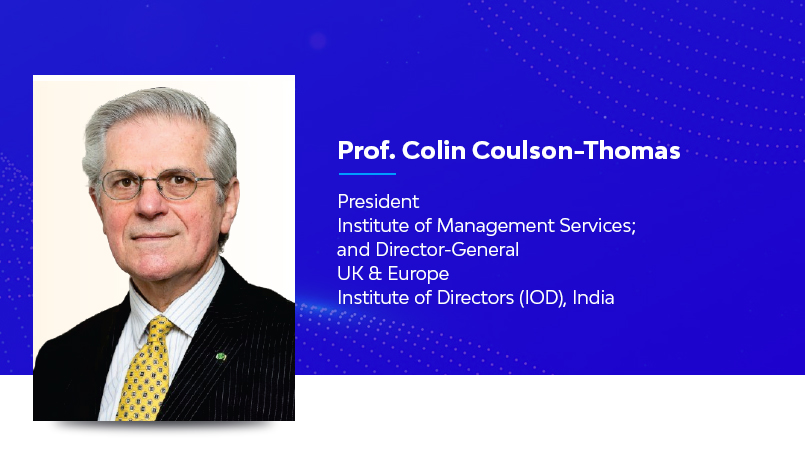
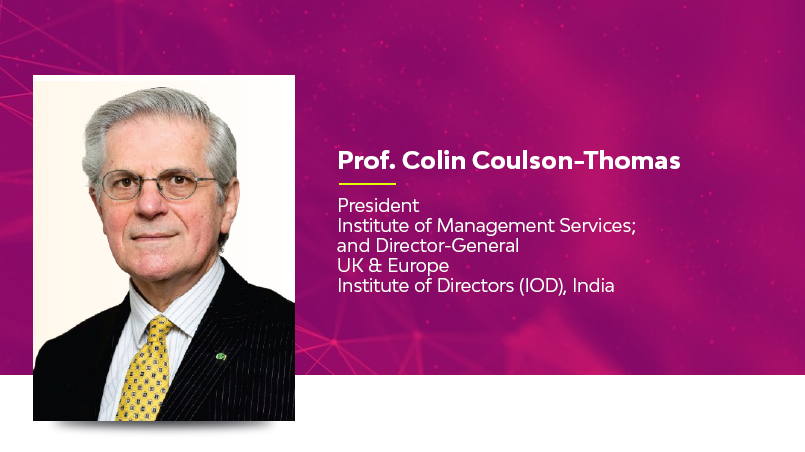
Prof. Colin Coulson-Thomas
Director General UK & Europe Operations
Institute of Directors (IOD), India
Prof. Colin, in his special address, he observed what he described as the widest gap between rhetoric and reality that he has witnessed in the recent years. Reflecting on discussions from the previous day, he noted that while global narratives convey ambition, the world outside exhibits a far harsher truth. He emphasised that humanity is confronting a series of interrelated environmental, geopolitical and technological challenges that cannot be delegated outside the boardroom. His specialisation in existential risks led him to caution that Climate Change is only one among many threats, with rapidly advancing Artificial Intelligence potentially amplifying criminal and biological risks too. He stressed the urgent need for adaptation, mitigation and resilience, acknowledging that achieving collective action has become increasingly difficult in a polarising world. Turning to India, he highlighted its dual position as both a challenge and a critical contributor to global solutions. As the largest and fastest-growing major economy, its expanding emissions and rapid growth must be managed responsibly to ensure a sustainable and durable future for all.
This was followed by Presentations of the Case Studies on 'ESG' by:
1. Genpact Limited, Bermuda
2. Tata Consumer Products Limited
3. Firstsource Solutions Limited
This was followed by Presentations of the Case Studies on 'Sustainability' by:
1. TVS Motor Company Limited, India
2. EXL Service Holdings Inc., USA
3. Tristar Transport LLC, UAE
4. Bristol Myers Squibb Company, USA
5. Kirloskar Brothers Limited, India
This was followed by an interactive Q&A session.

PLENARY SESSION – X
Future- Proofing Rik Management & Building Antifragile Systems and Culture for Operational Resilience
The Session was Chaired by:
Ms. Vasselina Haralampieva
Head, Sustainable Finance Governance & Regulation
European Bank for Reconstruction and Development (EBRD), UK
Ms. Haralampieva, in her address, outlined her institution's long-standing commitment to integrating climate and sustainability considerations into governance, strategy, and operations across emerging markets. Representing a bank with a 17-year presence in the region, she emphasised that ESG is embedded in its mandate and is fundamental to mitigating risks, creating value, and supporting clients through the green transition. She noted that environmental and social disruptions now cascade rapidly across borders, turning what were once externalities into direct continuity risks for companies. Ms. Haralampieva highlighted the bank's initiatives, including a 'cohort training programme' for financial institutions across new markets, covering governance, strategy, risk metrics, disclosures, and sustainability planning. She underscored the importance of biodiversity and natural capital, and of resilient boards capable of recognising independence, financial risks, and broader enterprise challenges, including geopolitical risks. She noted that the bank also supports clients by placing nominee directors and building governance capacity. She cited examples of partnerships that helped organisations measure emissions, manage supply chain vulnerabilities, and develop comprehensive transition plans. She stressed that true resilience requires more than absorbing shocks; it demands adaptability, innovation, and credible long-term planning. She concluded by reaffirming EBRD's leadership in sustainability reporting and its commitment to supporting clients in aligning with global standards and the Paris Agreement.
The Session had the following distinguished Speakers:
1. Mr. Rahul Himalian
Director-Tourism & Marketing
Indian Railways Catering and Tourism Corporation (IRCTC)
2. Mr. Shailendra R. Veer
Chairman
Veer Technologies, India
3. Mr. Peter Waziri
Board Director, CEO
Financial Strategist, USA
Mr. Himalian emphasised that effective governance, future-proofing, and enterprise risk management begin with acknowledging the limits of one's own knowledge. Drawing on the example of IRCTC, he illustrated how large public-sector digital ecosystems can institutionalise resilience in the face of disruption. IRCTC manages India's vast catering, tourism, ticketing, and packaged drinkingwater operations, handling approximately 16 lakh daily railway bookings, of which 87% are online. Its services span everything, from economical meals to luxury tourism through the Maharajas' Express and the Golden Chariot. He highlighted his sector's exposure to geopolitical instability, extreme weather events, technological disruptions, and cybersecurity challenges. IRCTC's response has been to strengthen digital trust through zero-trust architecture, real-time monitoring, earlywarning systems, and AI-enabled analytics for fraud detection, sentiment analysis, and demand forecasting. He noted that transformation requires adaptability, not reduced investment. By integrating fragmented platforms, expanding tourism offerings, and adopting agile governance, IRCTC aims to evolve from resilience to antifragility, ensuring continuity, public accountability, and secure digital experience for millions of rail travellers.
Mr. Veer reflecting on the theme of developing organisational mindsets, observed that disruptions have become an enduring characteristic of the modern world. The COVID-19 outbreak, which surfaced in late 2019, served as a powerful reminder of the consequences of overlooking early signals, as few recognised the seriousness of the warnings being issued at the time. He explained that Veer Technologies has since integrated anticipatory practices into its operational culture, closely monitoring emerging risks and preparing for potential shocks. This approach is strengthened by the experience of senior leadership and the innovative perspectives of the next generation, including specialists in robotics and automation. Their combined vigilance enabled his organisation to respond swiftly during the pandemic and contribute to efforts that safeguarded lives. The speaker emphasised that awareness, agility and intergenerational collaboration are essential for building organisations capable of evolving and remaining resilient in a rapidly changing global environment.
Mr. Warizi offered insights from his vantage point as a non-executive director serving on the boards of a US healthcare company and a UK university. Despite engaging only a few times a year, he emphasised the importance of being able to review extensive board papers within limited time and still contribute meaningfully to organisational resilience. He highlighted his core responsibilities, which include helping organisations recognise long-term trends, understand their cyclical nature, and identify the risks and opportunities they create. Disruptions, he observed, had become a constant feature of global business, and boards must learn to interpret and embrace these shifts rather than resist them. He stressed the need to ask the right questions, probe management constructively, and understand organisational culture deeply. He concluded that true resilience emerges from a combination of sound strategy, cultural adaptability, and the willingness to view global transformation as a continuous opportunity for evolution.
This was followed by an interactive Q&A session.

PLENARY SESSION – XI
Boardroom Innovation & Corporate Transformation
The Session was Chaired by:
Prof. David Grayson, CBE
Emeritus Professor of Corporate Responsibility
Cranfield School of Management, UK
Prof. Grayson reflected on the demanding pace of discussions and emphasised the growing relevance of corporate responsibility in today's rapidly changing environment. Speaking from his experience as a nonexecutive director of a small bank in Southeast Asia, where he also chairs the nominations committee, he underscored the practical challenges faced by boards navigating continuous and accelerating change. He noted that directors, executives, and those reporting into boards must now operate with sharper awareness, greater agility, and an ability to engage with complex issues at speed. He referred to a recent observation that the pace of global transformation will not slow, reinforcing the need for boards to adopt a disciplined but enabling approach and highlighted the value of effective governance principles, particularly the idea that boards should maintain informed oversight while empowering management to act decisively.
The Session had the following distinguished speakers:
1. Ms. Girija Subramanian
Chairman cum Managing Director
The New India Assurance Co Ltd. India
2. Ms. Jen Sisson
Chief Executive Officer
International Corporate Governance Network (ICGN), UK
3. Mr. Pyarali Jamal, FRSA
Transformation, ESG & Sustainable Finance Specialist, UK
Ms. Subramanian highlighted the privilege of joining global peers in London to reflect on boardroom innovation at a time when risk is being fundamentally redefined. Climate shocks, technological disruptions, supply chain fragility and geopolitical uncertainty are converging, placing unprecedented demands on corporate governance. She emphasised that boards are no longer mere custodians of compliance but architects of transformation. For an institution such as New India Assurance, India's largest non-life insurer with a centurylong legacy, innovation has become essential for survival. She noted that digital ecosystems, venture-backed competitors and customers seeking instant, tailored solutions are reshaping the insurance landscape. The board's role, therefore, must evolve from oversight to foresight, encouraging experimentation, enabling responsible risk-taking and recognising that traditional metrics do not capture the value of digital investments. She stressed the need to harness data responsibly, expand digitally and enabled distribution, and integrate ESG principles as a strategic imperative. Ultimately, she argued that the board must become a learning entity capable of steering the organisation through transformation with resilience and purpose.
Ms. Sisson, outlined an investor's perspective on how boards should convert today's profound technological disruption into long-term value. With global shifts in AI, automation and clean technology reshaping business models, she emphasised that the central question is not whether disruption will occur, but whether boards are adequately prepared. ICGN's governance principles place clear accountability on boards to balance innovation, resilience and responsible risk-taking in pursuit of sustainable success. She urged boards to allocate structured time for strategic horizon-scanning, integrate innovation and sustainability metrics into performance evaluation, and strengthen scenario planning, particularly as digital transformation represents a fundamental strategic reinvention. Investors now expect boards to understand how emerging technologies will redefine both competitive advantage and risk. She highlighted the need for responsible data governance, ethical oversight of AI, and a board culture that supports robust challenge, psychological safety and continuous learning. Finally, she stressed the importance of aligning capital allocation and executive compensation with long-term strategic and sustainability objectives, noting that what is incentivised ultimately drives behaviour.
Mr. Jamal emphasised that sustainability has become a clear commercial imperative. Drawing on his advisory work with regulators, the UK Government and multiple boards, he noted that organisations increasingly recognise the financial implications of ESG issues, even as political pushback in regions such as the United States continues to create fresh challenges. He stressed that boards do not need all the answers, but they must know the right questions to ask. Effective oversight, he argued, requires clarity on responsibility for sustainability, whether through specialist committees, risk and audit structures, or strengthened board capability. He highlighted the need for meaningful ESG metrics in executive remuneration, robust materiality assessments, improved external assurance and greater scrutiny of supply-chain impacts, especially Scope 3 emissions. Mr. Jamal concluded that decision-useful, outcomes-focused data, intense training, and a cultural shift towards long-term value creation are essential for boards seeking to navigate complex ESG expectations and drive credible, organisation-wide change.
This was followed by an interactive Q&A session.
PLENARY SESSION – XII
FIRESIDE INTERACTIVE SESSION
The Most Expensive and Risky Decision a Board Makes:
How Boards Select, Hire & Fire the CEO
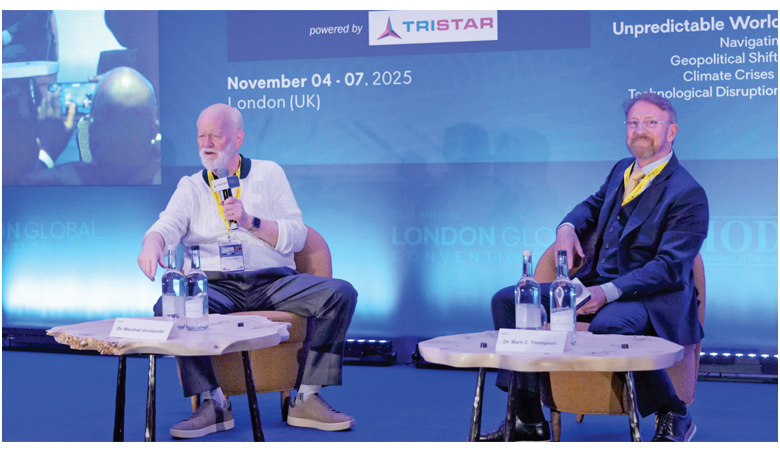
Dr. Mark C. Thompson
Chairman & Founder
Chief Executive Alliance, USA
&
Dr. Marshall Goldsmith
Executive Coach, Leadership Thought Leader
#1 NYT Bestselling Author, USA
The plenary session, explored the realities shaping modern leadership. Both Dr. Thompson & Dr. Goldsmith examined the forces that are transforming today's boardrooms, the behavioural habits that undermine even the most capable executives and the new expectations that define the CEO's role. What unfolded was a candid conversation about power, humility, change and the courage required to lead before the crisis arrives.
Special Remarks by Dr. Mark C. Thompson
Theme: When the Warning Comes Too Late
Five years ago, the likelihood of a CEO losing their position because of activist pressure was around one in twenty. Today, it has risen to between fifteen and twenty per cent. I have seen first-hand how quickly the activist “knock on the door” can appear and how often it leads to abrupt exits not only for chief executives but for board members as well.
What distinguishes the organisations, is how they navigate this pressure, does it lead to their willingness to begin transformation? I often encourage companies to conduct what I call an “internal activist review”. We challenge ourselves to write the activist letter before someone else sends it. We elevate the strategic plan by asking uncomfortable questions. What would an activist demand that we fix today? What blind spots have we ignored? This exercise can be existential, but it is also constructive. It allows us to confront major issues such as employee engagement and leadership pipelines, long before they become crises. Increasingly, we track potential successors by how they lead their people. Engagement, influence and emotional maturity have become as important as financial results.
Theme: What Most Organisations Get Wrong
When I evaluate organisations on succession planning, I often find a surprising gap between perception and reality. Many companies insist they have a well-defined CEO succession plan. Yet when I ask to review it, only a small number can produce one. When I ask for evidence of leadership development, sponsorship or mobility planning, the number becomes even smaller.
Sometimes the “plan” is no more than a sentence. If Mark is hit by a bus, Marshall will step in. That is not succession planning. Real planning requires deliberate development, clear pipelines and a partnership between the CEO, the Chief People Officer and the executive team. It is not simply a contingency. It is a foundation for cultural continuity.
Special Remarks by Dr. Marshall Goldsmith
Theme: The Habit Every Leader Must Break
When I look at the greatest behavioural flaw among successful leaders, I often find the same pattern . It is, “the overwhelming desire to win too much.” If it is important, we want to win. If it is trivial, we still want to win. If it does not matter at all, we somehow still want to win anyway.
I often illustrate this with a simple scenario from everyday life. Your partner suggests going to a restaurant you did not choose. You agree, but once you arrive, you spend the entire evening criticising the service. Why? Because you did not get your way. Almost every leader I coach fails this test.
My advice is simple. Just stop. Enjoy the evening. This need to be right, damages relationships at home and undermines leadership at work. It signals insecurity more than authority.
Theme: When Leaders Should Say Nothing
There is another trap that leaders fall into. We feel compelled to improve every idea, even if only by five per cent. Yet this small correction often cuts the other person's ownership by fifty per cent. I always remind CEOs that a “suggestion” from them is rarely heard as a suggestion. It is heard as an instruction. Sometimes real leadership means saying, “That is an excellent idea” and stopping there.
I admire leaders like Allan Mulally, who would begin meetings by asking, “Is there someone here who can answer this better than me?” When the answer was yes, he let them speak. That behaviour requires confidence, not ego.
Theme: Accepting Who Really Holds Authority
I also emphasise two lessons that every leader must internalise.
First, we are not here to prove how intelligent we are. Yet many executives spend their careers attempting to do exactly that.
Second, every decision is made by the person who has the power to make the decision. Leaders waste tremendous energy resisting this truth. I once coached an executive who tried to persuade every board member individually after a unanimous vote went against him. Ten calls, ten attempts at convincing and no change to the outcome. The board had spoken. It was their decision to make.
Peter Drucker taught me long ago that the owners may not always be right, they may not always be reasonable, but they own the company. Their decision stands.
Theme: The Reason We Lead
I close our session with a reminder that is deeply meaningful to me. Every person in a position of influence has the ability to make a positive difference. We are not here to prove how bright we are or to win every argument. Our purpose is to help others succeed.
The future of leadership belongs to those who lead with humility, clarity and intention. When we focus on relationships rather than ego, we create the conditions for others to grow. That is what real leadership looks like.
CONCLUSION
Our dialogue reinforced a simple truth. Leadership today requires both structural foresight and behavioural depth. Activist pressures are increasing, stakeholder expectations are transforming and the emotional demands on leaders are higher than ever.
To lead effectively, we must embrace early transformation, accept power dynamics, invest in our people and resist the temptation to win when winning does not matter. These principles are not merely strategic. They are human.
They define the leaders who will thrive in a world that is changing faster than any era before.
This was followed by an interactive Q&A session.
SPECIAL WARM-UP TALK:
THE ART OF SUSTAINABLE LEADERSHIP:
Communication that Connects, Inspires, and Unites
Mr. Doug Gordon
CEO Coach, Author, Corporate Trainer & TEDx Speaker
Ireland
Mr. Gordon emphasised that effective communication, marked by confidence, clarity and conviction, is central to creating positive relationships with boards, investors, working teams and clients. Drawing on his tenure at Columbia Threadneedle Investments, he described how he increased annual fund sales from £50 million to £1.75 billion, outlining principles that organisations can apply to achieve scalable growth. He also shared how he built a radio show and podcast from nothing to 368,000 live listeners through consistency and value-led content. Mr. Gordon further explained how professionals can structure compelling presentations and become paid speakers, referencing his engagements with Dell, Samsung, JP Morgan, Aviva and ESB. He discussed creating passive income from personal knowledge, illustrated by his success in writing a book and selling over 22,000 copies. In conclusion, he outlined strategies for scaling start-ups globally and building authentic, long-term client relationships with Hollywood actors, politicians, sports stars and major international organisations.

PLENARY SESSION – XIII
The Business Case for Good Corporate Governance
‘Special Address’ delivered by the Chair of the Session:
Mr. Balaji Nagabhushan
Group Chief Administrative Officer
Tristar Group, UAE
Mr. Nagabhushan delivered an insightful address reflecting on his professional journey and the evolution of risk management in modern organisations. He began by recounting his career, which started in 1986 in the banking sector. After 28 years in banking and finance, he chose to transition into a completely different domain, i.e. Logistics, when he joined the Tristar Group. He noted that this shift was significant, but he was fortunate to have an exceptional mentor who guided him through the unfamiliar business landscape. He contrasted the earlier, simpler era of risk management, when responsibilities centred on buying insurance, basic underwriting and qualitative scoring, largely handled by treasury teams or risk-unit heads. Board oversight was minimal, and risks were viewed as isolated hazards. Mr. Nagabhushan also highlighted how today's environment has shifted to integrated risk management, combining scenario analyse, stress testing and advanced modelling. Governance now demands stronger oversight, including dedicated risk committees. He concluded by noting that organisations are seldom credited for crises avoided, only for those survived, and warned that the greatest danger often lies not in external threats but in high-priority risks that remain unresolved for years.
This was followed by Presentations of the Case Studies on 'Corporate Governance' by:
1. Micron Technology, Inc., USA
2. Heritage Foods Limited, India
3. Coforge Limited, India
4. Blue Dart Express Limited
5. SEIL Energy India Limited
This was followed by Presentations of the Case Studies on 'Risk Management' by:
1. LTIMindtree Limited
2. Infosys Limited

DAY 3: NOVEMBER 06, 2025
GLOBAL LUNCHEON BUSINESS MEET FOR PROMOTING TRADE & INVESTMENT
HOUSE OF LORDS, UK PARLIAMENT, WESTMINSTER, LONDON
The Global Business Meet was held in the august setting of the House of Lords, Parliament of the United Kingdom. The proceedings commenced with a brief one-to-one business promotion session, fostering meaningful interactions among distinguished participants.
The gathering was formally inaugurated with a warm and thoughtful 'Welcome Address' by Mr. Amrit S. Mann, OBE, JP, FRSA, Solicitor and Businessman, representing Baroness Verma. His remarks set a purposeful tone for the Meet. Mr. Mann welcomed the delegates and recognised LGC as a leading international forum on Corporate Governance and Sustainability. He highlighted the historic ties between the House of Lords and India, noting that the focus today is interdependence in trade, innovation, and sustainable growth. Referring to the recently concluded India-UK Free Trade Agreement, he described it as a significant milestone reflecting shared ambition and mutual benefit, and commended IOD, India for strengthening UK-India collaboration.
This was followed by an 'Introduction Address' by Dr. Graham Wilson of the Department of Psychology and Counselling, University of Oxford. His thoughtful remarks provided helpful context for the discussions that followed, and he noted that the Business Meet offers an important opportunity to build relationships that support trade and investment across borders.
Next, Mr. Ashok Kapur, IAS (Retd.), Director General, IOD, India, 'Opening Remarks', underscored the significance of the event and outlined its core objectives with clarity and purpose. He announced the gathering of the recent passing away of Mr. Gopichand Parmanand Hinduja, Late Chairman - Hinduja Group; and Hinduja Automotive Limited, UK, a noted leader of the Indian diaspora and a leading industrialist, whose vision and support were instrumental in bringing IOD, India to the United Kingdom and invited the audience to honour his memory. Thereafter, he requested all present to observe a 'minute of silence' in tribute to the memory of Late Mr. G. P. Hinduja.
The 'Special Remarks' were presented by Dr. Tayeb Kamali, UAE Chairman-IOD, India, and Chairman of the Board of Trustees, Abu Dhabi School of Management (ADSM), whose global outlook and perspectives added notable depth to the proceedings.
The highlight of the Global Meet was the 'Keynote Address' by The Rt. Hon. Lord Jonathan Marland, Chairman of the Commonwealth Enterprise and Investment Council, former UK Minister and Prime Minister's Trade Envoy. Lord Marland offered a thoughtprovoking reflection on leadership, enterprise, and international cooperation, providing the noted audience with a compelling blend of insight and foresight. He emphasised on the strategic value of the UK-India trade relationship, noting the active engagement of the UK Parliament in advancing the Free Trade Agreement, the importance of Commonwealth alliances, recognising their role in promoting trade, expanding business opportunities, and strengthening global networks. His address resonated strongly with participants and set a forward-looking tone to the discussions that followed.
Another notable moment was the announcement of a landmark hospitality partnership by Mr. Manoj K. Raut, CEO and Secretary General, IOD, India. The agreement, signed between Mr. Martin R. Smura, Chairman of The Union of Grand Metropolitan Hotels, and Mr. Ramesh Arora, Chairman of The Signature Hospitality Group, was poised to redefine the global hospitality landscape. Mr. Raut congratulated both leaders on this significant achievement, noting that the partnership stands as a testament to shared vision, collaboration, and a commitment to excellence. He added that the industry is eagerly anticipating the impact that their combined expertise and passion will bring in the future.
The Business Meet highlighted that Ethical Governance is becoming increasingly important, especially as rapidly advancing technologies continue to reshape every sector. Several guests examined pivotal historical developments since the mid-twentieth century, noting the accelerating rise of intelligent machines and referring to Google's 'Willow', a new quantum chip which significantly reduces errors as it scales up, a major breakthrough in quantum error correction, as an example of the extraordinary pace at which technology is expanding human capabilities. While acknowledging the remarkable promise of Artificial Intelligence, they also reminded the select audience that such rapid innovation carries significant risks if left without proper oversight. Drawing upon the philosophies of great thinkers of Ancient India and founders of Modern India, Chanakya and Mahatma Gandhi, they emphasised that Power must always be guided by Purpose and Responsibility. This led to a compelling question for all present: “whether innovation, particularly in Artificial Intelligence, is progressing in a manner consistent with ethics, accountability and the wider interests of society that it is supposed to serve.”
The dialogue was further enriched by reflections on cultural values that underpin excellence in service, the rising strategic importance of data ownership in the twenty-first century, and the growing expectation for sustainability-led business models. Speakers highlighted the need for organisations to build resilience by aligning commercial ambition with environmental and social responsibility. The importance of humility in learning was also illustrated through a Socratic reminder that genuine progress often begins with the willingness to first unlearn. Examples of responsible innovation, ranging from recycling initiatives to Circular-Economy practices were demonstrated, and how meaningful social impact can coexist with robust business performance. Reflective tributes paid homage to leaders who had played an essential role in strengthening institutional partnerships and encouraging global cooperation. Collectively, these contributions affirm a shared commitment to purposeful, resilient leadership in an increasingly complex and fastchanging world.
A complete list of the distinguished international speakers & thinkers who delivered 'Special Remarks' at the Business Meet is provided below:

1. Mr. Balaji Nagabhushan
Group Chief Administrative Officer
Tristar Group, UAE
Mr. Nagabhushan reflected on his humble beginnings and the remarkable journey that brought him to a platform as distinguished as the House of Lords. He shared that he has long been inspired by the visionaries present at the forum, and that IOD India had given him an early opportunity to grow and contribute. Recalling his time in the UAE, he noted how critics once predicted Dubai would sink, yet its trajectory only continued upward, with plans already extending to 2050 and 2070. He also revisited the decisive steps that forged the enduring collaboration between IOD, India and Tristar, shaping it into the partnership it is today.
2. Mr. Venu Lambu
Chief Executive Officer and Managing Director
LTIMindtree, UK
Mr. Lambu began by introducing LTIMindtree as part of L&T, India's largest engineering conglomerate. He highlighted the strengthening relationship between the UK and India, noting the UK's strategic position for crossborder collaboration. He emphasised the growing focus on Artificial Intelligence, sharing use cases for new business opportunities and underscoring how AI is fundamentally reshaping business models and transforming the way organisations operate.
3. Mr. Praveen Pardeshi, IAS
Chief Economic Advisor to the Chief Minister of Maharashtra; &
CEO, Maharashtra Institution for Transformation (MITRA), India
Mr. Pardeshi recounted that in 2021; while serving as Municipal Commissioner in Mumbai, he was approached by a company exploring the manufacture of a COVID-19 vaccine. He highlighted the remarkable journey of the UKorigin Oxford technology, the AstraZeneca and the Serum Institute collaboration, which enabled the vaccination of India and several nations from Ghana to the Caribbean. He used this example to demonstrate the transformative power of India-UK partnerships. He then spoke about Maharashtra, India's leading industrial state, noting its current position as a half-trillion-dollar economy and its ambition to double to a one-trillion-dollar economy within the next five years.
4. Mr. Sanjeev Jaiswal, IAS
Vice President & Chief Executive Officer
Maharashtra Housing and Area Development Authority (MHADA), India
Mr. Jaiswal highlighted India's goal of achieving a $5 trillion economy by 2047, noting Maharashtra's central role and Mumbai's ambition to contribute $1 trillion. He praised Chief Minister - Mr. Devendra Fadnavis's focus on infrastructure, investment, and inclusive growth, and outlined the plan to build three million homes across the Mumbai Metropolitan Region. Acknowledging the challenges, he stressed the need for a renewed approach, particularly through cluster redevelopment, and pointed to major projects set to reshape the city in the coming years.
5. Mr. Mohit Ralhan
Global CEO and Managing Director
TIW Capital, Dubai (UAE)
Mr. Ralhan highlighted the pivotal post-1945 moments that reshaped the modern world. The atomic bomb redefined global power, the 1969 end of the gold standard elevated the US dollar, and the 1995 advent of the World Wide Web transformed global connectivity. By 2020, he noted, Artificial Intelligence had emerged as the next defining force, with machine intelligence challenging long-held societal concepts. Citing examples such as Google's “Willow” solving complex equations within minutes, he concluded that the central challenge now lies in governance to ensure AI's efficiency remains ethical, accountable, and safely regulated.

6. Mr. Rahul Himalian
Director-Tourism & Marketing
Indian Railway Catering and Tourism Corporation, (IRCTC)
Mr. Himalian emphasised that when we approach the world with an open mind and a blank slate, we naturally begin absorbing ideas. Machine learning functions in much the same way, starting as a blank canvas that gathers data and learns continuously. Artificial intelligence, he noted, is similarly shaped and strengthened by the way we nurture it each day. He concluded by highlighting the innate spirit of hospitality embedded in Indian culture, a quality that continues to distinguish India on the global stage.
7. Mr. Ramesh Arora
Founder & CEO
Signature Hospitality Group London, UK
Mr. Arora expressed his gratitude for the upcoming partnership with the Union of Grand Metropolitan, noting the significant opportunities it could create for the growth of the hospitality sector. He extended his heartfelt thanks and commended IOD for its invaluable contributions over the years, particularly in advancing the standards and practice of corporate governance.
8. Dr. Angelo George
Chief Executive Officer
Bisleri International Pvt. Ltd., India
Dr. George introduced Bisleri and highlighted how sustainability has become deeply embedded in the company's business strategy, shaping the brand, the communities it serves, and the planet at large. The ongoing challenge, he noted, is not only to remain relevant and exciting, but to meet the expectations of a new generation of consumers seeking purpose-driven action. He outlined the organisation's key initiatives to stay plasticfree, conserve water, and reduce pollution, and announced that Bisleri is creating India's first framework for measuring, verifying, and valuing an entity's water footprint.
9. Mr. Vijay Karia
Chairman and Managing Director
Ravin Group of Companies, India
Mr. Karia remarked that India today stands at the centre of global developments, noting that the country has become truly international and remains at the forefront of many transformative shifts around the world. Reflecting on the occasion, he honoured one of IOD's guiding pillars, the late Lt. Gen. Jaswant Singh Ahluwalia, whose unwavering commitment to strengthening international relations helped shape the organisation's global stature. He added that IOD India has grown multi-fold due to the dedication and hard work of its team, offering them warm appreciation and applause for their collective efforts.
10. Mr. Manoj Jain
Chairman and Managing Director
Bharat Electronics Limited
(a Navratna Defence PSU, Ministry of Defence, Govt. Of India)
Mr. Jain highlighted his organisation's long-standing work and its most significant partnership with the DRDO, noting that this collaboration has been central to their growth. Building on this foundation, the organisation is now expanding beyond Indian technologies and forging connections with global innovation ecosystems. He explained that this journey also led to the realisation that developing their own R&D capabilities was essential for delivering seamless, end-to-end solutions. He emphasised the importance of learning from the agility of start-ups and adapting quickly to emerging technologies in order to stay competitive and future ready.
11. Mr. Saurabh Tiwari
Director, Middle East
The Indian Hotels Company Limited (IHCL)
Mr. Tiwari shared that Taj stands among the finest hospitality brands, distinguished by its deep investment in developing its people and leadership. This commitment drives strong profitability, a significant portion of which supports philanthropic initiatives. He noted that Taj began with one man's vision, and its enduring purpose is rooted in giving back to the community. Highlighting the brand's iconic hotels, exceptional service, and sustainable practices, he emphasised that Taj is a way of life, transforming service into lived experience and hospitality into enduring heritage.

12. Mr. Raghav Singhal
Managing Director & CEO
ICICI Bank UK Plc.
Mr. Singhal observed that we are meeting at the dawn of a new era marked by financial expansion and intelligent, technology-driven growth. Free Trade Agreements, he noted, do far more than facilitate trade as they pave the way for deeper investment flows and long-term economic partnerships. He underscored the pivotal role of directors as the individuals who ultimately make things happen, shaping strategy, driving execution, and ensuring that organisations are prepared to seize the opportunities emerging in this transformative moment.
13. Ms. Girija Subramanian
Chairman cum Managing Director
The New India Assurance Co Ltd.
Ms. Subramanian noted the enriching discussions on UK trade and the historic FTA, which set the stage for broad collaborations. Introducing The New India Assurance as a flagship long-term insurance company, she highlighted the sector's historic transformation, supported by recent government initiatives and updated regulatory standards that enhance investor confidence and customer focus. Citing the rise of GIFT City as a key financial hub, she invited global investors to explore emerging opportunities in India.
14. Dr. Mark C. Thompson
Chairman & Founder
Chief Executive Alliance, USA
Dr. Thompson spoke about the idea of 'growth' and noted that true progress comes from investing in quality education and preparing young people to become futureready leaders. He emphasised the vital role of mentors, the individuals who step forward to guide and align emerging talent with the broader visions of their organisations and nations.
15. Mr. Rakesh Swami
Group President - Corporate Affairs
Godrej Industries Limited, India
Mr. Swami applauded IOD for convening the event at a pivotal moment, as India and the UK enter the Comprehensive Economic and Trade Agreement (CETA). He noted that this landmark bilateral partnership is expected to propel trade to $100 billion within the next five years. He also highlighted Godrej's enduring legacy since the era of Swaraj and its evolution into one of India's fastest-growing companies, underscoring the organisation's long-standing commitment to national development and global competitiveness.
16. Mr. Dhian Singh Ubhi
Advisor, Climate Change to the Govt. of UK
Mr. Ubhi stated that he wished to address the issue of air pollution and the critical role played by industries, organisations, and individuals in contributing to it. While the subject receives considerable discussion, he observed that meaningful action remains limited. He emphasised the urgent need for collective responsibility and concrete measures to move beyond conversation and begin driving real, measurable change.
17. Mr. J. K. Arora
Chairman & CEO
Tradologie.com, India
Mr. Arora recalled an old saying: “If we survive today, we will see tomorrow,” noting that AI is not the immediate problem some perceive it to be. Instead, he suggested that many of the world's current challenges could be eased through the adoption of a common global currency, an idea that has been debated extensively, particularly in relation to currency parity and exchange stability, and one that was once close to implementation.

18. Dr. Regeena J Murali
Founder & Chancellor
Jeppiaar University, India
Dr. Murali reflected on the institution's successful journey over the years and emphasised the importance of stronger collaboration to advance education. He called for developing curricula that align more closely with the evolving needs of industry, ensuring that future talent is better equipped to meet the demands of today's rapidly changing business landscape.
19. Mr. Mahendra Mehta
Founder Director
Mercure Metals & Alloys Pvt. Ltd.
Sr. Vice President
Bombay Metal Exchange (BME), India
Mr. Mehta highlighted his organisation's long history and the pivotal role of BME in shaping India's non-ferrous metal sector over the past nine decades, acting as a vital bridge between trade and industry while promoting ethical practices and fostering sustainable, long-term growth.
20. Dr. Tasneem Shariff
Co-Founder and Secretary General
The Diplomatic Club, India
Dr. Shariff highlighted her organisation's vision of promoting people's diplomacy and fostering meaningful global dialogue. She noted with pride that they now have more than 56 chapters worldwide, serving as platforms for trade, commerce, youth diplomacy, and cultural exchange. She concluded by inviting all stakeholders to collaborate and work together in advancing these shared objectives.
21. Mr. Paresh Rughani
International Motivational Speaker, UK
Mr. Rughani reflected on his journey from chartered accountant to pursuing his passion for public speaking, noting that the greatest human fear is not heights but speaking before an audience. He introduced “PEACOCK,” his signature public-speaking programme designed to help individuals overcome this challenge. Concluding his remarks, he highlighted the growing role of IOD in strengthening business networks and its continued progression from being a good organisation to a great one.
The Meet drew to a close with an air of optimism and purpose, having brought together an exceptional assembly of business leaders, policymakers, and thought partners from across the globe. The event stood as a testament to the power of dialogue, diplomacy, and shared vision in advancing sustainable growth and responsible corporate leadership. The exchange of ideas fostered meaningful connections and renewed commitment towards shaping enterprises that are not only profitable but purposeful and resilient.


DAY 4: NOVEMBER 07, 2025
SPECIAL SESSION ON
“CULTIVATING INNOVATION AND SUSTAINABILITY AS CORE BOARDROOM PRIORITIES”
'THE PAVILION’
UNIVERSITY OF WESTMINSTER, LONDON
The fourth and the last day of the Convention unfolded at 'The Pavilion', University of Westminster, UK, centred on the discerning theme, “Cultivating Innovation and Sustainability as Core Boardroom Priorities.” The proceedings commenced with a gracious 'Welcome Remarks' delivered by Prof. Brendon Noble, Director, Institute of Healthy Urban Living, University of Westminster, UK, alongside Mr. Manoj K. Raut, CEO & Secretary General, Institute of Directors (IOD), India.
This was followed by the 'Special Remarks', delivered by Mr. Balaji Nagabhushan, Group Chief Administrative Officer, Tristar Group, UAE, and an insightful 'Special Address' delivered by Prof. Charlie Jeffery, CBE, Vice-Chancellor & President, University of York, UK.
One of the day's main session was a compelling Fireside Interactive Session on “Strengthening Trade and Investment in an Unpredictable World,” featuring Mr. Martin Wolf, CBE, Chief Economics Commentator, Financial Times, UK, in conversation with Dr. R. Seetharaman, Economist, Independent Director of L&T Finance Ltd., and former Group CEO, Doha Bank, Qatar.
Thereafter, a 'Special Address' was delivered by Mr. Avadhesh B. Mathur, IPS (Retd.), former Secretary in the Prime Minister's Office, India, which further enriched the high-level deliberations.
A distinguished Felicitation Ceremony honoured the IOD Global LIFE Members, recognising their steadfast commitment and their enduring support in propelling the Institute's global mission.
The programme featured an erudite Panel Discussion on the central theme of the day. The session was expertly moderated by Prof. Sam Medhat, Chief Executive, Institute of Innovation and Knowledge Exchange (IKE Institute), UK. The esteemed panel of distinguished speakers included Prof. Mike Saks, Emeritus Professor, University of Suffolk, Professor, University of Westminster & University of York, UK, Mr. Mike Pilbeam, Director and Innovation Council Board Member, Institute of Innovation & Knowledge, Prof. (Dr.) R.P. Banerjee, Chairman & Director, EIILM- Kolkata, India, Dr. (CA) Sahitya Chaturvedi, Secretary General, Indian Business & Professional Council (IBPC), Dubai, Ms. Dipti Pardeshi, Advisory Board Member and Former Director, WHO and IOM, Geneva, Dr. Binod Atreya, Managing Director, Banking, Finance & Insurance Institute of Nepal (BFIN), Dr. Saleesha A Stanley, Pro Chancellor, Jeppiar University, India, Mr. Sunil Bahadur Thapa, Principal Political Advisor to the President.


The distinguished Panellists, drawn from diverse sectors across the globe, convened for a stimulating and wideranging debate centred on the pivotal question: “How can Boards ensure that sustainability is seamlessly embedded within an organisation's innovation strategy?” In addition to this core inquiry, the panel engaged in an incisive discourse on the boardroom's expanding mandate and encompassing the stewardship of digital transformation, the advancement of inclusive development, the championing of social responsibility, and the cultivation of resilient and forward-looking innovation ecosystems.
The final day drew to a close with a plan for future action, and a 'Summary of Recommendations' and 'Closing Remarks' delivered by Prof. Colin Coulon-Thomas, Director-General, UK and Europe Operations, Institute of Directors (IOD), India. He articulated the key takeaways and future priorities distilled from the four days of deliberations. Prof. Colin expressed profound gratitude to all participating dignitaries, speakers, and delegates whose contributions rendered the London Global Convention and Business Meet a resounding success that it was. He extended warm wishes for their future endeavours and thanked them for their unwavering support in advancing IOD's mission to champion excellence in leadership and governance.

FELICITATION OF IOD LIFE MEMBER(


IOD, India is especially grateful to its Event Partners:
Our Presenting Partner: Tristar Group, UAE
Our Principal Partner: Maharashtra Industrial Development Corporation (MIDC)
Our Platinum Partner: IDFC FIRST Bank Limited
Our Gold Partners:
1. NBCC (India) Limited
2. Bharat Petroleum Corporation Limited
3. Bisleri International Private Limited
4. Maharashtra Housing and Development Authority
5. ICICI Bank UK Plc.
6. Ravin Group
7. TIW Capital Group, Dubai
8. Godrej Industries Group
9. Eastern Institute for Integrated Learning in Management (EIILM), Kolkata
10. Veer Technologies
11. Granules India Limited
Our Silver Partners:
1. LTIMindtree Limited
2. NRB Bearings Limited
3. CEO Ready: A Harvard Business Review Publication By Mark Thompson
4. Apeejay Stya Svran Group
5. KP Group
6. Blue Cloud Softech Solutions Limited
7. Chieron Active Ingredients Private Limited
8. Bharat Electronics Limited
Our Bronze Partners:
1. World Gold Council
2. Indian Railway Catering and Tourism Corporation Limited (IRCTC)
3. SPP Pumps Limited.
4. Punjab National Bank
5. State Bank of India
6. New India Assurance Company Limited
7. Tradologie.com
8. Hindustan Aeronautics Limited
9. India Infrastructure Finance Company Limited
10. Here & Now 365
11. Jeppiaar University
12. Mercure Metals & Alloys Private Limited
13. The Diplomatic Club
Our Strategic Partner: ACCA (the Association of Chartered Certified Accountants)
Our Hospitality Partner: Indian Hotel Company Limited
Supported By: Signature Hospitality Group
Our Supporting Partners:
1. London Chamber of Commerce and Industry
2. The Institute of Company Secretaries of India (ICSI)
3. The Institute of Cost Accountants of India (ICMAI)
4. FICCI FLO
5. Banking, Finance and Insurance Institute of Nepal
6. Dubai Quality Group
7. Maldives Capacity Development and Governance Institute
8. Vietnam Independent Directors Association
9. Institute of Corporate Governance of Kenya
10. Lalcap Limited
Our Knowledge Partner: University of Westminster
Our Media Partner: Republic TV
This Report is compiled by:
Mr. Ashok Kapur, IAS (Retd.)
Director General
Institute of Directors (IOD), India
and
Ms. Violina Das
Assistant Editor – Director Today
Institute of Directors (IOD), India

 Back to Home
Author
Institute of Directors India
Bringing a Silent Revolution through the Boardroom
Institute of Directors (IOD) is an apex national association of Corporate Directors under the India's 'Societies Registration Act XXI of 1860'. Currently it is associated with over 31,000 senior executives from Govt, PSU and Private organizations of India and abroad.
Owned by: Institute of Directors, India
Disclaimer: The opinions expressed in the articles/ stories are the personal opinions of the author. IOD/ Editor is not responsible for the accuracy, completeness, suitability, or validity of any information in those articles. The information, facts or opinions expressed in the articles/ speeches do not reflect the views of IOD/ Editor and IOD/ Editor does not assume any responsibility or liability for the same.