 Quick Links
 Connect us

 Directors Databank (Empannel Yourself)
 Become a
  Become a
  Blog
Blog
 Become an Awards Assessor
 Publications
 Contact Us






Impact of Davos Forum on Corporate Governance in 2026


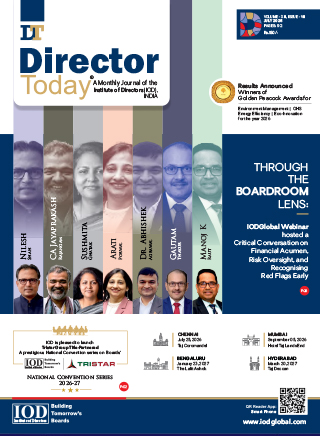
The Institute of Directors (IOD) is projecting the likely Corporate Governance Trends in the coming year and also presenting them in this issue of Director Today. The thrust of this article is on the impact of the World Economic Forum 2026 on Corporate Governance.
The World Economic Forum Annual Meeting (Jan 19-23, 2026) in Davos gathers leaders from government, business, civil society, and academia to tackle global challenges under the theme “A Spirit of Dialogue.” Its key agendas cooperation in a contested world, deploying innovation responsibly, unlocking growth, sustainability, and investing in people implicitly link to corporate governance by shaping expectations of board leadership, strategic direction, and accountability in a global context.
Beyond a traditional shareholder focus, WEF promotes stakeholder capitalism, where companies are expected to create value for all stakeholders (employees, society, and environment) and enhance corporate governance practices to reflect this broader responsibility.
Corporate Governance Shifts through the Lens of WEF: Setting Trends for 2026
From the World Economic Forum's perspective, Corporate Governance in 2026 is expected to embody the following core dimensions:
• Trust-Based & Integrity-Focused Governance: WEF emphasises that integrity and ethical governance are not just compliance activities but performance enablers, building trust with stakeholders and unlocking business value. Governance models should elevate trust over mere procedural compliance, framing anti-corruption and ethical conduct as drivers of sustainable growth, innovation, and competitiveness.
• Stakeholder-Integrated Strategy: Driven by stakeholder capitalism, boards must consider broader societal impact and align governance with the expectations of investors, regulators, communities, and employees, creating accountability beyond short-term results.
• Governance of Technology and Risk: Effective governance must include oversight of cyber and digital risks, AI, and technological disruption. Boards must govern the impact of technology, embed ethical AI frameworks, and ensure that innovation is balanced with resilience and societal trust.
• ESG and Systemic Accountability: ESG frameworks are no longer peripheral but core governance elements that help boards manage systemic risk, balance economic performance with social and environmental impact, and align with long-term goals.
• Long-Term Strategic Resilience: Davos themes emphasise governance beyond short-term results. Leadership continuity and governance preparedness will be highlighted, focusing on resilient and sustainable systems.
Corporate Governance 2026: The Control Pillar of Long-Term Value Creation
By 2026, corporate governance will move far beyond a narrow focus on compliance. It will become a central pillar of long-term value creation, stakeholder trust, and organisational resilience, shaped by technological change, heightened societal expectations, and increased scrutiny.
Against this backdrop, Boards should integrate the following priorities into their governance journey:
• Evaluate innovation not only for novelty but for its purpose, impacts, and externalities, ensuring it is responsible and sustainable.
• Embrace the concept of a 'Unitary Board', leveraging collective wisdom and applying principles of materiality to steer the organisation effectively.
• Consider implementing “Shadow Boards” to strengthen generational insight, providing younger professionals a platform to contribute perspectives directly.
• Prioritise evidence-based action by building robust data systems to define and demonstrate “responsible” practices, such as tracking sourcing, value creation, and indirect impacts.
• In the era of digital governance, ensure adequate human oversight for autonomous AI applications, appointing individuals who understand potential 'Black Box' risks.
With these integrations, corporate governance in 2026 will no longer be about ticking boxes; it will be about navigating complexity with integrity, transparency, and foresight.
Conclusion
Directors are entering 2026 with a focused yet optimistic outlook. As uncertainty continues, boards are prioritising stronger oversight, improved risk management, and more disciplined execution. Good Governance is no longer a defensive mechanism but a strategic asset that enables organisations to thrive. Companies that embrace robust, ethical, and forward-looking governance frameworks are better equipped to earn trust, attract capital, retain talent, and create lasting value.
In this sense, Corporate Governance in 2026 is not just about how companies are governed, but about how they contribute to a more resilient and sustainable global economy.
 Back to Home
Author

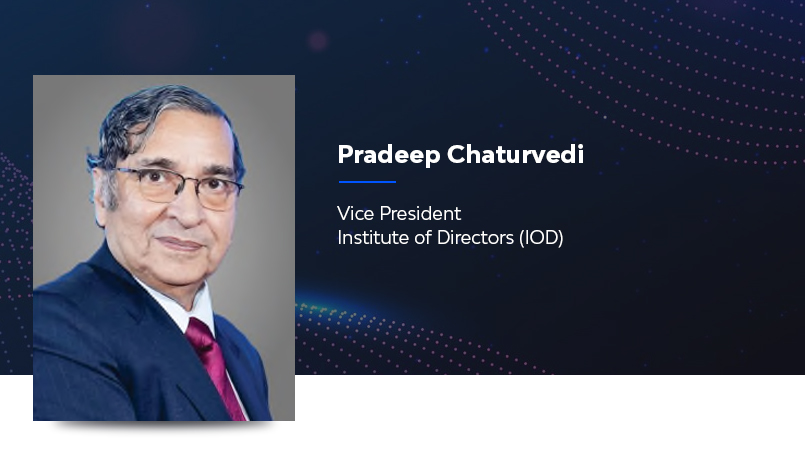
Pradeep Chaturvedi
Vice President - Institute of Directors
He is former Advisor FAO & former Chairman, Institution of Engineers, Delhi. He is a Mechanical Engineer & has been involved with Environment & Energy Policy (planning & implementation) of energy projects under the UN Agencies for over three decades in India & other Asian and Pacific countries. He is Vice-President, World Environment Foundation & Institute of Directors, India.
Owned by: Institute of Directors, India
Disclaimer: The opinions expressed in the articles/ stories are the personal opinions of the author. IOD/ Editor is not responsible for the accuracy, completeness, suitability, or validity of any information in those articles. The information, facts or opinions expressed in the articles/ speeches do not reflect the views of IOD/ Editor and IOD/ Editor does not assume any responsibility or liability for the same.