 Quick Links
 Connect us

 Directors Databank (Empannel Yourself)
 Become a
  Become a
  Blog
Blog
 Become an Awards Assessor
 Publications
 Contact Us






The Code for a Rainbow Nation - South Africa's journey towards an inclusive and stakeholder-led Corporate Governance


Insights by
Prof. (Judge) Mervyn E. King SC
In 1992, I was approached by Institute of Directors in South Africa and Mr. Nelson Mandela to form a committee and to draft a Code on Corporate Governance suitable for the special circumstances in South Africa. Those special circumstances were that we had been a country of unequal opportunity under the Apartheid laws of the then National Government whereas we knew in 1992 that in 1994 we would enter our new dispensation of becoming a democracy.
This meant that fellow citizens on the basis of race that were excluded from the different spheres and activities in the corporate world would now have equal opportunity to do so, but there was no structure or guidance to help them on this journey. Hence the request for me to set up a committee and to draft a Code suitable for those circumstances.
In 1992, I formed that committee which consisted of persons reflective of what became known as our rainbow nation. At the time the corporate governance dictate was the primacy of the shareholder. I concluded that to come out with a Code based on that foundation would be seen to be, in the circumstances, as white monopolistic capital. In consequence I wittingly steered my committee away from the thinking at the time and we came out with a model which was issued in 1994 that emphasised board decision-making in the long-term best interests and overall health of the company, while recognising the importance of understanding and responding to the needs, interests, and expectations of stakeholders relevant to the business.
I wrote every word of that report which assumed my name as the King Report on Corporate Governance in South Africa. The only sub-committee was one on ethics which was chaired by a senior executive in South Africa.
I was then appointed 'Chairman' of the United Nations Committee on Corporate Governance and Oversight. It was in that position that I became steeped in sustainability issues. Research by Ocean Tomo showed that only 20% of the market capitalization of companies listed on the great stock exchanges of the world was reflected in the financial statements issued by a company and the rest 80% was made up of the then so-called non-financial aspects which morphed into the ESG factors which today are referred to as the sustainability issues.
In 2002 I recommended to my committee that it was time that South African companies should report on sustainability issues using the guidelines that had been initiated by the Global Reporting Initiative (GRI) in Amsterdam, of which I became the chairman. This second report was issued and became known as the King II Report.
In 2009, the King III Report was launched, advancing the principle that good governance should be assessed by the outcomes achieved by a company. It identified four core outcomes as the benchmarks of sound governance:
1. Sustainable value creation;
2. The establishment of adequate and effective systems for the conduct of the company's business;
3. Efficient and effective leadership by directors acting as guardians of the company's assets and affairs; and
4. The presence of trust and confidence in the company, reflected in the legitimacy of its operations within the communities in which it operates.
Only 20% of the market capitalization of companies listed on the great stock exchanges of the world was reflected in the financial statements issued by a company and the rest 80% was made up of the then so-called non-financial aspects which morphed into the ESG factors which today are referred to as the sustainability issues.
The late Sir Adrian Cadbury described 'King III' as being in the forefront of corporate governance codes in the world. In 2016 the King Committee issued 'King IV' where we said that operationally the company uses its resources and works with stakeholders on an integrated basis and therefore, we should report on such a basis. In that report we recommended integrated thinking and doing an integrated report by the board. It is the most informed collective to show how the financial impacts on the nonfinancial and vice versa rather than leaving it to the comparatively uninformed user to draw their conclusions. Also, to leave the financial and sustainability reports in two silos is divorced from reality.
In 2025 the 'King V' report was issued. This report was essentially based on the King IV report but set out in four sections.
• The first section recorded the four outcomes which should be achieved by a company to be said to be practising good governance.
• The second section set out the code to be followed by preparers and practitioners.
• The third section is a glossary of terms, and
• The fourth section is a template of reporting on how a company has set out to achieve the principles of the code.
The language of King V has been simplified with the toning down of technical terms and made it easier for small and medium sized companies to follow the recommendations of the report.
Each of the King Reports has become a listing requirement on the Johannesburg Stock Exchange.
South Africa is generally seen to be one of the leaders in the world on corporate governance.
 Back to Home
Author
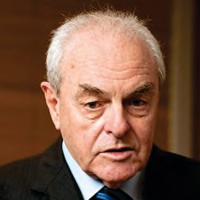
Prof. (Judge) Mervyn E. King SC
Chair Emeritus - King Committee on Corporate Governance (SA), IIRC & GRI and former Judge of Supreme Court of South Africa
Owned by: Institute of Directors, India
Disclaimer: The opinions expressed in the articles/ stories are the personal opinions of the author. IOD/ Editor is not responsible for the accuracy, completeness, suitability, or validity of any information in those articles. The information, facts or opinions expressed in the articles/ speeches do not reflect the views of IOD/ Editor and IOD/ Editor does not assume any responsibility or liability for the same.