 Quick Links
 Connect us

 Directors Databank (Empannel Yourself)
 Become a
  Become a
  Blog
Blog
 Become an Awards Assessor
 Publications
 Contact Us







Latest from the Regulator - November 2025

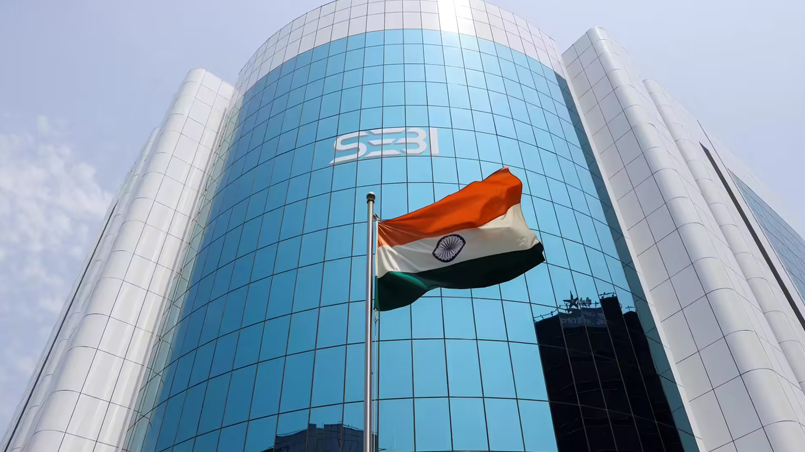
1. SEBI modifies Related-Party Transactions norms
In yet another move to strengthen the RPT norms and also deepen transparency surrounding the Related Party Transactions (RPT), the Securities and Exchange Board of India (SEBI) issued a notification on 19 November 2025 in the form of Securities and Exchange Board of India (Listing Obligations and Disclosure Requirements) (Fifth Amendment) Regulations, 2025. The said notification primarily focuses on the following:
• Minimal RPT disclosure to the Audit Committee (Annexure 13A):
For RPTs that do not exceed one per cent of annual consolidated turnover or Rs. 10 crore, whichever is lower, the listed entity shall provide 'Minimum information to the Audit Committee for approval of RPT' specified in Annexure-13A, provided in the SEBI Circular No.: SEBI/HO/CFD/CFD-PoD-2/P/CIR/2025/135
• A transaction with a related party shall be considered material:
If the transaction(s) to be entered into individually or taken together with previous transactions during a financial year, exceed the thresholds specified in Schedule XII of these regulations Excerpt from Schedule XII is shared below:
| Consolidated Turnover of Listed Entity | Threshold |
| Up to Rs. 20,000 Crore | 10% of the annual consolidated turnover of the listed entity |
| More than Rs. 20,000 Crore to upto Rs. 40,000 Crore | Rs. 2,000 Crore + 5% of the annual consolidated turnover of the listed entity above Rs. 20,000 Crore |
| More than Rs. 40,000 Crore | Rs. 3,000 Crore + 2.5% of the annual consolidated turnover of the listed entity above Rs. 40,000 Crore or Rs. 5,000 Crore, whichever is lower |
The above materiality thresholds are a significant shift from the Earlier Framework, i.e. –
A transaction with a related party shall be considered material if the transaction(s) to be entered into individually or taken together with previous transactions during a financial year, exceed ten percent of the annual consolidated turnover of the listed entity as per the last audited financial statements of the listed entity.”
• Validity of Shareholders' Omnibus Approvals on RPTs:
i. Approvals given by shareholders in Annual General Meeting (AGM) will remain valid until the next AGM or up to 15 months, whichever is earlier.
ii. Approvals granted in other than AGM, the validity shall not exceed one year from the date of such approval.
• Audit Committee Approval for Subsidiary RPTs
| S. No. | Scenario | When approval of Parent's Audit Committee is required? |
| 1. | Listed Subsidiary | Not Required If the listed subsidiary has to comply with SEBI (LODR) • Regulations 23 – Related Party Transactions • Regulation 15(2) – Applicability of Corporate Governance norms for Listed Entities |
| 2. | Unlisted Subsidiary (with Audited Financials) | Required if: Transaction value exceeds the Lower of • 10% of subsidiary's standalone turnover OR • Parent's Schedule XII threshold. |
| 3. | Unlisted Subsidiary (without Audited Financials) | Required if: Transaction value exceeds the Lower of • 10% of subsidiary's paid-up share capital + securities premium* OR • Parent's Schedule XII threshold). *value as on a date, not older than three months prior to the date of seeking approval of the audit committee |
| 4. | Unlisted Subsidiary of a Listed Subsidiary | Not Required from Ultimate Parent Approval from the Listed Subsidiary's Audit Committee suffices |
Universal Conditions (for S. No. 2 & 3 above):
• Applies only to RPTs where the listed parent is NOT a party.
• The cumulative transaction value with a related party exceeds Rs. 1 crore in the financial year.
This framework ensures oversight is applied where needed, without creating redundant layers of approval for alreadyregulated listed subsidiaries.
For more details, please visit:
2. SEBI's New Rules of “Regulatory Comfort”
The Securities and Exchange Board of India has unveiled the Informal Guidance Scheme, 2025, replacing the twodecade- old 2003 framework and reshaping how market participants seek regulatory interpretation. The updated regime widens eligibility, enables digital submissions, sets firmer timelines, and significantly strengthens confidentiality changes that expert say will meaningfully influence how businesses manage regulatory ambiguity. st Effective from 1 December 2025, the new scheme repeals the earlier framework. Existing guidance stays valid, and applications submitted before the cut-off will be processed under the old rules.
From Gatekeeping to Broader Access: The most notable shift lies in who can seek clarity. While the 2003 scheme primarily catered to intermediaries, listed entities, acquirers and IPO-bound companies, the 2025 version expands access to include:
• Pooled investment managers
• Trustees of AIFs, REITs and InvITs
• Market Infrastructure Institutions such as stock exchanges, clearing corporations and depositories
This expansion is expected to make regulatory engagement more inclusive and transparent across India's capital-market ecosystem.
Confidentiality That Truly Protects: Another impactful enhancement is in confidentiality. The new scheme retains the 90-day confidentiality window but introduces permanent redaction for commercially sensitive information, a major safeguard for FinTechs, quant funds, algorithmic-trading platforms and other innovation-driven market participants.
For more details please visit: https://legal.economictimes.indiatimes.com/amp/news/regulators/sebis-new-rules-ofregulatory-comfort/125640896
3. Securities Markets Code Bill (SMC), 2025
The government is set to introduce the Securities Markets Code Bill (SMC), 2025, which merges the SEBI Act 1992, the Depositories Act 1996, and the Securities Contracts (Regulation) Act 1956 into a unified regulatory framework.
4. MCA issues key clarification under Companies Act, 2013
The Ministry of Corporate Affairs (MCA) has introduced an important clarification through the Companies (Meetings of Board and its Powers) Amendment Rules, 2025, refining the interpretation of “Business of Financing Industrial Enterprises” under Section 186 of the Companies Act, 2013.
Under the revised framework, Non-Banking Financial Companies (NBFCs) registered with the Reserve Bank of India will now have their core activities, such as lending in the ordinary course of business and issuing guarantees or securities for loan repayment which are formally recognised as part of their financing business. This removes ambiguity and reduces the need for unnecessary board or shareholder approvals for routine transactions.
The clarification extends similarly to finance companies regulated by the International Financial Services Centres Authority (IFSCA). All financing activities permitted under IFSCA regulations will now fall within the scope of “business of financing industrial enterprises,” ensuring operational continuity without added compliance layers.
By aligning the legal definition with the practical functioning of lending institutions, the MCA has effectively eased the compliance load on NBFCs and IFSC-based finance firms, supporting efficiency, reducing procedural delays, and enabling smoother credit operations within the regulatory framework.
For more details, please refer:
https://cdn.ibclaw.online/legalcontent/Companiesactlegal/Notification/Companies+(Meetings+of+Board+and+its+Powers)+Amendment+Rules%2C+2025.+03.11.2025.pdf
 Back to Home
Author

Institute of Directors India
Bringing a Silent Revolution through the Boardroom
Institute of Directors (IOD) is an apex national association of Corporate Directors under the India's 'Societies Registration Act XXI of 1860'. Currently it is associated with over 31,000 senior executives from Govt, PSU and Private organizations of India and abroad.
Owned by: Institute of Directors, India
Disclaimer: The opinions expressed in the articles/ stories are the personal opinions of the author. IOD/ Editor is not responsible for the accuracy, completeness, suitability, or validity of any information in those articles. The information, facts or opinions expressed in the articles/ speeches do not reflect the views of IOD/ Editor and IOD/ Editor does not assume any responsibility or liability for the same.