 Quick Links
 Connect us

 Directors Databank (Empannel Yourself)
 Become a
  Become a
  Blog
Blog
 Become an Awards Assessor
 Publications
 Contact Us







Boardroom Pressures and Directorial and Corporate Resilience


Addressing Performance and Wellbeing Consequences of Increasing Workloads
Directorial and executive roles are ever more demanding as uncertainty and insecurity increase, and issues on boardroom agendas multiply, and become more complex, interdependent and difficult to handle. Assembling a board of manageable size with the competences and bandwidth to confront them and securing access to current and relevant advice in any depth as and when required is becoming practically impossible. As stakeholder, compliance and assurance expectations also expand and fragment, is there a limit to the complexity, uncertainty, pressure and matters that directors and executives can handle?
Increasing Pressures on People and Organisations
Life for many people and their families and communities has also become more uncertain, insecure and precarious. They might be affected either directly or indirectly by the same challenges, global risks and existential threats confronting corporate boards. Like directors, CEOs and senior executives, they may experience anxiety, insecurity and stress.
Decentralised decision making may better enable boards to do what is best for the companies they are responsible for.
Buffeted by events, some might wonder for how much longer they can keep up with seemingly endless waves of change, rising expectations and increasing workloads. Where social support is available people may stop working earlier and/or report stress and mental health problems.
Many of the contexts in which companies operate are fragmented, polarised and volatile, with the cooperation and collaboration needed for effective collective responses to common challenges, shared risks and existential threats elusive or unobtainable. Where there once might have been compromise or a degree of consensus for the common good there is now division, protectionism and transactional deals to promote national interests. Multilateralism seems to be withering, with many international arrangements, organisations and institutions unable to cope and appearing fragile. Certainties that can be relied upon are ephemeral.
Hot and hybrid warfare, conflicts, grey zone activities, biodiversity, ecosystem and habitat loss, and global warming continue. Climate change impacts are more noticeable, frequent and extreme. Rising sea levels and abandonment of areas unsuitable for cultivation and human habitation add to migratory flows. Activities and infrastructures will need to be reinvented and relocated. Few countries could cope financially or operationally with combinations of crisis events occurring simultaneously. Whole of society responses are increasingly required.
Wellness could be an organizational priority, leveraging existing resources and/or working with health plans and/or community services and partners.
Rethinking Board Priorities
The resilience of people, organisations, communities, societies, and supporting systems, processes, relationships, supply chains, infrastructures and services that enable transition to lifestyles that sustain core human activities is crucial. The nature and scale of what is required for our survival has consequences for directors and the people of organisations. Both may already face external, contextual and competitive pressures. Responding to immediate and short-term issues might overload them. They are mutually dependent for the implementation of direction. Their ability to cope, welfare and wellness could now be a corporate priority.
Directors and boards vary in the importance they attach to people as opposed to other elements of capability, such as technology. Some replace them with robots or machines that might work longer hours and outperform them. Others value their flexibility and upskill and reskill them to build their capability to complement relevant technologies and handle greater complexity. They may see them as likely to be more rather than less important for collective resilience as challenges, risks and threats multiply. They might go beyond legal and regulatory requirements relating to health, safety and welfare when supporting them.
Corporate and public governance arrangements struggle to accommodate the changing nature of organisations, multiple business and operating models, shifting stakeholder priorities, the pace of technological developments, climate and sustainability pressures, geopolitical conflicts, and uncertainties concerning state trade and other policies. As complexity overwhelms arrangements, processes and systems, the emergence of multiple and divergent interests, priorities and views within boards and stakeholder groups further complicates trust, consensus building and prioritisation. Even agreeing what questions to ask can be difficult.
Tackling Ever Increasing Regulations
Regulation and government intervention which might increase the pressure and overload on directors can be blunt instruments and lead to negative and unintended consequences, when and where there is a diversity of requirements, situations and circumstances. Decentralised decision making may better enable boards to do what is best for the companies they are responsible for, their capabilities, connections and financial and other resources, and their issues, challenges, opportunities, locations and stage of development. What should boards do to address high and performance affecting levels of anxiety and stress among employees?
Laws and regulations often become longer and more complex and onerous over time as efforts are made to cover further eventualities, possibilities and situations, and mission creep and overzealous compliance occurs. Additions to close loopholes can create even more of them and increase their complexity. However, views on deregulation can also be polarised. Is it shifting costs onto the environment or others elsewhere? Could doing what a reasonable person might think is appropriate, ethical and right in the circumstances in relation to the purpose of a law or rule to avoid unintended consequences or abuse of power be justifiable?
Do the public and other stakeholders trust boards, regulators and bureaucrats to focus on achieving socially and environmentally responsible and beneficial outcomes, when they exercise discretion and act, interpret or apply rules? Are market and pricing solutions and/or changes of approach, behaviour, purpose and priorities required, rather than more extensive and tighter legislation and/or regulations? Are overload, stress and other symptoms of unwellness, inhibiting or preventing required action? Is wellness a fashion, fad, or expression of woke culture to be derided? Could it be a potential enabler of change if enhanced?

Recognising Wellness Issues
Wellness could be perceived and addressed in terms of the ability to cope with situations and circumstances that give rise to symptoms associated with it. AI and digital technologies can impact the availability, location, quantity and quality of work. They can enable and distract. Both directors and employees may experience overload. Their corporate resilience can be enhanced when they work together to address common issues. Interventions such as coaching could be at various levels from tasks or roles to lifestyles and commissioned by individuals or organisations. Where they should focus depends on concerns, needs and priorities.
Certain activities such as business-to-business (B2B) sales can be more stressful than others. Wellness could be the purpose of a corporate initiative or contribute to another purpose, as when a mental health initiative includes stress management, wellness and mindfulness workshops. When adopted more widely, activities may become an element of community or national culture, such as Yoga in India. International mobility can give rise to mental health, financial and social stress. Physical wellness might also be affected by cultural adjustments
Corporate action should take laws and regulations relating to employee health, equitable treatment, safety and welfare into account. Various experiences and services relate to health, beauty, wellbeing and wellness. Tourism and variety provide physical, quality-of-life, psychological and other benefits. Many employers offer some form wellness support. Larger entities are more likely to provide health risk screening and promote healthy lifestyles. Benefits of personal counselling can include fewer absences and improved health metrics.
Corporate action should take laws and regulations relating to employee health, equitable treatment, safety and welfare into account.
welfare into account. Various experiences and services relate to health, beauty, wellbeing and wellness. Tourism and variety provide physical, quality-of-life, psychological and other benefits. Many employers offer some form wellness support. Larger entities are more likely to provide health risk screening and promote healthy lifestyles. Benefits of personal counselling can include fewer absences and improved health metrics.
Acting Positively to Confront Realities
Rather than tolerate the adverse impacts of increasing demands and complexity on well-being and performance, boards could act to reduce them with clear messaging and convenient and accessible offerings for directors and all employees. Wellness could be an organizational priority, leveraging existing resources and/or working with health plans and/or community services and partners. Some activities can and might be contracted out or undertaken collaboratively. The growth of coaching, personal trainers and the health, beauty and fashion sectors suggest people are prepared to pay to look and feel good.
Programme assessments suggest accessible and affordable wellness activities and/or subsidised related services offered by a community or state can enhance optimism and psychological wellbeing and reduce mental health issues. Some people and organisations seem more resilient and better able to cope with challenges, insecurity, uncertainty, overload and stress than others.
Participation in collaborative activities to confront challenges, risks and threats and contributing to collective responses to them might also help to overcome feelings of isolation, marginalisation and powerlessness.
Much depends upon individual personas, perceptions and qualities and whether events and situations are viewed as problems or opportunities. Some practices that draw upon ancient wisdom and living in harmony with the natural world might reduce stress and benefit the environment. Could a shared vision and purpose, and tolerance and respect, enhance resilience and enable boards and people within organisations and institutions to pursue a common objective such as collective survival in the face of fragmentation and polarisation?
Exploring and Enabling Alternative Futures
Previous civilisations have imploded when the cost of complexity, especially its increasing requirement for energy, has exceeded its social returns. Spiralling demand for energy, water and scarce minerals because of AI adoption and data centres suggest another collapse may be imminent, unless simplification becomes a priority. A change of direction is urgently needed.
Many infrastructures, institutions, mechanisms, systems and processes around the world appear increasingly fragile and struggle to cope. New forms of stakeholder engagement, collaboration and more responsible leadership are now required. Will the scale of a succession and/or combination of challenges currently facing many boards and employees provoke positive action to seize related opportunities? Should directors champion and adopt less stressful, healthier and more balanced, fulfilling and sustainable lifestyles?
 Back to Home
Author

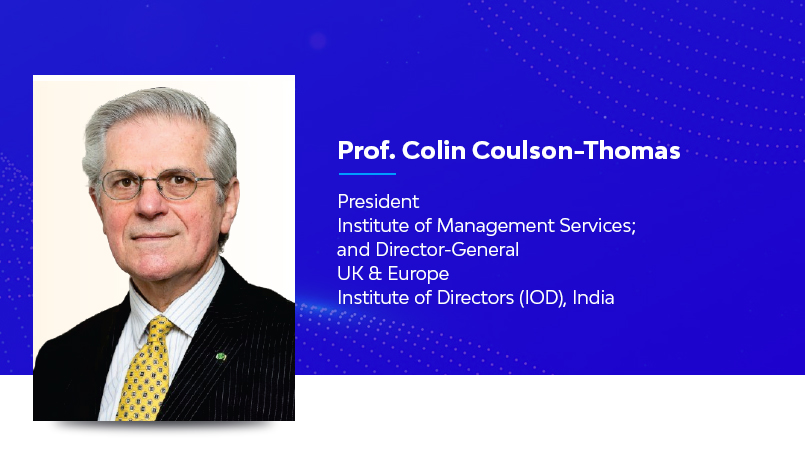
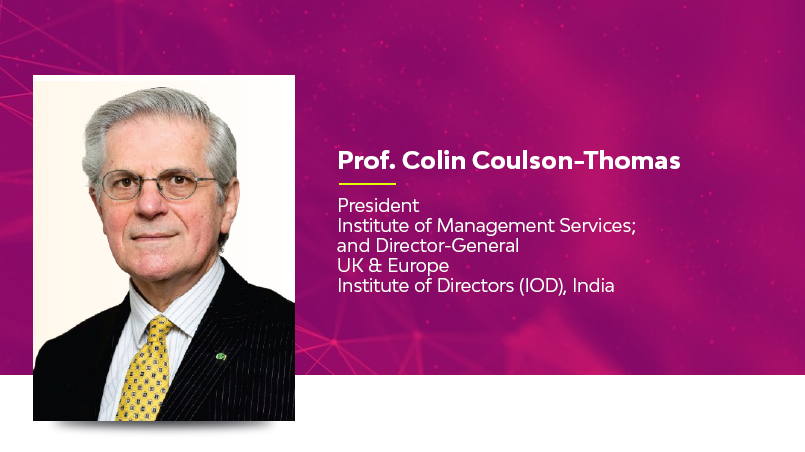
Prof. Colin Coulson-Thomas
Director-General of IOD India for UK and Europe operations
Prof. (Dr) Colin Coulson-Thomas, President of the Institute of Management Services and Director-General of IOD India for UK and Europe operations. He has advised directors and boards in over 40 countries.
Owned by: Institute of Directors, India
Disclaimer: The opinions expressed in the articles/ stories are the personal opinions of the author. IOD/ Editor is not responsible for the accuracy, completeness, suitability, or validity of any information in those articles. The information, facts or opinions expressed in the articles/ speeches do not reflect the views of IOD/ Editor and IOD/ Editor does not assume any responsibility or liability for the same.