 Quick Links
 Connect us



 Directors Databank (Empannel Yourself)
 Become a
  Become a
  Blog
Blog
 Become an Awards Assessor
 Publications
 Contact Us







Sustainability has become an economic force that is deciding the direction of capital flows, shaping expansion plans and designing pivotal strategies. When a topic begins to influence investment decisions, trade terms, resource security and innovation, it stops being the last agenda item of the meeting and becomes the operating environment the company must navigate if it wants to grow
Read more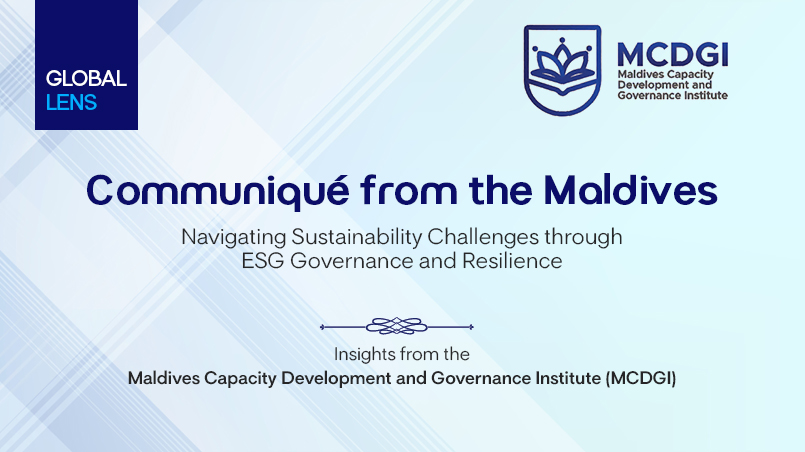
Maldives development model depends heavily on tourism, fisheries, imported fuel and coastal infrastructure, while its geography exposes communities and economic assets to sea-level rise, flooding, erosion, coral degradation and freshwater stress. Environmental decline can therefore quickly become a fiscal, social and governance crisis.
Read more
Business leaders today are navigating a convergence of challenges that would have been almost unimaginable just a decade ago. Climate change is increasing physical risks to infrastructure. supply chains and communities. Geopolitical fragmentation is reshaping value systems. and trade and investment patterns.
Read more
For decades, corporate governance has been aimed towards maximizing shareholder value, assessed almost exclusively through financial metrics. However, with the times changing, we see the business landscape evolving into one that operates under a social conscience.
Read more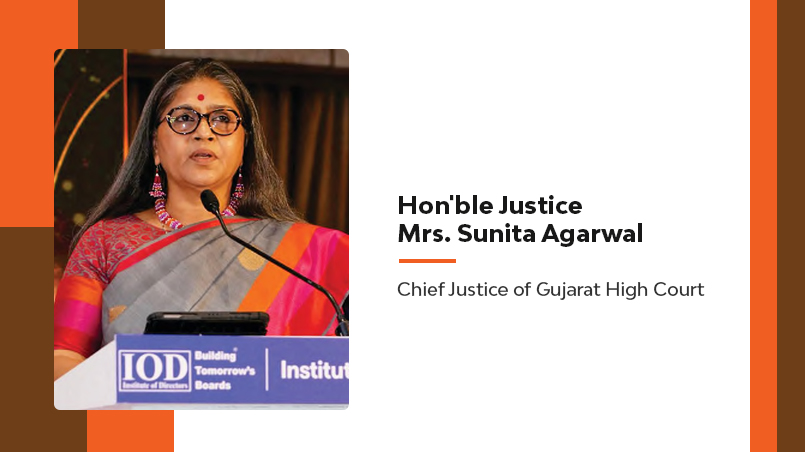
By- Institute of Directors | Authored by- Hon'ble Justice Mrs. Sunita Agarwal
Aug 12, 2026

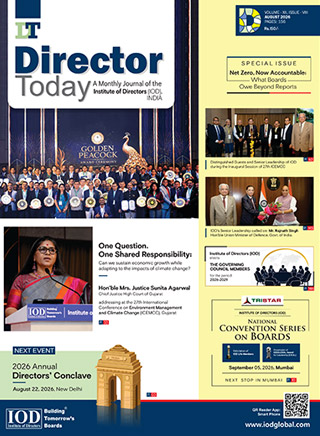
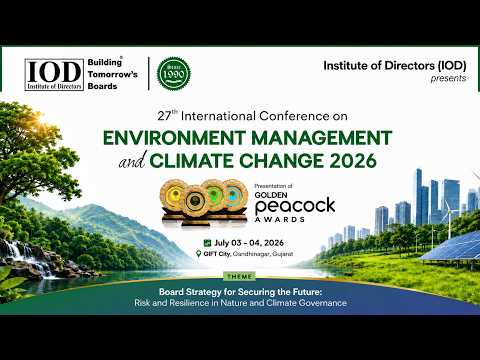
The theme of this year's Conference, "Board Strategy for Securing the Future: Risk and Resilience in Nature and Climate Governance," reflects that transformation. It recognises that environment management is no longer confined to pollution control, regulatory compliance or corporate social responsibility. It has become a question of governance, strategy and long-term institutional resilience.
Read more
The Union Cabinet has approved the BHAVYA-Rasayan (Bharat Audyogik Vikas Yojana Rasayan) scheme with a C3,030 crore outlay to establish three world-class chemical parks across India, aimed at strengthening the country's chemical manufacturing ecosystem.
Read more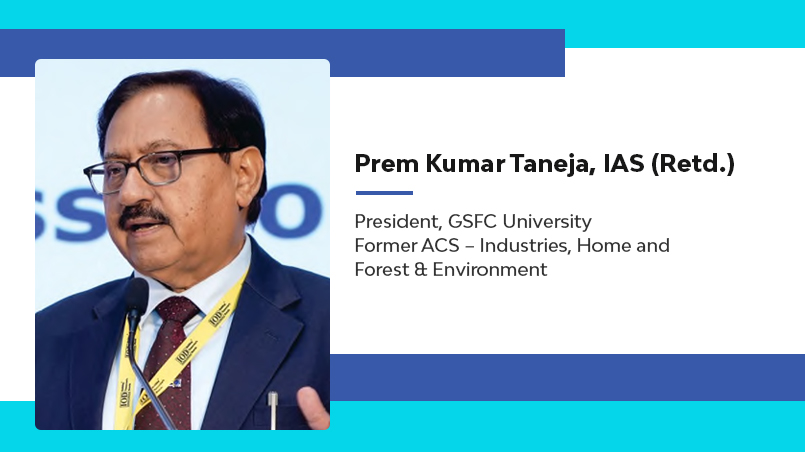
By- Institute of Directors | Authored by- Mr. Prem Kumar Taneja, IAS (Retd.)
Aug 12, 2026
Green finance and sustainable capital allocation are, to my mind, among the most critical drivers of the global energy transition. I believe capital remains central to achieving meaningful progress, and that aligning financial resources with sustainability objectives has the potential to create transformative outcomes.
Read more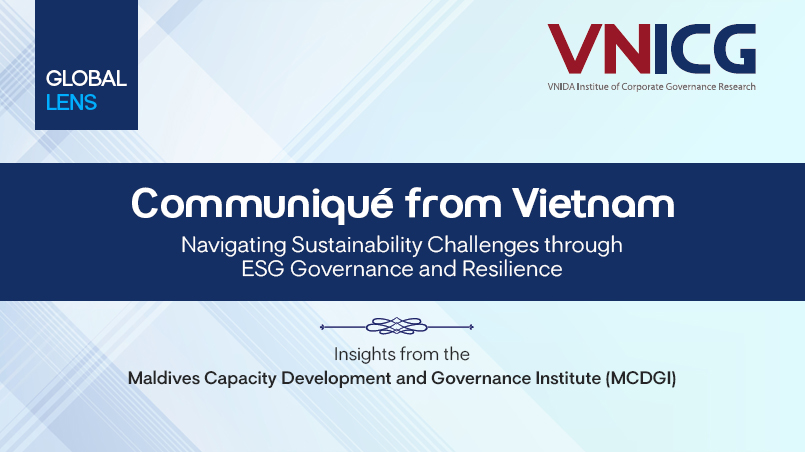
Vietnam's corporate sector has reached an inflection point. A decade of institutional reform - a strengthened legal framework, a national Corporate Governance (CG) Code, and rising market awareness - has pushed environmental, social, and governance (ESG) practice forward.
Read more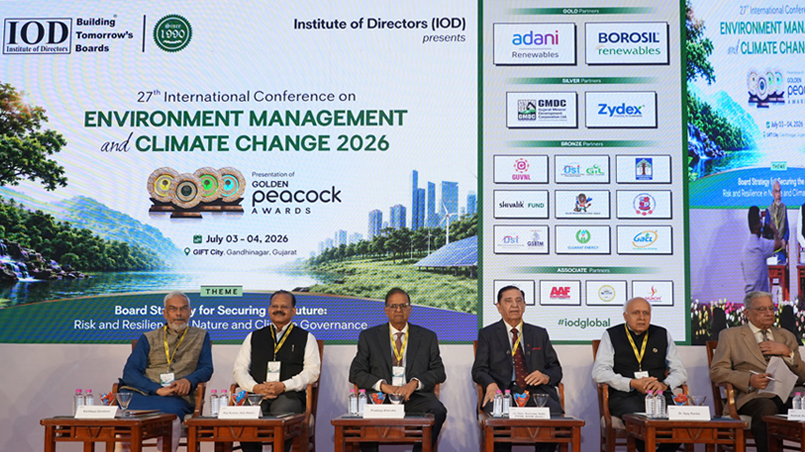
A key highlight of the Conference was the presentation of the Golden Peacock Awards 2026, recognising excellence in Occupational Health & Safety, Environment Management, Energy Efficiency, and Eco-Innovation. Brief profiles of the Award-winning organisations are featured in this issue on pages 87-109, celebrating exemplary leadership in advancing sustainable business practices and responsible corporate governance.
Read more
In many ways, one could even say that compassion is the highest form of preparedness, because when we prepare, we prepare not only for ourselves but also for others who may be affected by unforeseen circumstances. Conversely, the absence of preparedness means that we continue to act without sufficient foresight for what the future may bring.
Read moreAbout Publisher
Bringing a Silent Revolution through the Boardroom
Institute of Directors (IOD) is an apex national association of Corporate Directors under the India's 'Societies Registration Act XXI of 1860'. Currently it is associated with over 31,000 senior executives from Govt, PSU and Private organizations of India and abroad.
Categories