 Quick Links
 Connect us

 Directors Databank (Empannel Yourself)
 Become a
  Become a
  Blog
Blog
 Become an Awards Assessor
 Publications
 Contact Us







Building Corporate Governance From Ground-up: Lessons from an Indian Banker's Foreign Posting

Lessons from an Indian Banker's Foreign Posting
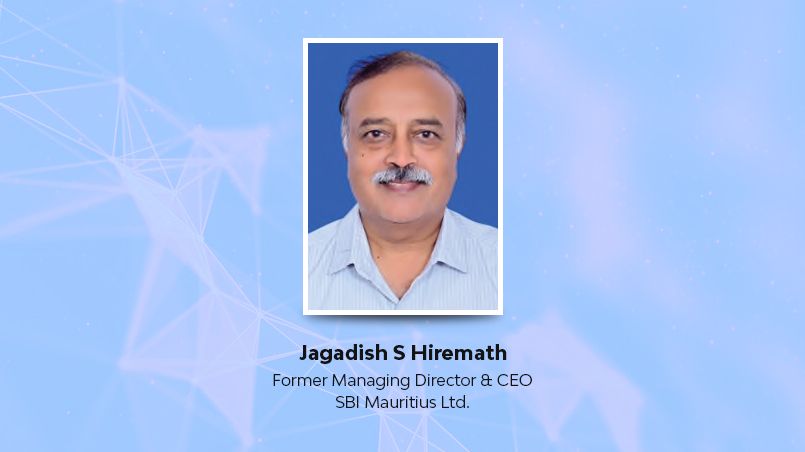
I joined the State Bank of India Mauritius Ltd as MD and CEO. SBIML, as we called it, a subsidiary of State Bank of India with 15 branches, about 240 staff, and a balance sheet of over USD 1 billion.
As I started the assignment in right earnest, my focus was on business growth and profitability. I did not know much about Corporate Governance, although I had heard of it.
What I found when I arrived was this: there was a very simplified Board framework at SBIML with only one Committee viz ECOD (Executive Committee of Directors). No Audit Committee. No Nomination and Remuneration Committee. No Risk Management Committee.
A Small Step That Turned Out to Be a Big One
Even before governance became a formal agenda, I made one decision that I believe set the foundation for what followed.
For all proposals to be approved or sanctioned, I decided to form committees. The idea was simple: personal or individual bias should be eliminated, and the collective wisdom of committee members should prevail in taking decisions. Whether it was a credit proposal, an operational change, or a policy matter, it would go through a committee and not just through me.
This was, in my view, a small step in corporate governance. But it had a surprising side effect. Staff felt involved. They felt ownership. They debated proposals, challenged assumptions, and took responsibility for outcomes. Decision-making improved. Accountability improved. And without realising it at the time, I was building a culture that would later support formal governance structures.
You cannot hire a consultant, adopt a template, and call it governance. It requires leadership commitment, staff involvement, and cultural change.
When the Central Bank Decided It Was Time
The Governor of the Central Bank of Mauritius was keen to implement Corporate Governance in all banks in the country. During a meeting with Bankers, he announced that governance would be implemented as per the King Report on Corporate Governance, with support from the MBA (Mauritius Bankers Association).
One day of each week was identified for practical sessions organised by the MBA. These sessions covered matters such as committee structures, governance charters, how to find independent directors, and what the central bank expected.
I Did Not Keep This to Myself
After every MBA session, I debriefed my staff, the Vice Presidents in particular , and sought their inputs. I wanted them to understand what was coming and to contribute to how we would implement it. Later, I had my concerned staff also attend the sessions directly so they could get familiar with the process, so that governance would not become a one-man project.
After these meetings, I submitted a detailed note to our Corporate Centre in India for approval. In the meantime, I knew I had to look out for candidates for two Independent Directors. I shortlisted three candidates, again with the help of the MBA, who knew the local professional community well. The note was approved, which included inter alia the names and profiles of the two Independent Directors.
The Four Committees We Built
With approval in hand, we formed four committees including ECOD (which already existed). Each had a clear charter, defined composition, and minimum meeting frequency of four times a year.
The banks that act before they are forced to are the ones that earn trust from regulators, investors, and customers.
1. Executive Committee of Directors (ECOD): This was a sub-committee of the Board comprising Executive and Non-Executive Directors. This existing committee was modified with changes in the composition of Directors , as well as its responsibilities and functions.
It met frequently, often at short notice, to dispose of credit proposals and operational matters as per the Delegation of Powers vested with it. It also reviewed the performance of the bank. All minutes of the ECOD were put up to the Board for information.
2. Audit Committee: This comprised two Independent Directors and two Non-Executive Directors. It was chaired by an Independent Director, this committee oversaw financial reporting and the work of Internal and External Auditors. Importantly, I was not a member of the committee and attended only by invitation.
The most significant change was that the AGM (Audit) reported directly to the Audit Committee rather than to the MD and CEO. This single change transformed the independence of our audit function.
3. Corporate Governance, Nomination and Compensation Committee (CGNCC): This committee had five members with a majority of Non-Executive or Independent Directors. The MD and CEO was a member, and it was chaired by an Independent Director. The CGNCC ensured enforcement of good governance practices in line with the Guidelines on Corporate Governance issued by the Bank of Mauritius. Its responsibilities included nomination and selection of "Fit and Proper Persons" as Directors and Senior Executives, determining the bank's general policy on Directors' fees, remuneration of Executives and Senior Management, and other important staff-related matters.
4. Conduct Review and Risk Management Committee: Again, chaired by an ID, with a majority of Non-Executive Directors. This committee was responsible for reviewing and approving an effective Risk Management policy, ensuring adequate control and information systems were in place, monitoring related party transactions and the overall risk management of the bank.
Getting the Independent Directors Ready
With the committees in place and meeting schedules decided, I arranged an orientation-cum-induction meeting for the two Independent Directors. I explained the structure and functioning of both State Bank of India and SBIML and responded candidly to their questions.
That done, we were all set for the first Board meeting where the Independent Directors were briefly introduced. Thereafter the meetings proceeded smoothly. I always ensured to send the agenda papers well in advance to the IDs. The minutes of the meetings were also sent to them in a timely manner.
This may sound basic, but in practice, these small disciplines make or break governance. If your Independent Directors receive agenda papers one day before a meeting instead of one week, they cannot prepare. And if they cannot prepare, governance becomes a formality, not a function.
The Letter to the Central Bank
Once everything was running, I sent a formal letter to the Bank of Mauritius about the implementation of corporate governance in SBIML.
In the very next bankers' meeting conducted by the Bank of Mauritius, the Governor singled out the undersigned for special praise. He said that SBIML had implemented corporate governance with speed and in the right spirit. He added that other bankers may reach out to the undersigned for advice or clarification on their own implementations.
That recognition, from the highest banking authority in the country, was not just for me. It was for my entire team. The Vice Presidents who attended the MBA sessions, the officers who helped draft the charters, the Independent Directors who took their roles seriously from day one. We had done it properly, not on paper, but in practice.
What I Would Tell Indian Boards Today
It has been over a decade since that Mauritius experience. Today, back in India, I see the same patterns repeating. NBFCs under increasing RBI scrutiny, scrambling to put governance structures in place. Cooperative banks being told they need professional boards. Companies preparing for IPOs, trying to build in months what should have been built over years.
From someone who has been through this process from zero, here is what I would say.
Governance cannot be imported. It must be built. You cannot hire a consultant, adopt a template, and call it governance. It requires leadership commitment, staff involvement, and cultural change. When I formed decision-making committees at SBIML even before formal governance arrived, I was building a culture of shared accountability. The governance structures worked later because the people were already used to collective decision-making.
The MD must step back. When I excluded myself from the Audit Committee and changed the auditor's reporting line, as per Corporate Governance standards, it was uncomfortable. But that discomfort is the point. If the MD controls the audit, there is no independent oversight. Governance requires the person at the top to give up some control voluntarily.
Treat your Independent Directors with respect. Send papers on time. Give them honest answers. Let them ask uncomfortable questions. The IDs are not ornaments on your Board. They are your strongest defence against blind spots.
Do not wait to be told. The Governor recognised us because we moved with speed and in the right spirit. We did not drag our feet or treat governance as a box-ticking exercise. The banks that act before they are forced to are the ones that earn trust from regulators, investors, and customers.
I started my Mauritius journey as a banker who did not know much about corporate governance. I left it as someone who had built a governance framework that was recognised by the Central Bank. That journey taught me something I carry to this day: “Governance is not a burden on business. It is what makes business trustworthy.”
 Back to Home
Author
Jagadish S Hiremath
He is a seasoned banking and financial services professional with over 37 years of experience across corporate and SME banking, credit management, audit, risk oversight, and corporate governance. As Managing Director & CEO of SBI Mauritius Ltd. (2010–2014), he led the bank to became the first bank in the country to implement a comprehensive corporate governance framework. Earlier, he headed SBI's Corporate Accounts Group in Chennai, managing a credit portfolio exceeding C21,000 crore across diverse sectors. Post-retirement, he served as General Manager–Administration at Muthoot Finance. An IICA-certified professional, he brings extensive expertise in governance, credit risk, audit, and international banking operations.
Owned by: Institute of Directors, India
Disclaimer: The opinions expressed in the articles/ stories are the personal opinions of the author. IOD/ Editor is not responsible for the accuracy, completeness, suitability, or validity of any information in those articles. The information, facts or opinions expressed in the articles/ speeches do not reflect the views of IOD/ Editor and IOD/ Editor does not assume any responsibility or liability for the same.