 Quick Links
 Connect us

 Directors Databank (Empannel Yourself)
 Become a
  Become a
  Blog
Blog
 Become an Awards Assessor
 Publications
 Contact Us







Guardians of Risk and Long-Term Value: Financial Acumen & Independent Judgment Strengthening Board Oversight

At the board level, there is confluence of talent. Undoubtedly, we need people of different backgrounds, and their financial literacy is unlikely to be of a similar level. However, collectively, the board must define boundaries within which management is supposed to operate.
Many a time, I have seen boards expect management to behave prudently and do not define boundaries that result in excessive risktaking. Be it leverage, be it asset-liability mismatch, be it treasury operations. The management feels they are trying to optimize returns. They forget about risk. The board believes the management is behaving prudently and fails to put brakes when there is a need.
I think the board must play its role in setting the rules, defining the boundaries, and selecting the best players. Then it is up to management to go and play and win the game. The regulator and government believe there should be no mishap. Whenever there is a mishap, they want to fix accountability. Obviously, one cannot argue against that. Sometimes, there are genuine errors. Sometimes, there is wilful fraud. In the current judicial and regulatory structure, it is difficult to distinguish between a genuine error, a normal business decision going wrong, and wilful fraud.
Dare I say, we have created an environment where honest guys are most afraid of rules, regulations, and the compliance burden, and crooks are willing to take it for granted. Many a time, they confuse a financial degree with financial literacy.

A board should create a culture where forecasts should always under-promise and work should always over-deliver.
In my three decades in the market, I have seen financial literacy being displayed by people with no financial degree and financial stupidity being displayed by people having the highest financial degree.
Can a non-finance director justify a position on the audit committee?
Undoubtedly, yes, provided he is financially literate and not afraid of asking questions. Many a time, what we need is common sense rather than complete knowledge of the law. Compliance with the law is absolutely important, but an angle brought by a non-finance guy through common sense will also add value to the audit committee. Financial oversight and accountability is a fine balancing.
There will be an odd delivery which will bounce, or skid, or swing more than we can expect. What is important is that there is a culture of recognising the risk as and when it arises.
The three things which any board member should focus upon:
1. Truth and fairness in financial statements: While there are many accounting standards pursuing truth and fairness, ensure that the statement which you approve passes the smell test. I have seen a retail company which was engaged in selling ready-made garments running an inventory of one year. This was done at cost. Undoubtedly, the board member should have applied common sense to figure out that ready-made garments not sold over one year will require some sort of markdown.
2. Cash Flow Conversion: While profits and EBITDA, they are all an opinion-cash flow is reality. Focus upon cash flow to check whether financial statements are true and fair or not.
3. Independent Oversight: The independent director on the audit committee should hold management accountable by constantly asking questions. If needed, have an independent meeting with the CFO rather than the entire management to get your questions and doubts resolved. When you ask questions to the CFO and the management, from their reply you will be able to find how sincere they are and whether they have to hide anything, or whether you can take them at face value.
At the end of the day, as a board of directors, our job is to set boundaries, set rules, and observe that the rules are followed, and do not hesitate to show a red card or a yellow card where needed. Once a few yellow and red cards are shown, I can guarantee you that compliance will improve significantly.
Risk management is a culture. In essence, it means let your profits run and cut your losses.
Will it be possible for the management to anticipate every risk?
Will it ever be possible for the board or the management to anticipate every risk?
There will be an odd delivery which will bounce, or skid, or swing more than we can expect. What is important is that there is a culture of recognising the risk as and when it arises.
There is no point in doing a post-mortem; we can do that later. The focus should be to empower management to tackle the risk then and there itself. Many a time, management believes, "Let's hide the risk rather than share it with the board. On its own, the risk will disappear." They are worried about the scolding they may receive from the board for not anticipating that risk. That culture of expecting 100% anticipation of risk and making management hide it because of the fear of scolding is not good for any company.
Crisis management is, obviously, the most important work for a board. Crises do not announce themselves; they arrive many a time unexpectedly. Each crisis is different from the past one and yet has many learnings from the past which can be applied. As a board, we need a framework for crisis management. It should appear with the management before, rather than at the time of crisis. The role of the board should be supportive of management to manage the crisis. When the soldiers are in battle, they better focus on what is in front of them without worrying whether their back is covered or not. Of course, post every crisis, one can do a post-mortem and analyse, learn, and take corrective actions.
During a crisis like COVID, we have seen that the extended flexibility given to management really made the difference. In our own group, we were running a war room to ensure that all our staff were taken care of. If we had followed the normal rules of providing monetary support, it probably would not have worked. Each senior level of management was given discretionary power to spend well above their normal limits.
The objective was very clear: We had to save everyone, and no one should complain about a lack of support. Money is secondary, and saving lives is primary. Once the crisis was behind us, of course, those powers were taken back. The audit of all the spending was done.
The whole purpose of crisis management is to act as a team. The board and the managers, together in the battle, there is no blame game.
Forward guidance is a tricky subject. Best of the analysts go wrong by a massive amount. A board should create a culture where forecasts should always under-promise and work should always over-deliver. This conversation is absolutely important for good companies. Many a time, management commits mistakes because they do not want to be seen as people who did not meet the targets. Forecasting could be for internal as well as external stakeholders.
The annual budget must have flexibility to meet changing scenarios. If there is an emergency like COVID or a Middle East crisis in between, the board should be considerate and willing to change the budget rather than push the achievement of targets at any cost. The same thing will apply in external forecasting. Under-promise, over-deliver.
Prepare and budget for unforeseen events, and in case they occur, feel free to revise it downwards and share the bad news early. Successes can be delivered later. In forecasting, the board must support management to accommodate genuine deviations.
With the advent of Artificial Intelligence, the shape of board meetings is going to change. The way to present information, the way to question, and the way to verify data are all going to change substantially. But do remember, when you upload data to an LLM, it could be shared in the public domain. You will need to use company LLMs which are secured and which do not allow sharing of data.
Each board member should be trained, at the company's cost, in the usage of AI. It will be unfair to expect that every board member will be literate about AI and will be able to keep pace with the latest developments. AI will take away the burden from management, as many of the queries, data, and communication could be sorted out through AI leverage.
In 2030, I believe there will be a digital CFO and a digital Company Secretary, along with a real CFO and a real Company Secretary. Most board members will be communicating with the digital CFO to answer their questions, run verification of data, make comparisons with peers, and test forecasts. A lot of questions will get answered through this digital communication. The board meetings will focus more on human elements.
Today, many a time, a large amount of time is devoted to routine and compliance matters, and many a time there is a shortage of time to discuss strategic needs. The AIleveraged boardroom will ensure that boards focus more on strategic needs rather than routine matters.
One of the financial habits which every individual, including board members, should develop, retain, and remember is risk-adjusted return. When the going is good, we all enjoy the thrill of speed. But then unforeseen risks will come. As an individual, as well as a board member, we need to remember there is no free lunch. Risk and return are two sides of the same coin, and they are inseparable.
The most important question which every audit committee should ask management, and very rarely is asked, is: "Is there any question which we haven't asked you? Is there any information which you haven't shared for fear of rebuke from us? Please feel free to communicate and share."
We will judge not based on the errors committed, but on the basis of your genuineness. It is the job of the audit committee to assure management that they are free to share their errors and omissions without fear of reprisal.
 Back to Home
Author

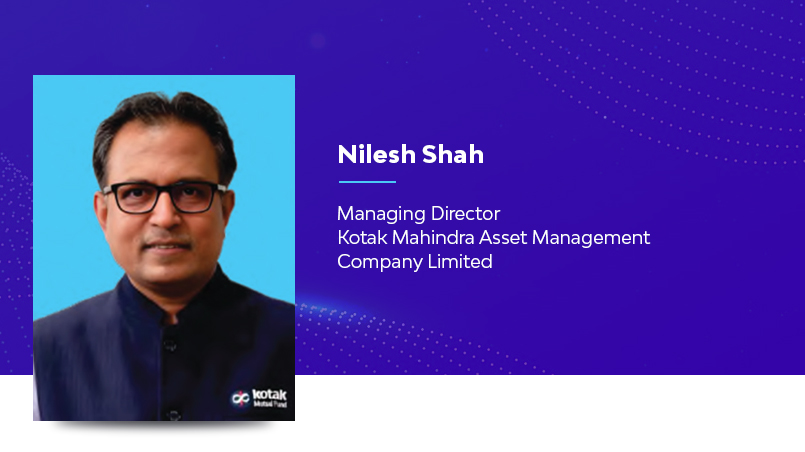
Nilesh Shah
Managing Director Kotak Mahindra Asset Management Company Limited
Owned by: Institute of Directors, India
Disclaimer: The opinions expressed in the articles/ stories are the personal opinions of the author. IOD/ Editor is not responsible for the accuracy, completeness, suitability, or validity of any information in those articles. The information, facts or opinions expressed in the articles/ speeches do not reflect the views of IOD/ Editor and IOD/ Editor does not assume any responsibility or liability for the same.