 Quick Links
 Connect us

 Directors Databank (Empannel Yourself)
 Become a
  Become a
  Blog
Blog
 Become an Awards Assessor
 Publications
 Contact Us







The Other Side of Geopolitical Risk is a Promised Land: Will Your Board Go There?

In times of geopolitical tension, most boards reach for the same decades-old playbook in a very new era: freeze major bets, cut exposure, protect the downside. That instinct is understandable, but incomplete. For a certain kind of director or CEO, this is not only a period of danger; it is a once-in-a-decade opportunity to quietly reposition the business while competitors are paralysed.
“Every threat is an untapped opportunity.”
If you are smart enough to work with that truth, the positive, opportunity-obsessed board member who looks for growth in every situation, this moment belongs to you.
From Risk Maps to Growth Maps
Traditional board packs are full of geopolitical “heat maps” shaded in alarming reds and oranges. The conversation usually stops at: “How do we stay out of trouble here?”
An opportunity-oriented board asks a different question: “Where does this tension create unmet demand, pricing power, or strategic space?”
Insist on a long-term narrative that emphasises reliability, ethics, and, where appropriate, neutrality and respect for local contexts, crafted to remain credible across multiple blocs.
It is time to turn red into green.
You start by reframing each “red zone” as a growth hypothesis:
• Where supply is disrupted, there is room to step in as the reliable alternative, backup supplier, backup logistics route, backup data host. You also ask: “What is right under our nose that we have not explored yet? Is there a local play or a new disruption we can create instead of waiting for stability?”
• Where investors and competitors are retreating, there may be cheaper entry tickets, distressed assets, or less crowded competitive fields. History is full of brands that leaned in during crisis, raised prices on real value, and came out stronger with elevated positioning and loyalty.
• Where regulation tightens, sanctions, data localisation, security, ESG, you find niches for specialised, compliant services that are difficult to replicate and can command premium margins.
The key question becomes:
“Are we safe and prepared enough to see and pursue the opportunities others cannot even perceive?”
This mindset does not ignore risk; it insists on asking a second question immediately after risk analysis:
“What would it take to safely make money here while others are scared?”
That second question is where asymmetric growth lives.
Using Turbulence to Build Strategic Muscle
Geopolitical shocks expose which organisations were merely lucky in stable times and which have built true strategic muscle. Boards fixated purely on downside preservation miss the chance to use this period to upgrade the organisation itself. This is the moment to pilot some of your long-pending ideas at lower relative risk and test them in the real world.
A growth-oriented board will push for:
• Scenario planning as a dynamic discipline, tightly integrated into strategy and capital allocation rather than a once-a-year exercise.
• Faster, clearer decision-making: crisp crisis delegation, pre-defined thresholds for convening the board, and better real-time information flows to directors.
• Investments that were previously “hard sells”, supply-chain visibility, diversification of production and markets, cyber resilience, regional hubs, now backed by a vivid, lived case for urgency.
The aim is to emerge from this period structurally stronger, with capabilities that do not disappear when the headlines cool down. Resilience becomes a competitive asset, not just a compliance box.
Riding New Waves of Spending
Geopolitics is reshaping where money flows. Governments, large corporates, and investors are redirecting capital toward security, resilience, and sovereignty. Boards that are truly opportunity-oriented track these flows and tilt the portfolio accordingly.
Several spending waves are particularly notable:
• National security and resilience: heightened demand for secure infrastructure, logistics, digital trust, critical-infrastructure protection, and redundancy in supply chains.
• Reconstruction and realignment: over time, conflict and realignment create long arcs of spending on infrastructure, energy transition, and regional manufacturing.
• Assurance and continuity: large customers increasingly seek partners who can guarantee continuity and security; they are willing to pay a premium for vendors that can “stay standing when others fall.”
The opportunity-focused director constantly asks:
“Which of our existing capabilities could be reframed as part of a resilience, security, or sovereignty solution, and priced accordingly?”
Turning Fragmentation into Portfolio Advantage
The old assumption of a single, integrated global market is weakening. Geopolitical tension is producing overlapping blocs, corridors, and spheres of influence. Many boards see this purely as a loss of scale. A more strategic lens sees the chance to re-architect the portfolio. It starts with a step back: “If I looked at this business from the outside, in this fragmented world, what new opportunities would I see?”
That involves:
• Moving from a single “global” strategy to a portfolio of regional strategies, GCC, Global South, specific trade corridors, each designed for local politics, regulation, and alliances.
• Building optionality into structures: asset-light models, minority stakes, joint ventures, and regional hubs that provide access to multiple blocs without locking the company into one camp.
• Identifying under-priced regions and sectors where risk perception is worse than underlying fundamentals, and entering through calibrated, partnership-driven approaches.
In this view, fragmentation does not only destroy; it also quietly removes competitors who cannot adapt. For the adaptive, politically intelligent board, that is an opening.
Talent and Board Composition Arbitrage
In tense times, people move before capital. Talent relocates, experts become more open to new roles, and leaders rethink where they want to live and build. A far-sighted board treats this as a rare moment to reshape its human capital.
Three moves stand out:
• Attract displaced or mobile high-calibre talent into safer, opportunity-rich hubs, bringing scarce skills in risk, cyber, policy, and complex operations.
• Refresh the board's composition with directors who understand geopolitics, public policy, digital security, and regional dynamics, not as a token gesture, but as a core strategic requirement.
• Design leadership-development pathways that give high-potential executives exposure to different regulatory and political environments so the organisation's “geopolitical IQ” compounds over time.
This builds a reputation as the employer, and board, that understands the world as it is, not as it was. That reputation itself becomes a magnet for the next generation of leaders.
Trust and Narrative as Hard Strategy
In a fragmented, emotional geopolitical climate, stakeholders constantly ask, “Whose side are you on?” This is where boards often underestimate their power. Narrative and trust are no longer soft issues; they now define access to markets, partners, and even regulators.
A growth-oriented board will:
• Insist on a long-term narrative that emphasises reliability, ethics, and, where appropriate, neutrality and respect for local contexts, crafted to remain credible across multiple blocs.
• Encourage active participation in industry bodies, multilateral forums, and standard-setting groups, positioning the company as a system-level actor rather than a narrow commercial player.
• Oversee how the company supports employees and communities affected by unrest, recognising that each decision in a crisis is either a deposit into, or a withdrawal from, the organisation's trust account.
When trust is scarce, being the calm, consistent, values-anchored actor is a strategic differentiator. Markets remember who behaved well when times were bad.
“The Director” the Future Will Remember
In every era of disruption, history recognises two kinds of leaders: those who merely survived and those who used the moment to redefine their organisations. As a board member or CEO with a relentlessly positive, opportunity-seeking mindset, you are uniquely positioned to do the latter.
You are the person in the boardroom who says:
• Show me the upside scenario next to the downside.
• Where does this risk map hide unmet demand?
• How do we invest now so that when others finally move, we are already there?
Geopolitical tension will continue to ebb and flow. The real question is whether your board chooses to be a cautious spectator or a disciplined, imaginative player. For those willing to see beyond fear, the other side of geopolitical risk is indeed a promised land, one of structural advantage, deeper resilience, and enduring growth.
 Back to Home
Author
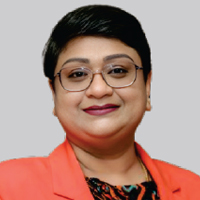
Neetu Choudhary
She is a Business & Leadership Coach, Board Member Advisor, Author, International Keynote Speaker, and Business & Leadership Podcast Host of “Lead With Neetu” with over 25 years of global experience. A former IT Release Manager at DP World UAE Region, she has worked with more than 150 companies across 30+ countries. She is a Master of Computer Applications and has advanced credentials such as Six Sigma Black Belt (USA), EFQM (Brussels), CGEIT (USA), PMI-RMP, and qualifications in PMO, CMMI, and ITIL. She has served as judge & team leader for various international business excellence awards, including the Dubai Quality Award (DQA) and the Mohammed Bin Rashid Award (MRM) by the Dubai Chamber, among others.
Owned by: Institute of Directors, India
Disclaimer: The opinions expressed in the articles/ stories are the personal opinions of the author. IOD/ Editor is not responsible for the accuracy, completeness, suitability, or validity of any information in those articles. The information, facts or opinions expressed in the articles/ speeches do not reflect the views of IOD/ Editor and IOD/ Editor does not assume any responsibility or liability for the same.