 Quick Links
 Connect us

 Directors Databank (Empannel Yourself)
 Become a
  Become a
  Blog
Blog
 Become an Awards Assessor
 Publications
 Contact Us







Confronting Environmental, Social and Technological Irresponsibility


Initiating Greater Stakeholder and Collective Responsibility
Many directors face a dilemma. They may feel they are endeavouring to be socially and environmentally responsible. A company might have CSR and/or ESG policies, invest in pollution reduction initiatives and appear to satisfy legislative and regulatory requirements in jurisdictions in which it operates. Perhaps it matches the efforts of competitors and companies against which it benchmarks its performance. It may even receive external recognition for its achievements. Yet daily we breath air that reduces life expectancy and there is news of extreme weather events somewhere on our increasingly stressed planet.
Despite the best intentions of many and the achievements of some, collectively we are not doing enough to ensure our collective survival. Is it possible that we could be individually responsible and doing the best we can in relation to what we feel we can influence while being collectively irresponsible? Do we need to rethink what it is to be a responsible director in the light of global risks and multiple existential threats? Are whole of society approaches and sector responses now required? Must more customers, investors and other stakeholders also act responsibly? How might boards best initiate greater stakeholder responsibility?
Collective Irresponsibility
Collectively we are irresponsible. We are not doing enough to confront various existential threats which are the result of human activities. While few directors might say they wake up every day keen to start working for our demise, this outcome is increasingly likely to be the consequence of what they either do or do not do to address negative environmental and social impacts. When the later are evident and irrefutable, some defend or justify their actions. They claim any harm or damage to eco-systems results from them supporting government policy, prioritising growth, lifting people out of poverty, or benefitting today's stakeholders.
A purpose could itself be responsible or irresponsible and its impacts might lead to aspects of both, whether intended or unintended.
Decisions and choices must often be made when multiple and inter-related issues are involved, stakeholders are divided, views may be contested and polarised, and uncertainties, misinformation, disinformation and lobbying by special and vested interests abound. Those who do not wish to be an outlier, may advocate doing just enough to show willing without being at a competitive disadvantage, and at the same time keeping in with whoever is in power. In a more transactional era, whether a course of action is regarded as responsible may derive from views of the herd and influential others rather than be driven by internal values.
Corporate Irresponsibility
CSR and ESG are likely to remain an issue for those concerned about the negative social and environmental effects and externalities of corporate activities and contemporary lifestyles, and the lack of effective collective responses to them. How they are aligned and integrated into board strategy and governance, and for what purpose may determine their impact. Many major corporations are socially and environmentally irresponsible. They drive demand. Their offerings underpin prevailing and unsustainable ways of living. They ignore the eco-system damage caused by their operations and offerings and fail to address shared existential threats.
Irresponsible practices such as built-in obsolescence, the premature ending of product lines, and sales commissions that encourage over-selling are widespread. Despite balanced scorecards, integrated accounting, multiple pressures, risks and threats, and a diversity of concerns among stakeholders, some boards seek to maximise certain factors such as profits, rather than pursue a greater plurality of business drives, objectives and purposes. Government policies, whether unsustainable growth or fossil fuel subsidies, are also often irresponsible. They are environmentally damaging, socially divisive, or favour certain special interests.
As governments focus on avoiding conflict, hybrid and hot wars, greater business involvement may be needed to deliver services, renew infrastructures, and relocate vulnerable communities.
Corporate Purpose
Whether or not board activities and decisions are desirable, responsible and sustainable depends upon corporate purpose and the outcomes being sought. Many corporate and government aspirations, policies and priorities, including for unsustainable development and growth, exacerbate global risks and existential threats, compound negative externalities, and reduce our collective prospects for survival. A purpose could itself be responsible or irresponsible and its impacts might lead to aspects of both, whether intended or unintended. One test is whether the demise of a company would help or harm our prospects of survival.
Some corporate purposes have proved less entrenched than many may have expected or might have hoped. Some previous positions of major companies once considered responsible were quickly abandoned or reversed following the election of climate change denying and fossil fuel favouring US President Donald Trump. Boards vary in the extent to which they take account of social and environmental responsibility, ethical and legitimacy considerations and values, and a wider public good and shared interests, when they review a corporate purpose. Those who share a purpose may be more willing to support and/or implement it.
Environmental and Social Responsibility
Given unsustainable growth on a planet with finite resources and an expanding population, the global environmental outlook is grim. Due to fears of being both left behind and at a competitive disadvantage, some directors join the crowd. They ignore scientific realities. Multiple indicators show that global risks and existential threats are at record levels. Remaining tipping points approach. Through their inaction many boards are complicit in the mass extinction of species and threats to critical eco-systems. Far too few business leaders have been active advocates, ambassadors and champions of environmental responsibility.
Environmental and social risks feature highly in assessments of global risk impacts. Food security and other risks, and pressures upon finite resources, are compounded by continuing growth in the world's population. Poverty and exclusion lead to marginalisation and those marginalised are often most at risk from collective irresponsibility. As governments focus on avoiding conflict, hybrid and hot wars, greater business involvement may be needed to deliver services, renew infrastructures, and relocate vulnerable communities. Addressing migration flows will require international effort. Collective responsibility is required.
Digital Responsibility
Multiple technologies are developing more rapidly than frameworks and mechanisms to ensure their responsible development and use and prevent their misuse. Their advantages and potential applications are often promoted, while their possible drawbacks may be overlooked. Countries compete to attract and secure mega data centres required by the increasing use of artificial intelligence (AI) that deplete energy, water and other resources. At some point in their development or evolution autonomous AI applications may realise the extent to which existential threats to life result from human activities. They may attempt to take us out.
Sustained social and environmental responsibility can build reputation, legitimacy and trust over the longer-term. It might also strengthen brand equity and customer and supplier loyalty. Boards should ensure that innovative adoptions of evolving technologies are ethical, responsible and sustainable, and enhance organisational resilience. Many early adopters of them are bad actors, whether criminal groups, hostile states or collaborations between the two. Applications can also be used to supercharge other existential threats such as those which are nuclear or biological or exacerbate global risks such as disinformation.
Responsibility for Outcomes and Impacts
Individual and collective corporate conduct should be judged by its impact. There may be a wide gulf between rhetoric and claim and the reality of outcomes. Whether alignment, consistency and integration are desirable depends upon what a board is setting out to achieve and its consequences for the environment, society and common good. Strategic growth that is planned or otherwise intentional and aligned with corporate aims, purpose and longer-term goals may or may not be regarded by some as responsible and sustainable. It might be irresponsible when externalities, opportunity costs and its future implications are assessed.
Responsible boards consider the longer-term resilience, sustainability and viability of corporate activities and operations, and the services and infrastructures upon which their contemporary enterprises depend. Responsible governments would explore ways of making companies responsible for the negative externalities they impose upon others. 'Big tech' and data centre operators could be made to pay for higher costs borne by others. Most people have yet to encounter a ministerial team which would be that responsible. There is almost always a limit to the extent to which any decision maker is prepared to be responsible.
International Considerations
Conduct and what is acceptable can vary across jurisdictions. Some companies might be tempted to be less vigilant in certain locations. Negative externalities can be exported, while national data may give a misleading impression of the realities experienced by many citizens. Exaggerated claims and allegations of greenwashing have resulted in cynicism and distrust. The Business Responsibility and Sustainability Report (BRSR) Core enhances the credibility and reliability of ESG disclosures by requiring external verification. Should smaller and nonlisted companies consider the Business Responsibility and Sustainability Report (BRSR)?
Boards operate in an unpredictable and volatile world. Events can occur that have not been prepared for, and for which past experiences and understanding might not be relevant. Since the illegal and unprovoked invasion of Ukraine, corporate ESG policies that exclude defence sector involvement have hindered defensive preparations in other European democracies. As situations, circumstances, government policies and public priorities change, new information, emerges, or less damaging alternatives become available, what was once regarded as acceptable may no longer be seen as responsible. ESG criteria might need updating.
 Back to Home
Author

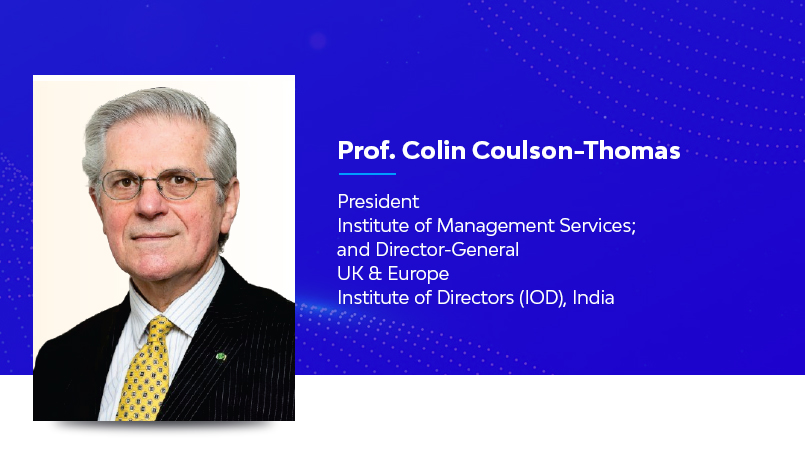
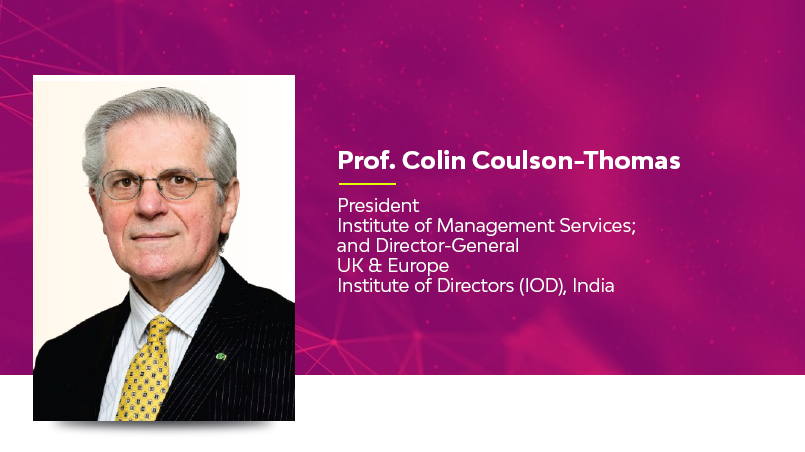
Prof. Colin Coulson-Thomas
Director-General of IOD India for UK and Europe operations
Prof. (Dr) Colin Coulson-Thomas, President of the Institute of Management Services and Director-General of IOD India for UK and Europe operations. He has advised directors and boards in over 40 countries.
Owned by: Institute of Directors, India
Disclaimer: The opinions expressed in the articles/ stories are the personal opinions of the author. IOD/ Editor is not responsible for the accuracy, completeness, suitability, or validity of any information in those articles. The information, facts or opinions expressed in the articles/ speeches do not reflect the views of IOD/ Editor and IOD/ Editor does not assume any responsibility or liability for the same.