 Quick Links
 Connect us

 Directors Databank (Empannel Yourself)
 Become a
  Become a
  Blog
Blog
 Become an Awards Assessor
 Publications
 Contact Us






Women Directors, Changing Contexts and Board Diversity


Reviewing Boardroom and Business Requirements for a New Era
Many boards are vulnerable. The experience, expertise and development of their members, and their attitudes, assumptions and expectations, often derive from a previous era. They may no longer be current or relevant in an uncertain, unpredictable and disrupted world. In the USA, people in diversity, equity and inclusion roles and some senior women thought to have benefitted from gender bias have been fired. Where ought gender to rank among age, culture, ethnicity, nationality, education, social background, experience, skills, personal qualities, interests, perspectives, relationships, priorities, disability, values or other diversity factors?
Legal and regulatory requirements and practices for safeguarding, protecting, ensuring fair treatment and preventing gender, ethnic, religious, age or other forms of discrimination or bias can vary according to the jurisdiction. They may also change over time. Responsible boards take steps to tackle obstacles and barriers facing under-represented groups. Directors often favour equal opportunities and agree that board appointments should be based on merit in relation to requirements. Differences of view sometimes emerge when discussing steps such as quotas or positive discrimination to favour those over-looked or excluded in the past.
A woman director, and especially one who has brought life into this world, might be more aware of the care needed to sustain and protect it, while ecosystems, humankind and other species are vulnerable.
In our current era, stability can be transient. Capabilities, solutions and sources of power and influence may not remain relevant as circumstances change. What might come next is often difficult to predict. Whatever is done or experienced can have unexpected consequences. Our collective survival increasingly depends upon changing direction in multiple arenas, doing things differently and innovation, enterprise and entrepreneurship. What are the implications for women directors and others who have been selected because their educational and social backgrounds or other factors enabled them to fit in? How might diversity criteria change?
Changing Realities and Requirements
In a transactional world deals are done, hard power is exercised and weaknesses are ruthlessly exploited. Principles, laws, rules and regulations might once have been supported by common values and ethical and professional codes. They are now increasingly seen as a constraint by those eager to advance their own interests. Governments, especially those subservient to autocrats, regularly flout them, ignore science and focus on outcomes that benefit a favoured clique. The common good and whether a party in a dispute is aggressor or victim seem less important than associating with winners and maximising business benefits.
Fragmentation and polarisation are occurring in a variety of arenas. Individuals such as directors and companies and other organisations can face dilemmas when choosing between contending positions and/or competing entities. Larger and more powerful players may exert pressure on those lying low to either back them or accept what they propose. Some people are supine. They defer to greater negotiating strength or adopt avoidance strategies. Others resist, if only to learn more about possible penalties for not conceding to superior power. Many potential resisters accede or submit, persuading themselves they are realists and pragmatists.
Integrity once topped surveys of desirable qualities sought in directors. More contemporary nomination committees may now play it safe and prefer candidates who do not create waves, or who are not on record as critical of autocratic regimes or those holding superior power. They might opt for candidates more likely to adapt to those in power, be complicit with the domination of some over others, eschew involvement in politics, ignore fairness and social and environmental concerns, and just concentrate on “business”. Looming risks and threats might be ignored and opportunities to increase our prospects for collective survival missed.
Resilience in Contemporary Contexts
Many boards are vulnerable. The experience, expertise and development of their members, and their attitudes, assumptions and expectations, often derive from a previous era. They may no longer be current or relevant in an uncertain, unpredictable and disrupted world.
When looking at the mix of people that might improve a company's resilience and its ability to cope with the many dilemmas of operating in a new era and navigating its geopolitical, technological and environmental challenges, where do women directors and past efforts to increase their numbers on corporate boards fit in? A lack of diversification, including in a customer base or supply chain, is a source of vulnerability. So too are barriers of discipline, function, business unit, organisation or country? Where do gender barriers now rank in relation to others? Does the priority given to different forms of diversity need to change?
It may take time for a new director to settle in and adapt to the practices of a particular board and the interplay of its personalities. As situations, circumstances and contexts can and increasingly do unexpectedly change, the experience, qualities and skills sought in board members may alter. What might be apposite and more relevant could change before a recent joiner feels comfortable and vary again before a board member's term of office expires. Responses could include obtaining additional support from an advisory board and/or more frequent updates and briefings from those with current awareness and understanding.
In fluid situations, thought may need to be given to the term of board appointments and the associated frequency of re-elections. In the short-term, geopolitical tensions and armed conflicts may be of greater concern than environmental issues that come more to the fore as a time horizon expands. In due course the nature and prioritisation of technological risks and challenges might evolve as more experience is gained of AI and its implications. Boards are often light on what they need to navigate environmental, geopolitical and technological risks, handle disruptors, resist exploitation of vulnerability and collaborate on collective responses.
Adapting to Autocracy and Hard Power
Collaboration and collective responses can be especially important for middle ranking entities. Coordinated action could increase their ability to resist demands of larger ones that pursue their own interests and avoid them being individually picked off. Internationally, business leaders may switch their attention from over-coming differences of national culture, practice, and other barriers, to accommodating the changing whims of autocrats, keeping in with centres of power, and trying to avoid alienating them. They may have to listen more closely to what autocrats say and be alert to the underlying drivers of their motivations.
Assertions and claims of autocrats should be taken with a pinch of salt. Political power might be temporary. Business leaders may be reluctant to make significant upfront investments requested by an authoritarian ruler if a change of mind, priority or circumstances could occur. Despite pressure and the backsliding of others, there may be limits to the extent to which a board is willing to accommodate a bully. Resolve may stiffen. Where values are more than rhetoric, some directors may seek to avoid involvement in activities of questionable legality or legitimacy and/or likely to result in negative impacts on the environment or society.
Taking advantage of a more authoritarian regime in the USA, some major companies have quickly changed direction and rolled back on or ditched their previous environmental and diversity, equity and inclusion policies. The operation of international markets has been disrupted by frequent changes of planned US tariffs. More companies outside of autocracies are now subject to the egos and whims of those in power. A domino effect may result in small suppliers facing greater pressure from larger companies to reduce their prices. Big companies exercising superior market power might put their own interests ahead of a relationship.
Handling Contemporary Dilemmas and Pressures
Selection questions should focus on what potential directors advocate now rather than their past deeds in an era in which adherence to certain principles and rules might be assumed. Are they aware of ploys and negotiating tactics that autocratic and transactional leaders employ, such as the use of unpredictability to encourage others to make concessions? How would they handle the shifting nature and variety of unfamiliar and increasingly inter-related issues that may occur simultaneously in various combinations? Board capabilities, priorities and strategies are requiring greater flexibility, resilience and agility, along with an ability to adapt.
Directors should be sensitive to issues, explanations or justifications that resonate with key stakeholder groups. Creating space for innovation related activities within organisations can be challenging when there are purpose, priorities and other considerations of a state or autocrat to navigate, support provided needs to preserve spontaneity, and political and tactical skills may be required. What are the priorities for building capacity at board level? Directors may have to find ways of better pursuing multiple objectives simultaneously as well as supporting CEOs and balancing profitability with purpose while creating shared value.
A focus on coping with hard and market power pressure, negotiating deals, and ensuring a company's own commercial and financial survival, can easily result in environmental issues, a growing risk of multiple vital ecosystem collapse and looming existential threats being overlooked. At the same time and despite the best intentions of some, collective responses are woefully inadequate, and collaboration is more difficult to achieve. A woman director, and especially one who has brought life into this world, might be more aware of the care needed to sustain and protect it, while eco-systems, humankind and other species are vulnerable.
Diversity and Contemporary Boardrooms
To keep a main, group or holding company board to a manageable size, nomination committees should try to encompass as many diversity factors as possible when new appointments are to be made. Diversity criteria for subsidiary boards could embrace those related to the jurisdictions concerned. They might include religious, caste, tribal or other considerations to create a membership that may also reduce the risk of certain groups feeling discriminated against, excluded or marginalised. Senior, appointments can sometimes affect the motivations of elements of a workforce, and their perceived prospects for advancement.
Sometimes those new to a board and brought in to reflect contextual and other changes alter their behaviours. They modify what they say to better fit in with those appointed in a previous era. A critical mass of women directors may be needed for them collectively to have an impact. Board level quotas for women may not increase their representation in senior executive roles. Achieving diversity at board level may have to be accompanied by efforts to increase the diversity of those responsible for implementing an agreed direction. Those at the top do not always give both board and executive succession the priority they deserve.
Achieving appropriate diversity is challenging. Current risks and existential threats at a time of uncertainty, unpredictability and insecurity suggest preparation for a career as a director or senior executive of a company that operates internationally could be problematic. Complex issues that are difficult or impossible for a single board and/or entity to tackle may occur together and simultaneously, rather than individually and sequentially. Boards of businesses that compete must also collaborate to resist deals and direction being imposed upon them by autocrats and powerful leaders, without them being accused of collusion or being unpatriotic.
 Back to Home
Author

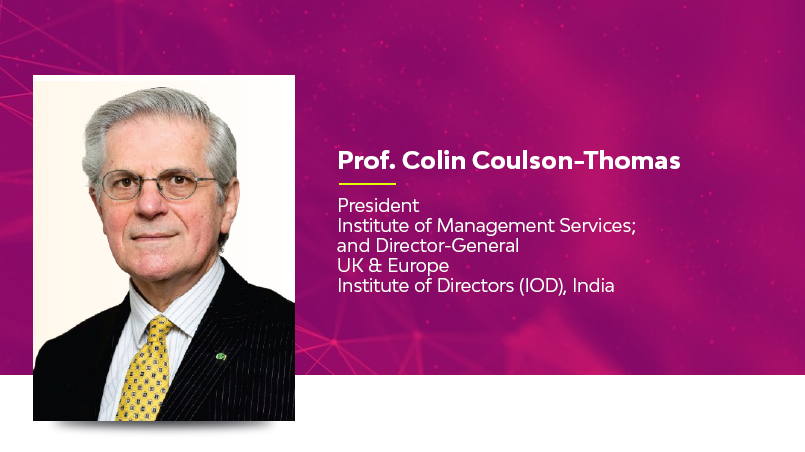
Prof. Colin Coulson-Thomas
Director-General of IOD India for UK and Europe operations
Prof. (Dr) Colin Coulson-Thomas, President of the Institute of Management Services and Director-General of IOD India for UK and Europe operations. He has advised directors and boards in over 40 countries.
Owned by: Institute of Directors, India
Disclaimer: The opinions expressed in the articles/ stories are the personal opinions of the author. IOD/ Editor is not responsible for the accuracy, completeness, suitability, or validity of any information in those articles. The information, facts or opinions expressed in the articles/ speeches do not reflect the views of IOD/ Editor and IOD/ Editor does not assume any responsibility or liability for the same.