 Quick Links
 Connect us

 Directors Databank (Empannel Yourself)
 Become a
  Become a
  Blog
Blog
 Become an Awards Assessor
 Publications
 Contact Us







Driven by Purpose, Defined by Impact: A Holistic Vision for Leadership, Well-being, and Enduring Institutions

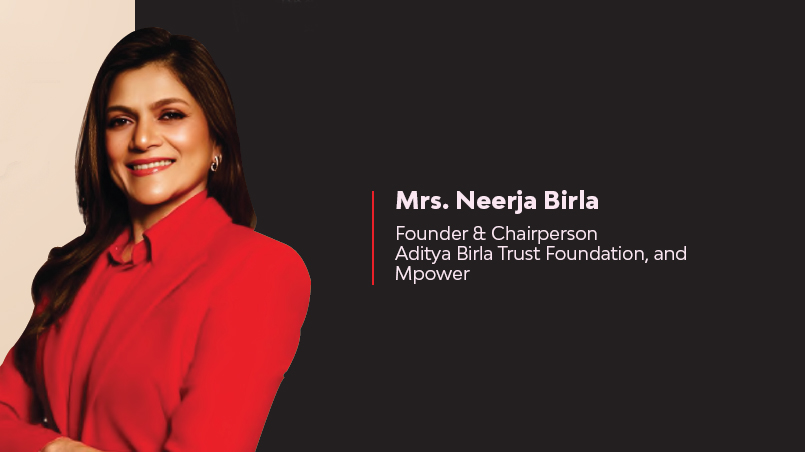
My leadership philosophy has therefore evolved around building institutions that nurture the whole individual and not just capability, but emotional strength and resilience.
A fundamental belief: Education and Well-being are inseparable
Education can transform lives. Not only intellectually, but also emotionally and socially. However, I do believe that academic excellence alone does not ensure well-being. Many young people are navigating stress, anxiety, and emotional challenges silently. Global estimates suggest that nearly one in seven adolescents experiences a mental health condition, yet a majority remain undiagnosed and unsupported.
This revealed a structural gap in how we think about development. My leadership philosophy has therefore evolved around building institutions that nurture the whole individual and not just their capability, but also share emotional strength and resilience.
Wellbeing supports Productivity, Resilience and Long-term Performance
Building on this belief, I have come to recognise that sustainable change requires both conviction and structure. Intent can initiate action, but long-term impact is built through clearly defined systems, strong partnerships, and measurable outcomes. When we established Mpower (an Aditya Birla Education Trust initiative), the objective was not limited to raising awareness, but to build accessible and scalable mental health services that could be embedded across different ecosystems. Today, through clinics, school and institutional programs, as well as communitybased interventions, MPower has reached nearly 180 million individuals across India.
For me, pragmatism lies in working collaboratively with educators, policymakers, corporate leaders, and mental health professionals to design solutions that are evidencebased, implementable and sustainable. The focus is not only on well-being as an outcome, but on enabling holistic wellness that directly supports productivity, resilience and long-term performance of people.
The Leader's Edge: Reflect, Regulate, and Pause
In parallel, leadership today inherently involves navigating uncertainty. The real question is not how to eliminate it, but how to build the capacity to respond to it constructively. That begins with self-awareness. Leaders need to invest in reflection, emotional regulation, and the discipline to pause before reacting. Research consistently shows that leaders who prioritise emotional intelligence build more resilient teams and healthier organisational cultures.
This is especially relevant as organisations are simultaneously addressing gender equity in the workplace, the expectations of Gen Z in professional environments, the need to improve productivity, reduce absenteeism, and build more resilient work cultures. In that context, support systems such as mentorship, professional guidance, and open dialogue become equally important. Over the years, we have seen that when leaders acknowledge vulnerability and normalise well-being, it strengthens trust across the organisation which helps create high-trust environments where individuals are better equipped to navigate complexity, adapt to change, and perform more sustainably.
Purpose, Culture, and the Ability to Pivot
These insights naturally extend into the broader question of institution-building. For me, institution-building is guided by a few enduring principles, starting with a clearly defined Purpose and a commitment to compassionate leadership where empathy and a people-first approach inform decisions and shape long-term impact. Without clarity on what the institution aims to build over time, it becomes difficult to take consistent and aligned decisions.
The second principle is Culture. The internal environment of an institution, how people think, behave, and engage ultimately defines its strength, often more than what is outlined in strategy documents. In the context of education, this means looking beyond academic outcomes and focusing equally on how young individuals are growing and evolving as people. A simple example of this is when we began integrating structured mental health and well-being programs into our schools. Initially, there were questions around time, resources, and how it would fit into an already rigorous academic environment. But because the larger purpose was clear, that student development is not only academic, we were able to stay consistent and build this into the system over time in Aditya Birla World Academy (ABWA).
Closely linked to this is the third principle, which is the Ability to Pivot. The environment is changing rapidly and institutions cannot remain static. At the same time, change has to be anchored in a stable core, otherwise it becomes directionless.
Mental health: Not an occasional aid, but a core part of overall well-being
Over the last decade, conversations around mental health have opened up significantly, especially post the pandemic, but the systems to support people have not kept pace. Through early work with institutions and workplaces, it became evident that while people were beginning to acknowledge mental health, there was still hesitation, lack of relatability, and limited access to structured care. What stood out was that mental health was often treated as an occasional aid, not as a core part of overall well-being.
The pandemic became an inflection point. It made the issue visible across all sections of society and brought it into everyday conversation. At the same time, it exposed how unprepared our systems were to respond at scale. With Mpower, the intent was to move this from awareness to implementation to building accessible, credible and continuous support systems. The shift has seen, from a handful of organisations engaging earlier to over 50 corporates today adopting dedicated mental health initiatives, reinforced that change is possible when the approach is structured and sustained.
At a national level, the focus has been to normalise conversations, build institutional capacity, strengthen advocacy for mental health as a public health priority and integrate mental health into education and workplaces, so it is recognised as fundamental to how individuals learn, work, and live.
Well-being of people: A shared responsibility
This need for integration becomes even more evident when we look at the challenges faced by young people today. Our helpline data offers a clear lens into where the need lies today. Between August 2020 and July 2025, nearly 86% of calls came from individuals aged 18 to 40, with a large share from the 18–25 group. This indicates that young people are facing heightened pressures but are also more willing to seek support.
The nature of concerns varies across life stages. Younger individuals reach out for academic stress, relationships, workplace pressures, and future anxiety, while older individuals speak more about isolation, health concerns and caregiving. This reinforces that a one-size approach cannot work. I always state the well-being of young people is a shared responsibility across systems. Educational institutions must embed mental health literacy, counselling and emotional learning into their frameworks, ensuring these are not treated as standalone initiatives but integrated into the core functioning of the system through curriculum design, teacher training, and regular student engagement. Families need to create safe, non-judgmental spaces for open conversations.
At the same time, organisations increasingly recognize that employee well-being directly impacts productivity, engagement and retention, making mental health a core priority. When schools, families, and workplaces operate in alignment, they create a continuum of support that helps young individuals build resilience, confidence and navigate challenges more effectively.
Psychological safety at the Workplace
In this broader context, of organisations in fostering psychologically safe workplaces becomes critical. For me, building a psychologically safe workplace starts with a simple belief, that people do their best work when they feel safe, heard, and supported. Psychological safety is not a soft idea; it is central to innovation, collaboration, and sustained performance. The first step is ensuring access to credible mental health support. Whether it is counselling services or helplines, people should know that help is available, confidential, and easy to access when they need it.
Equally important is the role of managers. In many ways, they are the first point of contact. Investing in their ability to recognise early signs of distress and respond with empathy can make a meaningful difference. It also helps address the gap we often see in leadership engagement on mental health. I also believe that culture is shaped by what we make visible. When leaders speak openly about well-being and encourage honest conversations, it reduces stigma and creates a sense of trust. Ultimately, psychological safety is about creating an environment where people feel comfortable expressing ideas, raising concerns, and acknowledging challenges without fear of judgment. When that happens, both individuals and organisations are able to perform at their best.
Building Humane Organisations
Bringing these ideas together leads to a larger reflection on the kind of organisations we are building. Organisations are, at their core, human systems. If leadership focuses only on outcomes and not on the people driving those outcomes, it may work in the short term, but it is not sustainable. What I have seen is that when well-being, trust, and clarity of values are built into the way an organization functions, performance follows more consistently. It is not about doing something extra; it is about how decisions are made, how people are treated, and what behaviours are encouraged.
Boards today have an important role to play here. They set the tone on what matters. If they prioritise long-term resilience over short-term gains, and create accountability around culture and leadership behaviour, it changes how the organisation operates. Building a humane organisation is not at odds with performance. In fact, it makes organisations more stable, more adaptive, and better equipped to handle complexity.
For leaders, the shift is quite simple in principle to pay attention to both people and performance with equal intent. When that balance is right, you build institutions that last and create value not just for the business, but for society as well.
**Excerpts from Mrs. Neerja Birla's conversation with Institute of Directors (IOD), India**
 Back to Home
Author
Mrs. Neerja Birla
Founder & Chairperson Aditya Birla Trust Foundation, and Mpower
Owned by: Institute of Directors, India
Disclaimer: The opinions expressed in the articles/ stories are the personal opinions of the author. IOD/ Editor is not responsible for the accuracy, completeness, suitability, or validity of any information in those articles. The information, facts or opinions expressed in the articles/ speeches do not reflect the views of IOD/ Editor and IOD/ Editor does not assume any responsibility or liability for the same.