 Quick Links
 Connect us

 Directors Databank (Empannel Yourself)
 Become a
  Become a
  Blog
Blog
 Become an Awards Assessor
 Publications
 Contact Us







A Report on Delhi & NCR Region IOD Members' Meet (Bi-Annual) 2026


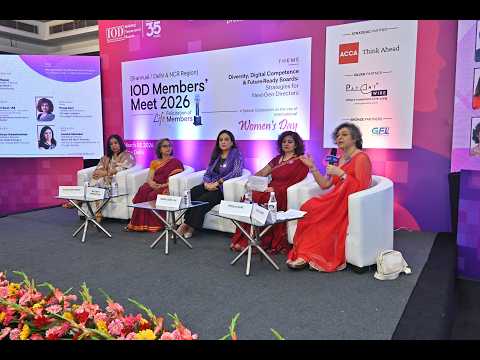
On the eve of International Women's Day, the Institute of Directors (IOD), India, convened its Bi-annual Members' Meet on March 07, 2026 in New Delhi, bringing together an accomplished cohort of women leaders from across the corporate and public sectors. The gathering reflected both the spirit and substance of the occasion, with a thoughtfully curated line up that embodied the theme through experience, leadership, and perspective.
The event witnessed the participation of nearly 200 members and distinguished guests, creating a vibrant forum for dialogue, reflection, and professional exchange. The presence of such a diverse and eminent audience lent depth to the deliberations, reinforcing the Institute's continued commitment to fostering inclusive leadership and forward-looking boardroom practices.
More than a formal convening, the Members' Meet served as a platform to celebrate the growing influence of women in leadership while encouraging meaningful conversations around governance, diversity, and the future of boards.
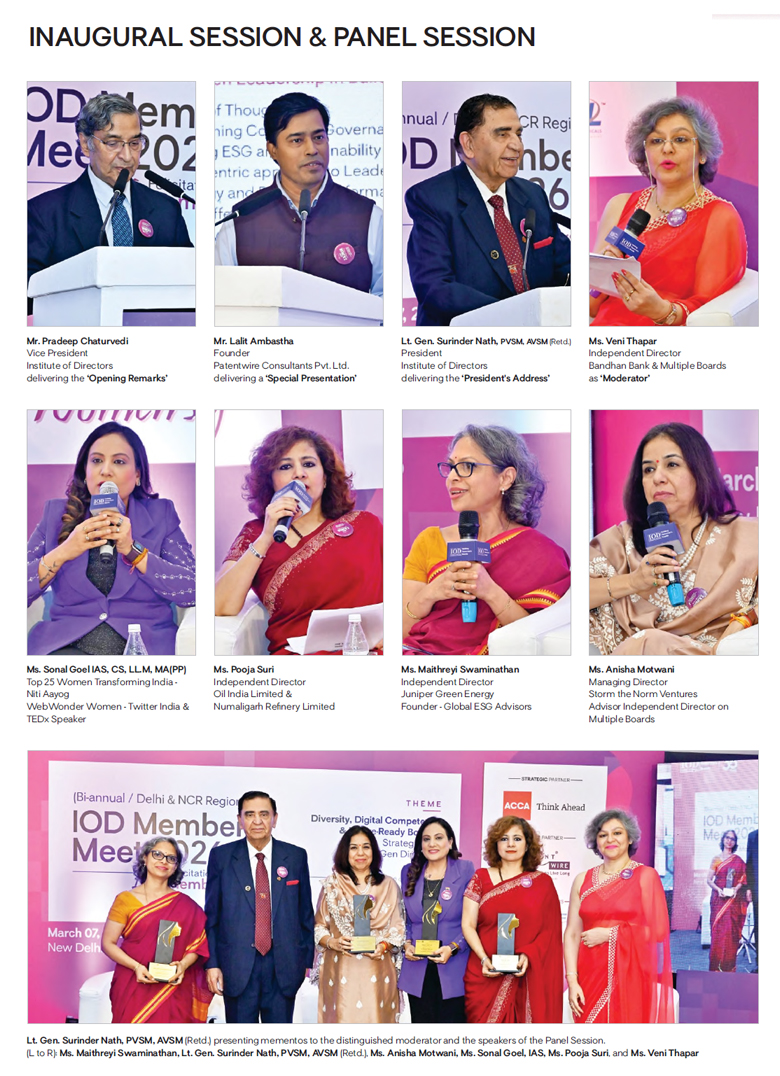
The event was inaugurated with the 'Opening Remarks' delivered by:
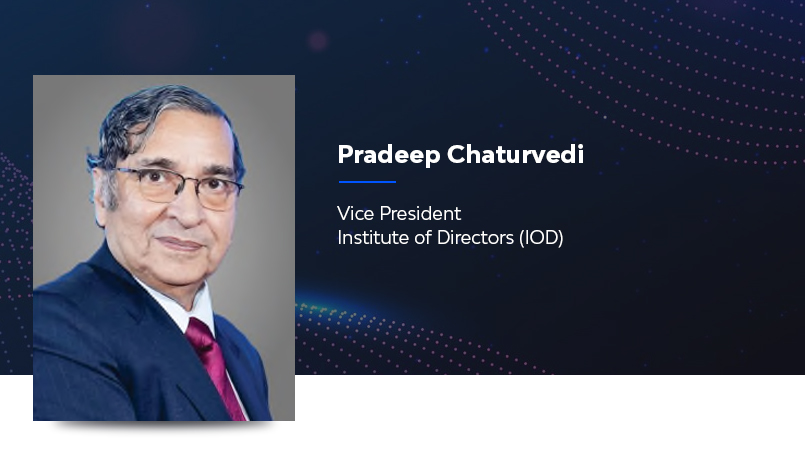
Mr. Pradeep Chaturvedi
Vice President
Institute of Directors
Mr. Chaturvedi observed that women leaders are central to strengthening governance, resilience, and long-term value creation. In an era of technological disruption, ESG priorities, and heightened stakeholder scrutiny, diverse board perspectives enhance strategic foresight and reduce the risks of uniform thinking. Referring to regulatory developments such as the Companies Act, 2013 and SEBI's LODR framework, he noted that while women's representation on boards has improved, meaningful participation remains a concern. Global evidence, including Deloitte's Women in the Boardroom report, continues to highlight the underrepresentation of women in top leadership roles. He emphasised that women leaders play a critical role in advancing governance, ethics, sustainability, and inclusive organisational culture, while strengthening board effectiveness. He concluded that future ready boards must move beyond tokenism towards building strong leadership pipelines through mentorship, inclusive policies, and systemic change, making women's leadership integral to credible and sustainable governance.
This was followed by a 'Special Presentation' by:
Mr. Lalit Ambastha
Founder
Patentwire Consulting Pvt. Ltd.
Mr. Ambastha in his address, drew attention to the concept of the “line of fire,” drawing a parallel with organisational leadership, where top management is increasingly the first to face the impact of disruptions. He observed that this shift is largely driven by the rise of technology and the growing dominance of intangible assets in business value creation. Citing examples such as Apple Inc., with its extensive intellectual property portfolio, he emphasised the strategic importance of innovation and IP led growth. Reflecting on India's economic trajectory, he noted that the country's relative position in the global economy is closely linked to its pace of innovation, highlighting the risks of underinvestment in this area. He stressed that future directors must move beyond managing physical assets and human capital to effectively governing intangible assets. He further advocated a transition from asset ownership to asset intelligence, where intellectual property and data driven capabilities are leveraged as competitive advantages. In this context, he introduced a structured governance framework comprising five elements and ten pillars, designed to help organisations analyse challenges and strengthen decision making in an increasingly complex business environment.
This was followed by a 'President's Address' delivered by:
Lt. Gen. Surinder Nath, PVSM, AVSM (Retd.)
President
Institute of Directors
Lt. Gen. Nath set the tone for an evening centred on inclusive and future ready governance. The address underscored the significance of the theme, focusing on diversity, digital competence, and strategies for next generation directors, as a reflection of the evolving responsibilities of modern boardrooms. He highlighted that boards today operate in an environment shaped by technological disruption, ESG imperatives, and rising stakeholder expectations. In this context, diversity was positioned as a strategic advantage rather than a symbolic goal, enhancing decision making, risk oversight, and institutional credibility. Equal emphasis was placed on digital competence, with boards expected to navigate areas such as artificial intelligence, cybersecurity, and data governance with informed oversight. The address also stressed the importance of continuous learning and particular attention was drawn to the need for strengthening pathways for women and emerging leaders, moving beyond representation towards meaningful inclusion.
This was followed by a Panel Session on: Representation to Influence: Rethinking the One-Woman Role in Indian Boardrooms
The session was moderated by:
Ms. Veni Thapar
Independent Director, Bandhan Bank; and Multiple Boards
Ms. Thapar opened the session with a data led perspective on the status of women directors in India, offering a candid assessment of their current representation in boardrooms. She observed that while the numbers remain modest, the shift from absence to presence marks an important structural beginning, positioning women within spaces where critical decisions are shaped. However, she questioned whether representation alone is sufficient, urging a deeper examination of impact and effectiveness. She emphasised that board participation must move beyond a compliance driven, box ticking approach towards meaningful contribution anchored in professionalism and collective responsibility. Raising pertinent concerns, she drew attention to career interruptions faced by women and their implications for leadership progression. She further explored how emerging technologies, including artificial intelligence, could play a role in mitigating the professional setbacks associated with such breaks, thereby enabling more sustained and inclusive pathways to leadership.
The session had the following distinguished Speakers:
1. Ms. Sonal Goel, IAS, CS, LL.M, MA(PP)
Top 25 Women Transforming India-Niti Aayog
WebWonder Women-Twitter India & TEDx Speaker
2. Ms. Maithreyi Swaminathan
Independent Director, Juniper Green Energy; and Founder, Global ESG Advisors
3. Ms. Anisha Motwani
Managing Director
Storm the Norm Ventures
Advisor & Independent Director on Multiple Boards
4. Ms. Pooja Suri
Independent Director, Oil India Limited; and Numaligarh Refinery Limited
Ms. Goel, in her address, reflected on gender parity as an everyday imperative rather than a symbolic observance limited to occasions. Drawing from her experience across both corporate and civil sectors, she traced the evolving role and representation of women, noting the gradual yet significant progress over time. She emphasised that true inclusion extends beyond presence to access to influence within organisations. The ability of women to contribute meaningfully at the board level, she observed, depends on the skills, competence, and credibility they build over time, rather than positional authority alone. She also underscored the importance of making decision making more gender sensitive, aligning governance with broader societal realities. Referring to pioneers such as Anna Rajam Malhotra, she highlighted the structural biases that once defined professional frameworks, noting how conditions that once restricted women's participation have gradually evolved. This transition, she observed, reflects a broader shift towards more inclusive and equitable institutional cultures.
Ms. Swaminathan offered a nuanced perspective on the debate around women's representation as a compliance requirement. She observed that board composition itself is rooted in regulatory mandates, and gender diversity is an extension of this broader governance framework. Reframing the narrative, she emphasised that the role of directors, irrespective of gender, originates from legal responsibility and fiduciary duty. She noted that once individuals demonstrate capability and expertise, their presence transcends compliance and becomes defined by the value they bring to board deliberations. She further advocated for a more inclusive approach to board appointments, encouraging organisations to recognise potential, skills, and aptitude rather than relying solely on prior experience. Drawing from her own professional journey across the public and private sectors, including multiple career breaks, she highlighted the importance of continuous learning and skill enhancement. She observed that evolving competencies, particularly in areas such as artificial intelligence, are increasingly relevant, especially in the context of governance, risk oversight, and the ethical deployment of emerging technologies.
Ms. Suri highlighted that women directors contribute significantly to board effectiveness by bringing diverse perspectives, governance discipline, and deeper stakeholder insight, thereby enabling more balanced and thoughtful decision making. She emphasised that influence in the boardroom is not derived from compliance driven appointments but is built through preparation, domain expertise, and active participation in deliberations. Addressing leadership pathways, she observed that non-linear career trajectories can be particularly enriching, as they expose individuals to varied roles, responsibilities, and cross functional experiences, strengthening their overall perspective. At the same time, she underscored the importance of continuous learning, noting that the ability to consistently upgrade skills and remain relevant is essential in an evolving business environment.
Ms. Motwani presented a candid perspective on the uneven nature of women's representation across boardrooms, noting that experiences vary significantly across organisations. She observed that entry into boards through compliance driven mandates should be viewed as an opportunity, with the onus thereafter resting on individuals to demonstrate capability, create impact, and add tangible value. She drew attention to the growing pool of board ready women who, despite being well prepared, often face limited opportunities, attributing this in part to conventional emphasis on titles and linear career progression. She advocated for a shift in this mindset, encouraging recognition of diverse career paths and experiences. Reflecting on career journeys, she emphasised that taking breaks is both valid and often necessary, provided individuals remain committed to growth. A pause, she noted, need not imply stagnation, underscoring the importance of continuity in learning and aspiration. She concluded with an aspirational note, encouraging professionals to look beyond perceived limitations and approach their careers with a sense of possibility and purpose.
FELICITATION CEREMONY OF
IOD LIFE MEMBERS
This was followed by the 'Guest of Honour Address' delivered by:
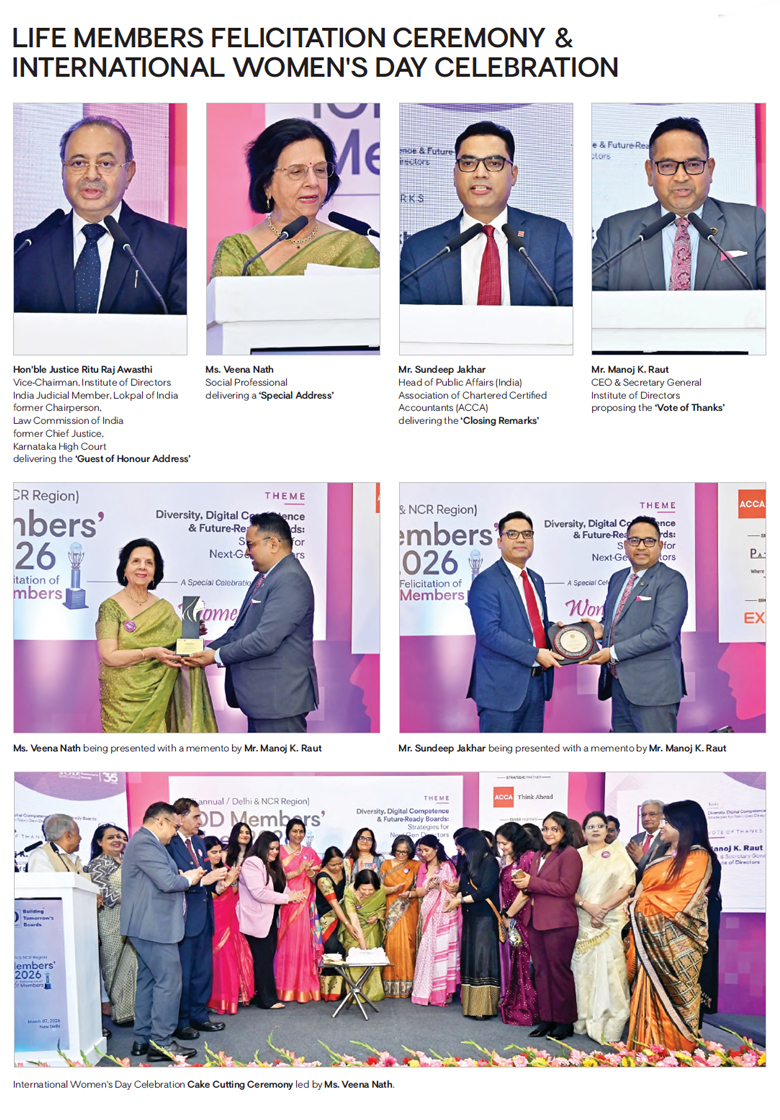
Hon'ble Justice Ritu Raj Awasthi
Vice-Chairman, Institute of Directors
India Judicial Member, Lokpal of India
former Chairperson, Law Commission of India
former Chief Justice, Karnataka High Court
Justice Awasthi commended the Institute of Directors for fostering a credible platform dedicated to boardroom governance, ethical leadership, and responsible institutional practices. Reflecting on the theme, he observed that in an era marked by rapid technological change, evolving stakeholder expectations, and heightened accountability, boards must move beyond oversight to cultivate foresight. He emphasised that diversity strengthens judgement and enhances institutional resilience, while true inclusion must extend beyond representation to meaningful participation and leadership. In the context of International Women's Day, he noted that these principles assume even greater significance. He further remarked that future ready boards are those that anticipate change, embrace continuous learning, and align long term value creation with social responsibility. Governance, he concluded, ultimately rests on trust, sustained through integrity, transparency, and accountability.
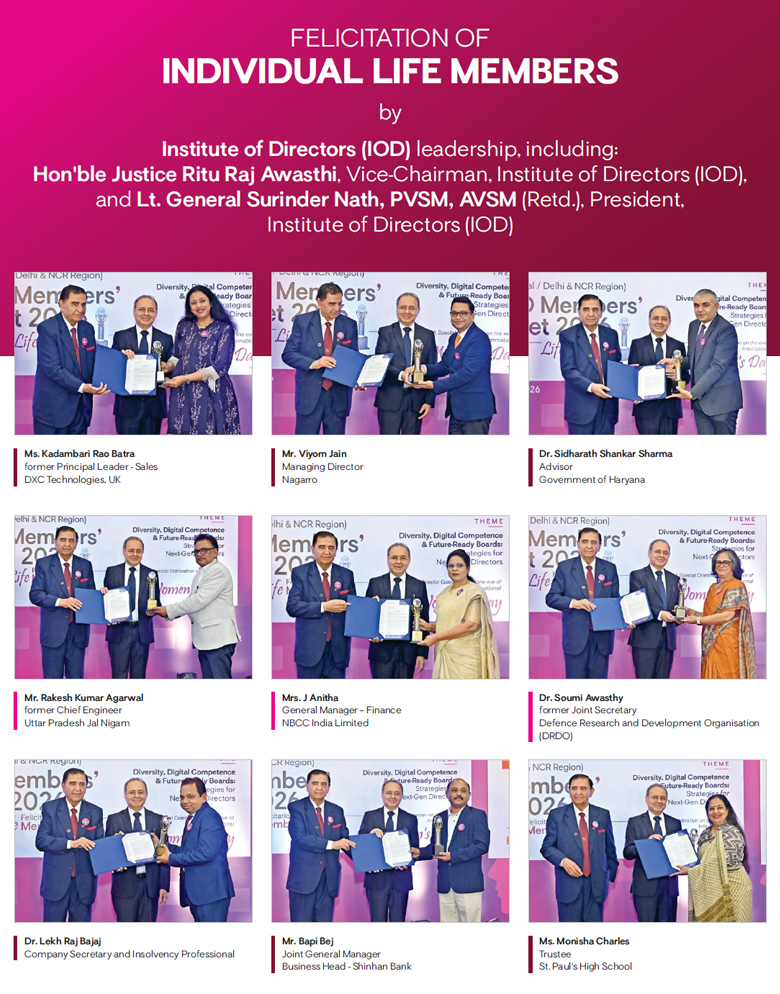
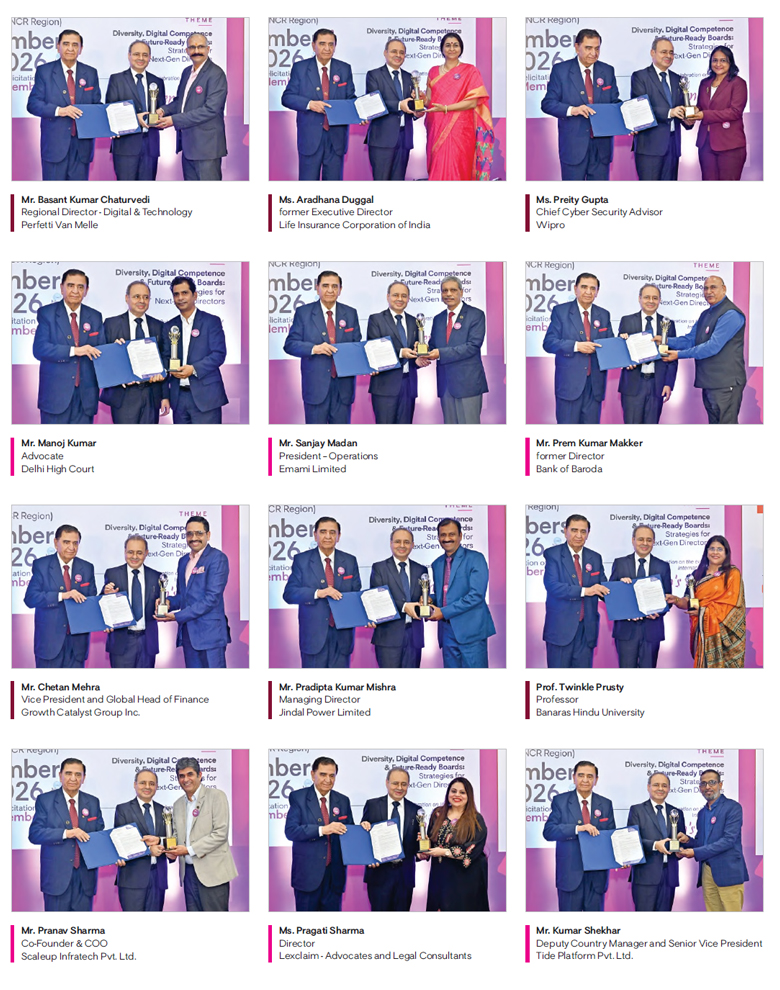
This was followed by the felicitation of IOD Life Members as published in page no. 90-91.
International Women's Day Celebration
A 'Special Address' was delivered by:
Ms. Veena Nath
Social Professional
Ms. Nath, reflected on the evolving role of women across societal and institutional spheres, positioning the occasion as both a celebration of achievements and a call for continued progress towards gender equality. The speaker highlighted the enduring influence of women as nurturers, educators, and leaders, shaping individuals, organisations, and the broader fabric of society. Drawing on historical and contemporary examples, the address noted the growing presence of women across governance, business, science, defence, sports, and the creative sectors. While acknowledging these advancements, the address also pointed to persistent challenges, including disparities in pay, access to opportunities, and issues of safety and dignity. It emphasised the need for sustained efforts to ensure equality in education, healthcare, and economic participation. In conclusion, the address underscored that empowering woman remains central to inclusive and sustainable progress, with the 2026 theme reinforcing the importance of collective growth through support, inclusion, and shared responsibility.
This was followed by felicitating all the women staff of Institute of Directors, Delhi head-office with mementos and a cake cutting ceremony.
The 'Closing Remarks' were delivered by:
Mr. Sundeep Jakhar
Head of Public Affairs (India)
The Association of Chartered Certified Accountants (ACCA)
Mr. Jakhar observed that the global business environment is undergoing rapid transformation, driven by technological acceleration, increasing complexity of risks, and rising stakeholder expectations. In this context, he noted that the role of boards has evolved significantly, requiring them not only to oversee but to anticipate change, provide strategic direction, and guide organisations through disruption. He emphasised that diversity, as highlighted during the forum, is not merely about representation but about enabling better quality of thinking and decision making. He further remarked that the conversation on women's participation in boardrooms must move beyond token representation towards meaningful participation, influence, and the ability to shape outcomes. Highlighting the attributes of future ready boards, he underscored the importance of openness to learning, intellectual curiosity, and the willingness to challenge established assumptions. He concluded by noting that effective boards are those that continuously evolve, with a strong commitment to learning and adaptability at their core.
The 'Vote of Thanks' was proposed by:
Mr. Manoj K. Raut
CEO & Secretary General
Institute of Directors (IOD)
Mr. Raut in his closing remarks, expressed his appreciation to all those present, noting that the gathering took place on the eve of International Women's Day. He acknowledged the significance of the occasion and conveyed his gratitude to the distinguished guests and speakers for their presence and participation. He commended the speakers for their insightful and timely contributions, which enriched the discussions and added depth to the deliberations of the evening. He further appreciated the engagement of members and participants, whose presence underscored the importance of continued dialogue on governance, leadership, and inclusion. Concluding on a note of appreciation, he thanked all attendees for contributing to a meaningful and impactful session.
The event concluded with a Networking Dinner.
IOD, India is especially grateful to all its Event Partners:
Our Strategic Partner:
• The Association of Chartered Certified Accountants (ACCA)
Our Silver Partner:
• Patentwire Consultants Pvt. Ltd.
Our Bronze Partners:
• EXL Service Holdings, INC. and Affiliates
• Gujarat Fluorochemicals Limited (GFL)

This report was compiled by:
Ms. Violina Das
Assistant Manager - Editor & Communications
Institute of Directors (IOD)
 Back to Home
Author
Institute of Directors India
Bringing a Silent Revolution through the Boardroom
Institute of Directors (IOD) is an apex national association of Corporate Directors under the India's 'Societies Registration Act XXI of 1860'. Currently it is associated with over 31,000 senior executives from Govt, PSU and Private organizations of India and abroad.
Owned by: Institute of Directors, India
Disclaimer: The opinions expressed in the articles/ stories are the personal opinions of the author. IOD/ Editor is not responsible for the accuracy, completeness, suitability, or validity of any information in those articles. The information, facts or opinions expressed in the articles/ speeches do not reflect the views of IOD/ Editor and IOD/ Editor does not assume any responsibility or liability for the same.