 Quick Links
 Connect us

 Directors Databank (Empannel Yourself)
 Become a
  Become a
  Blog
Blog
 Become an Awards Assessor
 Publications
 Contact Us







Beyond Tokenism: Reimagining Boardroom Leadership for Sustainable Impact


Why Inclusion Must Move from Representation to Real Influence
As we mark International Women's Day 2026, boardrooms across the world are rightly celebrating progress in gender diversity. Numbers are improving. Reports show rising participation. Panels reflect more balance than ever before.
And yet, the fundamental question remains: Has diversity translated into decision-making influence?
True inclusion is not about representation alone. It is about participation with power. It is about ensuring that diversity meaningfully shapes governance, strategy, and long-term value creation.
Over the course of more than three decades spanning engineering, global business transformation, and leadership roles within international organisations. I have witnessed how governance structures either empower meaningful inclusion or reduce it to optics. Representation is the beginning. Influence is the destination.
From Transformation to Governance
My professional journey began in engineering and evolved into leading complex global business and digital transformation programmes across more than 120 countries. Working within multilateral institutions demanded operational precision, transparency, and accountability at scale. Systems were not abstract constructs; they directly affected health delivery, migration governance, humanitarian protection, and financial stewardship.
One lesson became clear early on: transformation does not succeed because technology is introduced. It succeeds because governance aligns with change.
Boards that understand risk, digital disruption, stakeholder trust, and long-term resilience create durable institutions. Boards that treat transformation as an operational matter risk strategic drift.
Diversity strengthens that alignment. Different professional paths, cultural perspectives, and leadership experiences sharpen oversight. Diverse boards ask different questions. They challenge assumptions. They anticipate interconnected risks.
In today's environment, that breadth of perspective is not desirable-it is indispensable.
Tokenism rarely announces itself. It appears subtly- when women are appointed but excluded from core committees; when financial and digital oversight remains concentrated in familiar networks; when diverse voices are welcomed in discussion but side-lined in final decisions.
Moving Beyond Symbolism
Across sectors, women are increasingly present in boardrooms. Yet presence alone does not guarantee impact.
Tokenism rarely announces itself. It appears subtly-when women are appointed but excluded from core committees; when financial and digital oversight remains concentrated in familiar networks; when diverse voices are welcomed in discussion but sidelined in final decisions.
True inclusion requires structural participation:
• Engagement in audit, risk, technology, and ESG committees
• Equal authority in strategic votes
• Recognition of crossdisciplinary expertise
• A culture that values constructive challenge
Influence is exercised where oversight resides. Without committee-level integration, representation risks becoming symbolic.
Inclusive boards are not quieter; they are stronger. They deliberate more rigorously. They recognise that financial resilience, cyber risk, climate exposure, and workforce transformation are deeply interconnected.
“Diversity without decision-making authority is symbolism.
Diversity with structural influence is transformation.”
Digital Transformation as a Governance Imperative
Digital transformation is no longer an IT initiative-it is a boardroom responsibility.
Artificial intelligence, cybersecurity, data governance, automation, and digital ethics are redefining competitive advantage. Without digital literacy at the board level, blind spots multiply.
In global institutions, digital systems determine resource allocation, accountability, and operational transparency. In corporations, they shape supply chains, customer trust, and enterprise risk.
Technology decisions now carry ethical, regulatory, and reputational implications. Oversight cannot be delegated entirely to management.
Women leaders-particularly those who have navigated complex, cross-border environments-often bring systems thinking to these discussions. They connect technology to people, innovation to inclusion, and efficiency to longterm sustainability.
Boards that embed digital competence into governance structures position themselves for resilience rather than reaction.
Sustainability as Strategic Core
Sustainability has moved from peripheral corporate social responsibility to central strategic concern. Climate volatility, demographic shifts, supply chain fragility, and public health disruptions directly affect enterprise value.
In multilateral environments, sustainability initiatives succeeded only when embedded into operational systems with measurable accountability. Aspirations required structure.
Similarly, corporate ESG must extend beyond disclosure frameworks. It should inform capital allocation, risk appetite, and long-term growth planning.
Women leaders frequently advocate for long-term orientation and stakeholder inclusion not as ideology, but as risk management discipline. Sustainable value creation demands broader lenses.
Boards must ask:
• Is our business model resilient to climate risk?
• Are we preparing our workforce for digital economies?
• Do our governance structures reflect the realities of global interdependence?
Inclusive leadership strengthens the ability to confront these questions honestly.
Inclusion and Economic Competitiveness
Gender inclusion is not merely an equity objective; it is an economic strategy.
Digital economies require expanded talent pools. Yet women remain underrepresented in technology, AI, cybersecurity, and digital leadership roles.
Boards influence corporate policy on skilling, mentorship, flexible work structures, and leadership pipelines. Decisions taken at the board level shape whether organisations cultivate diverse future leaders or perpetuate narrow succession patterns.
Countries with demographic potential will convert that potential into growth only if women's participation expands in high-value sectors.
Inclusion, therefore, is not a concession it is a catalyst for competitiveness.
Personal Reflections on Leadership
Across my professional journey, I have frequently worked in environments where perspectives were not always evenly represented. Those experiences reinforced the importance of preparation, clarity of thought, and the willingness to engage constructively with established assumptions.
What I learned was this: influence is earned through competence, but sustained through courage. Inclusive leadership is not about volume; it is about value.
The most effective boards I have encountered share three defining characteristics: integrity, transparency, and accountability. These qualities deepen-not diminish-when leadership reflects the diversity of the stakeholders it serves.
Governance is ultimately about trust. Trust flourishes where inclusion is authentic and influence is equitable.
Conclusion: From Celebration to Commitment
International Women's Day should inspire more than celebration. It should prompt recalibration.
Boards must move beyond counting seats to assessing impact. They must:
• Integrate digital and ESG expertise into board criteria
• Ensure diverse leaders serve on core oversight committees
• Sponsor and mentor emerging women into governance pathways
• Foster cultures where rigorous debate strengthens decisions
The future of governance will be defined by those who can navigate technological disruption, environmental volatility, and global complexity with clarity and accountability.
Women in boardrooms are not there to fulfil quotas. They are there to shape outcomes.
When inclusion moves from optics to authority, governance evolves from compliance to leadership.
And that evolution will determine which institutions merely survive and which truly endure.
 Back to Home
Author
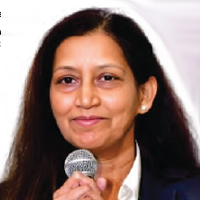
Ms. Dipti Pardeshi
She has been dedicated to leading high-impact business and IT initiatives within United Nations international organizations. Most recently, she served as the Director of the Business Management Systems at World Health Organization (WHO) in Geneva. Her career includes significant roles such as Chief of Mission for the International Organization for Migration (IOM), the UN's Migration Agency, in London, and Chief Information Officer for IOM in Geneva. Her national experience in India includes working for the World Bank-funded Maharashtra Emergency Earthquake Rehabilitation Programme.
Owned by: Institute of Directors, India
Disclaimer: The opinions expressed in the articles/ stories are the personal opinions of the author. IOD/ Editor is not responsible for the accuracy, completeness, suitability, or validity of any information in those articles. The information, facts or opinions expressed in the articles/ speeches do not reflect the views of IOD/ Editor and IOD/ Editor does not assume any responsibility or liability for the same.