 Quick Links
 Connect us

 Directors Databank (Empannel Yourself)
 Become a
  Become a
  Blog
Blog
 Become an Awards Assessor
 Publications
 Contact Us






Driving Leadership and Operational Excellence: The Strategic Imperative of Women at the Helm


As we observe International Women's Day on 8 March 2026, the global corporate landscape finds itself at a defining crossroad. For over a decade, the conversation around gender diversity in Indian boardrooms has been driven largely by legislative mandates - beginning with the landmark Companies Act of 2013. Over the last decade, the narrative has certainly evolved, as evidenced by the transition of many Indian family-led businesses to professionalized boards and the increasing role of Indian women in STEM-heavy industries reflecting in boardroom compositions, but there is still much to be done and accomplished. There are enough indications that we are moving beyond the era of "compliance-driven diversity" toward an era marked by "capability-driven influence."
Redefining Leadership in the Age of Permacrisis
Leadership is not a title bestowed by a board seat; it is an active practice of influence. It is the shift from being a 'Director' who attends meetings to being a 'Leader' who shapes the company's destiny through rigorous inquiry, structural oversight, and the courage to lead with authenticity.
The modern boardroom operates in a state of "permacrisis" - a world defined by geopolitical volatility, the rapid march of AI, and the nonnegotiable mandates of Environmental, Social, and Governance (ESG) frameworks. In such an environment, the traditional, often monolithic approach to leadership can be a liability.
Leadership excellence today requires a high "Cognitive Diversity Quotient." Research consistently shows that gender-diverse boards are more effective at mitigating "groupthink" - the silent killer of strategic innovation. Women leaders often bring a unique calibrated approach to risk, balancing the natural overconfidence that can lead to aggressive but fragile actions. By asking the "awkward questions" and challenging longheld assumptions, women at the helm ensure that strategic decisions are stress-tested against a broader range of outcomes. Boards are often high-ego environments and a woman who can navigate these dynamics, de- escalate tension, and refocus the group on the shared mission is exercising the highest form of leadership.
Women leaders are often the architects of "Psychological Safety" on boards, which allows members to speak up about operational risks before they become crises.
Operational Excellence: Beyond the Silo
Operational Excellence is the bridge between a Board's strategy and its execution. Women at the helm ensure this bridge is built on the pillars of risk-intelligence, cultural health, and sustainable innovation. We move the conversation from 'efficiency' to 'resilience,' ensuring that the organization doesn't just run fast, but runs in a direction that is sustainable for all stakeholders.
Historically, "operations" has been viewed as a functional silo - the domain of the factory floor, field activities or the back office. In recent times, operational excellence has evolved into a strategic capability that encompasses supply chain resilience, digital transformation, and workforce sustainability.
There is a direct, data-backed link between gender diversity and operational performance. Recent studies in operations management indicate that gender-balanced teams are significantly faster at "routine formation" - the ability to standardize new processes and adapt to internal or external shocks. In an era where companies must pivot their supply chains or integrate new AI-driven workflows overnight, this adaptability is the ultimate competitive advantage.
By focusing on culture and inclusive leadership from the Board level, women leaders ensure that the "human engine" of operations is healthy. Women leaders are often the architects of "Psychological Safety" on boards, which allows members to speak up about operational risks before they become crises.
Women leaders, who often navigate complex multistakeholder environments throughout their careers, bring a pragmatic, holistic view to resource allocation. Whether it is spearheading "Lean" methodologies or driving the transition to "Green Manufacturing," women in leadership are proving that inclusivity is not a moral "add-on" - it is a performance multiplier.
From Presence to Power: The Path Forward
Despite the progress made - with women now occupying approximately 20% of board seats in India's top listed companies - a gap remains between presence and power. True operational and leadership excellence occurs when women move from being "Independent Directors" in name to chairing the Audit, Risk, and Nomination Committees. These are the engines of corporate governance where capital is allocated, risks are mitigated, and the next generation of leadership is forged.
To drive this transformation, organizations must focus on three strategic levers:
• Fixing the Leadership Funnel: Board diversity is unsustainable without a robust pipeline of women in C-suite and PCL-owning roles.
• Moving Beyond Tokenism: Boards must actively track the "clout" of their diverse members - measuring participation, committee leadership, and the execution of sponsored initiatives.
• Fostering an Inclusive Board Culture: A seat at the table is meaningless without a voice that is heard. Boards must evolve their culture to value dissent and diverse perspectives as assets, not obstacles.
International Women's Day 2026 is a moment to celebrate how far we have come, but more importantly, it is a call to action.
Driving leadership and operational excellence requires the full spectrum of human talent. As we navigate the complexities of the mid-2020s, the organizations that will thrive are those that recognize gender diversity as a core governance capability - one that sharpens decisionmaking, accelerates operational agility, and builds longterm organizational resilience. The helm is ready; it is time for more women to lead the way.
 Back to Home
Author
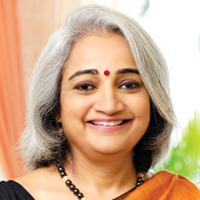
Ms. Gangapriya Chakraverti
experience comprises corporate and leadership roles in the Murugappa Group and Ford Motor Company's Business Services organization and business development and consulting roles in Mercer Consulting. Gangapriya has been the first lady President of the Chennai chapter of the NHRDN (2019-2021) and served on its National Board for two consecutive terms. Currently she also serves as an Independent Director on the board of an auto-component manufacturing company and advises a start-up in the IIT Madras Research Park. She was also recently awarded the Women of World Awards 2023 instituted by The Hindu, in the Business Leadership category.
Owned by: Institute of Directors, India
Disclaimer: The opinions expressed in the articles/ stories are the personal opinions of the author. IOD/ Editor is not responsible for the accuracy, completeness, suitability, or validity of any information in those articles. The information, facts or opinions expressed in the articles/ speeches do not reflect the views of IOD/ Editor and IOD/ Editor does not assume any responsibility or liability for the same.