 Quick Links
 Connect us

 Directors Databank (Empannel Yourself)
 Become a
  Become a
  Blog
Blog
 Become an Awards Assessor
 Publications
 Contact Us







Inclusion by Design: Lessons from India's Global Capability Centres


Global Capability Centres (GCCs) in India have evolved beyond their original mandate. What began as efficiency-driven extensions of global firms are now centres of ownership, innovation, and enterprise leadership. Having worked closely with GCCs across sectors for over two decades, I have seen many factors behind this success. One of the quieter, yet most consequential drivers has been intentional inclusion.
In the context of International Women's Day, this article focuses on women. However, the principles discussed here apply equally to building resilient, future-ready talent systems more broadly.
Women constituted 35% of the GCC workforce in 2024, significantly up from 26% in 2016 (NASSCOM). Representation at leadership levels has also improved, with women now accounting for approximately 22%. This progress is not accidental. GCCs have benefitted from two decades of global conversations on diversity, equity and inclusion, but more importantly, from translating enterprise intent into local execution.
Drawing on my experience, I have framed these learnings as a set of design principles. They are intended to offer boards and leaders practical, actionable insights rather than aspiration alone. In the spirit of the International Women's Day 2026 theme, “Give to Gain”, these principles reflect how intentional investment in inclusion strengthens institutions and leadership pipelines.
Women constituted 35% of the GCC workforce in 2024, significantly up from 26% in 2016 (NASSCOM). Representation at leadership levels has also improved, with women now accounting for approximately 22%.
1. Start with clarity and consistency
The first step toward equity is ensuring that policies on hiring, performance management, grievance redressal, career progression, and workplace conduct are not only well articulated but well understood and consistently applied. Clarity builds trust. Consistency ensures credibility.
2. Leadership makes it real
Unless employees see visible and sustained commitment to equity from senior leadership, inclusion efforts are unlikely to succeed. Gender balance is not a side initiative; it is a business priority. Leaders who role-model inclusive behaviors and decision-making make intent tangible for the organization.
3. Be intentional at the point of entry
Fairness begins with talent acquisition. Across levels, this requires deliberate attention to the selection process – from ensuring a strong representation of women in hiring shortlists, to having diverse interview panels and actively countering unconscious bias associated with certain roles. In recent years, many GCCs have also expanded hiring into Tier 2 and Tier 3 cities, widening access to capable and motivated talent.
4. Visibility creates leadership readiness
Research consistently shows that mixed-gender teams make better decisions, particularly in complex, risksensitive and highly collaborative environments. Leadership roles in GCCs demand not only technical depth but also cultural intelligence and the ability to navigate cross-border challenges. Women must therefore be included not only in people-centric roles but also in transformation programmes, data initiatives, regulatory engagements and innovation charters. These assignments build enterprise visibility, broaden capability, and accelerate leadership readiness.
5. Support careers through life stages
Many GCCs have invested in leadership accelerator programmes focused on middle management talent, creating structured learning and capability-building pathways. Returnship programmes have also enabled women to re-enter the workforce after career breaks. Support during key life events plays a critical role in reducing attrition and sustaining long-term participation.
6. Mentorship sponsors the future
Talent management teams play a crucial role in identifying and reviewing potential. Mentorship and sponsorship are not interchangeable – both matter, but sponsorship accelerates careers. In my view, sponsorship of the next generation of leaders should be a visible leadership KPI, not an informal expectation. The “Give to Gain” principle comes to life when leaders intentionally invest in others while building enterprise succession readiness.
7. Measure what matters
Boards increasingly expect data-driven governance, and inclusion should be no exception. GCCs possess strong analytical foundations, enabling enterprise-wide measurement of equity and fairness. Metrics related to hiring, promotions, pay equity and benefits provide visibility into progress and gaps, allowing leadership to course-correct with confidence.
Beyond organisational design, ecosystem-level enablers have also played a significant role in advancing inclusion.
As part of the NASSCOM's National GCC Council, I have seen first-hand the impact of sustained collaboration between industry, government, and academia in nurturing future-ready talent. Women leaders across GCCs have served as powerful role models, while allies across industry leadership have contributed beyond their own organisations as speakers, coaches and mentors to the wider workforce.
Sponsorship of the next generation of leaders should be a visible leadership KPI, not an informal expectation.

NASSCOM's DEI initiatives have further catalysed change. Programmes such as Women Wizards Rule Tech (W2RT), led by the NASSCOM Foundation, focus on building future technology capabilities among women across roles. In recent years, the NASSCOM Women in Tech Awards have also shone a light on trailblazers who are shaping the ecosystem.
Government initiatives aimed at increasing women's workforce participation and entrepreneurship have expanded and deepened the available talent pool. In parallel, women-focused leadership development firms have created industry-wide cohorts that combine capability-building with strong peer networks, offering participants broader perspectives and sustained support.
As organisations prepare for an increasingly complex future, effectiveness will depend not only on competence but on perspective. Technical expertise and business acumen remain essential, but emotional intelligence, collaboration and inclusive leadership are becoming decisive capabilities.
Creating pathways for women to thrive in the workforce is therefore not a matter of equity alone. It is a matter of institutional strength, leadership continuity and long-term sustainability. While meaningful progress has been made, the journey from intention to the mainstreaming of inclusion is far from complete.
 Back to Home
Author
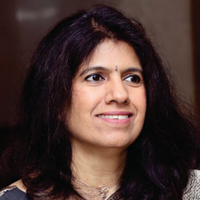
Ms. Surekha Shenoy Kunder
She is the Managing Director at Russell Investments India, with over 27 years of industry experience. Prior to this, she was at TIAA (Teachers Insurance and Annuity Association of America) as Chief of Staff and Chief Administrative Officer for 4 years and at Morgan Stanley as the Chief Operating Officer for over a decade. She played a key role in shaping business strategy, strengthening governance, and setting up new functions within the Global Capability Centre (GCC) in these organisations. She also served on the NASSCOM National GCC Council from2015 to 2019.
Owned by: Institute of Directors, India
Disclaimer: The opinions expressed in the articles/ stories are the personal opinions of the author. IOD/ Editor is not responsible for the accuracy, completeness, suitability, or validity of any information in those articles. The information, facts or opinions expressed in the articles/ speeches do not reflect the views of IOD/ Editor and IOD/ Editor does not assume any responsibility or liability for the same.