 Quick Links
 Connect us

 Directors Databank (Empannel Yourself)
 Become a
  Become a
  Blog
Blog
 Become an Awards Assessor
 Publications
 Contact Us







From Presence to Impact: How Women Leaders Are Strengthening Boardroom Effectiveness

For many years, the conversation around women in boardrooms focused on representation. Numbers mattered and they still do. Mandated thresholds and formal appointments helped initiate change. They signalled intent. They opened doors and normalised presence. As representation strengthens, the conversation naturally shifts. The question is no longer about presence alone. It becomes about what governance looks like in practice and how leadership behaviour shapes outcomes.
In practice, many leadership environments now reveal a noticeable shift. As more women step into senior roles, governance discussions increasingly emphasise clarity of intent. Decisions are paced more deliberately. Execution realities receive earlier attention. These are not universal traits. They are tendencies that surface in how leadership teams approach complexity. Decisions must be tested for feasibility and ownership. Follow-through becomes central. This discipline narrows the gap between strategic intent and operational delivery.
Strengthening Governance Outcomes Through Clarity
Across contemporary leadership conversations, clarity is increasingly treated as an operational necessity. Ambiguity at senior levels rarely remains abstract. It shows up downstream as friction, delay, or inconsistent execution. It is increasingly observed that effective leaders anchor decisions in practical framing. Sequencing becomes explicit and ownership is visible. While strategy becomes actionable, execution expectations are clearer. Governance shifts from endorsement to delivery discipline.
Risk conversations evolve in parallel. Leadership teams increasingly pay attention to operational strain, reputational exposure, and stakeholder implications alongside financial and regulatory factors. Early signals carry meaning. Unclear accountability, uneven follow-through, and unresolved concerns often precede larger breakdowns.
While strategy becomes actionable, execution expectations are clearer. Governance shifts from endorsement to delivery discipline.
As more women step into leadership roles, clarity, execution discipline, and anticipatory awareness are becoming more visible in governance conversations.
Recognising these indicators strengthens anticipatory governance. Intervention happens sooner and escalation becomes less likely.
These are behavioural governance qualities, not personality traits. They reflect how decisions are framed, tested, and carried through in practice. While frequently observed as women assume greater leadership visibility, they remain governance disciplines available to any leader committed to clarity and accountability.
Why This Shift Matters
As organisations scale and operate in interconnected ecosystems, governance effectiveness becomes a differentiator. Stakeholders evaluate not only strategy, but also execution credibility. Leadership teams are expected to anticipate strain and interrogate assumptions. Alignment across the organisation is critical. These capabilities depend on disciplined governance behaviour.
Greater visibility of women leaders often accompanies a stronger emphasis on execution discipline and early risk awareness. Dialogue increasingly connects decisions to lived organisational impact while collaborative communication supports constructive challenge. Decisions are examined rigorously without undermining cohesion. Boards shaped by such discipline are better positioned to translate direction into durable outcomes.
Conclusion
The shift underway highlights an important balance. Leadership journeys may reflect gender-specific experiences, yet the behaviours that strengthen governance are universal. As more women step into leadership roles, clarity, execution discipline, and anticipatory awareness are becoming more visible in governance conversations. These are not confined to gender. They are governance behaviours.
Effective governance depends on how decisions are framed, tested, and carried through. It does not depend on who occupies the seat. Organisations that succeed in complex environments lean into disciplined governance behaviour. In this sense, women at the helm are not redefining leadership. They are helping surface and normalise behaviours that effective governance has always required.
 Back to Home
Author

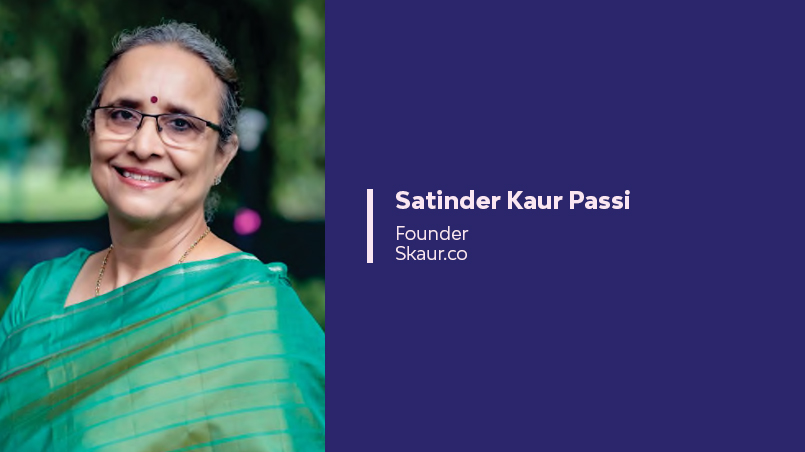
Ms. Satinder Kaur Passi
She brings deep expertise in process intelligence, service-led growth, and operational alignment, developed through extensive experience across the BFSI sector. She advises organisations on cost efficiency and customer experience outcomes. She is the Founder of Skaur.co and a Certified Independent Director.
Owned by: Institute of Directors, India
Disclaimer: The opinions expressed in the articles/ stories are the personal opinions of the author. IOD/ Editor is not responsible for the accuracy, completeness, suitability, or validity of any information in those articles. The information, facts or opinions expressed in the articles/ speeches do not reflect the views of IOD/ Editor and IOD/ Editor does not assume any responsibility or liability for the same.