 Quick Links
 Connect us

 Directors Databank (Empannel Yourself)
 Become a
  Become a
  Blog
Blog
 Become an Awards Assessor
 Publications
 Contact Us







Inclusive Tech Governance: Redefining Workplace Culture

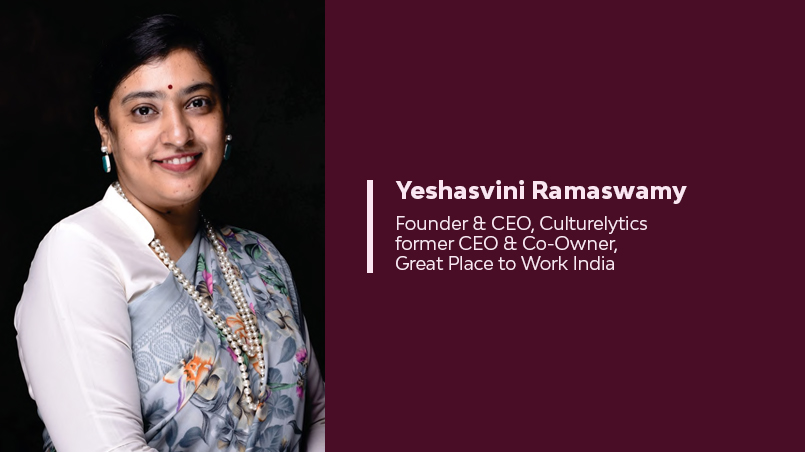
As we mark International Women's Day on 8 March 2026, I find myself reflecting less on celebration and more on responsibility.
The theme Count to Clout: Women in Leadership comes at a defining moment. Boardrooms today are not just discussing growth and compliance, they are confronting how artificial intelligence (AI) is reshaping decision-making, power structures, and workplace culture itself.
The recently concluded AI Summit in New Delhi, addressed by Prime Minister Narendra Modi, communicated India's ambition to lead in responsible and inclusive AI. The message was clear: innovation must advance alongside ethics, trust, and human-centred development. India does not intend to be a passive consumer of technology; it intends to shape its governance.
The scale of the shift demands attention. McKinsey estimates generative AI could add between $2.6 and $4.4 trillion annually to the global economy. More than half of organisations globally now use AI in at least one business function. NASSCOM projects India's AI market to reach $17 billion by 2027. At the same time, the World Economic Forum notes that while millions of new jobs may emerge, automation could displace tens of millions globally.
These are not abstract statistics. They are boardroom realities. And governance, ultimately, is about culture.
In my years working with over 5mn employee voices, during my tenure as CEO and Co-Owner, at Great Place to Work India, and now through Culturelytics (an AI company focused on supporting future ready workplace cultures), one insight has remained consistent: technology amplifies what already exists.
In a world increasingly shaped by algorithms, it is governance, rooted in values, accountability, and inclusion that will determine whether technology empowers humanity, strengthens cultures across nations, and builds global trust, or quietly erodes the very foundations of dignity and fairness.
If there is clarity of purpose, AI strengthens it. If there is bias, AI scales it. If trust is fragile, AI deepens the fracture.
Today's workplace is already in transition. Four generations work side by side. Gen Z expects transparency, speed, and purpose-driven alignment. Senior leaders bring institutional memory and stability. Digital tools are flattening hierarchies; authority is increasingly defined by competence rather than title. In this environment, introducing AI without a strong value system can destabilise trust quickly.
Inclusive tech governance therefore moves beyond compliance to conscious stewardship.
Directors must ask two fundamentally important questions:
1. Are our AI systems audited for bias and explainability?
2. Do we measure employee trust and cultural alignment with the same seriousness as financial returns?
Responsible AI is not just an IT issue. It is the Board's responsibility.
This is where the role of the Institute of Directors (IOD), India becomes even more urgent. As technology reshapes corporate risk landscapes, director education must evolve just as quickly. Oversight today extends into algorithmic accountability, cybersecurity resilience, ESG integration, and digital ethics. Institutions like IOD play a critical role in equipping boards with the literacy and foresight required for this new era.
The theme Women at the Helm is especially relevant here. Research consistently links gender-diverse boards with stronger governance standards and improved longterm performance. But beyond performance data, many women leaders bring an integrative lens - balancing innovation with impact, growth with responsibility, efficiency with empathy.
In conversations with women directors across sectors, I often observe a thoughtful insistence on asking the second-order question.
• Not just “Can we deploy this technology?” But “What does it mean for trust?”
• Not just “Will this improve productivity?” But “How does it affect inclusion across generations and functions?”
It is strategic foresight that needs to be encouraged at Board meetings.
India stands at a powerful intersection of demographic strength, digital acceleration, and global ambition. With policy direction articulated at the highest levels, including by Prime Minister Modi at the AI Summit, we have an opportunity to model inclusive tech governance for emerging economies.
But leadership will not be defined by how quickly we deploy AI. It will be defined by how responsibly we govern it.
Inclusive tech governance requires a strong value spine - non-negotiable ethical principles guiding decisions even as regulation evolves. It requires diversity in technology oversight committees. It requires measuring culture - trust, psychological safety, adaptability - alongside compliance and profitability.
On this International Women's Day, celebrating women at the helm must go beyond symbolism. It must reinforce the importance of inclusive voices in shaping the digital future of work. Workplace culture is increasingly shaped not only by leaders, but by algorithms. Boards that recognise this - and act with clarity and courage - will redefine responsible leadership in the AI era. Inclusive tech governance is not about slowing innovation. It is about sustaining it - with accountability, inclusion, and purpose.
 Back to Home
Author
Ms. Yeshasvini Ramaswamy
She is the Founder & CEO of Culturelytics, an AI-driven culture analytics platform enabling organisations to measure behaviour and predict business impact globally. A Fellow of the Institute of Directors (IOD), Charter Member TiE, Bangalore, Jury Member for the Dept of Electronics, IT&BT, GoK, and Trustee of iCreate, an NGO supporting army veterans, she champions responsible AI, inclusive leadership, and purpose-led, high-performance workplaces globally.
Owned by: Institute of Directors, India
Disclaimer: The opinions expressed in the articles/ stories are the personal opinions of the author. IOD/ Editor is not responsible for the accuracy, completeness, suitability, or validity of any information in those articles. The information, facts or opinions expressed in the articles/ speeches do not reflect the views of IOD/ Editor and IOD/ Editor does not assume any responsibility or liability for the same.