 Quick Links
 Connect us

 Directors Databank (Empannel Yourself)
 Become a
  Become a
  Blog
Blog
 Become an Awards Assessor
 Publications
 Contact Us







IOD Special Talk - Rethinking Water Responsibility: From Consumption to Custodianship


The water footprint of a product is not confined to the boundaries of a factory. It extends across the entire value chain, including energy use, transportation, and sourcing.
I would like to reflect on what is perhaps one of the most urgent, yet often underexamined, challenges of our time: Water.
In particular, I wish to speak about an emerging and promising idea, the concept of 'Water Credits' and how it may reshape the way we think about conservation and accountability.
India presents a striking paradox. We are home to nearly eighteen percent of the world's population, yet we possess only four percent of its groundwater resources. Over the years, we have extracted this resource with remarkable efficiency, but at a cost. Per capita availability has declined significantly, and vast regions of the country are now under severe stress. If this trajectory continues, we are not merely heading towards scarcity, but towards systemic instability.
Water scarcity is no longer just an environmental concern. It is a strategic risk. It has implications for food security, urban resilience, and increasingly, for business continuity. When one examines the structure of water usage, agriculture accounts for nearly eighty five percent, while industry uses about ten percent. Yet, it is industry that has the ability to respond most quickly, given its access to data, measurement systems, and capacity for innovation. This is where I believe the opportunity lies.
In my role at Bisleri International, we have had to confront a fundamental question.
Can a water company move beyond being a consumer of resources to becoming a steward of them?
This question has shaped much of our recent journey. Our efforts have focused on addressing two critical challenges: Plastic and Water.
I am proud to note that we have emerged as a both plastic neutral and significantly water positive. Across our operations, which span over one hundred and fifty plants, we have prioritised replenishment within local watersheds. Our work has included the construction of check dams, restoration of water bodies, and direct engagement with communities. In regions such as Ladakh, where access to water remains a pressing concern, our interventions have been guided as much by community need as by environmental logic.
It was in this context that we began to explore a new idea: If carbon credits have successfully created economic incentives for reducing emissions, could a similar framework be applied to water conservation?
This question marked a turning point.
However, water is fundamentally different from carbon. Carbon operates on a global scale, whereas water is inherently local. Its availability, usage, and impact are shaped by geography. A unit of water conserved in one region cannot be equated with that in another without accounting for context. This required us to rethink conventional models.
In November 2022, we began working towards developing an impact adjusted water footprint, one that reflects not just consumption, but the ecological and geographical cost of that consumption. Around the same time, the Government of India, under the leadership of Narendra Modi, introduced 'Mission LiFE', which recognised water as a critical component within the broader framework of environmental responsibility. This alignment of policy and practice provided a strong impetus.
Our analysis revealed important insights. The water footprint of a product is not confined to the boundaries of a factory. It extends across the entire value chain, including energy use, transportation, and sourcing. In some locations, the effective water cost of producing a single litre of bottled water was significantly higher due to regional scarcity. In fact, a large proportion of the overall footprint lay outside the immediate operational boundary.
This understanding compelled us to rethink our approach. We began integrating renewable energy into our operations, redesigned elements of our supply chain, and placed greater emphasis on lifecycle assessment. The data also challenged widely held assumptions. For instance, certain packaging formats perceived as environmentally superior were, in fact, more water intensive.
The broader objective now is to develop a universal framework that can be adopted across industries. Such a framework would enable organisations to calculate their true water footprint, assign economic value to conservation efforts, and potentially participate in structured credit mechanisms. Much like carbon markets, a system of water credits could create incentives for responsible behaviour, while also informing consumer choice through credible and transparent disclosures.
At the same time, caution is essential. Water is not merely an economic resource; it is deeply intertwined with issues of equity and social justice. Any framework must ensure that conservation in one area does not legitimise over-extraction in another. Regulation must be robust, and inclusivity must remain central.
Equally important is the role of agriculture, which remains the largest consumer of groundwater. Without integrating water efficient practices in this sector, any broader effort will remain incomplete.
In collaboration with institutions such as Observer Research Foundation, we have been working to refine these models and advance the conversation. The intent is to move from concept to implementation in the near future, and to position water credits not merely as an idea, but as a viable instrument of change.
For decades, industry has been evaluated on how efficiently it extracts and utilises resources. The coming decade will demand a different metric, how effectively we regenerate what we use. This requires a fundamental shift in mindset, from being users of water to becoming its custodians.
If approached with intent and integrity, India has the opportunity to redefine its trajectory. Water scarcity need not determine our future. With the right frameworks, partnerships, and commitment, we can move from a paradigm of scarcity to one of security.
 Back to Home
Author
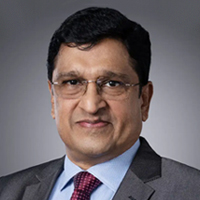
Dr. Angelo George
Chief Executive Officer Bisleri International Pvt. Ltd.
Owned by: Institute of Directors, India
Disclaimer: The opinions expressed in the articles/ stories are the personal opinions of the author. IOD/ Editor is not responsible for the accuracy, completeness, suitability, or validity of any information in those articles. The information, facts or opinions expressed in the articles/ speeches do not reflect the views of IOD/ Editor and IOD/ Editor does not assume any responsibility or liability for the same.