 Quick Links
 Connect us

 Directors Databank (Empannel Yourself)
 Become a
  Become a
  Blog
Blog
 Become an Awards Assessor
 Publications
 Contact Us







Latest from the Regulator - December 2025

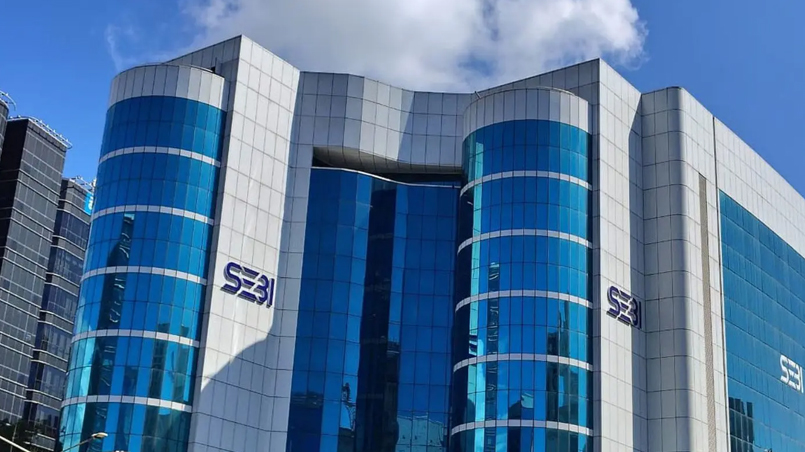
1. SMC Bill seeks to end regulatory overhang; caps SEBI's inspection, probe powers at 8 years
The Securities Markets Code (SMC) Bill, introduced in the Winter Session of the Lok Sabha, seeks to clearly define the enforcement reach of the Securities and Exchange Board of India (SEBI) by capping inspections and investigations at Eight Years, except in cases with Systemic Market Impact. The legislation aims to prevent prolonged regulatory uncertainty, overhaul existing securities market laws, enhance investor protection, streamline compliance, and improve regulatory governance.
Key Provisions
• Time-bound enforcement: SEBI must complete investigations within 180 days.
• Statutory limitation: An Eight-year cap on inspections and probes, excluding systemic cases.
• Investor protection: Introduction of an ombudsperson-led grievance redressal mechanism.
• Financial framework: SEBI must allocate 25% of its annual surplus to a Reserve Fund, with the remainder transferred to the Consolidated Fund of India.
International Best Practices
The Bill also introduces global best practices in areas like regulatory governance, accountability, and transparency, and measures such as regulatory impact assessment. It has provisions for arm's length separation between factfinding and adjudication processes, Ombudsperson Mechanism for Investor Grievance Mechanism, Inter-Regulatory Coordination Mechanism.
Grievance Redressal Framework
Investors must first approach the service provider or issuer's internal mechanism within 180 days of filing a complaint. If unresolved, the matter may be escalated to the ombudsperson within 30 days. The Bill replaces the current reliance on SEBI Complaints Redress System (SCORES) and the Online Dispute Resolution (ODR) platform.
The Bill consolidates and replaces three existing laws:
• Securities Contracts (Regulation) Act, 1956
• SEBI Act, 1992
• Depositories Act, 1996
| Topic | Position under SEBI Act / SCRA / Depositories Act (Repealed Act) | Status under Securities Market Code, 2025 |
| Size of SEBI board | Total of 9 (Chairman + 8 members) | Board will have 15 members (Chairman + 2 members from the Central Government dealing with finance and the administration of the Companies Act, 2013 + 1 officer from the RBI + 11 other members, including at least 5 whole-time members. |
| Disclosure of 'conflict of interest' | Any member who was a director having any direct or indirect pecuniary interest in any matter needed to disclose the same and that member and would not take any part in any decisions of the Board with respect to that matter. | The Code states that any member having direct or indirect interest (including the interest of a family member) in a matter for consideration will disclose the nature of the interest and not take any part in any decisions of the Board with respect to that matter. |
| Inclusion of investor charter | No express statutory provision. | Investor Charter incorporated into the Code. |
| Introduction of an ombudsman for redressal of investor complaints | No statutory ombudsman under any of the three Acts | Ombudsman positioned as an independent grievance redressal authority, separate from enforcement wings. |
While the SMC Bill aims to streamline enforcement, enhance investor protection, and modernise securities regulation, potential operational challenges remain, particularly the risk of the ombudsperson being overburdened by unresolved SCORES and ODR cases.
Additionally, if ombudsperson orders are appealable before the Securities Appellate Tribunal (SAT), the tribunal's workload could increase significantly. The Bill is now under review by a Standing Committee for further stakeholder consultation and refinement.
For more details, please visit: www.thehindu.com/business/smc-bill-seeks-to-end-regulatory-overhang-capssebis-inspection-probe-powers-at-8-years/article70422097.ece
2. Parliament Winter Session, 2025
The Winter Session of Parliament 2025 witnessed significant legislative momentum, with 10 Bills introduced in the Lok Sabha and 8 Bills passed by the Rajya Sabha. Overall, eight Bills were approved by both Houses over 15 sittings.
The session was also marked by the 150th anniversary of the National Anthem, “Vande Mataram.” The session also featured extensive discussions on electoral reforms, fiscal priorities, and key legislative measures shaping India's governance and development agenda.
Some of the new legislations introduced during the session include:
| Legislation | Ministry / Authority | Key Objectives | Status under Securities Market Code, 2025 |
| Sabka Bima Sabki Raksha (Amendment of Insurance Laws) Act, 2025 | Ministry of Finance / Law & Justice | Liberalise insurance sector; enhance transparency and policyholder protection | • FDI limit raised from 74% to 100% • amendments to Insurance Act, 1938, LIC Act, 1956, IRDAI Act, 1999 • track-and-trace compliance; mandatory KYC and digital policy records • enhanced IRDAI powers (Secs 14A–14E) • stricter penalties |
| Appropriation (No. 4) Bill, 2025 | Ministry of Finance | Authorise government expenditure | • Permits withdrawal from Consolidated Fund of India to meet approved expenditure |
| Central Excise (Amendment) Act, 2025 | Ministry of Finance | Revise excise duties post-GST compensation cess | • Amends Fourth Schedule of Central Excise Act, 1944 • revised duties on tobacco products—unmanufactured tobacco (70%), tobacco refuse (60%), manufactured tobacco up to 125% • covers nicotine-based inhalation/oral products |
| Manipur Goods and Services Tax (Second Amendment) Act, 2025 | Ministry of Finance | Implement GST Council decisions in Manipur | • Unique identification marking for goods; new compliance norms • appeal provisions requiring 10% penalty • penalties for track-and-trace violations (Sec 122B) • GST rate consolidation to 5% & 18% • SEZ/FTWZ supply inclusion |
| Sustainable Harnessing and Advancement of Nuclear Energy for Transforming India (SHANTI) Act, 2025 | Ministry of Law & Justice / Department of Atomic Energy | Promote nuclear energy while ensuring safety and liability | • Opens sector to private entities; licensing & safety authorisation • strict liability regime • Nuclear Liability Fund • strengthened Atomic Energy Regulatory Board (AERB) • compensation mechanisms • repeals Atomic Energy Act, 1962 & Civil Liability Act, 2010 |
| Securities Markets Code (SMC) Bill, 2025 | Ministry of Finance | Modernise capital market regulations | • Consolidates multiple securities laws strengthens investor protection • improves regulatory clarity and market efficiency |
| Health Security & National Security Cess Act, 2025 | Ministry of Law & Justice | Fund health and national security priorities | • Levies cess on machines and processes used in manufacture of specified goods • finances public health infrastructure and defence requirements |
| Viksit Bharat - Guarantee for Rozgar and Ajeevika Mission (Gramin) Act, 2025 | Ministry of Rural Development | Strengthen rural livelihoods; replace MGNREGA | • 125 days of guaranteed wage employment per rural household • Viksit Gram Panchayat Plans • integration with PM Gati Shakti • digital governance, biometric authentication, geo-tagging • grievance redressal and penalties |
3. The Ministry of Corporate Affairs has updated the rules for how directors of companies must verify and update their identity and contact details (a process called KYC - Know Your Customer)
The government has streamlined the director KYC process, making it less frequent but mandatory through a single online form, and updated an official designation. The main objective of this amendment is to simplify compliance for directors while ensuring that DIN details remain accurate, verified, and up to date in MCA records.
Key Changes:
1. Simplified Form: It replaces two older KYC forms (DIR-3-KYC and DIR-3-KYC-WEB) with a single new Form DIR-3-KYC-Web.
2. Less Frequent Filing: Directors must now file their KYC details once every three years (by June 30th), instead of annually. However, they must still update any change in mobile, email, or address within 30 days.
3. Name Change: It updates the official title of the "Regional Director (Northern Region), Noida" to "Regional Director, Northern Region Directorate I".
Effective Date: These new rules will come into force on March 31, 2026.
 Back to Home
Author
Owned by: Institute of Directors, India
Disclaimer: The opinions expressed in the articles/ stories are the personal opinions of the author. IOD/ Editor is not responsible for the accuracy, completeness, suitability, or validity of any information in those articles. The information, facts or opinions expressed in the articles/ speeches do not reflect the views of IOD/ Editor and IOD/ Editor does not assume any responsibility or liability for the same.