 Quick Links
 Connect us

 Directors Databank (Empannel Yourself)
 Become a
  Become a
  Blog
Blog
 Become an Awards Assessor
 Publications
 Contact Us







Rethinking Expectations of Company Directors: Coping with Changing Contexts and Pressures


Issues confronting directors, boards and contemporary leaders are becoming more complex and inter-related. Developments are increasingly uncertain and frequently unpredictable. Events are more difficult to foresee and prepare for. Shifts underway are causing a rethink of what constitutes responsible leadership and represents business excellence. Systems, processes and infrastructures may all reflect previous estimates of what could or might happen, projections of past trends, and assessments of possible developments. Many of them are lean with a limited margin for coping with unexpected developments. With pressure on resources and affordability constraints, there may be little redundancy and limited resilience.
Multiple points of failure could also be encountered at the same time, as global risks accumulate and existential threats loom. In a transactional era, dramatic policy shifts can and do occur on sanctions, tariffs and the use of force as deals are done and hard power is exercised. Preparations for certain events are often discussed and implemented individually. Little may be done to be ready for a combination of them occurring simultaneously. Past assumptions and expectations of requirements, actions and responses might no longer apply. Previous precedents may not be helpful when situations, circumstances and contexts change in unexpected ways. Previous norms and practices might no longer influence or constrain.
More individuals, including directors and senior executives, are running out of bandwidth as pressures upon them increase. Some are overloaded. They are feeling unwell and experiencing mental health issues.
Adjusting to Uncertainty and Changing Realities
Existing beliefs and values, legal and regulatory requirements, and criteria for determining accountability and responsibility, could all be based upon past assumptions and practices that need to be reviewed. Prevailing approaches across many institutions, including business, educational and legal systems, assume a certain level of continuity in terms of what might be expected. People and organisations seek enough continuity and sufficient stability to plan their futures, invest or decide what to study, teach or acquire. Contracts may also need to be for a minimum term to be viable. Multiyear investments may be required where government funding is annual, and a decision maker may lose an election or be replaced in a reshuffle.
Arrangements may be in place for a periodic enquiry, consultation or review with sufficient intervals between changes to allow implications and consequences to be considered and for them to be bedded in. As changes multiply and speed up, the frequency of these might have to be increased. Directors are expected to work for the long-term success of companies upon whose boards they sit, yet the future is often uncertain and unpredictable. Views on accountability, decisions about responsibility, and what is thought acceptable and reasonable may be heavily influenced by assumptions formed in a previous age when periodic reorganisations and re-engineering exercises were undertaken and formal planning occurred.
Regulation, reporting and other demands thought to be excessive deter innovation and initiative. Some boards consider de-listing to avoid burdensome requirements. The privilege of limited liability comes with certain obligations.
Determining Responsibility and Accountability
In an earlier era, accountability and responsibility were often easier to determine. Processes and structures might have existed long enough to be bedded in and properly documented. Job descriptions and formal statements of roles and responsibilities may have indicated who should have acted, been responsible, or done something different. Looking for a scapegoat, primary cause or someone to blame was often easier when individuals could be traced who took decisions that led to certain outcomes. Today, unwelcome outcomes such as extreme weather events can appear as unpredictable acts of God, resulting from impacts of global warming on eco-systems caused by collective human activities rather than certain individuals.
Past issues often related to a particular function or activity. They could be separately discussed and dealt with. In recent years, more of them seem to affect most or all aspects of corporate activities. Challenges, risks and existential threats are also often interrelated. They impact each other, rather than being self-contained. Issues such as climate change remain on board agendas because they cannot be easily delegated to one business unit, department or function. Groups considering behaviour and conduct may also have been more homogenous and less diverse than today. Consensus might once have been easier to achieve. Changes and developments were often gradual and incremental as people built upon what had gone before.
Moving Into an Insecure and Transactional Era
New appointees in a variety of roles would often share certain expectations and norms or 'rules of the game' with their predecessors. Courses and programmes of educational institutions and professional bodies were reviewed and updated less frequently than today. Preparation and planning for a career have now become more problematic and uncertain. Multiple changes might occur simultaneously. In many cases, they are also more fundamental and may be introduced by disruptors who despise rather than respect those they succeed. They may reject what has gone before, seek to play different games, and eliminate opposition rather than seek an orderly transition. Those coming to power may have supporters to reward.
In a transactional era, benefitting one's base and financial backers may take priority over maintaining a level playing field for supporters and opponents alike. Supporters could include high tech companies and those seeking to benefit by staying close to a centre of power. When cases involving AI are considered, it might increasingly be found that outcomes which disadvantage individuals result from an automated process powered by an evolving application that may hallucinate and is influenced by biases and data from a previous age. Fragmentation, polarisation and the lobbying of special and vested interests can magnify extreme views and increase inputs of misinformation, disinformation and fake news.
Coping With Complexity and Increasing Demands
The variety of changes occurring simultaneously in multiple areas can be bewildering for many citizens, especially those who grew up, were educated and whose early careers occurred in a previous era. They may now find themselves dealing with automated systems, about which those in a call centre they are queuing to reach might not know enough to resolve their queries. They may join the ranks of those who feel excluded. Aspects of modern life, complexity and a growing burden of changing regulations and legislative requirements can seem ever more intimidating. Compliance and reporting requirements ratchet upwards. They can become a proportionately higher burden for small and start-up businesses and entities which expand internationally and encounter differing overseas requirements.
Regulation, reporting and other demands thought to be excessive deter innovation and initiative. Some boards consider de-listing to avoid burdensome requirements. The privilege of limited liability comes with certain obligations. However, these should not be so onerous as to deter enterprise and entrepreneurship. Legislators and regulators should endeavour to safeguard and protect while making it easier for people to engage in business activities. Excessive requirements can add to workloads. More individuals, including directors and senior executives, are running out of bandwidth as pressures upon them increase. Some are overloaded. They are feeling unwell and experiencing mental health issues.
Unwelcome Consequences and Disrupters
Facing complex issues, difficult trade-offs and pressure to act ever more quickly, the lack of time for reflection, thinking, living with a decision, and considering different possible outcomes adds to anxiety and the risk of burn out. Fragmentation, polarisation and the algorithms of social media can also increase the number of people whose views have become more entrenched and who are willing to object and challenge. More individuals and groups may take direct action and/or initiate legal proceedings against companies and their boards. 'Push back' from some quarters may be followed by others. Directors could find themselves 'under the spotlight' or 'in the line of fire' of a particular lobby. Some might face calls for a company to become an 'activist', adopt a certain policy, or take a stand.
Disruptive forces can include criminal gangs and malign influences, including hostile countries seeking to steal or undermine an existing world order and/or current 'rules of the game'. Their purpose may be to discredit and sow division. Hostile hybrid warfare attacks could include recruiting individuals to carry out deniable acts of sabotage. Those disadvantaged by complexities, events and technological developments can be attracted to those who portray them as victims. Demagogues might offer to protect them and advance their interests. The marginalised may not look for continuity and a safe pair of hands. They might prefer a disruptor who is ready to tackle 'enemies' responsible for their misfortune.
Approaching Bandwidth and Global Resource Limits
Uncertainty, insecurity and being expected by colleagues to be positive can all take their toll. Accumulating evidence suggests where much more needs to be done to cope and survive. The time required to reflect, consider and discuss what to do or how to respond is being further eroded by fears of being left behind. This is especially so as others make massive investments in mega data centres required to power AI adoption, with adverse consequences for already stressed locations and ecosystems. Developments in certain areas of technology, including AI, are occurring more quickly than corporate arrangements and regulatory frameworks can be updated to ensure their ethical and responsible application and use.
Some pioneers already consider AI to be an existential threat. With growing scientific evidence of the harm caused by many corporate operations and human activities, it may become more difficult for directors to claim that they are not aware of the risks. Global risks and existential threats loom closer. Dramatic policy shifts can and do occur on sanctions, tariffs and the use of force. Hybrid conflicts can quickly become hot wars. Changes occurring have implications for people, organisations and fragile institutions, and how they prepare for the future. Cause and responsibility might become more difficult to establish in insurance and legal cases. The terms of directors' and officers' insurance cover may need to be reviewed.
Given unpredictability, what future enquiries, legislators, regulators and tribunals might consider reasonable and acceptable is uncertain. The provision of strategic direction could become increasingly problematic.
Implications for Directors and Boards
Accountability and responsibility challenge and shifts underway have implications for company directors and boards, and their core activities such as formulating strategy, intelligent steering, establishing risk tolerance and putting in place arrangements for the governance of risk. More events and risks may become uninsurable. There might be further roles that people become reluctant to take on and contractual commitments they avoid. Multiple changes in a variety of arenas are occurring simultaneously. Given unpredictability, what future enquiries, legislators, regulators and tribunals might consider reasonable and acceptable is uncertain. The provision of strategic direction could become increasingly problematic. Systems, processes, people and governance arrangements all have limits.
With demands upon directors and boards increasing, and consensus more elusive, being a director can seem like riding a tiger. Questions about the rationale, justification and incentives for taking on the duties and responsibilities of a company director and how to attract and recruit suitable candidates may become more acute. Autocratic demands, climate change deniers, and pressure to support policies of questionable desirability, legality and morality might arise simultaneously. IOD national and international events represent opportunities for directors to discuss common dilemmas and share their thoughts on the implications of contemporary developments for individual directors and corporate boards.
 Back to Home
Author

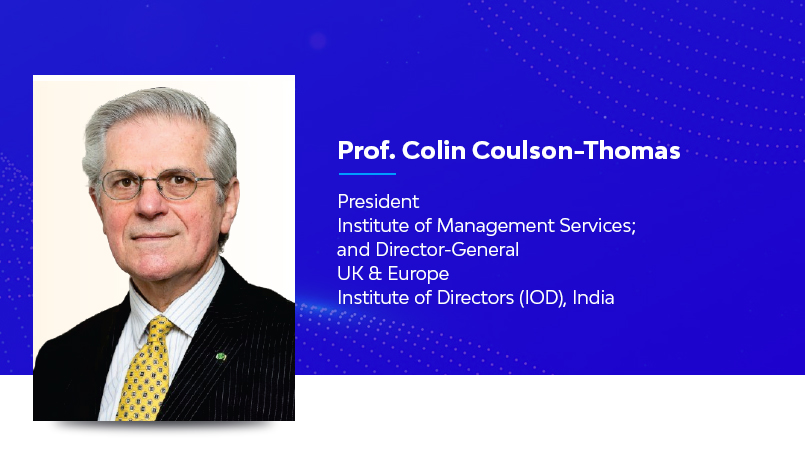
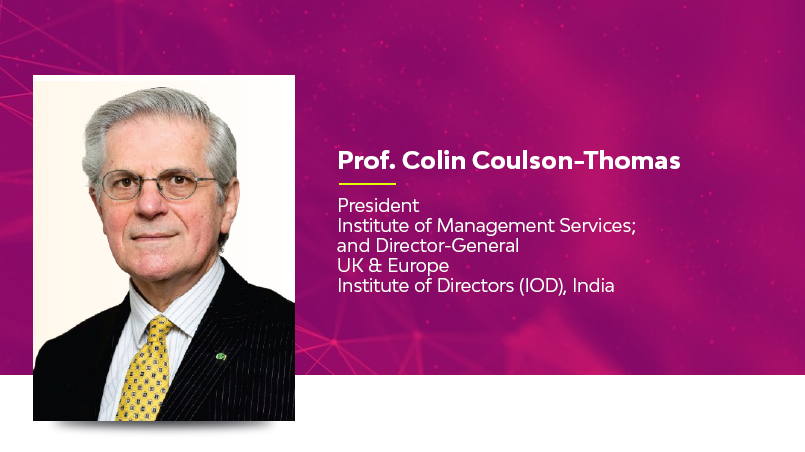
Prof. Colin Coulson-Thomas
Director-General of IOD India for UK and Europe operations
Prof. (Dr) Colin Coulson-Thomas, President of the Institute of Management Services and Director-General of IOD India for UK and Europe operations. He has advised directors and boards in over 40 countries.
Owned by: Institute of Directors, India
Disclaimer: The opinions expressed in the articles/ stories are the personal opinions of the author. IOD/ Editor is not responsible for the accuracy, completeness, suitability, or validity of any information in those articles. The information, facts or opinions expressed in the articles/ speeches do not reflect the views of IOD/ Editor and IOD/ Editor does not assume any responsibility or liability for the same.