 Quick Links
 Connect us

 Directors Databank (Empannel Yourself)
 Become a
  Become a
  Blog
Blog
 Become an Awards Assessor
 Publications
 Contact Us






Navigating Contemporary Geopolitical Challenges

Leadership Strategies for Resisting Pressure
and Retaining Autonomy
The current era of great power politics in an anarchic, uncertain and militarised world should have been foreseen. The steady accumulation of power and influence by certain leaders of powerful states has been clear, although overlooked or ignored by some. Their blatant and uncaring disregard of balanced advice, rational considerations and the impacts of their actions on others has perhaps been underestimated. This should not surprise, given the preoccupation of boards and other decision makers with immediate issues and inadequate collective action to address existential threats. However, the worst may be yet to come.
Two permanent and veto wielding members of the UN security council have now launched unprovoked wars of choice against other states. They have carried out a variety of activities that appear to be in contravention of the UN charter, both international and humanitarian law, and the Geneva Convention. We seem to have entered a period of disruption, upheaval, uncertainty, insecurity and instability in which previous assumptions and expectations about loyalties, obligations and the behaviour of others may no longer apply. The consequences are affecting people around the world in their daily lives. They pose new challenges for boards.
Geopolitical Challenges and Uncertainties
In recent years, risks have crystalised, latent differences have surfaced, simmering issues have boiled over, taboos have been broken, hybrid wars have become hot, and elections have been held. There are geo-economic and geo-political challenges and crises for leaders to handle, as well as environmental and technological risks and existential threats to navigate.
The consistency and stability hitherto sought by business leaders might now be transitory at best. Relationships can no longer be relied upon.
How should they and those with influence respond?
What positions should they consider, discuss and adopt?
For this year and next, the World Economic Forum features geo-economic confrontation involving tariffs and state-based armed conflict in the top five of global risks when they are ranked in terms of their expected impacts.
Many people, organisations, communities and countries are exposed and insecure. Before the strait of Hormuz was closed, some 20-25% of global seaborne oil and 20% of liquefied natural gas flowed through it. Strikes on desalination plants and other facilities around the Gulf could make some areas unliveable. Increasing security and military preparedness can be expensive. The use of hard power by UN Security Council members, hot and hybrid warfare, open rivalry among great powers and pervading insecurity resulted in global defence expenditure rising to $2.63 trillion in 2025. Certain disputes, conflicts and hybrid and hot wars have involved nuclear armed states.
Resources devoted to defence cannot be used for climate adaptation or addressing global warming exacerbated by wars. Many contemporary geo-political developments now occur in circumstances different from the recent past, and in an international context in which certain key players and a theocracy refuse to be constrained by previous generally accepted laws, conventions and norms. They are prepared to consciously flout them and engage in activities that seem to contravene international law, humanitarian law, the Geneva Convention and the United Nations Charter. Their leaders may also distrust relevant expertise, reject scientific evidence, ignore official advice and exclude or remove those giving contrary opinions.
The Rise of Autocrats and Authoritarian Leaders
Certain autocrats and leaders with authoritarian leanings refuse to be constrained by constitutional provisions and principles in the pursuit of what they feel advances their own and their country's narrow national self-interests. They might quickly face the consequences of trusting their intuition or drawing on personal experience. However, the costs of their mistakes or overreach may be borne by many others, including fellow citizens. Targets of their pressure, victims of their aggression and those adversely affected by their actions and the subsequent responses of others. They lack constraints to protect them from themselves.
The World Economic Forum features geoeconomic confrontation involving tariffs and state-based armed conflict in the top five of global risks when they are ranked in terms of their expected impacts.
The impulsive can come unstuck. Action may be initiated without a plan B or a fall-back position. Following instincts, inflexibility, and a failure to consider alternatives, other possibilities and different outcomes can be costly. It may lead to situations from which extraction is difficult. As a result of inadequate information, preparation, foresight and challenge, or naivete about how others might respond, events may not evolve as planned. Opponents should not be underestimated. Warnings should be heeded. Impatience, inadequate resourcing and depleting initial stocks can strengthen an opponent's position and resolve.
Hubris can lead to over-extension. The initiator of a war of choice may suffer a loss of trust and moral authority. A standing that has taken years to build may be quickly lost. In the absence of challenge, they may give inadequate thought to how a war might end. Used to getting their own way, lacking patience and emboldened by past “wins”, they may be poor at playing a long game. They may cede advantage to an adversary willing to endure onslaughts until an assailant is bored and wants to move on. Knowing how and when to counter is vital.
The Unpredictability of Wars
Competition for scarce resources can drive territorial aspirations. Initiating an attack may risk a rapid loss of control. Autocratic adventures overseas or across state borders to increase power or territory can result in advantage switching over time to a party that is more prepared and on home ground. Many creatures are tenacious when defending their territory, especially when survival is at stake. They know the local terrain. An assailant may have a long and costly supply chain. Opposition from third parties and their dislike of an initiator may also grow as costs imposed upon them, and disruption, collateral damage and inconvenience rise.
Supporters of an adventure for what they feel they might gain from its success can falter as costs mount and benefits begin to appear illusory. Those spurned or not consulted may avoid involvement with a potential embarrassment or failure. Allies may have different objectives and disagree on when a conflict should end. Negotiations are complicated when one party has had enough while others still have ambitions to fulfil. In an era of asymmetric warfare, costs for an ostensibly more powerful aggressor can greatly exceed those of a defending victim. A theocracy intent on spreading a religion may also be indifferent to hardships citizens endure.
International trade is seen by some as a zero-sum game that reduces self-sufficiency and leads to dependencies which others might exploit. The disadvantaged may believe an elite has benefitted at their expense. Many turn to populist idealogues with authoritarian tendencies to defend their interests. The multilateral era has given way to power politics. Hard power is exercised. Putin's Russian Federation is mired in its illegal and unprovoked invasion of Ukraine with a front line kill ratio of 1:5 against it. The US which once supported a rules based international order has also initiated a costly war of choice. It disrupts rather than leads and is no longer trusted by many or regarded as a dependable ally.
Adjusting to a Changed World Order
The world order is in a state of flux and changing. Decision makers of many organisations are having to adapt. The consistency and stability hitherto sought by business leaders might now be transitory at best. Relationships can no longer be relied upon. Some follow the lead of the super-powers, shift their positions, associate with one of them, and/or scramble to reduce dependencies and conclude new trade agreements. Arms control agreements expire or are ignored. With protection umbrellas in doubt and delays in negotiating fresh arrangements, more countries may seek to develop nuclear weapons. New arms races have emerged.
International institutions are fragile. Without a common set of rules and shared norms to constrain it, the global struggle between the US and China could become confrontational. Middle ranking powers may pursue new forms of collective security as they avoid entanglements and seek greater autonomy and self-sufficiency. Environmental and other challenges on board agendas require collective responses. Low-income countries are especially vulnerable to existential threats, higher food prices and climate change. As richer countries focus on their back yards and own interests, one may see further debt defaults.
Responsible leaders should devote more attention to existential threats that require collective responses. These may be problematic due to polarisation and fragmentation. There may be opportunities to form issuebased coalitions without expectations or requirements for shared values. In seeking security, some entities that a generation ago might have anticipated clashes between belief systems, cultures, religions and/or values, can find themselves working with strange bedfellows across such divides. They face dilemmas, options and choices.
Considerations for Preserving Autonomy
Boards, CEOs and other leaders should consider how important it is to accommodate, or not alienate a powerful player, home government, administration or regime whose actions could impact its activities. Much will depend upon the scale of a business and the sectors it operates in. Potential vulnerabilities that could be exploited or levers that could be pulled should be identified. The continuance of alliances, organisations, institutions, and collaborative networks must not be taken for granted. Their policies and priorities should be kept under review, threats to their operations, viability and value monitored, and other arrangements investigated.
In a rules-based order appeals might have been made to what one hoped would be shared interests and a wider public good. In a hard power era, it might be prudent to prepare for the worst. Timing can be important. Alternatives, replacements or successors might be even worse rather than better. While not acting prematurely, procrastination should be avoided. Ego, impatience, inadequate preparation, selfishness and/or the regular ignoring of advice and constraints are warning signs. Extra vigilance, anticipation of possibilities, and preparation for certain outcomes may be required. An entity might be disadvantaged by future moves.
In a transactional era, the outcomes of certain conflicts and deals may be uncertain. Great power rivalries could also be unfolding or playing out. Rationality, veracity, environmental and social responsibility, and concern for the public good should not be assumed. Wars can be interlinked. It may be worth assessing the cards held by contending parties and gaming the hands they could play. Inviting key executives to act out possible scenarios in certain roles may increase their awareness of risks and possible outcomes. Confronting uncertainty, tolerance of unpredictability, and resistance to pressure could be worth preparing for.
Recognising and Addressing Realities
The extent of ruthlessness, stupidity and venality ought not to be underestimated. Key players might have little regard for the welfare of others and prioritise their political survival and the interests of supporting cliques. Wide gulfs can exist between claims and actual intentions. Behavioural characteristics, such as attention spans and how much collateral damage or frustration might be endured, may be discernible. Knowing what drives an opponent or competitor, and what pressures, obligations, and/or constraints could affect them can be helpful. Terms of office and election dates might influence behaviours and outcomes.
Many decision makers, CEOs and national leaders walk on metaphorical tightropes and eggshells. Tolerance, diplomacy and avoidance of contradiction and criticism may embolden powerful bullies. Standing up to them could be risky and harm those for whom a leader is responsible. If ethics, morality, past conventions, norms and legacy rules are ignored, the discretion a leader might have and respect shown to them may depend on indicators of hard power. Military capabilities, economic strength, technological edge and critical resources can be exaggerated. Unity, resilience and staying power of other players could be underestimated.
Telling authoritarian leaders what they would like to hear or do can reinforce their views. It may lead them to overestimate the capability of their military and/or economy to achieve their aspirations. It might cause them to under-estimate opposition and the reactions and defences of others. While ostensibly inferior, a target may better endure pain or be prepared for asymmetric warfare. If leading powers commit, their limitations and dependencies may soon become apparent to others. Canny actors move quickly to take advantage of disruptions. They may advance their interests while bigger beasts lock horns and exhaust themselves.
Agility, Flexibility and Intelligent Adaptation
Small states such as Singapore have performed well in terms of standards of living and/or technological excellence. Prospering in our new era requires agility, flexibility and intelligent adaptation, if they are to continue to enjoy levels of development that can elude larger states. Relative positions might be quickly improved or lost depending upon reactions to geopolitical developments. With so many players concerned about what they might lose, more thoughtful and calculating ones may see opportunities to reposition and make gains.
The pursuit of self-interests by a powerful player may make most people, the environment and future generations worse off. Deal makers sometimes feel they exist in a zero-sum world. They seek gains at the expense of other players. They aim to win on their terms, regardless of collateral damage and externalities. Replicating success in a different context can be problematic. Greater uncertainty, instability and insecurity create fresh interest in adaptive leadership. The qualities sought in political leaders and directors and senior executives of companies affected by global events in a changed international system might require review.
Nomination committees should opt for those with attitudes, behaviours and qualities needed to address realities and navigate contemporary geopolitics. Collective survival can depend upon whether the positive benefits of corporate inspired innovation outweigh the negative impacts and unwelcome disruptions of certain political leaders. Boards could be critical in relation to challenges like climate change and energy transition. As issues, risks and threats accumulate and become more inter-related, greater attention must be given to geopolitics and international relations. To retain autonomy, boards must resist pressure and adapt.
 Back to Home
Author

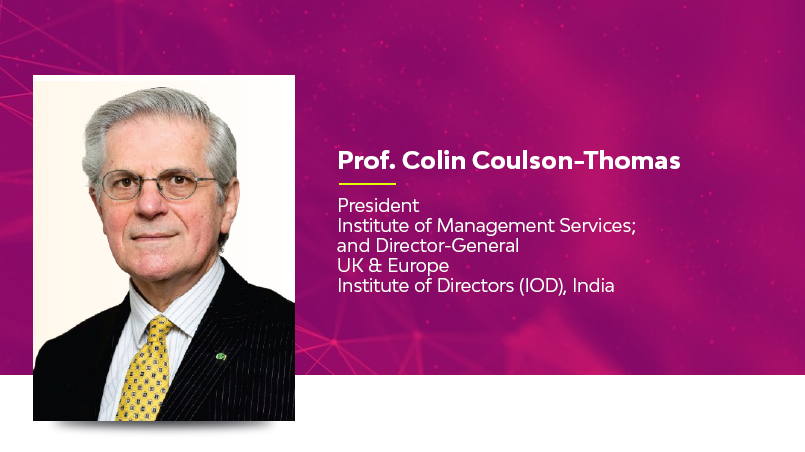
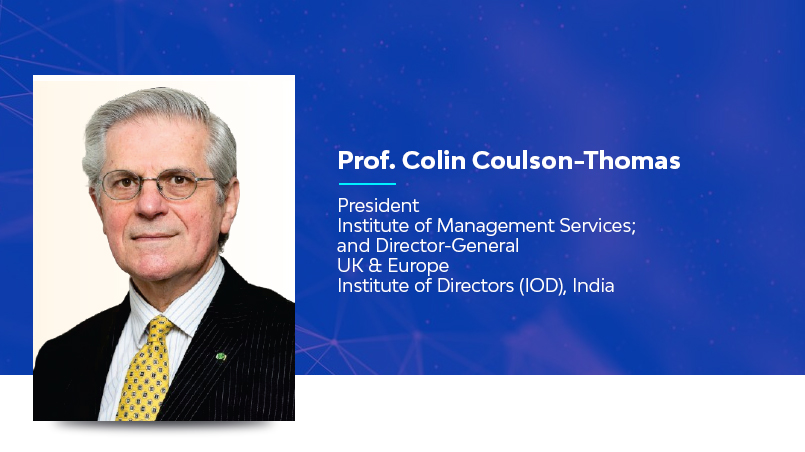
Prof. Colin Coulson-Thomas
Director-General of IOD India for UK and Europe operations
Prof. (Dr) Colin Coulson-Thomas, President of the Institute of Management Services and Director-General of IOD India for UK and Europe operations. He has advised directors and boards in over 40 countries.
Owned by: Institute of Directors, India
Disclaimer: The opinions expressed in the articles/ stories are the personal opinions of the author. IOD/ Editor is not responsible for the accuracy, completeness, suitability, or validity of any information in those articles. The information, facts or opinions expressed in the articles/ speeches do not reflect the views of IOD/ Editor and IOD/ Editor does not assume any responsibility or liability for the same.