 Quick Links
 Connect us

 Directors Databank (Empannel Yourself)
 Become a
  Become a
  Blog
Blog
 Become an Awards Assessor
 Publications
 Contact Us







An Entrepreneurial Journey From The Corner Office: Leading with Purpose and Humbition

The real differentiator for organisations is not the ability to predict every risk, but the ability to respond effectively when disruptions arise.
Having spent over three decades with Unilever across markets such as the Arabian Peninsula, the Philippines, Bangladesh, the Middle East, and South Asia, what key motivations and guiding principles shaped your journey and enabled you to emerge as a distinguished example of global leadership?
No one is born a leader. As I often say, if you look at the title of my book, A CEO's Brew, a good brew is made with the right ingredients, it requires time to brew, and it requires heat. Leadership is no different. It demands the right traits, time to build capability, and the resilience to go through cycles of turbulence to truly evolve.
If I reflect on my 21 years as a CEO across markets, each phase shaped me in a distinct way. When I went to Bangladesh, the Unilever business was in deep trouble. That was my first CEO role, and it was entirely about rebuilding and transforming the business. It was also where I began developing my core leadership muscles. I often say that I truly developed my CEO skills in the deltaic plains of Bangladesh.
The Philippines presented a very different challenge. It was a much larger market, and while the business was not in distress, it was performing significantly below its potential. My first priority was to restore self-belief and confidence within the team.
The second was to take on a formidable competitor, the P&G, in the largest category. We beat them and took over the market leadership in a very competitive fight, and that too in a very short time.
My stint across North Africa and the Middle East added another layer of complexity. I was leading a 20-country cluster, and the question was how to organise and run it with both scale and focus, almost as if it were a single enterprise. You cannot put your arms around such a vast business, so you have to learn to lead through others. This period was also marked by significant disruptions in the global financial sector and the Arab Spring. It was during this time that I internalised a philosophy that has stayed with me: look after your people, and the people will look after your business.
In fact, when the region was going through turmoil and many organisations were withdrawing investments but we chose a counterintuitive path, we increased our investments. Leadership, in that moment, meant giving confidence to my team. I remember telling a colleague: if we win, the credit is yours; if we lose, the responsibility is mine. That conviction enabled the team to act decisively, and the results followed.
When I returned to India to lead Hindustan Unilever Limited and the broader South Asia business, the context again was different. The business needed to enhance competitiveness, grow faster, and prepare for a rapidly changing world. During this period, we navigated multiple disruptions like demonetisation, GST, COVID, and inflation while transforming the organisation through strategic and structural shifts, including leveraging data and technology and empowering teams.
What key strategic factors enabled you to remain relevant and resilient across such varied markets?
Working across diverse countries, cultures, and business cycles has been an invaluable learning ground. It has strengthened my ability to adapt and deepened my understanding of what it takes to build high-performing organisations. Each market, each context, brings its own complexities, but the underlying principles of leadership and value creation remain consistent.
I have always been guided by a simple yet deeply held philosophy:
Whenever there is a crisis, it has two components: 'Challenges' and 'Opportunities'.
I have consciously trained myself to look for the 'Opportunities'. It is easy to be consumed by the challenges, but enduring relevance comes from the ability to identify and act on what is possible even in the most uncertain circumstances.
The second important bit is, if you look at the name of my book, “A CEO's Brew” - it is stirred by Passion, Purpose, and Humbition. These are not just words; they are principles that have consistently shaped my journey and leadership approach. At the core:
• Passion is what drives energy and commitment.
• Purpose must always be larger than profit, giving direction and meaning to what we do, and
• Humbition must push us to strive beyond our current realities, but always anchored in humility. Because without humility, you stop learning. And the moment you stop learning, you stop evolving.
I was also taught very early on that success should never be measured by the money you have in the bank, but by the impact you create on others. Profit, in my view, should be the outcome of doing the right things, not the sole objective in itself.
You have worked with such distinguished organisations in your earlier roles, and are now on an entrepreneurial journey with a private equity firm, while also serving on several global boards, including Air India, Danone, and a leading pharmaceutical company. What motivated this transition, and how do you see this shift shaping your journey going forward?
In India, this is a joint venture between L Catterton and me, and for me, it is very much an entrepreneurial journey. Earlier, I used to create value for one large organisation - HUL. Now, it is about helping create value across multiple companies.
At L Catterton, we are not just providing capital. We are actively engaged in building the capabilities of the businesses we invest in, and in many ways, helping them transition from what I would call a hustle enterprise to the making of an institution. That, to me, is both exciting and deeply meaningful.
There are, of course, similarities between private equity and my earlier role. At the core, both are about creating value.
But there are also fundamental differences. At Unilever, the objective was to build a timeless organisation, something that endures. In private equity, you operate within a defined investment horizon, typically five years. You invest, build, and eventually exit. That shift in time horizon brings with it a different lens and discipline.
That said, the underlying domain remains the same. We are investing in the consumer space, which is something I have been deeply passionate about throughout my career. It continues to be about brands, about consumers, and about creating value.
Alongside this, I have the privilege of serving on some exceptional boards. With Air India, it is about contributing to a national cause, helping shape the airline into one which every Indian loves. With Danone Group, I am able to retain a strong global perspective, given its scale and presence across the US and Europe. My association with Dr. Reddy's Laboratories is equally enriching, especially as I strongly believe in the confluence of biology and technology. I also continue to chair Unilever Indonesia, which, after India, is the largest listed subsidiaries of Unilever. In many ways, my board roles fulfil my engagement with large, complex organisations, while my entrepreneurial journey allows me to focus on building and creating value across businesses.
So, I would say, I am able to strike a balance. My 'big company appetite' is fulfilled through my board roles, and my passion for building and creating value continues through my entrepreneurial work.
Ambition must always be tempered with the anchor of humility. Without humility, ambition can very quickly become counterproductive. If you do not have humility, you will cease to be a learner. You will not be able to say, “I do not know.” You will not have the ability to acknowledge mistakes or accept failures.
The global environment in recent years has been marked by unprecedented economic, geopolitical, and technological disruptions. What message would you share with corporate boards on navigating such uncertainty while ensuring resilience, responsible governance, and long-term organisational stability?
Let me begin by saying this very clearly:
Every company must have a robust risk management framework.
It is essential to identify risks and put in place actions to mitigate them. However, equally, one must recognise the limits of foresight. No organisation can predict all risks. There will always be what I call “unknown unknowns.” Events that no one anticipates, disruptions that emerge without precedent. Who would have imagined geopolitical geopolitical driven supply chain shocks or regulatory shifts becoming such defining challenges?
The reality is, uncertainty is inherent.
In that context, the real differentiator for organisations is not the ability to predict every risk, but the ability to respond effectively when disruptions arise.
The first and most critical capability is Resilience. By resilience, I mean the ability to absorb shocks and bounce back when faced with adversity. It is not about avoiding crises, but about emerging stronger from them.
The second is Agility. Agility is multidimensional. It begins with the ability to identify both challenges and opportunities in a dynamic environment. It then extends to the speed of decision-making, the willingness to act decisively, and finally, the discipline to execute those decisions swiftly and effectively. It is this combination that defines true organisational agility.
At the foundation of agility lies adaptability. Organisations must continuously evolve, recalibrate, and remain flexible in their thinking and operations. Without adaptability, agility cannot be sustained.
Therefore, if I were to distil my message to boards, it would be this: Focus on building organisations that are resilient, adaptable, and agile. These are not abstract qualities; they must be embedded into the culture, processes, and leadership mind-set of the enterprise. If you can build resilience, flexibility, adaptability, and agility into the DNA of your organisation, then regardless of the nature or scale of the crisis, you will be equipped not just to withstand it, but to navigate it with confidence.
With today's multi-generational workforce and increasing emphasis on organisational culture, how do you see culture influencing growth, especially drawing from your global experience across diverse markets?
There is a great deal I have spoken about culture over the years, and it is something I feel very strongly about. If I were to step back and look at what truly constitutes a 'high-performing organisation,' I would say that I have been able to codify it into a few fundamental elements, with 'Culture' being a central, defining force.
The first and most important element is mindset. Organisations must cultivate both, a 'growth mindset' and an 'owner's mindset'.
A growth mindset is about people who will constantly hunt for opportunities, even in the face of significant challenges. It is, quite simply, the difference between seeing the glass as half full versus half empty. You need leaders and teams who instinctively lean towards possibilities rather than limitations.
Equally important is the owner's mindset. Regardless of role or designation, individuals should think and act as if they own the enterprise. When people begin to take that level of ownership, accountability and commitment naturally follow, and that, in turn, drives superior outcomes.
The second dimension is the development of capabilities that are distinctive and difficult to replicate. In a consumer goods context, this could mean innovation, distribution strength, or cost leadership. But the key is that these capabilities must be hard to copy. If they are easily replicable, they cease to provide any meaningful competitive advantage.
The third dimension is what I describe as the 'highperformance anatomy' of an organisation. This encompasses several critical elements. It begins with talent management and how you attract, retain, and nurture the best people. It extends to crafting sharp and coherent strategies. It requires what I often call a 'fetish for execution', an unwavering focus on translating intent into action. And importantly, it includes culture itself.
Culture, in this context, is not an abstract idea. It is about how you empower people, how you create an environment where individuals feel trusted, safe and enabled. It is about fostering a belief that failure is not the opposite of success, but a necessary part of the journey towards it. These behaviours and beliefs do not exist in isolation; they are deeply rooted in the culture of the organisation.
So, when we speak about growth, culture is not a peripheral factor but it is foundational. It shapes mindset, it influences behaviour, and it ultimately determines how effectively an organisation can execute its strategy. In my experience across markets and contexts, culture has consistently been one of the most powerful levers of sustained, long-term growth.
With the rapid evolution of the business landscape from quick commerce and e-commerce to the rise of AI how should organisations prepare for what lies ahead? What innovations do you foresee, and how should leaders approach the ethical and strategic implications of AI?
The first and most important thing I would say is this: Do not be afraid of or fear AI. As leaders and as organisations, we must consciously move away from apprehension and instead choose to engage with the possibilities that technology presents. You need to embrace AI.
The real question is not whether AI will impact business, but how effectively you harness the power of AI for the benefit of your organisation. That is where the real opportunity lies. This, however, will require a fundamental shift in how we think about talent and capability building. There will be a significant need for skilling, reskilling, and upskilling. Yes, some jobs will inevitably disappear, but at the same time, many new roles will emerge. The mistake organisations can make is to remain passive observers. You simply cannot afford to be on the sidelines watching this transformation unfold.
At the same time, it is important to recognise the limits of technology. There are aspects of human life particularly emotions that AI will never fully comprehend. Therefore, the real challenge is not just adoption, but responsible and thoughtful integration. We must ask ourselves: How do we use AI for the benefit of mankind, for the benefit of our people, and for the benefit of our employees, so that they are empowered to do their jobs better?
There is also an important strategic dimension, particularly in the Indian context. There is one school of thought that suggests India must develop its own Large Language Models (LLM). Equally, there is another view that the immediate priority should be to build AI applications that leverage existing models developed elsewhere. Both perspectives have merit, but what is undeniable is the importance of data.
Today, most AI systems are built on publicly available data that exists across the internet. Over time, this will become commoditised. The real differentiator will be proprietary, high-quality data. We are a nation of 1.5 billion people, and each individual represents a unique data point. If we can create, store, and harness this data effectively, the potential is enormous. It can power truly transformative and contextually relevant AI applications.
Ultimately, my advice is simple yet firm: Do not fear technology, embrace it. But do so with clarity of purpose, with the right governance, and with a commitment to ensuring that technology serves people—not the other way around.
From a leadership and boardroom perspective, how should board members approach AI, especially as organisations continue to transition through this technological shift?
From a Board Member's standpoint, the approach to AI must begin with a fundamental question: Is the right governance framework in place?
This is absolutely critical. It is not enough for organisations to adopt AI; boards must ensure that its deployment is anchored in strong, well-defined governing principles.
One of the first areas of focus should be the integrity of data and models. Boards need to ask whether the data being used and the models being deployed are robust from a 'privacy' and 'accuracy' standpoint. Are they being rigorously tested? Are we ensuring that data is not being misused in any form? These are not peripheral concerns; they sit at the very core of responsible AI adoption.
Because, at the end of the day, if your algorithm is flawed, it will inevitably lead to flawed outcomes. Similarly, if the underlying data is incorrect or biased, the conclusions drawn will be equally compromised. The quality of outputs is fundamentally dependent on the quality of inputs and the soundness of the models. Therefore, the role of the board operates along two clear dimensions:
First, it must assess whether the organisation has a coherent and forward-looking strategy to harness AI. This is about direction, intent, and alignment with long-term business objectives.
Second, and equally important, it must ensure that the right governing principles are firmly in place covering data usage, ethical considerations, risk mitigation, and compliance.
There is often a narrative that AI requires human oversight and it is rightly so. One must remember that AI itself is a creation of human intelligence. It has not emerged from some external or unknown force; it has been designed, built, and trained by human beings. Which is precisely why human judgment, accountability, and oversight remains indispensable.
In essence, boards must not only champion the adoption of AI but also act as custodians of its responsible use ensuring that innovation is balanced with integrity, and that technology ultimately serves the organisation in a manner that is ethical, reliable, and sustainable.
Your book: A CEO's Brew beautifully distils your journey at HUL and your leadership philosophy through the metaphor of a 'perfect brew'. If there is 'one ingredient' you would urge individuals to carry with them not just as professionals, but as human beings, what would it be?
The one concept I would truly like people to carry with them is my idea of 'Humbition'.
I believe very strongly that your ambition should be greater than the resources you currently have. There must be a certain intensity, a fierce inner fire that drives you forward, that pushes you to aspire beyond immediate constraints and visible possibilities.
However, that ambition must always be tempered with the anchor of humility. Without humility, ambition can very quickly become counterproductive. If you do not have humility, you will cease to be a learner. You will not be able to say, “I do not know.” You will not have the ability to acknowledge mistakes or accept failures.
And over time, that lack of humility will inevitably lead to a decline; whether for an individual or for an organisation. So, while I strongly advocate for ambitious thinking, it must be balanced. It must be grounded. The interplay between aspiration and humility is what sustains longterm growth and personal evolution.
If there is one takeaway I would emphasise, it is this: embrace ambition, but anchor it in humility.
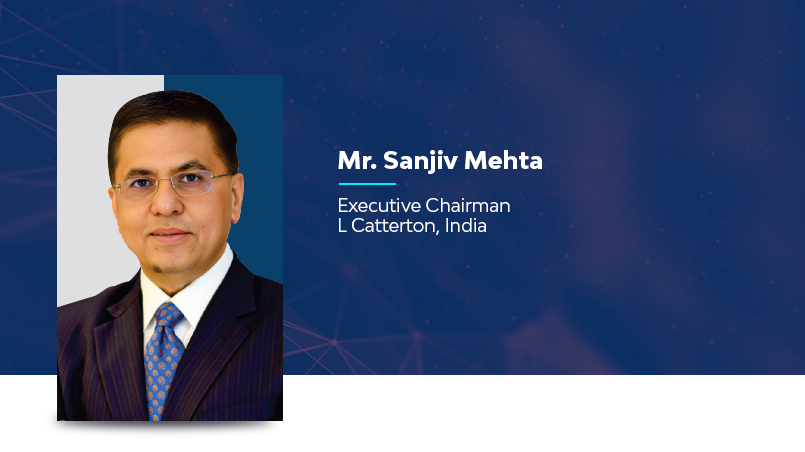
Mr. Sanjiv Mehta currently serves as Executive Chairman of L Catterton India. In addition, he sits on the boards of Air India, Danone, and Dr. Reddy's Laboratories, and is President Commissioner at Unilever Indonesia. He is also the author of the book – A CEO's Brew.
 Back to Home
Author

Sanjiv Mehta
He has spent over three decades with Unilever, including 21 years as Executive Chairman and CEO across multiple markets spanning South Asia, Southeast Asia, the Middle East, and North Africa, with oversight of operations in more than 25 countries. Between 2019 and 2023, he was also a member of the Unilever Leadership Executive, the company's global executive board.
Owned by: Institute of Directors, India
Disclaimer: The opinions expressed in the articles/ stories are the personal opinions of the author. IOD/ Editor is not responsible for the accuracy, completeness, suitability, or validity of any information in those articles. The information, facts or opinions expressed in the articles/ speeches do not reflect the views of IOD/ Editor and IOD/ Editor does not assume any responsibility or liability for the same.