 Quick Links
 Connect us

 Directors Databank (Empannel Yourself)
 Become a
 Become a
 Blog
 Become an Awards Assessor
 Publications
 Contact Us






Recalibrate: Changing Paradigms

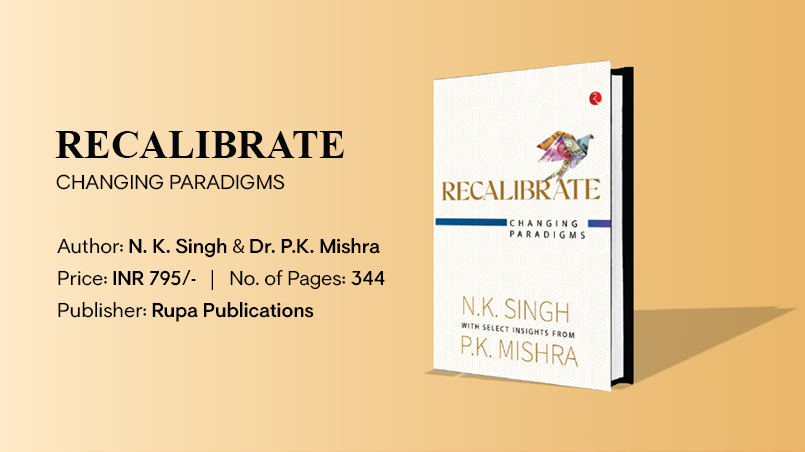
Few books on Indian economic governance manage to be simultaneously diagnostic and prescriptive without tipping into polemic. 'Recalibrate: Changing Paradigms' written by N. K. Singh with complementary insights from Dr. P.K. Mishra, the book stands out as a serious insider account of why traditional policymaking frameworks are no longer adequate.
“Rarely has the pace of change been so multidimensional -- faster than our ability to adjust.”
The central thesis is clear. The pressures shaping twenty-first-century governance, including geopolitical realignments, climate risk, pandemic-era fiscal shocks, and rapid technological disruption, require policymakers to move beyond extrapolating from the past. Instead, they must build forward with structural intent. The book does not romanticise precedent but draws from it to construct a more resilient policy architecture.
For corporate governance practitioners and boards, the discussion on fiscal federalism is particularly relevant. The author takes a clear position: while cooperative and competitive federalism should remain the norm in stable times, extraordinary crises require a strong federal anchor. "Federal romantics" who advocate near-total state autonomy, he argues, misunderstand how institutional resilience is actually constructed. This insight translates well to the boardroom, where the autonomy of subsidiaries cannot be absolute in the face of systemic risk.
 Back to Home
Authors
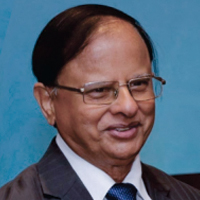
Dr. P. K. Mishra
Currently the principal secretary to the prime minister of India, has held various key positions with both the central and Gujarat state governments. He also worked as chairman, Gujarat Electricity Regulatory Commission (GERC). Dr. Mishra has authored several books like The Kutch Earthquake 2001: Recollections, Lessons and Insights (2005) and Agricultural Risk, Insurance and Income: Study of the Impact and Design of India. He was conferred the Sasakawa Award 2019 for Disaster Risk Reduction by the United Nations Office for Disaster Risk Reduction (UNDRR).
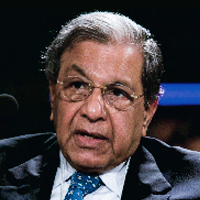
N. K. Singh
He is a prominent Indian economist, academician and policymaker. He chaired the Fifteenth Finance Commission and is currently the president of the Institute of Economic Growth (IEG). Prior to this position, he presided as chairman of the Fiscal Responsibility and Budget Management Review Committee (FRBM). He also served as a member of the Rajya Sabha (2008-2014). Earlier, he was secretary to the Prime Minister of India (1998-2001). He is the co-chairman of the India Advisory Board of the London School of Economics (LSE). Singh has been a recurring eminent guest lecturer at prestigious academic institutions and universities like Columbia, Yale, Stanford and the LSE.
Owned by: Institute of Directors, India
Disclaimer: The opinions expressed in the articles/ stories are the personal opinions of the author. IOD/ Editor is not responsible for the accuracy, completeness, suitability, or validity of any information in those articles. The information, facts or opinions expressed in the articles/ speeches do not reflect the views of IOD/ Editor and IOD/ Editor does not assume any responsibility or liability for the same.