 Quick Links
 Connect us

 Directors Databank (Empannel Yourself)
 Become a
  Become a
  Blog
Blog
 Become an Awards Assessor
 Publications
 Contact Us







IOD Interview - Sushma Paul Berlia


You became one of India's youngest women to lead a pharmaceutical company in your 20s - a rarity in a male-dominated industry. What were the defining challenges you faced during this early phase, and how did they shape your leadership philosophy?
Leadership, for me, has always been much more than an accolade or a role. It is a sacred calling a trust passed down through generations, asking us not just to uplift institutions or those around us, but to awaken the best qualities within ourselves. When I first entered the world of business, especially in the pharmaceutical sector as a young woman, I knew my presence was unconventional. There were moments when questions quietly appeared on the faces of those around me: “Is she prepared? Can she lead?” I did not respond with words of defiance, but with steady conviction grounded in the timeless values my father, Dr Stya Paul, gave me.
He taught me that true leadership is never about asserting authority. It is about stewardship carrying vision with integrity and serving selflessly. I remember his constant refrain: “Let not the world shape who you are by any external measure whether gender, age, or circumstance. Instead, let your actions flow from your unshakeable principles.” That reminder became my compass through regulatory storms, changing markets, and the inevitable doubts that arise along any meaningful journey. Time and again, I discovered that perseverance and inner consistency illuminate a way where the path is yet unseen. Each day in those early years, and ever since, has been a classroom some lessons arrived quietly, others with great force. I learned not to focus on conquering, but on building: nurturing teams bound by shared values and compassion.
I didn't start my journey wanting to be defined as a “woman leader.” To me, leadership is the privilege to serve to inspire, to uplift, and to create enduring value. If, through my journey, even one individual finds the courage to trust their conscience, to serve with humility, and to pursue their purpose, then I count that my greatest accomplishment."My father never taught me to be a woman leader. He taught me to be a principled one. That has made all the difference."
Apeejay Stya institutions are renowned for blending global best practices with Indian values. How do you ensure this balance remains relevant in an era of rapid technological disruption and shifting workforce demands?
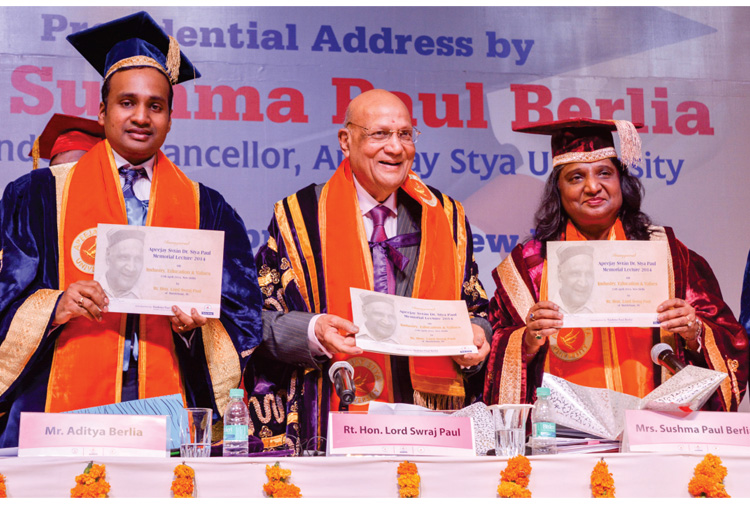
At the heart of our mission at Apeejay Stya institutions lies an unwavering belief: even as technology transforms our lives with breathtaking speed, it is our core values and enduring identity that form the compass guiding us forward. In these times of rapid technological disruption and evolving workforce needs, the question of balance is not just relevant it is imperative.
Our journey has always been a conscious and joyful synthesis, one that keeps a vigilant eye on the highest global standards while remaining firmly rooted in our Indian ethos. This dual vision is not incidental; it is the very DNA of our institutions, inspired by the dream my father, Dr Stya Paul, cherished so dearly: to nurture not just successful professionals, but whole human beings physically resilient, intellectually agile, spiritually awakened, and emotionally strong.
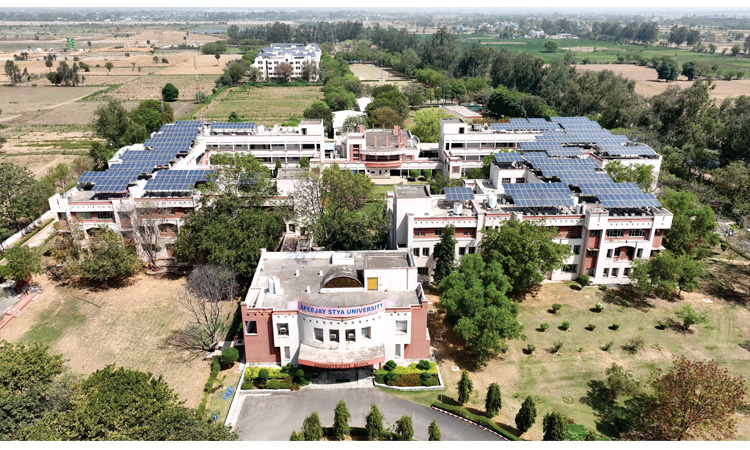
To ensure this equilibrium remains vibrant and relevant, we at Apeejay are relentless in our dedication to both innovation and tradition. Across our 16 schools, 10 higher education institutions, and Apeejay Stya University, we invest wholeheartedly in cutting edge pedagogies AI-powered laboratories, start-up incubators, and interdisciplinary research clusters. Yet, these innovations are always interwoven with the wisdom of our heritage. Whether it is the teachings of Swami Vivekananda, the insights of the Bhagavad Gita, or the artistic treasures of Rabindranath Tagore, our curricula celebrate the best of Indian thought in harmony with global advances.
Ultimately, our responsibility is not just to prepare young people to earn a livelihood, but to lead lives of purpose, courage, and compassion. If we succeed in this, then we have truly honoured both the legacy entrusted to us and the promise of tomorrow.
“Leadership, in my view, transcends mere control. It is a profound commitment - a sacred duty to nurture and awaken potential - not only within institutions and individuals, but within the very soul of our nation.”
"We must prepare our children not just to earn a living, but to live a life of purpose."
As the first woman to lead a multi-state chamber of commerce (PHDCCI), what structural or cultural shifts are still needed for substantive gender inclusion in governance?
When I was entrusted with the presidency of PHDCCI, it marked not only a deeply personal honour, but also a profound responsibility not just for myself, but for all women who have ever aspired to leadership in arenas where opportunities have sometimes been limited for them. Becoming the first woman to hold that office in 105 years was both a landmark achievement and a sober reminder of the journey still ahead. It underscored the vital difference between symbolic milestones and genuine, systemic transformation.
For me, true gender inclusion in governance transcends mere numbers. It calls for a fearless examination and renewal of both structural frameworks and cultural mindsets that have historically limited women's participation. Indeed, we urgently need robust structural reforms: clear representation policies, leadership development programmes crafted for women, transparent pathways for career progression, and equitable access to mentorship at every level.
Yet, the most profound challenge and opportunity lies in cultural transformation. True diversity goes beyond statistics and must be ingrained in the core of every organization. It has to be part of an organization's DNA. Throughout my career, I have championed an environment where merit flourishes irrespective of gender, while deeply acknowledging the unique hurdles women continue to face.
Equally critical is the deliberate creation of platforms where women's voices are not merely heard but truly valued and amplified. Having spent much of my life moving between boardrooms and classrooms, I firmly believe that the roots of gender inclusivity must be planted early.
As I often say, women do not need empowerment in isolation; they need ecosystems that cease to disempower them and instead enable their full flourishing.
True education does not just prepare us for a career. It prepares us for life. And a life well-lived is the finest leadership legacy we can leave behind.
With the National Education Policy (NEP) emphasizing multidisciplinary learning, how is Apeejay adapting, and what role should private universities play in shaping India's educational future?
The National Education Policy (NEP) represents a visionary step for India - one that powerfully resonates with the core philosophy that has guided Apeejay Education for decades. Long before the NEP 2020 took shape, we at Apeejay had already embraced the importance of holistic, multidisciplinary, and values-based education. Our institutions, from schools to Apeejay Stya University, have always championed the interconnectedness of knowledge and the nurturing of every learner's potential.
At Apeejay Stya University, our commitment to multidisciplinary learning is not a new adaptation, but the very foundation upon which we were built. We pioneered the Choice-Based Credit System (CBCS), created transdisciplinary degree programmes, and insisted that education must be outcome-based and student-centric. Our students enjoy true academic flexibility - choosing majors and minors across domains, participating in collaborative projects that cross traditional boundaries, and shaping their learning journeys to match their ambitions, whether in entrepreneurship, research, or the creative arts.
Our unique 11-domain learning model embodies this vision - fostering the kind of adaptive, integrative thinking that the NEP aspires to instil. We do not see disciplines as isolated silos, but as threads in a vibrant tapestry of learning and discovery. This empowers our graduates to be not only employable but also deeply thoughtful, creative, and resilient individuals.
Private universities, I believe, have a vital role in the future of Indian education. When guided by purpose and a sense of mission - rather than purely by market forces - we have the agility to innovate and set benchmarks for educational excellence. Private institutions must lead in creating new pedagogies, forming partnerships with industry and civil society, and responding dynamically to the evolving needs of our nation.
By putting the learner at the center and embracing the harmony of diverse fields of knowledge, we aim to nurture a generation ready to face the challenges of tomorrow with confidence, compassion, and courage.
In an era of AI and personalized learning, how must educators evolve to nurture critical thinking and emotional intelligence in students? What role should institutions play in upskilling teachers?
The role of an educator, in this transformative age of artificial intelligence and personalised learning, is experiencing profound evolution. Today, a teacher is no longer simply a transmitter of facts, but a mentor, a fellow explorer, and above all, a nurturer of potential. Information is everywhere, but wisdom, judgment, and compassion remain precious and this is where educators are truly irreplaceable.
At Apeejay, across all our institutions, we have long believed that the mark of a great educator is not defined by the ability to provide answers, but to cultivate the habit of inquiry. Our teachers are encouraged to inspire wonder, to encourage students to question, challenge, and reimagine the world around them. Critical thinking, therefore, is not taught as a subject it is embedded in every interaction, every project, and every discussion. We foster classrooms where students are partners in learning, where diverse viewpoints are respected, and where dissent is seen as the spark of creativity.
Equally vital is the nurturing of emotional intelligence. In a world where technology is ubiquitous, what becomes even more valuable is the ability to empathise, to collaborate across differences, to navigate ambiguity with resilience and ethical clarity. At Apeejay, social and emotional learning are woven into the very fabric of our educational experience.
To support our teachers in this changing landscape, continuous professional development is key. Our Academic & Administrative Development Centre rooted in collaboration with the Association of Indian Universities offers regular programmes that span digital pedagogy, interdisciplinary approaches, cognitive science, and well-being.
In the age of AI, institutions must remember that technology is a tool it is our humanity that gives education its soul. As educational leaders, our role is to empower teachers to embrace innovation without losing sight of these human values.
Ultimately, the future will demand many new skills, but it will always cherish the wisdom and heart that only a true educator can bring. This, at Apeejay, is the commitment we strive to renew each day.
"The most powerful tool in the classroom is still the teacher's ability to touch a soul."
How can educational institutions foster entrepreneurial mindsets in urban and rural areas? Should their approaches differ?
Entrepreneurship, to me, is not merely about building businesses; it is the spirit of curiosity, initiative, and the courage to shape one's own path. At Apeejay, we have always believed that nurturing entrepreneurial mindsets must begin early in the educational journey no matter whether a student comes from, an urban or a rural setting.
Our approach is grounded in the belief that while the core qualities of entrepreneurship resilience, creativity, and problem-solving are universal, the way we cultivate them must be contextually sensitive.
In our Institutions, we leverage the ecosystem's dynamism by establishing innovation labs, entrepreneurship cells, and our Apeejay Incubation Centre, supported by the Ministry of MSME. Here, students have access to industry mentors, networks, prototype funding, and even exposure to global markets. Through hackathons, start-up competitions, and collaborative learning spaces, we encourage our students to explore bold ideas and stretch the boundaries of possibility.
I am acutely aware that rural India presents a different tapestry of opportunities and challenges. Often, entrepreneurial energy thrives, but resources, exposure, and confidence may be limited. So, our strategy adapts: we focus on frugal innovation solving real, local problems with locally available materials. We anchor learning in vernacular languages, highlight success stories from the community, and invite local role models to share their journeys.
Above all, in both contexts, the true magic happens when we instill in every student the conviction that they can be agents of change. Entrepreneurship, I have always told my students, is not defined by starting a company it is about embracing a mindset that seeks to innovate, to question, and to improve lives around us.
So yes, while the foundational ethos remains the same, our methods honour the unique aspirations, resources, and realities of each setting. We are committed to empowering every learner, whether in a bustling city or a quiet village, with the belief and skills to create impact because the future of India depends on the entrepreneurial spark alive in all its children.
Industry often criticizes academia for being disconnected. What steps can bridge this divide?
While the relationship between academia and industry has faced challenges over the years, I firmly believe these can be overcome through shared commitment. At Apeejay, we believe that the future of education and innovation depends on dissolving these traditional silos and fostering a deeper partnership where both academia and industry emerge as equal and committed stakeholders in the learning ecosystem.
One of the foundational steps we have taken is embedding industry perspectives directly into the fabric of our curriculum. Every academic discipline be it engineering, biosciences, law, or design benefits immensely from the guidance of dedicated advisory boards, composed of seasoned industry leaders. These boards continuously inform curriculum development, ensuring that what we teach is not just theoretically sound but strikingly relevant to the evolving needs of the workplace and society at large.
Beyond curriculum design, our Corporate Resource Centres serve as vibrant hubs where academia and industry converge. Far from being simple placement portals, these centres actively facilitate partnerships - hosting industry roundtables, enabling corporate leaders to co-teach modules, and collaborating on research projects that address real-world challenges. However, individual institutional efforts alone cannot fully bridge this divide. What we need urgently is a supportive national framework - one that incentivizes industry academia partnerships through tax benefits, sustained funding for joint research, and formal recognition of faculty contributions to industry-related work. Such systemic encouragement would stimulate deeper engagement and innovation at scale.
In essence, bridging this chasm requires a mindset shift from seeing industry and academia as separate worlds to viewing them as complementary forces united in their shared mission: nurturing talent, driving innovation, and contributing meaningfully to nation-building.
"When academia and industry co-create, innovation ceases to be theoretical. It becomes transformational."
Your journey spans business, education, and nation building. What would you define as your most enduring contribution, and what message would you share with aspiring leaders?
As I reflect upon my journey traversing boardrooms and classrooms, shaping policy and learning in the heart of our communities - I see that my most meaningful contribution lies not in any solitary accomplishment, but in nurturing spaces where others are empowered to discover their own voice and rise to their fullest potential. What endures is not the revitalisation of industries or the founding of institutions alone, but the lives transformed, the talents awakened, and the confidence instilled in countless individuals along the way.
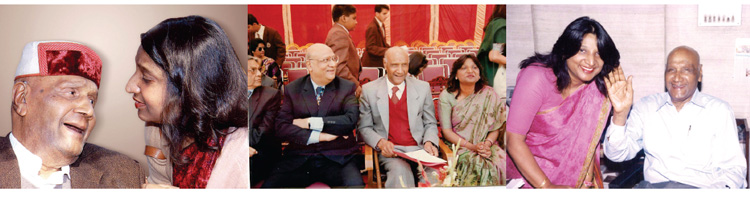
Carrying forward the legacy of my beloved father, Dr. Stya Paul, has illuminated my path as both a profound honour and a sacred calling. He taught me that the highest purpose we can serve is to ignite the spark of possibility in others to build institutions that stand as sanctuaries of excellence, empathy, and hope, where knowledge is wedded to values and ambition is tempered by conscience.
To the aspiring leaders who look to the future with hope and determination, I say this: let your dreams soar higher than any ceiling, but let your journey always be guided by integrity and humility. Lead with the courage to build, the resilience to endure, and the compassion to uplift.
I often find myself returning to our Apeejay motto, “Soaring High is My Nature” - “गर दखेना चाहते हो मेरी उड़ान को, तो ज़रा ऊँचा करो आसमान को” - if you truly want to see the height of my flight, raise the sky a little higher. This belief has been the foundation of my life, shaped deeply by my father, Dr. Stya Paul. From him, I learned that ambition must always be anchored in values and service.
Whether it was in shaping Apeejay Stya & Svran Group into a trusted name in the pharmaceutical and healthcare industries, or nurturing our 16 schools, 10 higher education institutions, and Apeejay Stya University, my vision has always been clear: to create spaces where others can soar, too.
To me, soaring high is not just about the heights I've reached; it is about inspiring others to believe that their own skies can be limitless.
In a world relentless in its pace, pause to search for meaning. In times where power is too often mistaken for force, let gentleness and kindness become your unshakable strength. And in these shifting times, anchor yourself in the timeless certainties of gratitude, service, and rootedness in values.
 Back to Home
Author
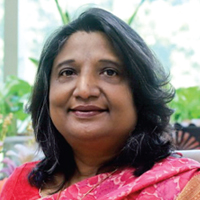
Mrs. Sushma Paul Berlia
Owned by: Institute of Directors, India
Disclaimer: The opinions expressed in the articles/ stories are the personal opinions of the author. IOD/ Editor is not responsible for the accuracy, completeness, suitability, or validity of any information in those articles. The information, facts or opinions expressed in the articles/ speeches do not reflect the views of IOD/ Editor and IOD/ Editor does not assume any responsibility or liability for the same.