 Quick Links
 Connect us

 Directors Databank (Empannel Yourself)
 Become a
  Become a
  Blog
Blog
 Become an Awards Assessor
 Publications
 Contact Us







IOD Special Talk - Reframing Responsibility : CSR, ESG and the Boardroom Imperative

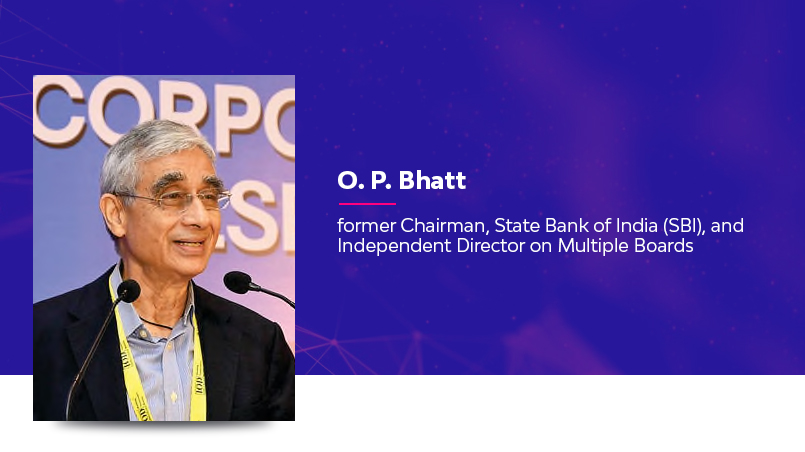
My association with the Institute of Directors (IOD) has been both longstanding and deeply rewarding. Over the years, I have observed its consistent and commendable efforts in advancing the discourse on sustainability, environmental stewardship, and corporate responsibility, not only within India but across global platforms. It is an institution that has played a quiet yet powerful role in shaping boardroom consciousness. It is, therefore, a privilege to address such a distinguished gathering of board directors, awardees, and governance leaders on this very platform, an audience that, in many ways, sits at the nerve centre of institutional decision making.
The deliberations preceding my remarks were both insightful and substantive; my intention, I must admit, was either to simplify the complexity before us or, perhaps, to provoke it further.
We meet at a moment of undeniable consequence. The stresses on our planet are no longer abstract projections; they are immediate, visible, and deeply disruptive. Climate volatility, environmental degradation, and geopolitical instability together define the context within which businesses now operate. In cities like Mumbai, where I have lived for over two decades, the absence of a clear night sky has become a quiet but telling reminder of the cost of unchecked development.
This brings me to a fundamental proposition. Development and environment are not opposing forces; they are inextricably linked. One cannot be pursued at the expense of the other. And herein lies the responsibility of the board. Modern economic activity is no longer driven by individuals alone; it is institutions, corporates, financial systems, and collective enterprises that shape outcomes at scale. These institutions, in turn, are guided by boards. The influence of directors, therefore, is both profound and consequential.
It is imperative that boards recognise this position of influence not merely as authority, but as stewardship. The decisions taken in boardrooms today have far reaching implications, not only for profitability and growth, but for ecological balance and societal well-being. CSR and ESG, in this context, must be viewed not as peripheral obligations, but as central to governance itself.
Development and environment are not opposing forces; they are inextricably linked. One cannot be pursued at the expense of the other. And herein lies the responsibility of the board.
India, notably, stands apart in having mandated corporate social responsibility through legislation. Yet, compliance with the prescribed expenditure, often reduced to a statutory two percent, cannot be mistaken for meaningful responsibility. At best, this represents the most elementary expression of CSR. True responsibility lies beyond compliance.
I believe it is time we reframe CSR, not as philanthropy, but as an organisation's conscious acknowledgment of its interdependence with the ecosystem. There is, in our civilisational thought, a powerful idea of ঋণী ভাব (Rini Bhav), a sense of indebtedness. Corporates, by their very nature, draw extensively from environmental, social, and intellectual capital. To give back, therefore, is not charity; it is restitution.
Our traditions speak of multiple dimensions of this indebtedness, to nature, to knowledge systems, to our ancestors, to the networks that sustain our daily lives, and to all living beings that enable existence itself. If CSR and ESG were to be approached through this lens, they would acquire a depth and authenticity that compliance frameworks alone cannot achieve.
At its highest level, CSR is not a function or a department; it is a mindset. It is what distinguishes an organisation that merely exists from one that truly matters. It is the difference between compliance and conscience.
Global corporate history offers us sobering lessons. The environmental disaster associated with BP and the emissions scandal at Volkswagen were not merely operational failures; they were failures of governance. In both instances, the root causes, weak oversight, compromised safety culture, and inadequate board challenge, point unmistakably to lapses at the highest levels of decision making.
The consequences were catastrophic. Environmental damage, loss of lives, severe financial penalties, and enduring reputational harm followed. These cases underscore a critical truth. Boards cannot afford to view ESG risks as secondary or external. They are intrinsic to business sustainability.
Equally instructive are examples closer to home, including governance failures such as Satyam Computer Services, which reinforce the importance of ethical leadership and robust oversight. Whether environmental or financial, the underlying thread in such crises is the erosion of governance discipline.
The expectations from boards are evolving rapidly. Today, directors are called upon not only to oversee financial performance, but to shape organisational culture, uphold ethical standards, and ensure that long term value creation is aligned with societal and environmental well-being.
This shift is both necessary and inevitable. It reflects a broader recognition that businesses do not operate in isolation; they are embedded within a larger ecosystem whose sustainability ultimately determines their own.
In closing, I would emphasise that the responsibility of the board is not incremental; it is foundational. The choices made at that level can influence not just corporate outcomes, but the quality of life for generations to come. CSR and ESG, therefore, are not optional conversations; they are central to the very purpose of leadership in our time.
 Back to Home
Author

O. P. Bhatt
He is former Chairman, State Bank of India (SBI), and Independent Director on Multiple Boards
Owned by: Institute of Directors, India
Disclaimer: The opinions expressed in the articles/ stories are the personal opinions of the author. IOD/ Editor is not responsible for the accuracy, completeness, suitability, or validity of any information in those articles. The information, facts or opinions expressed in the articles/ speeches do not reflect the views of IOD/ Editor and IOD/ Editor does not assume any responsibility or liability for the same.