 Quick Links
 Connect us

 Directors Databank (Empannel Yourself)
 Become a
  Become a
  Blog
Blog
 Become an Awards Assessor
 Publications
 Contact Us






Latest from the Regulator - April 2026

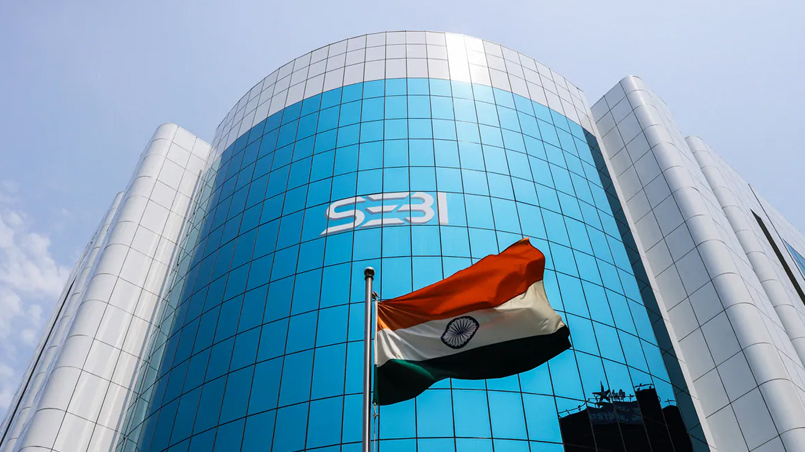
1. SEBI Plans Mandatory Biannual Workshops for Independent Directors
The Securities and Exchange Board of India (SEBI) is developing a framework to mandate biannual training workshops for independent directors, with attendance expected to be a prerequisite for reappointment following a five-year tenure. The initiative is being developed in collaboration with the National Institute of Securities Markets (NISM) and the Bombay Chartered Accountants Society (BCAS). BCAS has already submitted a draft curriculum to SEBI, which is currently under review.
The first workshops are tentatively scheduled for September–October, with a second round planned for March, establishing a recurring biannual cycle. Under the proposal, Independent Directors would be required to complete training at least once every five years, modelled on the continuing professional education norms applicable to other regulated professions.
Curriculum
While final details are yet to be formalised, the curriculum is expected to cover:
• Regulatory updates
• Fiduciary responsibilities
• Risk governance
• Emerging areas such as technology and cyber risks
• Case studies on governance failures
• Evolving expectations from audit committees and board-level oversight
Once SEBI approves the curriculum, NISM and BCAS will refine and conduct the workshops. SEBI is expected to mandate participation through a formal circular and regulatory amendments.
2. SEBI Proposal to Raise MII CEO Age Cap Faces Resistance
A proposal within SEBI to raise the upper age limit for Managing Directors and Chief Executives of Market Infrastructure Institutions (MIIs) has met with resistance from industry participants. The proposal seeks to increase the current age cap for MII top executives from 65 to 70 years, bringing it in line with norms prevalent in the broader corporate sector.
SEBI's existing regulations for MIIs prescribe both tenure limits and a hard upper age cap of 65 for MDs and CEOs.
Executives may serve fixed terms typically up to five years per appointment subject to board and regulatory approval, with the age limit acting as an absolute ceiling. These norms form part of a governance framework that has been progressively tightened over the past decade to address concerns around ownership, control, and conflicts of interest at systemically important institutions. MIIs are treated as public utilities given their central role in price discovery, clearing and settlement, and overall market stability, and are therefore held to stricter fit-and-proper norms and governance standards.
Industry participants have pushed back on the proposal, with concerns that relaxing the age cap could weaken succession planning and impede institutional renewal, some outcomes at odds with the governance objectives the current framework was designed to uphold.
3. SEBI Mandates NISM Certification for Social Impact Assessors
The Securities and Exchange Board of India (SEBI), through its circular dated April 13, 2026, has mandated a formal certification requirement for Social Impact Assessors (SIAs), strengthening the regulatory framework governing the Social Stock Exchange (SSE) ecosystem.
Under the revised norms, individuals acting as SIAs are required to obtain and maintain a valid certification from the National Institute of Securities Markets (NISM), specifically the NISM Series XXIII – Social Impact Assessors Certification Examination. This requirement is aligned with provisions under the SEBI (Issue of Capital and Disclosure Requirements) Regulations, 2018. The circular also prescribes a structured renewal mechanism. Assessors must either reappear for the certification examination or complete the corresponding continuing professional education (eCPE) programme to retain validity.
This move aims to standardise professional qualifications, enhance the credibility of social impact assessments, and strengthen investor confidence in social enterprises raising funds through the SSE platform. By formalising competency requirements, SEBI is reinforcing transparency, accountability, and comparability in impact reporting. For market participants, the development underscores the growing institutionalisation of impact investing and the need for robust, skill-based evaluation frameworks within India's evolving sustainable finance landscape.
For more details, visit:
 Back to Home
Author
Institute of Directors India
Bringing a Silent Revolution through the Boardroom
Institute of Directors (IOD) is an apex national association of Corporate Directors under the India's 'Societies Registration Act XXI of 1860'. Currently it is associated with over 31,000 senior executives from Govt, PSU and Private organizations of India and abroad.
Owned by: Institute of Directors, India
Disclaimer: The opinions expressed in the articles/ stories are the personal opinions of the author. IOD/ Editor is not responsible for the accuracy, completeness, suitability, or validity of any information in those articles. The information, facts or opinions expressed in the articles/ speeches do not reflect the views of IOD/ Editor and IOD/ Editor does not assume any responsibility or liability for the same.