 Quick Links
 Connect us

 Directors Databank (Empannel Yourself)
 Become a
  Become a
  Blog
Blog
 Become an Awards Assessor
 Publications
 Contact Us







Corporate News - April 2026


ECONOMY
RBI's expected credit loss guidelines may hit PSBs and Mid-tier banks harder
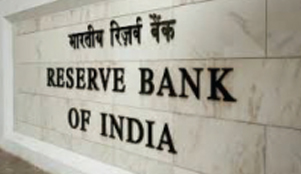
The Reserve Bank of India (RBI) has introduced an Expected Credit Loss (ECL) framework for banks, effective April 1, 2027. The framework marks a shift from the traditional “incurred loss” model to a forward-looking approach, requiring banks to estimate potential credit losses in advance rather than waiting for losses to materialise.
The framework introduces a three-stage classification system based on deterioration in credit risk:
• Stage 1: Standard assets with no significant risk increase: 12- month expected credit loss provisioning
• Stage 2: Assets with a significant increase in credit risk: lifetime expected credit loss provisioning
• Stage 3: Credit-impaired assets: lifetime expected loss with stricter provisioning treatment
While banks are broadly prepared for the transition, the impact is expected to be uneven. Public sector and mid-tier lenders may face greater pressure due to higher provisioning requirements and gaps in data readiness. Although the industry had sought additional time to strengthen credit risk databases, the regulator has retained the implementation timeline to align with global accounting standards. Analysts suggest the shift could weigh on sectoral profitability in the near term. For bank boards, the priority will be to strengthen risk assessment frameworks, enhance capital buffers, and invest in robust data infrastructure to manage the transition effectively.
India-New Zealand FTA to boost Trade, Mobility, and Investment
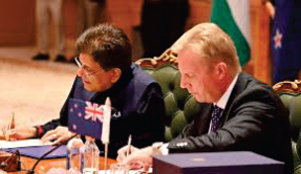
India has further expanded its global trade footprint with the signing of a comprehensive Free Trade Agreement with New Zealand, marking a milestone in bilateral economic relations. Concluded in a record nine months, it is India's fastest FTA and part of a broader strategy that has seen nine FTAs signed across 38 developed countries in recent years. The agreement covers market access, tariff preferences, investment, agricultural productivity, talent mobility, and collaboration in sectors such as tourism and sports. It is expected to benefit manufacturers, farmers, MSMEs, women entrepreneurs, students, and skilled professionals. The FTA also positions India as a key supplier of skilled workforce, with opportunities in IT, engineering, healthcare, education, construction, and services such as AYUSH, yoga, culinary arts, and cultural exchange, while strengthening access to Oceania and Pacific markets.
TECHNOLOGY
Union government speaking to Anthropic about concerns over Mythos

Concerns around emerging AI-driven cyber risks have intensified as Union Finance Minister Nirmala Sitharaman flagged the potential threat posed by Mythos, a cybersecurity-focused AI system developed by Anthropic. Describing the risk as comparable to warfare, the development underscores the dual-use nature of advanced AI which is capable of strengthening defence systems while also being vulnerable to misuse. Models such as Mythos, designed to identify network vulnerabilities, could potentially be weaponised to execute sophisticated cyberattacks, disrupt critical infrastructure, or compromise financial systems. Reflecting these concerns, the government has initiated consultations with banks and financial institutions. A specialised panel, led by C S Setty of the State Bank of India, has been constituted following a high-level meeting involving key policymakers, signalling a coordinated approach to assessing systemic risks.
MERGERS & ACQUISITIONS
Sun Pharma signs Definitive Agreement to Acquire Organon

Sun Pharmaceutical Industries has entered into a definitive agreement to acquire Organon & Co. in an all-cash transaction valued at $11.75 billion, including debt, marking the largest overseas acquisition by an Indian pharmaceutical firm. The deal, expected to close in early 2027, involves the purchase of all outstanding shares at $14 each. The acquisition is set to strengthen Sun Pharma's global portfolio across women's health, biosimilars, and branded generics, positioning it more strongly in high-growth therapeutic segments. The combined entity is expected to generate over $350 million in synergies within two to four years, alongside estimated annual free cash flows of approximately $2.5 billion, significantly enhancing its international branded business.
IHC of Abu Dhabi would pay C8,850 crore to acquire 43.5% of Sammaan Capital
International Holding Company (IHC) is set to acquire a 43.5% stake in Sammaan Capital through a C8,850 crore ($1 billion) investment via its affiliate Avenir, positioning itself as a promoter. The transaction, priced at C139 per share, involves a mix of preferential allotment and warrant conversion, and will trigger a mandatory open offer for an additional 26% stake. As part of the deal, IHC will gain board representation, with Sammaan set to become part of its global financial services platform, Judan Financial. The capital infusion will support Sammaan's strategic transition from a mortgage-focused lender to a diversified NBFC, with a focus on MSME and personal lending. The company aims to scale its assets under management and emerge among India's top three NBFCs by FY29. The transaction remains subject to regulatory approvals.
ESG
U.S. Imposes Solar Tariffs Up To 123% on Imports from India, Indonesia and Laos

The U.S. Department of Commerce has intensified trade intervention in clean energy markets by imposing preliminary anti-dumping duties on solar cells and panels imported from India, Indonesia, and Laos. Dumping margins have been set at 123.04% for India, 35.17% for Indonesia, and 22.46% for Laos, targeting imports that account for nearly two-thirds of U.S. solar supply, valued at $4.5 billion last year. The move reflects growing protectionist pressures amid the U.S. energy transition, alongside earlier countervailing duties addressing subsidies and pricing practices. Final determinations are expected in the coming months, around July 13 for India and Indonesia, and September 9 for Laos. The measures are likely to reshape global solar supply chains, prompting developers to reassess sourcing strategies, supplier exposure, and market dependencies, with potential shifts toward domestic or alternative international suppliers.
 Back to Home
Author
Institute of Directors India
Bringing a Silent Revolution through the Boardroom
Institute of Directors (IOD) is an apex national association of Corporate Directors under the India's 'Societies Registration Act XXI of 1860'. Currently it is associated with over 31,000 senior executives from Govt, PSU and Private organizations of India and abroad.
Owned by: Institute of Directors, India
Disclaimer: The opinions expressed in the articles/ stories are the personal opinions of the author. IOD/ Editor is not responsible for the accuracy, completeness, suitability, or validity of any information in those articles. The information, facts or opinions expressed in the articles/ speeches do not reflect the views of IOD/ Editor and IOD/ Editor does not assume any responsibility or liability for the same.