 Quick Links
 Connect us

 Directors Databank (Empannel Yourself)
 Become a
  Become a
  Blog
Blog
 Become an Awards Assessor
 Publications
 Contact Us







Achieving Beneficial Governance and Sustainability Impact


Do’s and Don'ts for enhancing directorial contributions
Multiple indicators show that certain global risks and existential threats are at record levels. They suggest diminishing prospects for the survival of contemporary human lifestyles and corporate operations unless corrective action is taken. Our planet and its eco-systems struggle to cope with and feed a human population of 8 billion as average global temperatures rise. We have started to trigger tipping points after which global warming becomes unstoppable.
Directors should work for the long-term success of a company. Too many boards are rationalising the past rather than preparing for the future. They face multiple competitive, environmental, geopolitical and technological challenges in an operating context that is uncertain, unpredictable and insecure. This article lists some do’s and don'ts for concerned directors seeking a more positive impact on governance, sustainability and humanity's future.
Leadership can be lonely, but if you address reality, confront common challenges and pursue shared goals you are unlikely to be alone. Engage, involve, inspire, and delegate. Seek allies.
Recognise global risks and existential threats and address realities. Do not hide your head in the sand, deflect or avoid responsibility. Most of the challenges we now face are the result of human activities and our innate ambition and drive to explore, discover and seek ever more. Governments are unlikely to effectively confront them without private sector innovation and entrepreneurship, while electoral success and financial viability require continuing growth.
Recognising Realities and a Shared Goal
Be alert to disruptions, developments, drivers and trends in the business environment and their implications and possible impacts. Donald Trump is a disrupter who thinks climate change is a con and a hoax. Fossil fuel companies again drill and mine. Despite increasing use of renewables, global temperatures continue to rise. The purpose and priorities of responsible directors, and the impacts and consequences of their actions, are now critical.
Emphasize common problems and shared interests. Most people and organisations are affected by multiple and inter-related global risks and existential threats. They can experience, feel and/or sense their impacts, but many feel powerless. They do not have the bandwidth, capabilities and scale to address them alone. However, they may well have an interest in adaptation, mitigation and resilience, and outcomes such as wellness and survival.
Be sensible rather than avaricious. More and new are not always better. They may come with hidden costs and delay affordable preparations and workable solutions. Be realistic about your fellow human beings. Recognise their vulnerability to deception, manipulation and rhetoric. Sufficiency may be a more sustainable strategy than maximisation and fairer across communities and generations. Articulate survival as a common imperative and shared goal.

Anticipation, Persistence and Collaboration
Read the road ahead. Exercise foresight. Anticipate requirements. Prepare for them and the impacts of likely scenarios and emerging trends. Be proactive. Act as a catalyst. Initiate where others prevaricate. Grasp nettles. Be prepared to give a lead when governments procrastinate and avoid difficult but pressing issues and uncomfortable realities. Be bold and courageous. Tackle negative externalities that others ignore or do not acknowledge.
Persist. Don't be put off by initial resistance. Confront vested interests. Be an advocate and ambassador of responsibility, sufficiency and sustainability. Be openminded. Some resistance may come from those who agree with your aspirations and intentions, but who feel there may be other and better ways of achieving your goals. Listen. Identify obstacles and barriers. Explore with allies and colleagues how they might be overcome.
Collective responses to climate change and other existential challenges are required in a fragmented and polarised world. Encourage cooperation, holistic and whole of society responses. Collaborate across business, departmental, discipline, function, entity and national boundaries. While ensuring momentum is maintained, fairly share burdens and credit for results. Champion holistic and systems thinking, nourish ambition, and reward initiative.
Maintaining Momentum
Watch your health and that of your colleagues. Do not take it for granted. Leadership and initiation can take its toll. Every dawn heralds a new day and fresh opportunity to strive for impact. Strengthen wellness support. Safeguard time to recharge your batteries and think. Social connections may stave off the loneliness and isolation that can accompany senior positions. A short break can refresh and help you to reflect and stay balanced and grounded.
Encourage ambition, but do not expect the impossible from yourself or others. Be big enough to ask for help. Not everyone hides or avoids extra responsibilities. Remove ceilings. Help others to focus on what is important and grow. Turn concern into contribution. Be realistic about your own ability and that of colleagues and key players to cope. Arrange successions. Stay current. See challenges as opportunities. Celebrate the overcoming of obstacles.
Leadership can be lonely, but if you address reality, confront common challenges and pursue shared goals you are unlikely to be alone. Engage, involve, inspire, and delegate. Seek allies. Others may share your views. While the influence of climate change deniers, backsliders and a reinvigorated fossil fuel sector might require vigorous resistance, many people, companies and stakeholders remain committed to operating more sustainability. Stand with them.
Encountering Opposition
Other leaders may think differently. Some authoritarian ones may have ordered sustained cyber and other attacks on your company and entities upon which you and it depend. They might be using disinformation to undermine trust and sow divisions in your community and society. The malicious often succeed because 'good people' are unaware, look away or 'do nothing'. Don't give them a free run. Be vigilant. Strengthen defences. Impose costs. Resist.
When confronted by complexity in an increasingly fractionalised, polarised and transactional world, access to a broader range of capabilities and skills can increase flexibility and resilience. Encourage diversity, involvement and participation. Adopt a wider range of diversity factors. Look beyond gender and ethnicity at other factors such as age, social background, perspective and different models of operation, viewpoints and ways of thinking.
Don't get bogged down or ossify. Stay fluid. Go around barriers. Explore different scenarios. Avoid absolutes when probabilities are available and more helpful for understanding and making decisions. Prepare 'plan Bs'. Develop alternatives and create options. Get out of the head office. Meet customers and other stakeholders. Invite feedback. Find out what people really think. Seek independent and objective counsel. Avoid sycophants and bloodsuckers.
Reconnecting, Adapting and Changing Direction
You are a living creature. Experience nature. Feel the natural world. Respect it and cherish it. Restoration of some habitat damage and regeneration may be possible, but certain destroyed eco-systems could be difficult to replace. Living entities and systems cannot be repaired or rebooted like a machine or robot. Think of other species. A mass extinction of them is underway. Those being eliminated include fellow life forms that share much of your DNA.
Changing direction takes time, which can work either for us or against us. Use it wisely. Playing for time can sometimes be positive rather than procrastination.
Be agile as well as flexible. Adapt to remain on a trajectory towards collective survival. Wherever possible, avoid dependency and becoming locked in. Currently, our collective corporate activities and contemporary lifestyles are not sustainable. We need to do things differently. Transition, transform and be prepared to adopt different ways of working, operating and organising. Innovate if its purpose is affordable, beneficial and responsible.
What cannot be stopped after tipping points have been crossed may be slowed to allow countervailing defences, possibilities or responses to emerge. Changing direction takes time, which can work either for us or against us. Use it wisely. Playing for time can sometimes be positive rather than procrastination. It can enable attitudes to change, lessons to be learned, mitigations to be put in place and solutions to be developed, implemented and scaled up.
Addressing Constraints and Limitations
We face food and water security and resource constraints. Recognize them, practical limitations and the impact of prices that rise as scarcity increases. Prioritise increased productivity and efficiency and effectiveness in the use of limiting factors. The processing of rare earth minerals and critical components is highly concentrated. Reduce the risk of exclusion by anticipating future controls on supply and developing new sourcing options.
Confront unnecessary complexity. It may indicate a lack of understanding or an intent to avoid scrutiny, conceal or deceive. Simplify without falling for simplistic solutions. Provide more responsible, sustainable and inclusive alternatives and options. Resist marketing hype. Proposed high-tech solutions can consume energy supplies and other scarce resources and may prolong the use of fossil fuels. Their costs are often more certain than their benefits.
Think for yourself. Do not simply 'follow the herd'. Exercise the independent judgement that is expected of a company director. Declare interests where appropriate. Don't be naive. Expect to encounter some backsliding, defensiveness, short-term thinking and lack of staying power in others. Recognise disinformation and human frailty as well as planetary limits. Encourage ethical conduct and celebrate integrity. Build trust and retain a moral compass.
When confronted by complexity in an increasingly fractionalised, polarised and transactional world, access to a broader range of capabilities and skills can increase flexibility and resilience.
Emphasising Positive Opportunities
To summarise, we have a common and shared interest in survival, and with existential challenges come unprecedented opportunities to imagine, explore, collaborate and innovate. Our enterprises could create new options and choices, tackle negative externalities, and address challenges such as climate change. As a director you could collaborate in overcoming obstacles and barriers to required collective responses to global risks and existential threats.
Your company could cooperate and offer alternatives. Enable simpler, healthier, less stressful and more fulfilling lives that are in harmony with the natural world. Remember future generations. Their prospects depend upon what we do today. Don't leave them an inheritance of scavenging in extreme weather conditions and fighting for habitable land, water and what might be usable in the detritus we leave behind. Encourage reuse, repair and recycling.
Various more resilient, sustainable and inclusive postindustrial futures are possible that could suit evolving local requirements and changing conditions. Be on the right side of history. It will be written by survivors. Sustain motivation. Don't let others loose hope. Lift them. Individually and collectively, they can make a difference. Offer opportunity, not illusion and the unobtainable. Inspire rather than deceive. Live the obituary you would like to have.
 Back to Home
Author

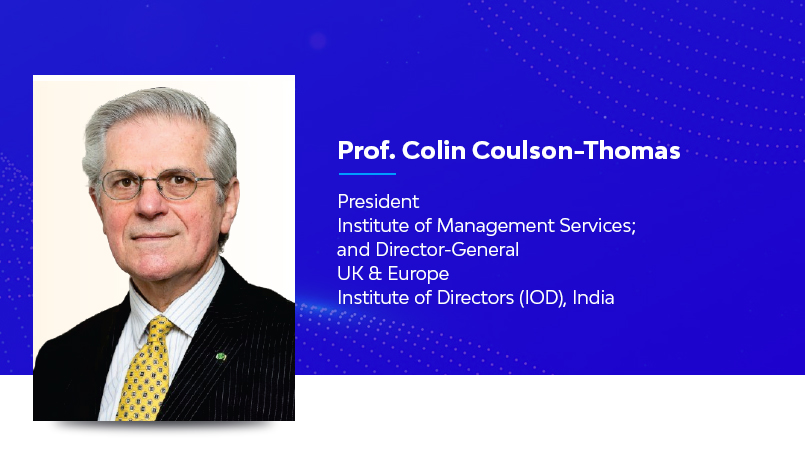
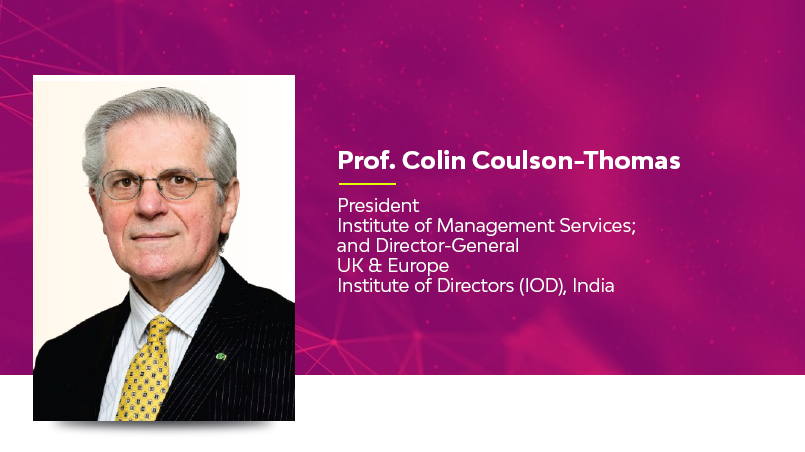
Prof. Colin Coulson-Thomas
Director-General of IOD India for UK and Europe operations
Prof. (Dr) Colin Coulson-Thomas, President of the Institute of Management Services and Director-General of IOD India for UK and Europe operations. He has advised directors and boards in over 40 countries.
Owned by: Institute of Directors, India
Disclaimer: The opinions expressed in the articles/ stories are the personal opinions of the author. IOD/ Editor is not responsible for the accuracy, completeness, suitability, or validity of any information in those articles. The information, facts or opinions expressed in the articles/ speeches do not reflect the views of IOD/ Editor and IOD/ Editor does not assume any responsibility or liability for the same.