 Quick Links
 Connect us

 Directors Databank (Empannel Yourself)
 Become a
 Become a
 Blog
 Become an Awards Assessor
 Publications
 Contact Us







Board Leadership for an Emerging Global Order: Vision and Purpose for a more Collaborative, Responsible and Sustainable Future


In an emerging new world order, status-quo powers strive to reassert, retain or recover a previous ranking, while aspiring and revisionist ones compete or collaborate to reduce their vulnerability and/or strengthen their bargaining position. The rules based international order is under sustained attack from certain countries with leaders who do not want to be constrained by conventions, previously shared assumptions, and alliances, arrangements and practices that impede their exercise of hard power to advance national and self-interests.
In a multipolar world as middle ranking powers search for new relationships to augment their capabilities, big powers seem more willing to exert hard power and disrupt to demonstrate and exploit their ranking. The USA is led by a climate change denier who initiated a war of choice that has backfired. The Russian Federation continues its unprovoked, illegal and brutal invasion of Ukraine. Vulnerable democracies in a restive Europe are under cyber and hybrid attack from authoritarian states controlled by de facto dictators.
We now live in an era that is uncertain, unpredictable, insecure and volatile. Looking ahead, we don't know what we might confront or encounter, or what could lie in wait or might lurk on whatever path we take. Lessons from the past seem dated. Existing board and corporate capabilities, the specialisms of current executives, and knowledge and skills of their advisers may not be relevant or applicable. Little can be taken for granted. Whether companies attract and retain the collaborations and talent they require could depend upon their purposes.
Global Risks and Existential Threats
Currently, we are not in a good place. Global risks and existential threats accumulate. Most of them result from human activities. Communities and societies are increasingly fragmented and polarised. More relationships are transactional. Boards face inter-related environmental, geopolitical and technological challenges. Fragile international institutions struggle to cope with AI, falling biodiversity and collapsing ecosystems. Global warming and climate change add to food insecurity and other concerns. Critical infrastructures, power supplies and undersea cables are especially vulnerable. Prudent players retain an analogue back up.
AI has emerged as a security risk for digital systems and an existential threat. Control and regulatory solutions to problems already experienced have yet to be developed. Mega data centres required by AI consume energy, water and resources needed to address other risks and threats. Authoritarian states employ AI and other technologies for surveillance and control of their populations. Bad actors and criminals, often with hostile state support, use AI to hack, steal, plant sleeping malware, disable, discredit and undermine. We are all at risk.
Stakeholder Concerns and Responses
Many people are anxious, concerned and stressed. They feel exposed, marginalised and powerless. Authoritarian leaders and demagogues offer to stand up for them. Lies, exaggeration, fake news, misinformation and disinformation are widespread. Multilateralism and liberal democracy appear in decline. Cooperation and collective responses are more difficult to achieve. The common good is giving way to the pursuit of narrow national and sectional interests. Grey zone conflicts and hot and hybrid wars abound.
Raw power rather than principles determines outcomes. Values and ethical considerations are more articulated than applied. Gaps between rhetoric and reality reach epic proportions. As net zero continues to appear elusive, governments promise unsustainable growth. As the developing world strives to industrialise and catch up, concerned realists doubt if enough people in developed countries will change their lifestyles in time to prevent climate Armageddon. Many people do not trust their leaders, and/or seek refuge in virtual worlds.
Younger people face an uncertain future as entry level jobs disappear. Obtaining work experience can be difficult. In many countries, home ownership seems remote. Current activities and lifestyles appear unsustainable. Our warming planet cannot cope with its increasing population and ecology depleting growth ambitions. A mass extinction of other species is already underway. Our own collective survival is problematic. Few if any countries could cope with multiple crises, risks and existential threats occurring simultaneously.
Differing Government and Societal Responses
On global warming, we are already in overshoot territory and urgently need to reduce greenhouse gas emissions. The industrialised north is preoccupied, indebted and partly stagnant with aging populations. Governments cannot meet current expectations. They have limited capacity to take on new commitments. Rearmament is straining public finances. Electorates prioritise cost-of-living challenges and welfare. Many people are disaffected. Few elected governments could survive sharp reductions in living standards.
Greater resilience and self-sufficiency, avoidance of dependency and reducing vulnerability appear common pursuits. Strategies seem more hard-nosed, cynical and sometimes zero sum. While the north fragments, realigns and/or is distracted by self-inflicted problems, countries and companies across the global south, could cooperate. This might aid resistance to pressure to strike individual deals on tariffs and trade, and the lure of development support that leads to dependency. Is an amalgam of factors creating an opportunity for purpose led leadership?
Many across the global south have less to lose than those in more developed parts of the world. They may also be closer to nature, while experiencing negative consequences of past and continuing practices. Could the global south where emissions per head are lower than those in the developed north be a key to our collective survival? Some 90% of the world's young people reside in the global south. They will suffer the most from global warming in their lifetimes. Yet many of them could live more sustainable and satisfying lives.
Could setting out to build sustainable social as well as economic value enable Corporate Leaders to build trust and attract necessary talent and support for offering hope?
Corporate and Board Leadership
Challenges for boards include responding to crises and shocks, while striving to increase resilience, cope with the unexpected, and provide direction, guidance and support for facing an unpredictable future. As various elements of organisations evolve in distinct ways, a shared purpose might align them. While required, needed and increasingly sought, vision and purpose are not easy to formulate when options and choices involve dilemmas, risks and uncertainties. Could setting out to build sustainable social as well as economic value enable Corporate Leaders to build trust and attract necessary talent and support for offering hope?
Might less materialistic development models change current trajectories? For boards seeking to create social as well as economic value, there are multiple possibilities for innovation, and the development of alternative lifestyles, eco-friendly built environments and more resilient infrastructures. Grassroots circular economy innovations already enable vulnerable communities lacking resources to make the most of what they have. A different path and wider corporate purpose might open new opportunities for cooperation with others.
Collaboration could speed the scaling up of environmentally beneficial innovations. A positive social and economic purpose could attract and inspire relevant expertise. Different options and alternative development paths could provide entry level work opportunities for young people to gain experience, engage with others, encounter nature, discover interests that become passions, contribute to their communities and build their self-confidence. Rigid structures might become more flexible and barriers to change more porous. Rather than imitate others and past practices, purposeful boards could initiate, inspire and transform.
Addressing Common Concerns and Shared Aspirations
Countries have a shared interest in survival. They and responsible boards could lead and work together on collective responses to common challenges, global risks and existential threats. More of the same will lead to our demise. Boards could cooperate to tackle negative externalities and enhance biodiversity. Hitherto overlooked parts of the developing world are vibrant with pent up youthful energy, latent talent and untapped wisdom. They may offer opportunities to rethink, reinvent and create more resilient communities and infrastructures.
Younger people could be offered the prospect of living simpler, healthier and less stressful lives in harmony with the natural world. The excluded and marginalised could be given a purpose. More of them might dare to dream. Perhaps hope and ambition could be democratised and fulfilment more widely experienced. Maybe feelings once fleetingly experienced by a few could be enjoyed in sustainable form by many more people. Coordinated and concerted action might enable more sustainable practices and lifestyles.
Circumstances that were once intermittent have become more common. Materialism, consumerism, hubris, and a lack of concern for consequences have led to an expanding agenda of common problems. When situations develop, events happen and crises arise, getting current, authoritative, objective and independent counsel on options, possibilities and responses is challenging. Past practices are often inappropriate or too inflexible. Boards must engage. We now need practical, purposeful and holistic solutions to inter-related problems.
Responsible board leadership for the emerging global order could provide the vision and purpose required for more inclusive and sustainable development.
Filling a Leadership and Trust Vacuum
Many people are deeply concerned. Often, they are unsure of what they can do to make a difference. Will those whose aspirations, behaviours and consumption have caused multiple problems for others and the environment adopt what could be a more satisfying and sustainable existence? Even where and when better and more inclusive options, choices and possibilities exist, people may still feel alone, excluded and helpless. Something is missing. Qualities, perspectives, resilience and purpose of another kind are now required.
Responsible board leadership for the emerging global order could provide the vision and purpose required for more inclusive and sustainable development. Effective collective action to address multiple challenges, risks and existential threats demands international cooperation and coordination, and whole of society responses. Vision and social as well as economic purpose might energise legacy institutions that struggle, are deadlocked, or have lost their way. It might reach the disaffected and the young who take to the streets where they can.
Current challenges and problems are often accompanied by opportunities for imagination, enterprise and entrepreneurship. What is often lacking are motivations and mechanisms for networking, collaborating and partnering with others to prepare proposals, secure funding and scale up new ventures. Visions and purposes with a social as well as an economic dimension articulated by responsible boards might enable diverse and hitherto unconnected talent to be harnessed. Where governments may be compromised and distrusted, boards could act.
Picking up the Baton
Purposeful leadership could provide opportunities for potential contributors to complement, work with and support people, organisations and institutions intent on creating a responsible, sustainable and more inclusive future. Likeminded potential collaborators exist in growing numbers around the world. Crises sometimes bring out the best in people. Confident boards should not be deterred by the enormity of current challenges. People may endure hardships when they have a positive purpose. Boards could pioneer alternative and fulfilling lifestyles.
There has been a growing concentration of wealth in more advanced societies. Multi-generational families in less developed countries could be harbingers of a more inclusive future. We face common challenges, risks and threats and have a shared interest in survival. Many who long for alternatives and better options and choices could collaborate with positive and social as well as economic purpose led boards to create a sustainable future. By engaging them and working together purposeful boards could help to create truly sustainable societies.
 Back to Home
Author
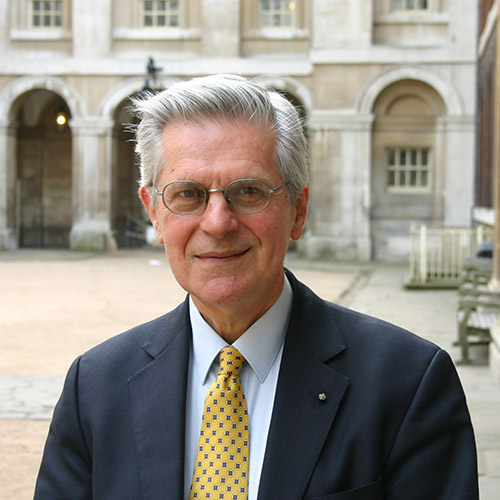
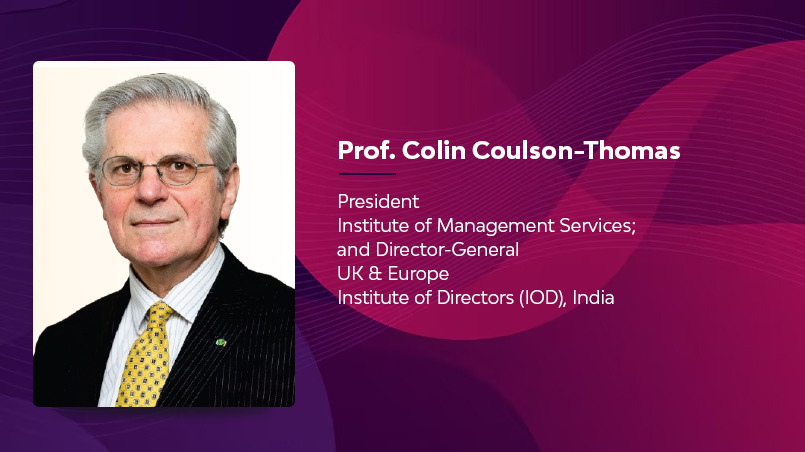
Prof. Colin Coulson-Thomas
Director-General of IOD India for UK and Europe operations
Prof. (Dr) Colin Coulson-Thomas, President of the Institute of Management Services and Director-General of IOD India for UK and Europe operations. He has advised directors and boards in over 40 countries.
Owned by: Institute of Directors, India
Disclaimer: The opinions expressed in the articles/ stories are the personal opinions of the author. IOD/ Editor is not responsible for the accuracy, completeness, suitability, or validity of any information in those articles. The information, facts or opinions expressed in the articles/ speeches do not reflect the views of IOD/ Editor and IOD/ Editor does not assume any responsibility or liability for the same.