 Quick Links
 Connect us

 Directors Databank (Empannel Yourself)
 Become a
  Become a
  Blog
Blog
 Become an Awards Assessor
 Publications
 Contact Us







The Independent Director as a Second Pair of Eyes: What has changed in the boardrooms and what must change next?


The role of an Independent Director has never been more vital than in today's increasingly complex corporate landscape. Currently, businesses are navigating geopolitical uncertainty, rapid technological disruption, diverse regulatory expectations, mounting stakeholder demands, financial pressures and growing scrutiny of corporate governance. In this environment, it is important for companies to get an objective perspective beyond management expertise and executive leadership, which is where an Independent Director steps in as a 'sounding board' or a 'second pair of eyes' of the company.
While proximity of management to the business is essential for effective leadership, it can sometimes make it difficult to step back and examine a decision objectively. On the other hand, the Independent Director looks at the business without being involved in its day-to-day execution. That distance gives an Independent Director the ability to ask questions which, those deeply involved in the business may otherwise overlook. Management sees the business every day; an Independent Director is expected to look at the company and its business differently.
Effective oversight requires trust, but trust should not mean unquestioning acceptance; as the old adage goes, 'trust but verify'.
The concept of independence in the Boardroom has evolved over time, alongside changing realities and growing complexities of the corporate world. Board positions and directorships were once associated largely with prestige and stature. Today, these represent a position of trust, accompanied by significant responsibilities and accountability towards the company and its various stakeholders - shareholders, management, promoters, partners, employees, multiple regulators and the community. Independent Directors are expected to bring more than oversight and compliance they must provide objective judgement, strategic direction, constructive challenge and a steady perspective when the path forward is not always clear.
In addition to independence and sound judgement, Independent Directors should ideally have domain expertise, cross functional knowledge and business understanding to ask the right questions, challenge assumptions and exercise informed judgement. Diverse business/professional experience and perspectives of Independent Directors can lead to varied and diverse questions. An effective Independent Director must be able to view the business both horizontally, with an understanding of the organisation and its strategic priorities as a whole and vertically, with the depth needed to examine critical issues in detail.
Independence is no longer regarded merely as a legal or regulatory status. In assessing the independence of Independent Directors, companies should look beyond the minimum mandatory provisions under the Companies Act and the Securities law and should take into account an individual's wider regulatory, professional and business associations to ensure that independence exists in substance as well as form.
Additionally, financial independence of a director from the company does not automatically result in independent thinking. In addition to legal and financial independence, it is of utmost importance for an Independent Director to possess intellectual independence as well as the mental make up to behave as such and the courage to challenge management and the ability to ask difficult questions. Quite often, good governance begins with a good question.
It is pertinent to note that the second pair of eyes should not become a second management team. An Independent Director must understand the distinction between governance and management.
It is pertinent to note that the second pair of eyes should not become a second management team. An Independent Director must understand the distinction between governance and management. It is not the job of the Independent Director to run the business; their job is to oversee, question, challenge and advise. The Independent Director should improve the quality of the decision and not take ownership of the decision away from the management. Importantly, Independent Directors do not necessarily need to know the answer to every question. However, they need to recognise when something deserves a deeper look.
The role of Independent Directors is often discussed after a corporate scandal, governance failure or regulatory action. But their real value should be preventive rather than remedial. Independent Directors ideally function as an 'early warning system'. Being de hors of the regular operations of the company, Independent Directors have the ability to notice issues such as areas of risk, weak controls, conflict of interest, related party concerns, etc.
Independent Directors can also contribute by bringing a longer-term perspective to Board decisions. Companies frequently operate under pressure to deliver quarterly or annual results. However, decisions that improve short-term performance may sometimes create adverse longer-term consequences. The 'second pair of eyes' therefore looks beyond what happens next to consider what happens after that.
The effectiveness of an Independent Director depends on the quality of the relationship between the Board and management. The Independent Director needs access to information, management, auditors, advisers and employees to make that independence meaningful. Effective oversight requires trust, but trust should not mean unquestioning acceptance; as the old adage goes, 'trust but verify'. Management should be able to present difficult information without fear, while Independent Directors should be able to challenge management without that challenge being interpreted as hostility.
While an Independent Director should be willing to disagree when circumstances warrant it, independence does not mean opposition to management or automatically taking a contrary position. An Independent Director who simply agrees with management every time adds limited value to the Board's oversight function. Equally, a Director who opposes every proposal without understanding the commercial context may become an obstacle rather than an effective sounding board. An Independent Director's role may be considered as that of a constructive challenger. The objective of an Independent Director is not to undermine management but to strengthen the quality of decisions taken by the Board. It helps establish a culture in which transparency, accuracy, accountability and responsible reporting are expected.
Looking ahead, Independent Directors will increasingly be expected to contribute meaningfully to the company's long-term growth, strategic direction and ability to create sustainable value for all stakeholders. This will require the Board to look beyond near-term financial performance and consider how the company can build resilient, competitive and sustainable business models in an increasingly dynamic environment. Independent Directors will need to constructively challenge management on the company's growth ambitions, capital allocation, market expansion, innovation, M&A opportunities and evolving customer expectations. They will also need to assess whether the organisation has the capabilities, talent, technology and financial resources required to execute its strategy effectively, while ensuring that growth is aligned with the company's long-term objectives and risk appetite.
At the same time, traditional areas of Board oversight will continue to evolve. Risk management, succession planning, technology and AI, cyber security and data governance will increasingly demand informed oversight of the Board. Independent Directors will need to remain abreast about emerging technologies, regulatory developments, environmental trends, stakeholder expectations and shifts in the competitive landscape. Their role will increasingly involve 'connecting the dots' of these external developments with the company's strategy to understand not only the risks associated with these areas but also their potential to transform the company's business model and create new opportunities for growth.
As the business environment continues to transform, companies and Boards need to be alert to geopolitical developments, emerging challenges and opportunities across areas such as ESG, cyber security and AI among others. Boards of the future will need to reflect diversity of knowledge, expertise, experience, perspectives as well as gender and age. 'Younger' Independent Directors who continue to be actively engaged in their professions or business can bring fresh perspectives and contemporary business insights to the Board, creating a valuable exchange of knowledge and experience.
Concluding Thoughts:
Recent developments in corporate India underline that governance is not merely about compliance, but also about the effectiveness of the Board, clarity of authority, clearly defined decision-making powers, alignment between shareholders and the Board, succession planning, constructive challenge and the ability of Independent Directors to identify and address governance concerns proactively. These developments reinforce the need for strong, independent and effective Boards, clearly defined roles between stakeholders and directors and a governance culture that encourages transparency, challenge and accountability.
The Independent Director is much more than an additional voice at the Board table. The role represents an important mechanism of corporate accountability and objective oversight. Ultimately, a strong Board is not necessarily one where everyone agrees. It is one where disagreement can be expressed constructively, evidence can be examined objectively and the final decision reflects thoughtful consideration of competing perspectives.
 Back to Home
Author
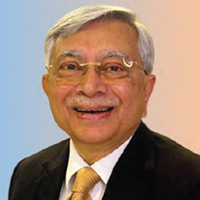
Jairaj Purandare
Mr. Jairaj Purandare is Founder Chairman of JMP Advisors Pvt. Ltd., a collaborating firm of Andersen Global in India. With over four decades of experience, he is widely recognised for his expertise in taxation and regulatory matters. He previously served as Regional Managing Partner, Chairman–Tax and Country Leader–Markets & Industries at PwC India, Chairman of EY India and Country Head of Tax & Business Advisory at Andersen India. Mr. Purandare has been recognised as a Highly Regarded Practitioner by International Tax Review in its 2026 World Tax and Transfer Pricing Directory. He serves as an Independent Director on the Boards of four listed companies.
Owned by: Institute of Directors, India
Disclaimer: The opinions expressed in the articles/ stories are the personal opinions of the author. IOD/ Editor is not responsible for the accuracy, completeness, suitability, or validity of any information in those articles. The information, facts or opinions expressed in the articles/ speeches do not reflect the views of IOD/ Editor and IOD/ Editor does not assume any responsibility or liability for the same.