 Quick Links
 Connect us

 Directors Databank (Empannel Yourself)
 Become a
 Become a
 Blog
 Become an Awards Assessor
 Publications
 Contact Us







From Bajaj's Legacy to Leadership: Aligning Heritage with Responsibility to Build Institutions That Outlast Generations

Imagine a board meeting a hundred years from now, in the year 2126. What might that boardroom look like?
When I ask you to imagine this, perhaps the more provocative question is, Will there even be a board as we know it today?
Perhaps directors will participate through immersive virtual environments. Perhaps AI will analyse every risk, model and challenge every assumption before the meeting begins, or perhaps governance could transform board oversight and make it more continuous rather than periodic, or perhaps some seats around the board table may even be occupied by AI advisors that augment human judgement.
But one thing will not change.
I believe every institution will still need stewardship. Every enterprise will still need accountability. Every generation will still need individuals willing to make difficult choices in the face of uncertainty. Technology may transform the boardroom, but responsibility cannot be outsourced. Judgement cannot be automated and trust cannot be delegated to an algorithm. The future may change the shape of boards, but I believe it will not eliminate the need for board leadership.
In light of this, the names of today's directors may fade from memory, but the legacy of our decisions will endure for generations. I believe they will not remember the numbers we reported, the presentations we debated, or the agendas that filled our board meetings. But I assume they will remember the institutions we strengthened, the trust we earned and the future we helped shape. They will inherit the institutions we build, the culture we shape, the values we protect and the planet we leave behind. And perhaps they will ask one simple question:
“When they had the chance to shape the future, did they act as owners of the next few quarters, or as stewards of the next generation?”
Ladies and gentlemen, that is the real challenge of board leadership in an emerging global order.
The world before us is unlike any that previous generations of directors have faced. So, the question before boards today is not whether we are compliant, but are we stewards of trust, custodians of legacy and architects of long-term value?
The Purpose of the Boards
Today, I believe the boards are measured by a much higher standard of their ability to balance performance with purpose, deliver prosperity with responsibility and create value that lasts far beyond quarters. The role of directors has expanded from overseeing business performance to stewarding societal progress.
As Bajaj Group celebrate 100 years of purpose-led growth, which is not only celebrating the success of our business but also a celebration of a legacy of our values, purpose and nation building. This is not only a privilege for us but an enormous responsibility and an obligation to live up to. Some occasions celebrate success, some celebrate history, and today as we celebrate a milestone journey from Legacy to Leadership, a legacy which has endured for 100 years because it has never been built merely on products, market share and profits. It has been built on values, trust, integrity, national purpose and service before self. These are the values that transformed us into a trusted name and how they have remained constant in our journey, but the world around them has changed dramatically, and that is true leadership.
The responsibility is not to preserve control, but to preserve values. It is to build organisations that can succeed beyond individuals, beyond families and beyond generations.
More than a century ago, our founder Mr. Jamnalal Ji Bajaj reminded us: “The purpose of business is not just profit, but service to society.” His wife, Smt. Jankidevi ji Bajaj, a freedom fighter, social reformer and champion of women's empowerment, who was honoured with the Padma Vibhushan, embodied sustainability's essence through ethical governance long before it became a framework. Mr. Ramkrishnaji Bajaj championed the belief that good ethics is good business, making integrity, fairness and transparency the cornerstone of responsible enterprise.
This legacy is the foundation of our future, and this is not just a destination to be preserved, but a springboard and an inspiration from which we build the next chapter of our impact and progress. Many organisations inherit assets and very few inherit values. Hence, as we navigate board leadership for an Emerging Global Order, the biggest competitive advantage will no longer be assets, balance sheets and even brands, but I believe it's the trust that many stakeholders place on us and how we live up to that.
Every generation of board leader inherits a legacy. But our true responsibility is to build a legacy worthy of being inherited by the next generation.
The real question before us is not how we preserve our legacy or protect our institutional knowledge, but how do we transform that into leadership that inspires and endures for generations to come?
From Custodians of Ownership to Custodians of Institutions
As a board member and a member of a promoter family, I often reflect on how dramatically this role has evolved. This has transitioned from being custodians of ownership to becoming custodians of institutions. The responsibility is not to preserve control, but to preserve values. It is to build organisations that can succeed beyond individuals, beyond families and beyond generations.
In fact, I believe the greatest responsibility of board leadership today is to drive greater professionalisation of boards by:
• Welcoming independent voices.
• Encouraging constructive dissent.
• Strengthening diversity.
• Empowering professional management.
• Separating ownership from decision-making.
• Building governance systems that are stronger than any one individual.
The true test of leadership is not how much authority they exercise but whether the institution can thrive independently. Focus has to be on building institutional strength where professionalism and entrepreneurship coexist and governance becomes a competitive advantage. Board effectiveness in my view depends on two key things, what the board focuses on and how well the board time is reserved for strategic discussions?
Great board leaders create an environment where directors are motivated, challenged and heard. They continuously seek feedback, manage the boardroom climate and foster trust.
The 3Ps: Protect, Perform and Prosper
So, as we transition towards a new VUCA world, I believe that every board has to focus on the 3Ps to insulate itself:
• Protect: Not only from the emerging risks but to ensure resilience long before the crisis arrives in terms of cybersecurity, AI, governance, climate risk, supply chain disruptions, reputation and stakeholder trust.
• Perform: Drive growth that is sustainable, inclusive and responsible by challenging assumptions, encouraging innovation and remaining future-focused.
• Prosper: Aim to drive prosperity for shareholders, employees, customers, communities and future generations.
Sustainability: An Integral Part of Our Agenda
As we lean into the emerging world, sustainability has become an integral part of our agenda.
At Bajaj Electricals, our purpose of “Inspiring Sustainable Living” guides our ESG journey across four strategic pillars covering environmental stewardship, social responsibility, governance excellence and sustainable growth.
For boards, sustainability must move beyond disclosure to execution.
At Bajaj Electricals, we have focused on embedding sustainability across our operations and value chain. Our ESG milestones, to name a few, include:
• 32% of our total electricity consumption is met through renewable energy (solar power), supporting our climate action commitments and accelerating our Net Zero journey.
• Achieved Zero Waste to Landfill, with over 99% of waste recovered through recycling, reuse, or other recovery processes, reinforcing our circular economy approach.
• 100% Zero Liquid Discharge (ZLD) operations at key manufacturing facilities, supported by rainwater harvesting and groundwater recharge initiatives.
• Driving circularity and responsible resource usage.
• Sustainable supply chain is one of our strategic focus areas, driving responsible sourcing and supplier engagement across the value chain.
Sustainability is also integral to our product innovation strategy. With over 180+ energy-efficient Stock Keeping Units (SKUs) and more than 350+ SKUs featuring improved packaging through EPS reduction, we are reducing environmental impact while enhancing product sustainability. Our focus on product life extension further supports a more circular and resource-efficient future we are striving to achieve. All our efforts are governed by strong board oversight with transparent governance and disclosures at its epicentre. These efforts have strived at making sustainability become part of everyday decision-making. These efforts are reflected in our improved ratings from leading agencies such as S&P Global, CRISIL, and NSE and, more importantly, helping us create sustainable value, manage risks effectively, and build a future-ready business. Over the last year, we have seen significant improvements in our ratings and now we are proud to be recognised among the leading performers in India's Consumer Durables and Household Appliances sector.
Over the past three years, our commitment to environmental sustainability has evolved from 40% to 100% of our CSR portfolio.
Corporate Responsibility: Creating Meaningful and Measurable Impact
Sustainability stands on two inseparable pillars:
1. ESG is about how responsibly we run our business
2. Corporate Responsibility is about how positively we contribute to society.
Through the Bajaj Electricals Foundation, we strive to create meaningful and measurable impact with key focus on environmental sustainability. Over the past three years, our commitment to environmental sustainability has evolved from 40% to 100% of our CSR portfolio. This shift is guided by a simple conviction: if we fail to protect our environment, every other development gain, whether in health, education, livelihoods or economic progress, remains at risk. Environmental sustainability is therefore not just a cause we support; it is the foundation upon which lasting social and economic prosperity is built.
Through our Improved Cookstove Project, we have distributed 14,000 improved cookstoves across Rajasthan and Maharashtra, benefitting over 70,000+ families. For the 8,000 improved cookstoves deployed across Rajasthan, we have projected a reduction of 222,711 tCO₂e over five years, and a further 6,000 cookstoves are under impact assessment, hence reinforcing our commitment to scalable climate solutions and sustainable community development. Our afforestation initiatives are helping restore green cover and strengthen ecosystem resilience through the plantation of more than 5 lakh trees over the last decade. These efforts are expected to sequester approximately 10,000 tonnes CO₂e annually, while enhancing biodiversity and creating long-term value for communities across India. Our solar solutions that promote clean energy, water stewardship programmes that conserve precious resources, green skilling or waste upcycling initiatives are a reflection of our belief to create lasting social value. We also encourage employee volunteering programmes and other employee-driven initiatives, where we channel collective energy to bring our vision of Better Planet, for a Better Life into action.
A Legacy for the Next Century
Let me conclude where I began.
Imagine that board meeting in the year 2126, where future directors may never know us. But they will inherit the consequences of our leadership, and they will inherit our governance standards, our institutions, our culture, our environmental footprint and our legacy. So, as directors, we therefore have a profound responsibility to move beyond compliance, to strengthen trust, to professionalise governance, to embrace sustainability and to create enduring values.
As ultimately, the true measure of a board is not the profits it generates in the next quarters, but the legacy it leaves for the next century.
And the true measure of leadership at board is not the ownership they preserve but the institution they build which continues to prosper long after their tenure has ended.
Thank you.
 Back to Home
Author

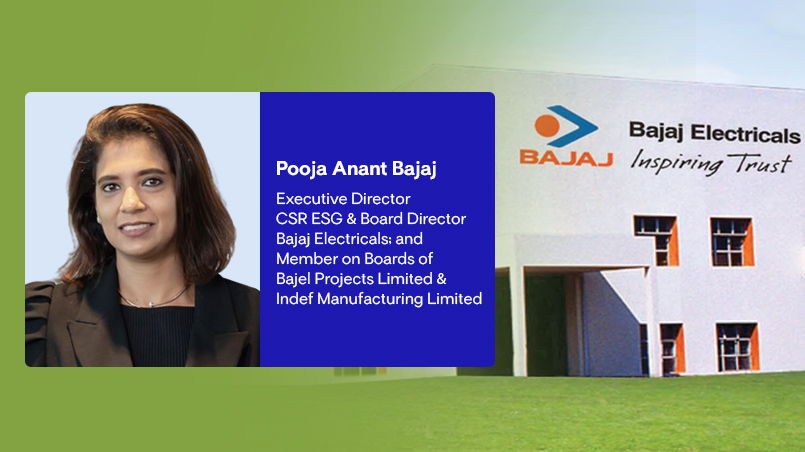
Pooja Anant Bajaj
Owned by: Institute of Directors, India
Disclaimer: The opinions expressed in the articles/ stories are the personal opinions of the author. IOD/ Editor is not responsible for the accuracy, completeness, suitability, or validity of any information in those articles. The information, facts or opinions expressed in the articles/ speeches do not reflect the views of IOD/ Editor and IOD/ Editor does not assume any responsibility or liability for the same.