 Quick Links
 Connect us

 Directors Databank (Empannel Yourself)
 Become a
  Become a
  Blog
Blog
 Become an Awards Assessor
 Publications
 Contact Us







Becoming Tomorrow's Independent Directors: Filling uncertain roles in an unpredictable future

Independent Directors (IDs) should complement executive colleagues who wrestle with day-to-day issues that burn up time needed for the independent thought expected of company directors. IDs and executive directors should understand each other's roles and how their respective contributions can be complementary. Someone thinking of becoming an ID should consider how boards and their role may change and what nomination committees look for.
Future Corporate Boards
Future company boards may operate very differently from those of today. Their evolution is uncertain. Issues they face are multiplying, frequently complex and more interdependent. Satisfactory responses to some emerging challenges do not yet exist. Expectations are also changing. Assumptions and practices are questioned. Opinions can be polarised. The views of stakeholders may be fragmented. Institutions are fragile. Volatility and vulnerability increase.
Insecurity abounds. No-one can be sure of what is around the corner. Many are not confident that they and/or a company and its offerings will still be needed, or if infrastructures and services will survive challenges from threats such as climate change or cyber-attacks. Those charged with finding tomorrow's directors do not know what they might confront or encounter. Continuity, navigating and steering usually benefit from some form of direction.
Companies now operate in a multi-polar, divided and more transactional world beset with trade, cyber, hybrid and hot war challenges. Autocrats seek to undermine liberal democracies. Future boards could face pressure from existing autocrats and those wanting to join their ranks. More attempts may be made to influence their decisions, seize corporate assets, erode board authority or impose a requirement to prioritise or serve a national or party interest.
When colleagues go missing, lack bandwidth or are reluctant to commit; could further non-executive or independent directors help?
Contemporary Realities
When situations develop, breakthroughs occur, events happen and crises arise, getting current, authoritative, objective and independent counsel on options, possibilities and responses is challenging. Existing capabilities and the specialisms of current advisers may not be relevant. Leadership roles can be lonely. When colleagues go missing, lack bandwidth or are reluctant to commit; could further non-executive or independent directors help?
Circumstances that were once intermittent are becoming more common. Different qualities and perspectives, and resilience of another kind, may now be required. When much can change in days, past practices are often inappropriate or too inflexible. Rather than fill an identified gap, could the right IDs use differently enhanced collective board capability to cope, and enable the monitoring and oversight provided to match evolving requirements?
While exercising foresight and considering different scenarios, boards may not anticipate unexpected events. Preparation and planning can be problematic when incidents and crises occur and impact in unforeseen ways. IDs may add to awareness of who might be affected, winners and losers, or what competitors could do. Their inputs often add to collective understanding. IDs can be further eyes and ears that observe, listen, think, assess and learn.
Long-term success often comes to those who are bouncing balls. When knocked down they get up, learn from their experience and go again.
Independent Director Requirements
Generational change is underway on many boards. IDs may smooth the path of transition. Qualities sought that appear contradictory could be complementary. Being ambitious and prudent, or visionary and realistic, can both be desirable. Much will depend on context, situation and stage of development. An entrepreneurial candidate could be appropriate for a start-up. Backers of new ventures often go for the 'right team' rather than a business plan.
What gets IDs a board seat may not be what ought to have led to their selection. An insecure or uncertain CEO and/or board chair may prefer someone compliant, who will fit in, go with the flow and not rock the boat. More confident ones may prefer an ID who will question, challenge and open people's eyes to new possibilities. A maverick might shake up an atmosphere of complacency. All directors must remember to fulfil their statutory duties.
Geopolitical and technological awareness rather than a financial or engineering background may be sought. More frequent and different types of ID involvement of varying length and by dissimilar means are likely to be required. Someone who is sceptical of hype, not gung-ho to uncritically adopt whatever is promoted, aware that opportunities can come with challenges, and who looks beyond survival at transition to more sustainable activities, might attract.
Motivations and Expectations
Candidates for ID roles may mention wanting to add value, contribute or put something back. A series of 'why' questions might uncover a driving purpose. A candidate's journey through life can be revealing. Some are entrepreneurial and willing to take risks. They may seek out frontline roles. Other's hold back and prefer less exposed and accountable advisory, head office and supporting roles. They coordinate and administer rather than create and build.
IDs are often associated with compliance. Their views may reflect directors' duties and roles set out in company law and derived from corporate governance codes to protect investors of quoted companies and the public from past events in certain developed countries. They might not reflect the issues of family companies elsewhere, recent delisting to avoid disclosure requirements, or deregulation that allows start-ups to grow while remaining private.
IDs should understand pressures CEOs and chief officers are under, the implications for risk and vulnerability, and where scrutiny and support might be required. They should be strategic rather than interfere in operational matters. IDs should embrace multiple disciplines and be neither too general nor too specialised. Depth in some areas could enable IDs to uncover when executives skate on thin ice in relation to their understanding and responsibilities.
Assessing Independent Director Candidates
Experience gained in a previous era may not be relevant to the challenges of tomorrow. What situations have candidates been in and what obstacles did they overcome? Where they could help an entity to cope and expand can be more important than what they have done. Some face more trials than others. Those with a track record of success may not have faced adversity. How they might respond when confronted with it? Will they stay the course?

Crises can bring out the best in some people. They are incisive and decisive, where others prevaricate and procrastinate. Others disappear quicker than a morning mist as the sun rises. Humanity and many companies, communities and institutions face multiple challenges, some of them existential. If aware of these, what if anything has a potential ID done about them? Communities, networks, contacts, relationships and people's associates can also be revealing.
Interests may be a clue as to beliefs and what a person considers important. A range of interests and wider engagement might evidence balance, control of time and not being overloaded. These factors could aid independence. IDs may have experienced a wider range of activities, situations and circumstances than a recently retired CEO whose energy and time has been devoted to a single entity operating predominantly in one possibly atypical sector.
Interviewing Potential Independent Directors
It is likely that assessors feel those short-listed for an ID role could add value. Rather than 'selling', a better strategy may be to help those evaluating to select them. Understanding of a company and its specific issues, might suggest interest in it, especially if other candidates talk mainly in general terms about themselves. Maybe some are 'future oriented' and will enquire about what they could do to help an entity confront challenges and seize opportunities.
When ID candidates leave after an interview, what has been learned or left behind? Some make little impact and are quickly forgotten. Others sow thoughts. Making people think can be helpful in boardrooms. There is little point being on a board if others do not pay attention to what a person says. What impact did an interviewee have? Will he or she be listened to? Some people hook others, grab their attention and keep their interest. Others don't.
Positivity can build confidence and increase motivation in colleagues. People who have coped with successive developments in volatile situations and uncertain contexts may be more aligned with current and future requirements. Long-term success often comes to those who are bouncing balls. When knocked down they get up, learn from their experience and go again. Rather than moderate their ambitions, they become more determined.
 Back to Home
Author
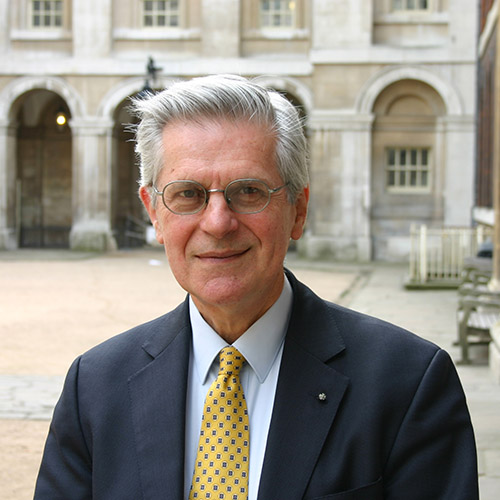
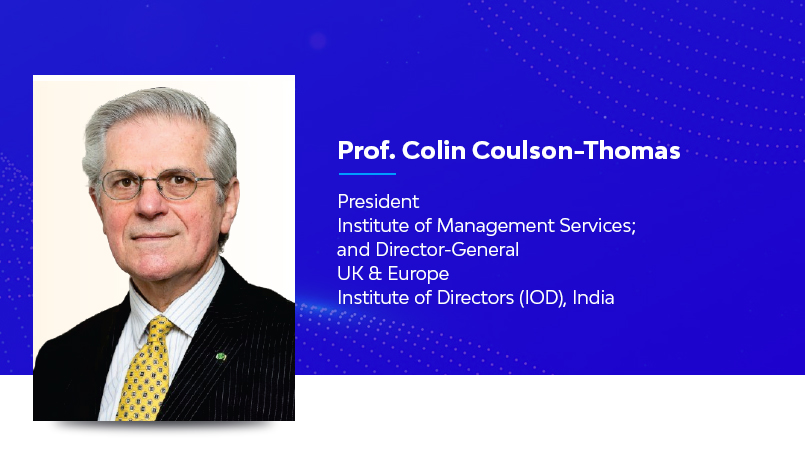
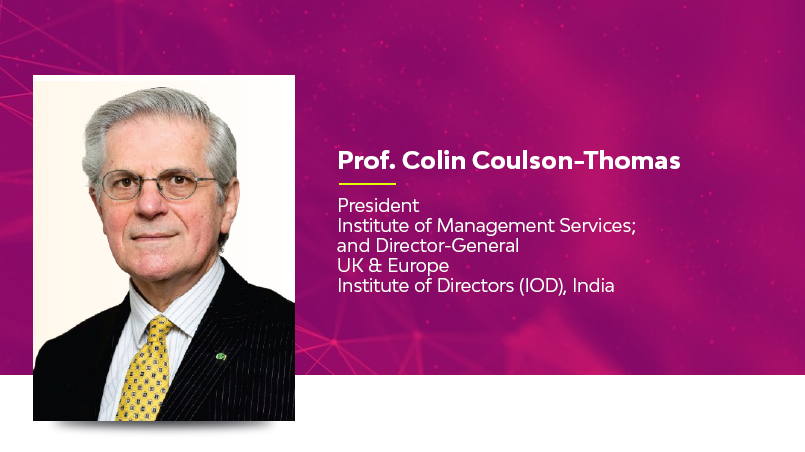
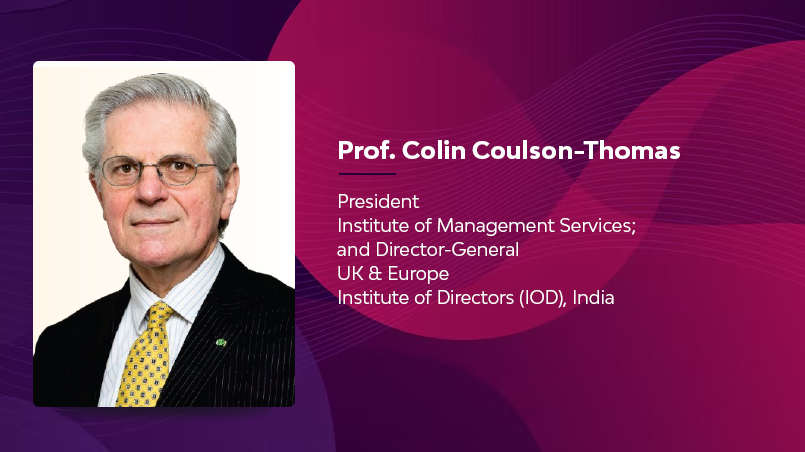
Prof. Colin Coulson-Thomas
Director-General of IOD India for UK and Europe operations
Prof. (Dr) Colin Coulson-Thomas, President of the Institute of Management Services and Director-General of IOD India for UK and Europe operations. He has advised directors and boards in over 40 countries.
Owned by: Institute of Directors, India
Disclaimer: The opinions expressed in the articles/ stories are the personal opinions of the author. IOD/ Editor is not responsible for the accuracy, completeness, suitability, or validity of any information in those articles. The information, facts or opinions expressed in the articles/ speeches do not reflect the views of IOD/ Editor and IOD/ Editor does not assume any responsibility or liability for the same.