 Quick Links
 Connect us

 Directors Databank (Empannel Yourself)
 Become a
 Become a
 Blog
 Become an Awards Assessor
 Publications
 Contact Us







Corporate News - September 2026


ECONOMY
UPI's New MDR Framework Effective from October 15, 2026
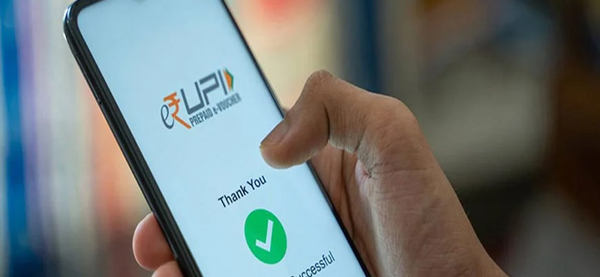
On September 15th the Ministry of Finance announced that, “UPI continues to remain free for Peer-to-Peer Transactions and 96% of Merchant Transactions”. Payments to merchants up to Rs. 2,000, along with transactions covered under the zero-MDR framework for small merchants, will also remain free. Consequently, approximately 96% of all P2M transactions will remain unaffected. MDR will apply only to specified merchant transactions above Rs. 2,000. It is clarified that MDR is neither a tax nor a charge collected by the Government or NPCI. It is distributed among payment ecosystem participants, including banks and payment application providers, to support the operation and continued expansion of the UPI ecosystem.
I. What Will Remain Free
• All Person-to-Person Transactions
• Merchant Payments Up to Rs. 2,000
• Payments Received by Small Merchants (up to Rs. 1 lakh per month)
II. What Will Attract MDR
• Merchant Transactions Above Rs. 2,000 (A nominal MDR of 0.4% and Rs. 300 for and beyond Rs. 75,000 transaction)
• Transactions in Essential Sectors and thin-margin sectors
• Capital Market Transactions (MDR of 0.02%, capped at Rs. 300 per transaction)
III. Customers Will Not Pay MDR: MDR is a charge within the merchant payment ecosystem. It is not a charge on customers making UPI payments. Banks have been advised to ensure that merchants do not pass MDR charges on to customers. UPI application providers are expressly prohibited from imposing platform fees or hidden charges.
Individuals will continue to have unlimited free usage, with no monthly quotas, volume restrictions or tiered caps on free UPI transactions.
Daily transaction limits prescribed by banks and NPCI, generally ranging from Rs. 1 lakh to Rs. 5 lakh depending on the transaction category, are security and risk-management safeguards. They are not charging thresholds.
ESG
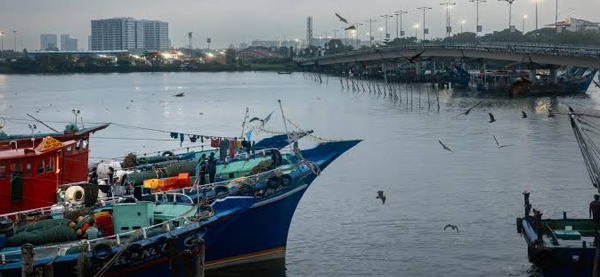
India's First Blue Bond Targets Sustainable Maritime Infrastructure
Sagarmala Finance Corporation (SMFCL) is set to raise Rs.600 crore through what has been reported as India's first blue bond, with the proceeds intended for maritime-sector projects. The 10-year bonds are designed to finance projects connected with areas such as port development and coastal road infrastructure. The issue also includes a greenshoe option* of Rs.500 crore.
Blue bonds are designed to direct capital towards projects associated with oceans, coastal ecosystems and sustainable maritime development. The proposed issuance adds another dimension to India's expanding sustainable-finance market, alongside sovereign green bonds and corporate green debt. For boards and institutional investors, the development highlights the widening range of thematic financing instruments through which infrastructure and sustainability objectives can increasingly be connected with capital-market funding.
 Back to Home
Author
Institute of Directors India
Bringing a Silent Revolution through the Boardroom
Institute of Directors (IOD) is an apex national association of Corporate Directors under the India's 'Societies Registration Act XXI of 1860'. Currently it is associated with over 31,000 senior executives from Govt, PSU and Private organizations of India and abroad.
Owned by: Institute of Directors, India
Disclaimer: The opinions expressed in the articles/ stories are the personal opinions of the author. IOD/ Editor is not responsible for the accuracy, completeness, suitability, or validity of any information in those articles. The information, facts or opinions expressed in the articles/ speeches do not reflect the views of IOD/ Editor and IOD/ Editor does not assume any responsibility or liability for the same.