 Quick Links
 Connect us

 Directors Databank (Empannel Yourself)
 Become a
  Become a
  Blog
Blog
 Become an Awards Assessor
 Publications
 Contact Us






Fear and Greed


The Invisible Hands of Corporate Governance
In keeping with the role of boards in an increasingly unpredictable world, I would like to speak about “Boardroom Morality” as a stabiliser for everyday governance. Two ancient forces still shape decisionmaking in every boardroom I have ever known: Fear and Greed.
Fear of losing market share, of environmental activism, of regulatory scrutiny.
Greed for influence, recognition, and the desire to paint a rosy picture for the markets.
Inside our boardrooms, we make decisions that shape not just our companies, but our economies, financial ecosystems, and communities. I want to show how morality can both temper and transform these instincts.
The Johnson & Johnson Tylenol crisis remains one of the clearest examples. The board anchored its actions in the company's long-standing creed of prioritising customer well-being, even at enormous cost. By choosing safety over sales and transparency over denial, they earned something far more enduring than quarterly gains: the trust of the public. Their decision neutralised fear and converted it into loyalty, reminding us that ethics need not be the enemy of enterprise, but its greatest source of strength.
But there is a counterexample – 'Olympus', a Japanese company where governance collapsed from within. The contrast between the two demonstrates a universal truth:
'Morality' is not a luxury in governance. It is not ornamental, nor frivolous. It is a discipline that carries a company through its worst days and ultimately defines its legacy. When the clouds gather, morality becomes our compass and our anchor against drift and ruin.
We live in an age obsessed with data-driven decisions, so it is easy to believe we have evolved past instinct. Yet, Fear and Greed remain the invisible hands of corporate governance, dressed up as prudence or ambition. The internet bubble showed us how greed can distort judgment, just as the crash that followed showed how fear can paralyse markets. The wild swings of the crypto era are further proof of these volatile impulses. When fear and greed are measured, they can fuel success; left unchecked, they reduce governance to a game of short-term wins at the expense of long-term stewardship.
Despite all the sophistication of governance frameworks, one vital question always lingers: What is the right thing to do? A board functions as a collective, but its moral strength rests on the conviction of individual directors. Our values, our choices to dissent or approve and shape outcomes. When a decision is legal but not ethical, the moral compass of every director becomes decisive. History shows that character often determines whether a company rises with integrity or collapses in scandal. Sometimes a single director raising a red flag or refusing complacency becomes the turning point.
Policies and structures may be perfect on paper, but without individuals willing to walk the talk, ethics becomes performative. Conversely, when intelligence is paired with integrity, empathy, and long-term thinking, a board becomes a true moral compass capable of guiding a company through scrutiny and storms.
As we grew from local transport to global shipping, I learnt that doing the right thing never appears in a spreadsheet, yet it is the most valuable investment we make.
When I founded Tristar 25 years ago, we had no capital but only courage, conviction, and a clear sense of right and wrong. We faced moments where compromise would have been an easier choice, but we chose integrity over quick wins. These decisions taken during our hardest times became the foundation on which Tristar stands today. As we grew from local transport to global shipping, I learnt that doing the right thing never appears in a spreadsheet, yet it is the most valuable investment we make.
Ethics gives us external frameworks, the rules, laws, and codes. But ethical leadership begins where the rulebook ends. It lies in the consistency between our words and actions. It is what we do when no one is watching. In the boardroom, this means aligning our decisions with the values we proudly display in annual reports and on organisational walls. It is not enough to ask, “Is it profitable?” or “Is it legal?” We must ask, “Is it right?”
Fear and greed may be the oldest forces in business, but they are not the most powerful. The strongest force a board can cultivate today is Moral Clarity. It shapes not only what a company earns, but what it becomes. Ultimately, this becomes the bedrock of an organisation.
And we must remember: the most valuable asset we protect does not appear on a balance sheet. It is the trust we build and sustain. The true legacy of any board is written not only in its minutes, but in the conscience with which it governs.
 Back to Home
Author
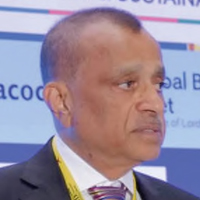
Eugene Mayne
Founder and Group CEO, Tristar Group, UAE
Owned by: Institute of Directors, India
Disclaimer: The opinions expressed in the articles/ stories are the personal opinions of the author. IOD/ Editor is not responsible for the accuracy, completeness, suitability, or validity of any information in those articles. The information, facts or opinions expressed in the articles/ speeches do not reflect the views of IOD/ Editor and IOD/ Editor does not assume any responsibility or liability for the same.