 Quick Links
 Connect us

 Directors Databank (Empannel Yourself)
 Become a
  Become a
  Blog
Blog
 Become an Awards Assessor
 Publications
 Contact Us






Global Corporate Governance in an Uncertain and Insecure World


Recognising Realities and Providing Future Strategic Direction
After relevant preparation, leaders in various arenas with differing career aspirations were often presented with distinct challenges and opportunities. These are now more inter-related. Key decision makers in multiple arenas currently face similar issues and shared global risks. They are insecure and confronted with existential threats and geopolitical and technological changes that require collective responses and collaboration across disciplinary, functional, organisational and national boundaries. Many of them may long for more stability. Greater resilience is sought in situations and contexts that are uncertain, fragmenting and polarised.
Many of those in leadership positions in different arenas are also discovering the limitations of their own preparation and that of their colleagues. The more thoughtful and aware among them question the relevance of legacy systems, processes and governance arrangements, and the ability of their colleagues and organisations to cope. Existing institutions upon which they depend, and support mechanisms, often seem fragile. Past assumptions, networks and sources of advice no longer appear relevant. Individuals feel exposed and vulnerable. Such concerns may be shared by those in senior roles in other arenas with whom they now need to connect.
Uncertain transitions and unpredictable outcomes
The apparent relative stability of various aspects of international arrangements in the period between the end of the cold war and the unprovoked 2022 Russian invasion of Ukraine differ from today's sense of fluidity and unpredictability, exacerbated by the election of a climate change denier and mega disrupter as President of the USA. For many of those unaware of the steady growth of authoritarianism in the Russian Federation under Putin and among backers of Donald Trump, strategic shifts that reverse past positions, contradict previous values and now favour self-interests and transactional deals over a common good have been unsettling.
Multipolarity could lead to smaller countries being sidelined as bigger powers make deals over their heads. Disorder, conflict and the pursuit of perceived national interests rather than a common good may result. Values of independence, sovereignty and territorial integrity and liberal democracy and the rule of law might be further eroded in a transactional world.
Changes are occurring, contending forces are at work and transitions are underway whose outcomes are difficult to predict. Anticipating future developments, scoping possible scenarios and preparing for what may or may not happen has become increasingly fraught. As events unfold, the continuation of past partnerships, voting patterns, long-term relationships and formal alliances can no longer be assumed in an era of shifting positions and temporary arrangements in which weakness and vulnerabilities are openly exploited. When raw power replaces principles, one may need to be prepared and ready to respond to any eventuality.
Many boards are ill-prepared for the situations and contexts they find themselves in, the challenges, risks and threats they face, developments that may occur and outcomes that could emerge, and contending pressures upon them to make strategic choices. Consensus may be difficult to achieve if directors, stakeholders and business partners adopt differing positions. Realistic assessments are required of available options, relative bargaining power, resilience, dependencies, vulnerabilities and likely implications and consequences of different options and possible relationships. Duration, reliability and timescales can be difficult to judge.
Navigating possible geopolitical developments
Geopolitical developments are especially difficult to predict. A transition may be underway, as multilateral cooperation based upon international institutions and common rules gives way to deals between an oligopoly of major powers or multipolar competition between groups of states. Multipolarity could lead to smaller countries being sidelined as bigger powers make deals over their heads. Disorder, conflict and the pursuit of perceived national interests rather than a common good may result. Values of independence, sovereignty and territorial integrity and liberal democracy and the rule of law might be further eroded in a transactional world.
International governance arrangements have been unable to address aggression by a veto holding member of the UN Security Council. Ignoring the illegality of Russia's unprovoked invasion of Ukraine in contravention of the UN charter, President Trump appears to favour the prospect of future business deals with Russia that might benefit certain of his financial backers, when the USA might gain more from participating in the reconstruction of Ukraine funded in part from Russian reparations required under international law. Emerging power alignment strategies could tip the balance between cooperation, fragmentation or domination.
The consequences of departing from or supporting national alignment and/or positioning strategies can vary by jurisdiction. Boards of significant entities may face pressures to conform or clarify, regardless of their governance arrangements. When states also have dependences and vulnerabilities and national statistics are not independently produced, relative power can be overstated and difficult to determine. Business leaders facing major and sequential disruptions and geopolitical shifts increasingly require flexibility, political awareness and diplomatic skills to navigate between the contending aims of competing states.
Confronting climate change and other existential threats
Current governance arrangements have been unable to prevent negative externalities such as accelerating global warming and the emissions that cause them. Global temperatures continue to rise. Mosquitos have been spotted for the first time in Iceland. While green commitments may increase so too do global emissions. Climate change related regulations appear to have been influenced by successful anti-climate lobbying by companies in high carbon producing sectors, such as cement, coal and oil production. Responsible measures are sometimes limited by behind-the-scenes lobbying which some companies endeavour to camouflage or hide.
Decarbonisation pledges have often been limited and much action is inadequate. Companies have often seemed concerned with avoiding reputational damage or legal sanction for not delivering, rather than achieving greater reductions in emissions. India with its heavy reliance on coal contributed the highest annual increase in greenhouse gas emissions in 2024. Fossil fuel lobbies have been emboldened by US government moves to encourage fossil fuel production and remove environmental constraints. Boards that ease back on or abandon past commitments to just do what is easy could become complicit in humanity's future demise.
Some progress has been made, but not enough. In the first half of 2025 solar generation grew faster than ever, and renewables produced more electricity than coal for the first time. Certain high-tech re-engineering solutions may not work and could prolong the use of fossil fuels. For communities and societies to become more resilient in the face of a challenge such as climate change, better ways of assessing whether measures being taken are effective and for how long and until what temperature is reached are needed, along with an appreciation of social, financial and other obstacles. barriers and inhibitors, and sources of vulnerability.

 Back to Home
Author
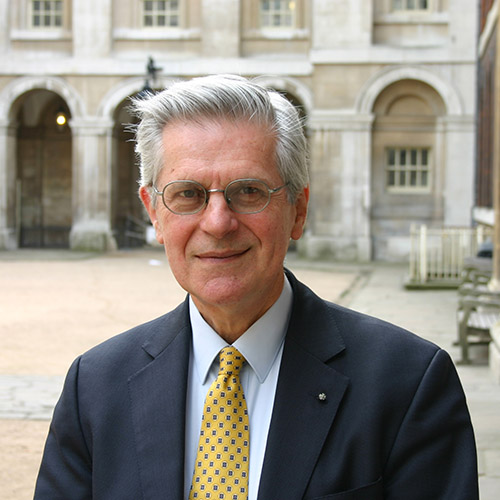
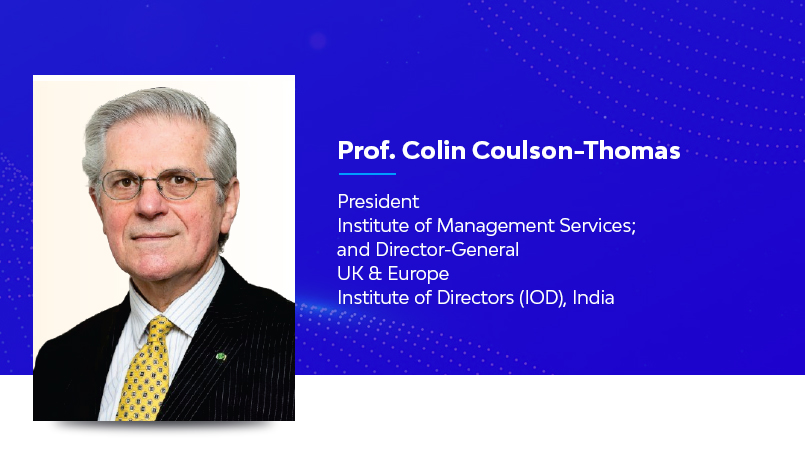
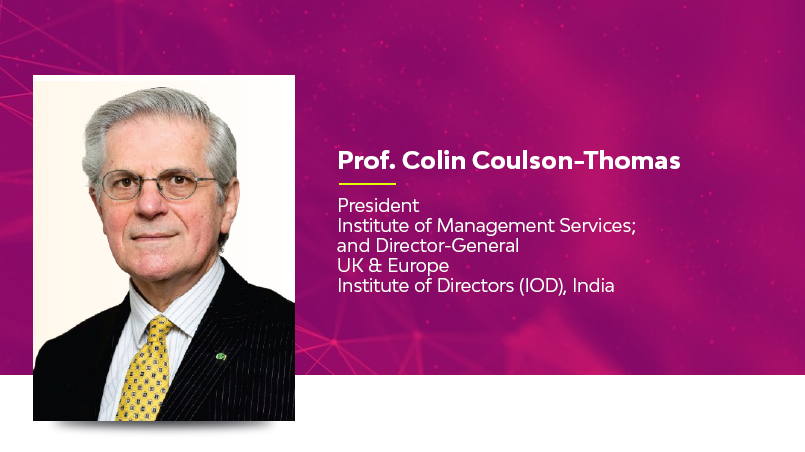
Prof. Colin Coulson-Thomas
Director-General of IOD India for UK and Europe operations
Prof. (Dr) Colin Coulson-Thomas, President of the Institute of Management Services and Director-General of IOD India for UK and Europe operations. He has advised directors and boards in over 40 countries.
Owned by: Institute of Directors, India
Disclaimer: The opinions expressed in the articles/ stories are the personal opinions of the author. IOD/ Editor is not responsible for the accuracy, completeness, suitability, or validity of any information in those articles. The information, facts or opinions expressed in the articles/ speeches do not reflect the views of IOD/ Editor and IOD/ Editor does not assume any responsibility or liability for the same.