 Quick Links
 Connect us

 Directors Databank (Empannel Yourself)
 Become a
 Become a
 Blog
 Become an Awards Assessor
 Publications
 Contact Us







Just-in-Case is the New Boardroom Mandate: Expect the Unexpected at Unpredictable Times

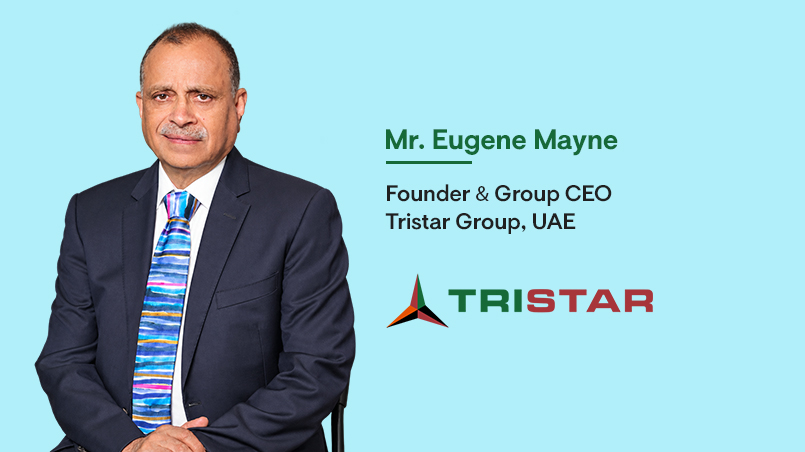
Q. Tristar has changed its operating philosophy from 'just-in-time' to 'just-in-case'. What does that shift demand of a board's risk appetite, capital allocation and crisis governance?
In the logistics business in general, disruptions that cause production stoppages or unfulfilled contracts have major financial and operational consequences. The shift from 'just-in-time' to 'just-in-case' reflects the need to balance operational efficiency with resilience.
For Tristar, it means treating preparedness as a priority without losing sight of the price tag.
Irrespective of industry, at a time when disruption can come from multiple directions, Boards must reassess their assumptions about preparedness. Redefining risk appetite starts with establishing clear thresholds of what level of disruption can the business tolerate and where is it unduly exposed. Capital allocation must weigh the cost of being prepared (such as holding additional inventory or maintaining alternative supply routes) against the potential cost of operational failure. Equally important, crisis governance must be designed before a crisis begins, with decision-making authority and contingency protocols that enable swift action without compromising safety, accountability or financial discipline. The Board's task is to define what must remain operational during a disruption, and what investment is justified to protect continuity. Good governance is not simply about how efficiently the business operates in normal conditions, but how well it can withstand exceptional ones.
Q. In a recent interview, you described risk and opportunity as 'siblings'. What is the one boardroom decision that separates most resilient companies from just well-governed ones in today's fragmented global order?
Describing risk and opportunity as 'siblings' reminds us that they share the same parent – Uncertainty. Risk is not always a reason to say no, just as opportunity should not be an automatic yes. Both demand our judgement. In similar vein, the Board has to maintain a balancing act between agility and strategy when responding to uncertainty – being able to commit to a direction, while being flexible about the plan.
Good governance establishes discipline in compliance, accountability, risk controls and the protection of shareholder value. While these are essential, they are not guarantors of resilience. Today's fragmenting global order and rapidly changing market conditions can undermine assumptions that seemed sound not so long ago. Truly resilient Boards recognise this. They can commit to a strategic direction, but remain willing to question assumptions, reallocate resources and adjust their approach when circumstances change. Resilience does not mean abandoning the plan, but recognising when it needs to change.
Q. What is the most dangerous governance failure boards are likely to make in this AI era: overregulating innovation, underestimating data risk, or mistaking automation for judgement?
Mistaking automation for judgement is a dangerous, possibly disastrous mistake. AI can produce fluent and convincing recommendations in spite of flawed data or missing context. This can encourage automation bias – the very human tendency to trust a machine's output without questioning it. As Board members, our value does not lie in the information made available to us, but how we interpret and act on it. Our responsibility is to bring experience, expertise, accountability and even some scepticism to the table, especially when facts are incomplete or consequences are uncertain. If we treat AI outputs as a substitute for our own judgement, we risk surrendering a fundamental responsibility. Underestimating data risk can be addressed through sounder data governance and quality controls, greater accountability, contractual safeguards and independent audits. Overregulating innovation is definitely a concern, and caution should not be an excuse for inaction. But neither of these risks can be managed if directors lack the knowledge or confidence to challenge the technology.
This is why I see mistaking automation for judgement as the more fundamental failure. A Board that defers to AI is less likely to question the quality of the data or the premise behind a recommendation or distinguish genuine innovation from risk that is concealed by technological sophistication. The three risks may be connected, but the ability to exercise independent judgement is what allows a Board to manage them all.
I believe inclusion has to be experienced, in everyday interactions. People should feel they belong – not despite their differences, but with whatever makes them who they are.
Q. Tristar's people come from many regions and backgrounds. How do you ensure inclusion in its different forms, and make diversity an everyday practice across a multinational workforce?
Our people come from different countries, cultures and backgrounds, but we are united by the work we do and the values we share. Inclusion does not mean expecting everyone to think or behave alike. It means creating an environment in which differences are respected, and everyone has the opportunity to contribute and grow.
In practice, this means ensuring people are treated fairly, that their voices have the opportunity to be heard, and they have enough chances learn and grow. In a multi-country organisation like ours, this responsibility belongs to leaders at every level and in every location. It is how diversity becomes an intrinsic part of the way we work, rather than a statement of what we stand for. I believe inclusion has to be experienced, in everyday interactions. People should feel they belong – not despite their differences, but with whatever makes them who they are.
Q. Tristar's Eco Voyager is the Gulf's first hybrid biofuel-electric bunkering barge and can cut CO2 emissions by about 50% compared with conventional diesel barges. What convinced the board that this was a governance decision, not merely an engineering milestone?
There is no denying the pride and honour accompanies the completion of any ground-breaking initiative. In the case of Tristar Eco Voyager though, it was more than an engineering milestone or a new addition to our fleet. It was a strategic decision about the kind of business we want to build, and the role we believe the maritime industry can play in the transition to cleaner energy and lower-carbon logistics. The project also supports the UAE's sustainability ambitions and demonstrates how businesses can turn climate commitments into practical action.
The Board's role was to recognise the opportunity, back the ambition and support its delivery.
Q. 'Safety at Sea' enters its eighth year on 9th November with seafarer wellbeing as its call to action. Should boards own mental-health risk the way they own financial risk?
Just as a Board would not delegate financial risk entirely to the finance team or cybersecurity only to IT, psychosocial risk cannot be handed over to HR and treated as a checklist of wellness perks.
The Board must take responsibility for the conditions in which people work: the culture, leadership behaviour, expectations, workloads and other workplace factors that either support wellbeing, or undermine it. It has to ensure that the organisation identifies and addresses risks at their source.
How people are treated is not separate from business performance. It is a matter of good governance, and the responsibility begins right at the top.
Q. As a founder who has built Tristar into a global group, what do you believe today's boards owe the next generation of leaders?
I believe today's Boards owe the next generation three things that are easy to name but harder to practise:
1. The Truth: A Board that has guided a company for many years knows things that no leadership development programme can replicate. The next generation deserves an unvarnished account, not a polished corporate story – what the company is truly good at, what it has been avoiding, what the non-negotiables are, and where things went wrong. If we curate history, we may be setting up successors to repeat our mistakes.
2. The Space: Emerging leaders must be given real responsibility, including consequential decisions, before they feel ready for it. I am calling this space. They need enough room to exercise judgement, make mistakes and learn from them, with the Board providing guidance.
3. The Keys: The next generation will inherit a world fraught with challenges that may bear little or no resemblance to those we face now. They will have to make decisions that no Board can fully imagine or anticipate today. Our responsibility is not to write down all the answers, but to equip them with the values, judgement and authority to find their own.
Beyond these three obligations lies a larger one. We owe the next generation of leaders more than a smooth succession. We owe them a company that is worth inheriting.
 Back to Home
Author
Institute of Directors India
Bringing a Silent Revolution through the Boardroom
Institute of Directors (IOD) is an apex national association of Corporate Directors under the India's 'Societies Registration Act XXI of 1860'. Currently it is associated with over 31,000 senior executives from Govt, PSU and Private organizations of India and abroad.
Owned by: Institute of Directors, India
Disclaimer: The opinions expressed in the articles/ stories are the personal opinions of the author. IOD/ Editor is not responsible for the accuracy, completeness, suitability, or validity of any information in those articles. The information, facts or opinions expressed in the articles/ speeches do not reflect the views of IOD/ Editor and IOD/ Editor does not assume any responsibility or liability for the same.