 Quick Links
 Connect us

 Directors Databank (Empannel Yourself)
 Become a
  Become a
  Blog
Blog
 Become an Awards Assessor
 Publications
 Contact Us







A Report on Regional Conclave on Corporate Governance & Sustainability - Hyderabad, 2026

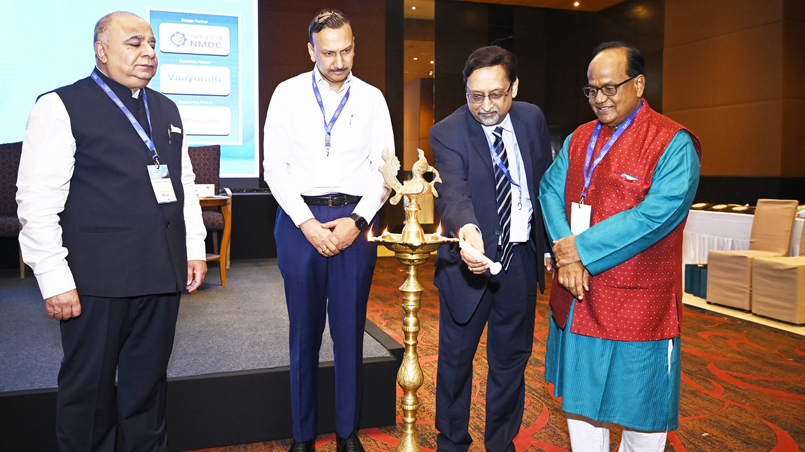
Strategic governance is no longer a boardroom nicety; it is the price of survival. That was the stark undercurrent of the Hyderabad Regional Conclave on Corporate Governance & Sustainability - 2026, hosted by the Institute of Directors (IOD), Hyderabad Region, at Vivanta on July 18, 2026. The theme, “Strategic Governance: Leading Through Global Disruptions and Uncertainty” was not a rhetorical flourish; it was a diagnostic. With technology upending business models, geopolitics redrawing supply chains, climate risk moving from forecast to fact, and stakeholders demanding more than quarterly earnings, the old playbook of reactive oversight is obsolete. The real question is not whether Boards can comply; it's whether they can lead.
The conclave assembled a formidable cross-section of policymakers, senior executives, corporate directors, entrepreneurs, and governance practitioners for deliberations on what it takes to stay ahead of the curve. Through two intensive panel discussions and keynote interventions, the dialogue cut through abstractions to confront the messy realities of execution, accountability, and ethical trade-offs. If there was a key takeaway, it was this: In an age of permanent turbulence, strategic governance is not an upgrade; it's a baseline. The organisations that treat it as such will not just survive disruption; they will shape it.
PANEL SESSION – I: OPENING SESSION
The 'Welcome Address' was delivered by:
Mr. Neerabh Kumar Prasad, IAS (Retd.)
Honorary Chairman
Institute of Directors (IOD), Hyderabad Region
former Chief Secretary, Government of Andhra Pradesh
Mr. Prasad welcomed the Chief Guest, speakers, delegates, IOD members and industry leaders, noting that organisations now operate amid rapid technological change, climate change, geopolitical shifts, cybersecurity risks and rising stakeholder expectations. Referring to the theme of the conclave, “Strategic Governance: Leading Through Global Disruptions and Uncertainty,” he said uncertainty is now a permanent business condition, requiring Boards to anticipate disruption rather than react to it, and to balance strategic vision with accountability, innovation with ethical leadership, and profitability with purpose. He concluded by thanking the Chief Guest, speakers, partners, delegates and the event organising team.
This was followed by the 'Chief Guest Address' delivered by:
Mr. Navin Mittal, IAS
Special Chief Secretary
Energy Department
Government of Telangana
Mr. Mittal spoke on leadership challenges arising from technological change, climate change, geopolitics and rising stakeholder expectations, noting that organisations must adopt agile, forward-looking governance to navigate an unpredictable environment. Describing a “BANI” world (Brittle, Anxious, Non-Linear, and Incomprehensible), he said leaders must rethink traditional approaches. He highlighted India's rapid progress in renewable energy, especially solar power, energy storage, electric mobility and smart infrastructure, and the transformative role of battery storage, pumped storage, EVs and intelligent grids in building a resilient energy ecosystem, backed by strong governance and policy support. He commended IOD for preparing board leaders for emerging governance challenges and expressed confidence in the conclave's value for navigating an uncertain future.
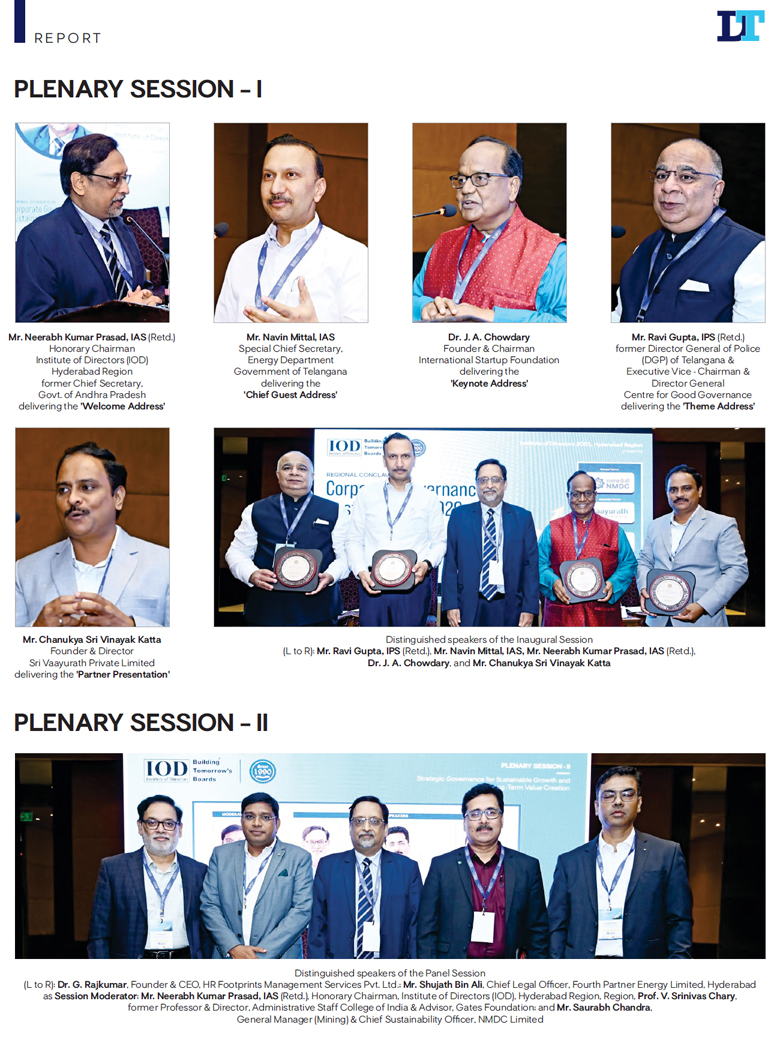
This was followed by the 'Keynote Address' delivered by:
Dr. J. A. Chowdary
Founder & Chairman
International Startup Foundation
Dr. Chowdary spoke on how global disruptions reshape industries while creating opportunities for entrepreneurship and innovation. He noted that India's IT services journey is now shifting, with Artificial Intelligence pushing organisations and institutions toward product innovation, IP creation and deep-tech research to strengthen global competitiveness. He outlined the “Three M's for startup success”, Mentorship, Money and Market Access (the most critical factor), and the “Three C's”, Connecting, Collaborating and Celebrating, stressing strong networks and collaborative ecosystems. He shared new International Startup Foundation initiatives, including a billion-dollar innovation ecosystem, global startup challenges, support for deep-tech ventures in Artificial Intelligence (AI), Quantum Computing, Defence, Life Sciences, Infrastructure and Energy, and rural entrepreneurship, concluding that innovation-driven enterprise will be key to jobs and economic growth.
This was followed by the 'Theme Address' delivered by:
Mr. Ravi Gupta, IPS (Retd.)
former Director General of Police (DGP) of Telangana & Executive Vice - Chairman & Director General
Centre for Good Governance
Mr. Ravi Gupta spoke on Artificial Intelligence's role in strategic governance and public administration, noting that governments have abundant data but the real challenge is converting it into timely, actionable intelligence. He said AI can improve decision-making, streamline administration, strengthen financial oversight, aid document verification, and enable citizen services and smart public administration, citing applications like AI-enabled document verification, financial monitoring, attendance management, multilingual services, facial recognition and smart tourism. He stressed that AI must be backed by strong governance, privacy safeguards and cybersecurity. He cautioned that AI should augment, not replace, human judgment, since courage, empathy, accountability, ethics and leadership remain human responsibilities. He concluded by urging responsible, ethical, trust-based governance over traditional approaches.
This was followed by the 'Partner Presentation' delivered by:
Mr. Chanukya Sri Vinayak Katta
Founder & Director
Sri Vaayurath Private Limited
Mr. Katta presented a patented technology to generate clean electricity from moving vehicles, positioned to complement conventional renewables and advance India's clean energy transition. He explained its potential integration across EVs, railways and other transport platforms to generate power while in motion, improving energy efficiency and sustainable infrastructure. Sharing his entrepreneurial journey, he spoke of common startup challenges in funding, market access and scaling, and thanked IOD for the platform to showcase clean-energy innovation, reaffirming commitment to India's sustainable, technology-driven growth.
PANEL SESSION – II
STRATEGIC GOVERNANCE FOR SUSTAINABLE GROWTH AND LONG -TERM VALUE CREATION
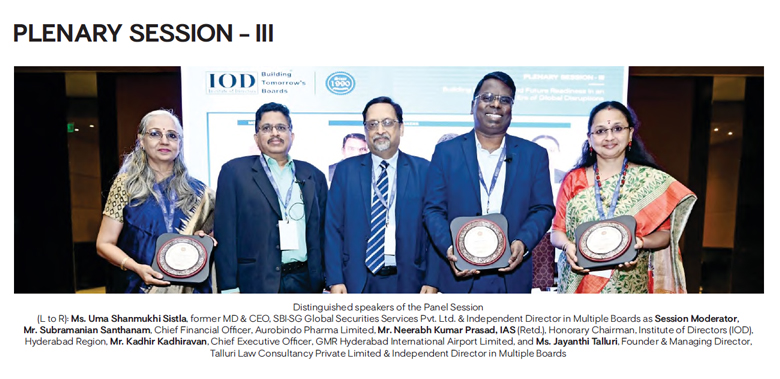
The Session was moderated by:
Mr. Shujath Bin Ali
Chief Legal Officer
Fourth Partner Energy Limited
Mr. Ali opened by placing the discussion within a global business environment shaped by geopolitics, technological disruption, sustainability, supply chains and evolving stakeholder expectations, noting these are redefining board roles from oversight toward proactive strategic leadership across ESG, AI, resilience, data governance and long-term value creation. He framed the session around translating strategic intent into measurable outcomes, and said boards must shift from compliance-oriented bodies to strategic partners providing foresight and resilience.
The Session had the following distinguished speakers:
1. Dr. G. Rajkumar
Founder & CEO
HR Footprints Management Services Private Limited
2. Prof. V. Srinivas Chary
former Professor & Director
Administrative Staff College of India & Advisor, Gates Foundation
3. Mr. Saurabh Chandra
General Manager (Mining) &
Chief Sustainability Officer
NMDC Limited
Dr. Rajkumar linked sustainable growth to strategic self-reliance, citing India's dependence on imported lithium, semiconductor chips and rare earths for EVs, renewables and AI, and said geopolitical and supply-chain risks have made circularity, redesigning products, infrastructure and business models for continuous resource recovery and reuse, a strategic imperative, not just an environmental one. Drawing on his HR Footprints experience, he said board effectiveness lies not in meeting discussions but in post-meeting execution, and introduced the Net Performance Accountability Score (NPAS) to measure accountability across leadership, culture, systems and performance.
Prof. Chary praised the conclave's planning as itself an example of governance through leadership ownership and attention to detail. He observed that while some boards are highly engaged, many remain procedural and ceremonial, and said today's environment requires boards to ensure organisations genuinely honor commitments to investors, employees, customers, regulators, governments and society, becoming custodians of institutional credibility.
Mr. Chandra, drawing on three decades in mining, said sustainability strategies conceived in boardrooms succeed only through effective field execution; rising temperatures and extreme conditions demand strategies that are practical and ground-aligned, with leadership commitment extending from boardroom to field. He cited NMDC initiatives such as paperless workflows, digital file management, e-communication platforms and digital transformation, plus CSR efforts in community engagement, education, livelihoods and inclusive growth in tribal regions that have strengthened trust and social acceptance.
This was followed by an interactive Q&A session with the audience.
PANEL SESSION – III
BUILDING RESILIENCE AND FUTURE READINESS IN AN ERA OF GLOBAL DISRUPTIONS
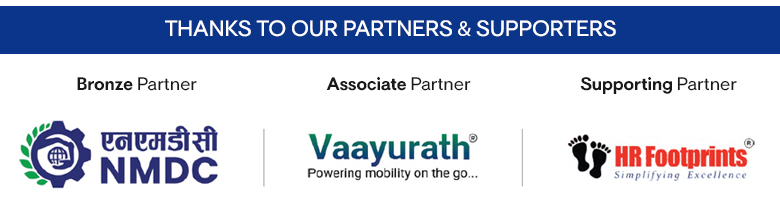
The Session was moderated by:
Ms. Uma Shanmukhi Sistla
former MD & CEO
SBI-SG Global Securities Services Private Limited & Independent Director in Multiple Boards
Ms. Sistla opened by tracing disruptive events over four decades, from Skylab and Y2K to the 2008 Global Financial Crisis, COVID-19 and ongoing geopolitical and economic uncertainty, noting that the biggest challenges are usually unforeseen, making preparedness essential. She said resilience is built through continuous preparedness and adaptability, not crisis response alone, and invited panellists to share how their sectors embed resilience into governance and risk practices.
The session had the following distinguished speakers:
1. Mr. Kadhir Kadhiravan
Chief Executive Officer
GMR Hyderabad International Airport Limited
2. Mr. Subramanian Santhanam
Chief Financial Officer
Aurobindo Pharma Limited
3. Ms. Jayanthi Talluri
Founder & Managing Director
Talluri Law Consultancy Private Limited & Independent Director in Multiple Boards
Mr. Kadhiravan shared aviation-sector insights, noting airports sit within an interconnected ecosystem where disruptions from airlines, regulators, geopolitics (citing Middle East tensions), fuel prices and demand shifts require anticipatory, not just reactive, resilience. He described Hyderabad Airport's Predictive Operations Control Centre and collaborative decision-making systems for real-time coordination, plus long-term strategies including diversified revenue, enterprise risk management and continuous stakeholder engagement, calling for predictive and prescriptive rather than reactive governance.
Mr. Santhanam gave the pharma perspective, noting disruptions (COVID-19, geopolitical conflict, supply-chain uncertainty) are now permanent features requiring anticipation over reaction. He highlighted India's reliance on imported API raw materials and how the PLI Scheme has boosted domestic manufacturing, citing Aurobindo's investments in indigenous penicillin production, sustainable water management and diversified sourcing and logistics, alongside enterprise risk management, succession planning and continuous risk monitoring as pillars of resilience and long-term value.
Ms. Talluri offered a governance and legal lens, framing resilience, future readiness and disruption as interconnected governance dimensions requiring proactive preparation for unknown uncertainties. She identified five pillars of future-ready organisations: governance readiness, leadership readiness, regulatory preparedness, digital capability and compliance, noting independent directors' role in objective oversight and early warnings. She said governance failures originate in boardrooms, not courtrooms, where risks go unasked, and called for a culture of preparedness and accountability across all committees.
This was followed by an interactive Q&A session with the audience.
The 'Closing Remarks' & 'Vote of Thanks' were proposed by:
Mr. Subhramanyu Achary
Deputy Regional Manager
Institute of Directors (IOD), Hyderabad Region
Mr. Achary thanked the Chief Guest, speakers, moderators, delegates, IOD members, partners, and supporting organisations for making the Hyderabad Regional Conclave a success, and acknowledged the day's insightful discussions on strategic governance, sustainability, resilience and board leadership amid global disruptions. He also recognized the IOD Hyderabad team, venue management and technical staff for seamless execution.
The Institute of Directors (IOD) extends its sincere gratitude to its Event Partners:
Bronze Partner: NMDC Limited
Associate Partner: Sri Vaayurath Private Limited
Supporting Partner: HR Footprints Management Services Private Limited
This report is compiled by
Mr. Subham Chakraborty
Assistant Manager
Institute of Directors (IOD), Hyderabad Region
Edited by:
Ms. Violina Das
Assistant Editor - Director Today
Assistant Manager - Communications
Board Research & Advisory
Institute of Directors (IOD)
 Back to Home
Author
Institute of Directors India
Bringing a Silent Revolution through the Boardroom
Institute of Directors (IOD) is an apex national association of Corporate Directors under the India's 'Societies Registration Act XXI of 1860'. Currently it is associated with over 31,000 senior executives from Govt, PSU and Private organizations of India and abroad.
Owned by: Institute of Directors, India
Disclaimer: The opinions expressed in the articles/ stories are the personal opinions of the author. IOD/ Editor is not responsible for the accuracy, completeness, suitability, or validity of any information in those articles. The information, facts or opinions expressed in the articles/ speeches do not reflect the views of IOD/ Editor and IOD/ Editor does not assume any responsibility or liability for the same.