 Quick Links
 Connect us

 Directors Databank (Empannel Yourself)
 Become a
  Become a
  Blog
Blog
 Become an Awards Assessor
 Publications
 Contact Us







Working With Nature to Confront Climate Change: Mitigating risk by building resilience


Human, eco-system and planetary health are inter-related. Pollution of the environment, biodiversity loss and climate change are also important drivers of the emergence and spread of disease. Life forms adapt in differing ways and at varying speeds. We can learn from species with whom we have a common ancestry. Understanding nature and how habitats regenerate to increase their resistance to fire and drought can encourage more responsible stewardship. We can work with rather than against them to reduce shared risks.
Most global risks and existential threats result from human activities which are not sustainable. Our planet struggles to cope with an increasing human population and ecology depleting growth ambitions. The World Economic Forum's 2026 annual Global Risk Report expects the top three ten-year risks in terms of severity of impact to be extreme weather events, biodiversity loss and ecosystem collapse, and critical change to earth systems. Collapsing life supporting ecosystems and climate change add to food insecurity concerns.
Protecting nature and tackling climate change face multiple obstacles and challenges, from detractors, opponents and the disinterested, to the non-committal and those unwilling to become involved. The natural world is not universally respected or viewed with reverence. Our dependence upon it and kinship with fellow life forms may not be appreciated by those who dwell in sanitised, beguiling and manipulating virtual worlds. For many it is a dumping ground or resource to clear or be exploited by rich and powerful lobbies and vested interests.
Accumulating Risks and Hesitant Responses
Exposure to climate and nature risks can be underestimated. Preoccupation with the moment can result in the cumulative costs of a sequence of disasters being overlooked. A University of Chicago led model suggests that there is a greater than 90% chance that total US's only weather and climate disaster damages from 2026 to 2030 will exceed $500 billion, and a 54% chance they will be over $1 trillion. Transition risks such as carbon pricing, technology disruption and stranded assets exceed physical risks in scale and urgency yet can receive minimal attention.
Increasing risks and our risk resilience are inter-related. Resilience is required to handle them. Inadequate resilience can increase them. Yet many directors remain complacent or distracted. Evidence of longer-term threats is ignored while they focus on immediate issues. There are many excuses, ploys and rationalisations to understand and overcome. Sustainability must become a core strategy for more corporate boards in an era of uncertainty, unpredictability, insecurity and volatility, in which conflicts and wars add to environmental damage.
Inaction is welcomed by climate change deniers, fossil fuel lobbyists and those with vested interests, or who are complicit or content to leave challenges to their successors. By then they will probably be more difficult to tackle, and it may be too late to resolve them. Despite federal policy vandalism, responsible US states recognise realities. They swim against the tide of deniers, backsliders and special interests. The hesitant sit on the fence or pay lip service to selected issues, without doing enough to change direction or make a difference.
Sufficiency versus Unsustainable Growth
Current collective human activities are unsustainable, and climate action is insufficient to prevent global warming and climate change. Overall, decarbonisation efforts are stalling and suggest 2–3°C warming, with some regions facing extreme increases of 8–10°C. Voluntary pledges are unlikely to achieve climate objectives without coordinated collective action. Habitats will be lost and excess deaths from extreme heat will rise. Eco-systems that absorb carbon could release it. In response, attitudes towards materialistic consumerism may change.
People might feel they have sufficient material possessions and baulk at the consequences of upgrading and policies of maximisation. The ever more that is strived for might turn out to be a temporary obsession. A strategy of sufficiency may seem preferable to preoccupation with growth. It can make more responsible use of scarce resources, increase flexibility and involve less environmental damage. Boards could monitor changing attitudes towards consumption, encourage awareness of alternative lifestyles, and appeal to those who are attracted to them.
Critics of fossil fuels on account of their negative environmental externalities often overlook the environmental damage caused by the mining of minerals required by electric vehicles, batteries and other technologies. Any continuing focus on increasing production of material goods and consumption invariably adds to pressure on limited resources likely to be required by future generations. Humans seem destined to always push against limits rather than live within them. To live sustainably our lifestyles must be in harmony with the natural world.
Recognising Limitations and Constraints
Throughout history civilisations have been constrained by energy and the water all life requires. Economic, environmental and social impacts of AI include pressure on both. Its rapid adoption imposes unwelcome costs on many people and exacerbates scarcity and affordability issues. The large energy demand of the mega data centres required by AI can result in a hike of electricity prices. This can have a particularly large and negative impact on the competitive advantage and viability of high energy consuming firms and sectors.
Governments and regulators could require date centres to cover increases in electricity costs imposed on customers or reimburse general electricity users. Too often, the environment and nature end up paying for consequences of negative externalities. Unprecedented and probably unsustainable global investments are being made in mega data centres in unsuitable locations. They strain electricity grids and pre-empt minerals, rare earths and other resources needed to confront climate change. Due to its take-up, limiting and prioritising access to AI is tricky.
Vested interests portray responsible regulation as inhibiting innovation. People fear being left behind. There is also pressure on limited resources from those seeking to catch up. A finance for sustainable development funding gap persists in critical sectors such as clean energy, infrastructure and social resilience. Developing countries alone need an additional USD 4 trillion annually to achieve UN SDGs and other climate targets. Bridging it could require more green bonds, transition finance, blended finance and ESG linked instruments.
Responding to Adversity
While good work is being done, collectively we are not doing enough to protect ecosystems and ensure our collective survival. Across G7 countries there is disenchantment with the performance of democratic institutions and a pervasive loss of trust in meaningful reforms. Some governments struggle to provide services and support. Few believe current policies will make future generations better off. There may be solutions that business could provide. Issues for many boards are when and with whom to step in and what stakeholders might support.
There is a greater than 90% chance that total US's only weather and climate disaster damages from 2026 to 2030 will exceed $500 billion, and a 54% chance they will be over $1 trillion.
Certain governments have been slow to transition to clean energy and advance sustainability agendas. This could be due to limited bandwidth or legislative time, fossil fuel dependence, annual budgetary cycles, or competing demands. Corporate boards may be more responsible in their pursuit of clean energy objectives. The energy sector has innovated with a rising share of patents and a focus on competitiveness and security. Given mega data centre demand and with infrastructure a target of hybrid and hot warfare, energy grid resilience is a concern.
Multiple crises and catastrophic events could occur together. Responsible leaders should focus on realities and resilience, assess the costs of inaction, and address multiple issues simultaneously. Adversity may force needed collaboration. Gulf states are aware of their vulnerability to missile and drone attacks, and dependence upon water, because a desalination plant was targeted. Water stress, extreme heat, and resource scarcity represent material financial and operational risks. Boards should understand their importance and mitigate them.
Assessing and Enhancing Resilience
Directors and senior executive teams need to be resilient in the face of challenges, risks and threats. Governance arrangements should enable entities to become more resilient to events and pressures. Factors that enhance resilience can deliver other benefits. Reading the road ahead may reveal opportunities as well as emerging threats. Networks, relationships and communications that share information about them before they are missed or become critical, systemic thinking, and quick and collective responses can also be especially helpful.
Responsible boards assess resilience to climate and other changes. They recognise declining biodiversity and the mass extinction of species underway. They engage with situations and circumstances, and act in the contexts in which they find themselves. They are adaptable and flexible, accept complexity and uncertainty, and tolerate ambiguity and volatility. They avoid complicity and recognise human culpability for global warming and inadequate collective human effort to contain greenhouse gas emissions and address extreme weather events.
Resilience requires more than defensive thinking. Proactive and responsible innovation, enterprise and entrepreneurship could play an important role in safeguarding nature and addressing climate change. The priority given to this and confronting other existential threats could be an indicator of excellence, responsibility and resilience. Learning from experience, adaptation, transition and transformation, and a willingness to review and reinvent policies, priorities, strategies and capabilities can be beneficial as well as enhancing resilience.
Recognising Inadequate Preparedness
Humanity, other species and many eco-systems face existential threats. Greenwashing, negative externalities and reluctance to phase out fossil fuels are widespread. Authenticity and trust are at a premium. Offering hope without providing opportunities for involvement in activities to restore, rewild, repair or recycle may not engage or motivate. Bad news about eco-systems and climate change can be ignored by positivity seekers. Examples from nature that people relate to might engender wider support of action and inspire societal resilience.
Many companies do not systematically assess their resilience in the face of eco-system challenges and climate change or identify indicators to track it and factors affecting it in the contexts in which they operate. A board should estimate how resilient an entity and its people are, address areas of vulnerability and establish resilience priorities. A social mindset could be encouraged within companies, communities and societies, to build cohesion, mutual support, resilience and the collective action effective responses often require.
Directors require a holistic perspective. They should encourage and support critical and joined up thinking that embraces the short, medium and longer-term, both within boards and across executive and management team silos. Boards should understand the consequences of environmental trends, global warming and climate change. They should track public concerns and learn from eco-cities, emerging green innovation districts, and more climate-resilient infrastructures. Collaboration is increasingly needed to address common challenges.
Ensuring Relevance and Value
Resilience requires adaptation to new realities and pressures. Integrated governance and priority changes may be required to cope with inter-related environmental, geopolitical, technological and transformational challenges, and remain relevant, resilient, secure and viable. Boards may draw inspiration from nature's ability to adapt, restore itself and rebound, when advocating positive action to buy time and respond to challenges such as climate change. Sustainable procurement can contribute to UN SDGs and increase resilience.
Rising sea levels because of global warming threaten historic, cultural and artistic centres and entire countries as well as modern and mega cities. Value creation for some is reducing it for others. The costs of relocation, rebuilding, replacement and new infrastructures, and failure of some communities and governments to cope must be recognised as financial risks. Climate-related financial disclosures and investor communications should reflect reality. Reporting should provide balanced information on assessed risks of inaction and steps to be taken.
Value chain sustainability and resilience may have to be strengthened amid evolving global trade and regulatory pressures. Circular economy practices and business models can help to mitigate climate change, protect the environment and enable more resilient and sustainable development. Potential outcomes include possible delivery of significant average reduction in greenhouse gas emissions, rising to around a half in the waste management sector. This could help us cope with the headwinds of war, AI, population increases and unsustainable growth.
Potential Health and Lifestyle Drivers
Not everyone is resigned to bad news or content with displacement activity. Some seek transformative experiences to achieve aspirations that include well-being and purpose. Deriving environmental, lifestyle and health benefits might be a differentiator. Ensuring our collective survival and enabling people to live simpler, healthier, satisfying, sustainable and less stressful lives in harmony with the natural world is alluring. Responsible enterprise and entrepreneurship to achieve this should be encouraged and obstacles to them addressed.
Options, choices and possibilities abound. Alternative lifestyles, opportunities and purposes exist. Climate change denial and believing global warming is a hoax amid record heatwaves suggests ignorance, gullibility, weakness of character, and failure to exercise the independent judgement expected of directors. Strong and confident boards resist short-term motivated bluster. They pursue the best long-term interests of companies and their stakeholders, and champion healthy ecosystems, partnership with nature and climate resilience.
Boards that once focused on competitive advantage should now give more attention to cooperation. The imperative of collective survival and our dependency upon the natural world may help to overcome current fragmentation, polarisation and geopolitical differences. Responsible businesses work with ESG investors, social entrepreneurs and policy makers. They collaborate, address challenges, enhance resilience, provide services, relocate communities, rethink built environments and infrastructures, and advance the public good.
Responsible Board Leadership
Greater resilience is required in an uncertain and insecure world. Individuals, organisations, communities and societies must confront, cope with and respond to a variety of contemporary challenges, risks and existential threats. Strategic adaptation is a critical requirement. As well as coping with and recovering from our impacts upon others, nature and the planet, we need to be proactive and foresee and prepare for future ones. Adaptive leadership and board, executive and corporate resilience could be strategic assets that give cooperative advantage.
Multiple factors contribute to erosion of order and stability, greater unpredictability, chaos, and hot and hybrid wars. Inter-related global risks and existential threats, and concern for geopolitical and technological challenges should not lead to implications and consequences for nature, eco-systems and the environment being overlooked. These are ominous and harbingers of what approaches. New forms of responsible leadership are needed. Different, focused and wider contributions are required from businesses, directors and corporate boards.
 Back to Home
Author

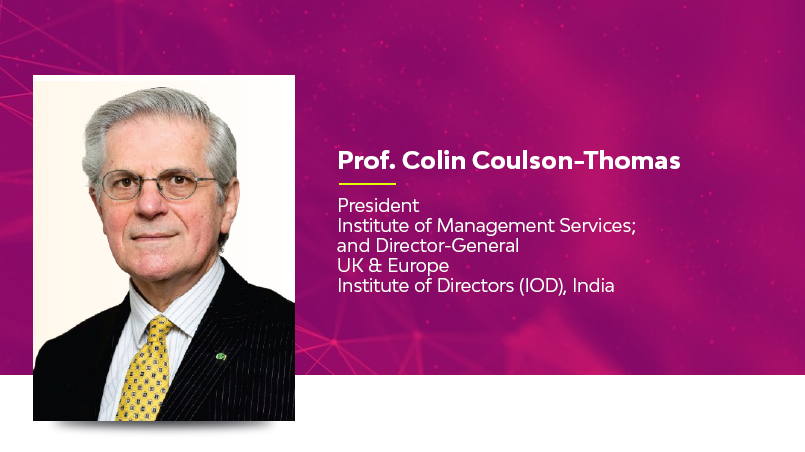
Prof. Colin Coulson-Thomas
Director-General of IOD India for UK and Europe operations
Prof. (Dr) Colin Coulson-Thomas, President of the Institute of Management Services and Director-General of IOD India for UK and Europe operations. He has advised directors and boards in over 40 countries.
Owned by: Institute of Directors, India
Disclaimer: The opinions expressed in the articles/ stories are the personal opinions of the author. IOD/ Editor is not responsible for the accuracy, completeness, suitability, or validity of any information in those articles. The information, facts or opinions expressed in the articles/ speeches do not reflect the views of IOD/ Editor and IOD/ Editor does not assume any responsibility or liability for the same.