 Quick Links
 Connect us

 Directors Databank (Empannel Yourself)
 Become a
  Become a
  Blog
Blog
 Become an Awards Assessor
 Publications
 Contact Us







Climate Resilience, Critical Resources and Corporate Governance: Leading Through an Uncertain World

Business leaders today are navigating a convergence of challenges that would have been almost unimaginable just a decade ago. Climate change is increasing physical risks to infrastructure, supply chains and communities. Geopolitical fragmentation is reshaping value systems, and trade and investment patterns. At the same time, the transition to cleaner, more electrified and technologically advanced economies is driving unprecedented demand for minerals, metals and other critical resources.
For boards and senior executives, these are no longer seemingly remote or peripheral sustainability concerns. They are core governance issues. The ability to navigate climate disruption, resource security challenges and evolving societal expectations will increasingly determine corporate resilience and long-term value creation.
This is a global challenge, but its significance for India is particularly pronounced. According to the World Bank, more than 80% of Indians live in districts exposed to climate-related disasters. Heatwaves, water stress, flooding and extreme weather events are affecting communities and economic activity alike. The country's drought-prone area has expanded 57% since 1997, while incidents of heavy rainfall have increased by almost 85% since 2012. These trends have implications for agriculture, manufacturing, mining, energy generation and logistics.
The country's renewable energy ambitions, digital innovation ecosystem, manufacturing growth and infrastructure investments demonstrate a willingness to think strategically about long-term development pathways.
At the same time, India is expected to account for a substantial share of future growth in global energy demand while pursuing major investments in renewable energy, transmission infrastructure, electric mobility and advanced manufacturing. Its target of 500 GW of non-fossil electricity capacity by 2030 represents one of the most ambitious clean-energy programmes in the world. India is also seeking to strengthen its position within emerging critical-mineral and clean-technology value chains. Decisions taken by boards today on resilience, resource stewardship and long-term investment will therefore help shape both corporate performance and wider economic resilience.
Resilience as a Strategic Imperative
Traditionally, resilience was viewed primarily through the lens of financial strength or operational continuity. Today, the concept is broader. Climate-related events such as heatwaves, flooding, droughts and water stress are already disrupting production, damaging infrastructure and affecting workforce wellbeing. Effective resilience requires organisations to move beyond short-term risk management and develop integrated adaptation strategies across operations, supply chains, employees and host communities. Research from the World Gold Council on responses to physical climate impacts highlights the value of incorporating local stakeholder perspectives and long-term environmental considerations into resilience planning.
For India, where economic growth remains closely linked to climate-sensitive sectors including agriculture, infrastructure, energy and natural resources, resilience planning should be regarded as a strategic business necessity rather than an environmental add-on.
The Critical Resources Challenge
Alongside climate risks, businesses are navigating an increasingly complex debate about critical resources. The transition to low-carbon economies requires vast quantities of minerals and metals, including copper, lithium, nickel, graphite, cobalt and rare earth elements. These materials are essential to renewable power systems, electric vehicles, batteries and digital infrastructure.
India has recognised the strategic importance of this challenge through initiatives such as the Critical Minerals Mission and efforts to strengthen domestic processing and manufacturing capabilities, reflecting a growing understanding that resource availability and energy transition ambitions are closely linked.
However, discussions about critical minerals often focus narrowly on securing supplies for specific technologies – clean energy, advanced computing, and defense applications - or immediate national priorities. A broader understanding of criticality would recognise the role that resource development can play in supporting economic transformation, infrastructure, institutional capacity and longer-term resilience. Achieving these outcomes will likely require greater international collaboration, longer-term vision, and stronger public-private partnerships.
This perspective is particularly relevant for emerging economies. Natural resources can support employment, infrastructure investment, foreign exchange earnings and broader development objectives. Experience from the gold sector demonstrates how responsible mining can contribute to socio-economic development while creating the infrastructure, skills and investment that enable future resource opportunities.
Although India is not a major gold-producing nation, there are important lessons from the sector's experience. Successful resource development rarely depends on a single commodity, company or project operating in isolation. It is usually the product of collaboration across supply chains, sectors and jurisdictions, supported by investments in infrastructure, skills, governance and local partnerships.
Why Governance Matters More Than Ever
These interconnected challenges elevate the importance of effective corporate governance. Climate change, resource access and supply-chain interdependencies introduce new forms of uncertainty that require boards to broaden their oversight of risk, strategy and long-term value creation.
Boards increasingly need to ask questions such as: How resilient is our business model under different climate scenarios? Where are the most significant vulnerabilities within our supply chains? How can climate adaptation and resource stewardship strengthen competitiveness and social license? And are governance structures equipped to oversee these emerging risks?
Increasingly, investors are asking the same questions of businesses - with the provision of capital potentially linked to the answers.
India has established itself as a leader among emerging economies through the introduction of SEBI's Business Responsibility and Sustainability Reporting framework, which has strengthened transparency and sustainability reporting among major listed companies.
Yet evolving expectations suggest that disclosure alone is no longer sufficient. Investors are also seeking greater transparency on wider contextual issues: climate transition plans, scenario analysis, governance oversight, capital allocation and measurable resilience outcomes. Stakeholders are increasingly focused on how climate considerations influence strategic decision-making rather than simply how organisations report performance metrics. Sustainability is moving from the reporting function to the centre of boardroom strategy.
From Compliance to Impact and Advantage
Forward-looking companies increasingly recognise that climate resilience and resource stewardship are not only matters of compliance or risk mitigation. They can also contribute to enduring stability and create competitive advantage.
Companies that understand physical climate risks, build adaptive supply chains and maintain strong relationships with suppliers, regulators and communities are often better positioned to protect assets, attract investment and sustain operations during disruption. Increasingly, resilience itself is becoming a strategic differentiator.
This is especially relevant in sectors dependent on natural resources. Responsible management of environmental and social impacts is increasingly linked to market access, investor confidence and societal legitimacy. Research from the World Gold Council on nature, biodiversity and climate adaptation highlights the importance of integrated environmental strategies and collaboration with local communities and other stakeholders. Such approaches can strengthen both operational resilience and broader social outcomes.
The Indian Opportunity
While much discussion focuses on risk, India also has a significant opportunity. Its scale, entrepreneurial capacity, technological expertise and growing role in global supply chains position it to become a leader in resilient and responsible business.
The country's renewable-energy ambitions, digital innovation ecosystem, manufacturing growth and infrastructure investments demonstrate a willingness to think strategically about long-term development pathways.
Corporate governance has a pivotal role to play in this transition. Boards that embed resilience, sustainability and resource stewardship into strategy can encourage innovation, strengthen infrastructure and workforce capabilities, and contribute to national development objectives while enhancing competitiveness.
Resilience should also be understood in broader terms than climate adaptation alone. It encompasses social cohesion, ecosystem integrity, resource efficiency, cybersecurity, geopolitical awareness and institutional trust. These dimensions are increasingly interconnected and will play a growing role in long-term business success.
A Leadership Agenda for an Uncertain Future
One of the main challenges for corporate leaders is not simply managing risk but leading through uncertainty. This requires organisations to look beyond quarterly reporting cycles and short-term operational concerns towards a broader understanding of value creation. Enduring economic prosperity depends on resilient communities, functioning ecosystems, secure supply chains and effective institutions.
For boards, three priorities stand out.
First, embed climate resilience and broader environmental considerations into governance, strategy and capital allocation decisions. Think local. Think long-term.
Second, adopt a broader understanding of strategic materials and critical resources, one that considers development outcomes, institutional capacity and supply-chain resilience alongside commodity-specific concerns.
Third, strengthen stakeholder engagement and transparency, recognising that trust and legitimacy are increasingly valuable strategic assets.
In a world characterised by climate disruption, geopolitical volatility and accelerating technological change, resilience is no longer simply a defensive concept. It is also a foundation for growth. The companies that thrive in the coming decades will not necessarily be those that avoid uncertainty. They will be those that understand it, adapt to it and help shape a more resilient and sustainable future in response.
 Back to Home
Author

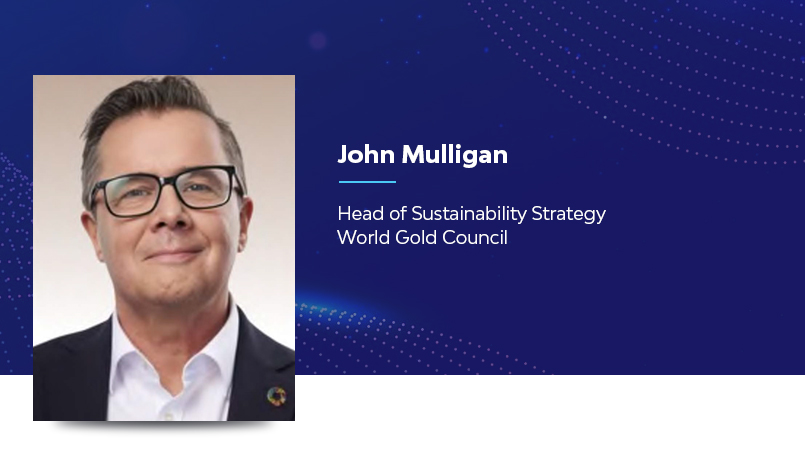
Mr. John Mulligan
He is the Head of Sustainability Strategy at the World Gold Council (WGC), where he leads the organisation's climate change and nature-focused research programmes, alongside strategic engagement with investors, policymakers, and key market stakeholders. In addition to his role at the WGC, Mr. Mulligan serves as President of the Sustainability Development Commission of CIBJO (the World Jewellery Confederation). He also chairs the climate programme of the Watch & Jewellery Initiative 2030 (WJI 2030) and the ISO Technical Committee on Jewellery and Precious Metals. Furthermore, he convenes the Gold Principles Group, driving sector-wide progress on responsible and sustainable business practices across the global gold industry.
Owned by: Institute of Directors, India
Disclaimer: The opinions expressed in the articles/ stories are the personal opinions of the author. IOD/ Editor is not responsible for the accuracy, completeness, suitability, or validity of any information in those articles. The information, facts or opinions expressed in the articles/ speeches do not reflect the views of IOD/ Editor and IOD/ Editor does not assume any responsibility or liability for the same.