 Quick Links
 Connect us

 Directors Databank (Empannel Yourself)
 Become a
  Become a
  Blog
Blog
 Become an Awards Assessor
 Publications
 Contact Us







How can Boards Overcome Climate Challenges?

Beyond Compliance-Driven Sustainability Initiatives
Climate change has emerged as one of the defining governance challenges of our time. Increasingly frequent extreme weather events, disruptions to supply chains, resource scarcity, and evolving stakeholder expectations are reshaping the global business landscape. What was once considered an environmental concern has now become a strategic business imperative, compelling corporate boards to integrate climate considerations into every aspect of long-term decision-making. Building resilience against climate risks while supporting sustainable economic growth has therefore become a central responsibility of modern boards.
The transition towards a low-carbon and climate-resilient economy demands a fundamental shift in corporate governance. Boards must move beyond compliance-driven sustainability initiatives and embed climate risk into enterprise strategy, capital allocation, investment decisions, and organisational culture. Effective climate governance requires balancing mitigation efforts through reduced greenhouse gas emissions with adaptation strategies that strengthen business resilience against unavoidable climate impacts. As global economies accelerate their pursuit of net-zero commitments under the Paris Agreement, organisations that proactively prepare for this transition will be better positioned to create long-term value.
Nature-based solutions, renewable energy, circular economy principles, sustainable finance, and green technologies are becoming key drivers of future competitiveness. Simultaneously, climate-related disclosures, ESG reporting frameworks, and investor expectations are placing greater accountability on boards to demonstrate measurable progress. This transformation also presents significant opportunities. Investments in clean technologies, sustainable infrastructure, resource efficiency, and green innovation are creating new markets, enhancing operational resilience, and strengthening corporate reputation. Boards that encourage innovation, foster responsible leadership, and promote a just and inclusive transition will be instrumental in navigating these opportunities while managing associated risks.
India's commitment towards sustainable development, including initiatives such as Mission LiFE and climate-resilient development programmes, further reinforces the importance of integrating sustainability into corporate strategy. Businesses have a critical role in supporting national and global climate ambitions through responsible governance, innovation, and collaboration.
As climate challenges continue to evolve, boards must lead with foresight, resilience, and purpose. Strong governance, informed decision-making, stakeholder engagement, and sustained investment in climate action will determine how successfully organisations adapt to an increasingly uncertain future. The boardroom will remain the cornerstone where climate ambition is transformed into meaningful business action, ensuring that economic growth and environmental stewardship progress together for generations to come.
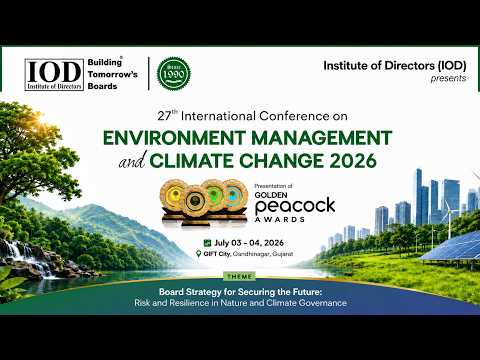
The Institute of Directors (IOD), India, has continued to provide an important platform for advancing dialogue on climate governance and sustainable business leadership. At its 27th International Conference on Environment Management and Climate Change, held on 03–04 July 2026 at GIFT City, Gandhinagar, Gujarat, under the theme "Board Strategy for Securing the Future: Risk and Resilience in Nature and Climate Governance," policymakers, corporate leaders, academicians, and industry experts deliberated on strengthening board preparedness for emerging climate risks. The Conference highlighted that climate change should no longer be viewed merely as a challenge to be managed, but as a strategic opportunity to redefine business models, strengthen corporate governance, accelerate innovation, and build resilient organisations capable of delivering sustainable long-term value.
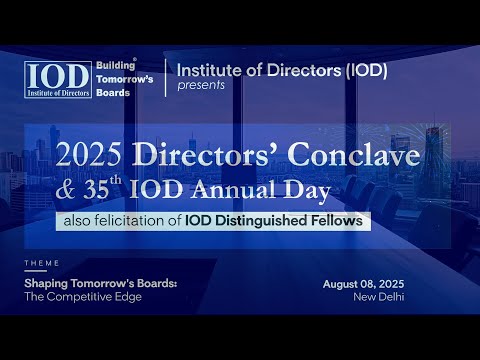
Building on this momentum, the Institute of Directors (IOD), India, is hosting its highly anticipated 2026 Directors' Conclave & 36th IOD Annual Day in New Delhi on August 22, 2026 on the theme, "Making Boards Effective for Investor Confidence & Sustainable Value Creation". I warmly invite you to join us for this important dialogue as we collectively shape the future of boardroom leadership, advance practical responses to emerging global challenges, and reinforce the role of responsible leadership in building resilient enterprises while fostering long-term economic and societal progress.
 Back to Home
Author

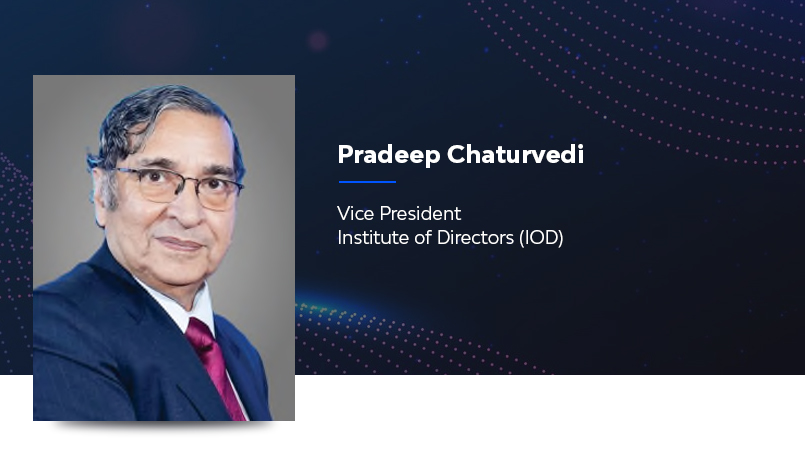
Pradeep Chaturvedi
Vice President - Institute of Directors
He is former Advisor FAO & former Chairman, Institution of Engineers, Delhi. He is a Mechanical Engineer & has been involved with Environment & Energy Policy (planning & implementation) of energy projects under the UN Agencies for over three decades in India & other Asian and Pacific countries. He is Vice-President, World Environment Foundation & Institute of Directors, India.
Owned by: Institute of Directors, India
Disclaimer: The opinions expressed in the articles/ stories are the personal opinions of the author. IOD/ Editor is not responsible for the accuracy, completeness, suitability, or validity of any information in those articles. The information, facts or opinions expressed in the articles/ speeches do not reflect the views of IOD/ Editor and IOD/ Editor does not assume any responsibility or liability for the same.