 Quick Links
 Connect us

 Directors Databank (Empannel Yourself)
 Become a
  Become a
  Blog
Blog
 Become an Awards Assessor
 Publications
 Contact Us







Beyond Good Faith: Why Boards Need Independent Information Channels & How IDs Know What's Happening


The Information Problem Every Independent Director Faces
What does it actually mean to be an independent director?
I'm working toward this role myself someday, and the more I study what independent directors do versus what they're supposed to do, the more I see a problem nobody talks about: You're supposed to watch over management, but management controls almost everything you know about the company.
You don't work there. You see the company maybe six to eight times a year, in structured meetings where everything is planned in advance. Every piece of information you get comes through the people you're supposed to be monitoring.
The Limits of Acting in Good Faith
In most boardrooms, independent directors operate in good faith. Management presents results, explains strategy, acknowledges challenges, and assures the board that risks are being managed. These assurances usually come from experienced executives who genuinely believe what they are saying. Independent directors respond accordingly. They listen, ask reasonable questions, and rely on the information provided. This approach feels responsible and aligned with the spirit of oversight.
The problem is that good faith assumes that management has full visibility and that information flows upward accurately. In reality, emerging risks are often misunderstood, delayed, or softened as they move through the organisation. Optimism, cognitive bias, and commitment to an existing narrative can obscure early warning signs.
Many corporate failures occur not because management is dishonest, but because management believes its own story for too long. When boards rely solely on that story, they inherit the same blind spots. By the time serious issues are acknowledged, the opportunity to intervene early has often passed. Good faith may be necessary, but on its own, it is not enough.
What the Law Actually Expects from Independent Directors
Indian corporate law doesn't let you off the hook by saying, "but management told us everything was fine."
The Company's Act is pretty explicit about this. Independent directors are expected to "keep themselves well-informed about the company and the external environment." They're supposed to "seek clarification of information" and get outside expert opinions when needed.
There's this legal test for director liability that most people don't fully understand. You can be held liable if misconduct happened with your knowledge and consent. That part makes sense. But there's an "or" in there. You can also be held liable if you failed to act diligently.
Keeping an ear to the ground is not about mistrust. It is about ensuring that oversight is based on verification, not assumption.
That "or" is the important part. It means you can't just say "I didn't know." The question becomes: should you have known? Were there warning signs you should have picked up on? Were there questions you should have asked?
Why “I Didn't Know” Is Not a Defence
Ignorance is not a defense if you should have been paying attention. This puts independent directors in an uncomfortable spot. How are you supposed to know what you don't know? How do you figure out which questions to ask when management hasn't flagged anything as a problem?
The answer, I think, is that you can't rely on management to tell you what to worry about. You need to build your own information channels.
A Real-World Example: The IndiGo Disruptions
In early December 2025, one of India's largest airlines, cancelled a large number of flights. At the peak, more than 1,600 flights were cancelled in a single day. Over roughly ten days, total cancellations reached between 4,000 and 4,500 flights.
Given IndiGo's dominant share of domestic air traffic, these disruptions had system-wide effects. The airline attributed the situation to a combination of internal pressures and external factors, including technical issues, weather, and congestion.
Warning signs were visible in plain sight. The disruption was not unexpected. In January 2024, India's aviation regulator announced revised pilot rest requirements to address fatigue risks. The operational impact was clear. Longer mandatory rest periods meant airlines would need more pilots to operate the same schedules. The industry had nearly two years to prepare, and several airlines adjusted staffing levels accordingly. Publicly, pilot unions were raising concerns that IndiGo had not done so. They spoke of hiring constraints and frozen pay. These were not internal leaks but open statements, accessible to anyone paying attention.
How Boards Miss Risks When They Rely Only on Management
This created a clear risk profile. A known regulatory deadline, an obvious operational implication, and public warnings from frontline employees. Yet the board approved an expanded winter schedule. The most likely explanation is reliance on management assurances that the situation was under control, exemptions would be granted, or disruptions could be managed.
The board appears to have acted in good faith. But good faith, without independent verification, was not enough.
Keeping Your Ear to the Ground: Approach to Informed Decision-Making:
In an increasingly complex business environment, effective oversight demands more than formal briefings. It requires directors to remain closely attuned to signals beyond the boardroom which is captured in the phrase, “Keeping Your Ear to the Ground”. For an independent director, “keeping an ear to the ground” is not just a passive exercise, but a disciplined approach to gathering unfiltered insights and validating management narratives.
1. Speak regularly with people below the senior leadership level.
Middle managers and frontline staff often see problems early. These conversations work best when they are informal and confidential, not part of scripted reviews.
2. Pay attention to sources management does not control.
Employee feedback, industry forums, union communications, customer complaints, regulatory announcements, and competitor actions often reveal gaps between internal assurances and external reality. When those gaps appear, they deserve closer scrutiny.
3. Require evidence for important claims. If management states that the company is prepared for a regulatory or operational change, ask to see the underlying assumptions, staffing plans, compliance confirmations, and contingency measures. Assurance without documentation is not diligence.
4. When the stakes are high and management's narrative does not fully align with available signals, commission independent verification.
The cost of an external review is usually negligible compared to the cost of a major failure.
5. Develop the habit of asking a simple question.
How do you know? What data supports this view?What would indicate that the assessment is wrong?
Keeping an ear to the ground is not about mistrust. It is about ensuring that oversight is based on verification, not assumption.
How Directors Can Be Strategic About Verification
You can't verify everything. But you can verify the things that matter most. You can't talk to everyone. But you can talk to the people who would know if something was seriously wrong. You can't commission independent reviews all the time. But you can commission them when management's narrative conflicts with what you're hearing from other sources.
The goal is not to catch management doing something wrong. The goal is to make sure that if something is going wrong, you find out early enough to fix it.
How Some Boards Are Addressing the Information Gap
Some boards have figured this out. Not perfectly, but better than most.
Some require independent directors to spend time annually at operational sites, not on ceremonial tours but actually working alongside employees to see what they see. Some commission regular "red team" exercises where outside experts are paid to argue against management's strategy and identify what could go wrong.
These are not radical ideas. They're just systematic attempts to break out of the information bubble that naturally forms around leadership.
Conclusion
If you are an independent director, there is one question you should ask yourself regularly. If something went badly wrong at this company tomorrow, would I have seen it coming?
If the honest answer is no, or if you are unsure, then you may be relying too much on good faith.
This does not require assuming management is dishonest. It does not mean turning board meetings into hostile interrogations. It simply requires verification. Building channels that do not rely entirely on management. Asking questions that require evidence, not just assurance, but listening to perspectives that differ from those presented in the boardroom.
Because when things go wrong and the question is asked, “Why didn't you know?”, saying “management didn't tell us” will not be enough.
The real question will be: Why didn't you ask?
 Back to Home
Author
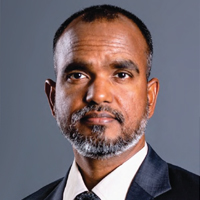
Gautam Gupta
Mr. Gautam Gupta is a Senior Partner & Co-Founder at Mindspring Advisory. He has over 25 years of experience in insurance and banking across six markets, with expertise spanning governance, risk, internal audit, and compliance. A Certi?ed Fraud Examiner and ordained Buddhist monk in Thailand, he was featured in Asia Insurance Review (July 2025) and has engaged directly with Thailand's Of?ce of Insurance Commission on insurance policy.
Owned by: Institute of Directors, India
Disclaimer: The opinions expressed in the articles/ stories are the personal opinions of the author. IOD/ Editor is not responsible for the accuracy, completeness, suitability, or validity of any information in those articles. The information, facts or opinions expressed in the articles/ speeches do not reflect the views of IOD/ Editor and IOD/ Editor does not assume any responsibility or liability for the same.