 Quick Links
 Connect us

 Directors Databank (Empannel Yourself)
 Become a
  Become a
  Blog
Blog
 Become an Awards Assessor
 Publications
 Contact Us







Operational Excellence Lessons from the Shop Floor: How Process Discipline and Continuous Improvement Drive Sustainable Performance


After spending more than two decades inside factories, boardrooms, audit discussions, crisis meetings, and improvement workshops, one truth stands out clearly - Most business problems are operational problems in disguise.
Companies often blame markets, competitors, or pricing pressures. But when we walk through the shop floor, review processes, and talk to the people doing the work, the real story emerges: inefficiencies, inconsistencies, and unmanaged variation quietly erode profits every day.
Operations is not a department. It is the heartbeat of an organisation. And Operational Excellence is not a buzzword, it is the discipline that separates stable, growing businesses from those constantly fighting fires.
The Reality of Operations
In theory, operations look structured - procedures, machines, manpower, planning systems. In reality, many workplaces run on adjustment, experience-based decisions, and last-minute problem solving.
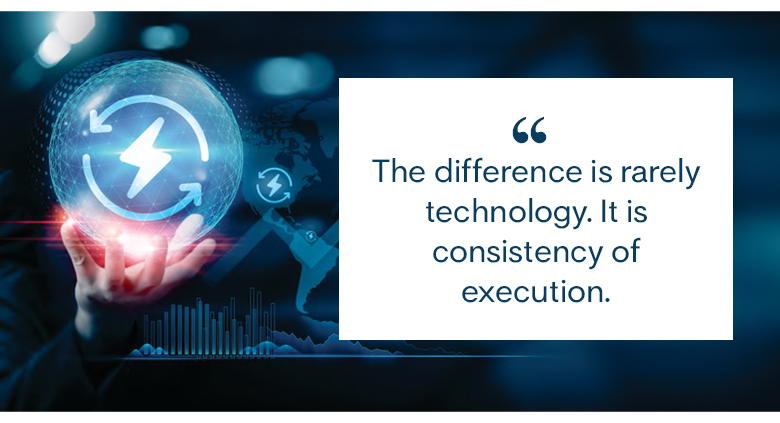
Over the years, I have seen organisations with sophisticated software but chaotic shop floors, detailed manuals nobody follows, and quality systems that exist only during audits. Yet, I have also seen modest plants with simple systems outperform large corporations because they mastered operational discipline. The difference is rarely technology. It is consistency of execution.
Across industries the patterns repeat:
• Rework is accepted as normal
• Maintenance is reactive
• Production targets override process discipline
• Problems are fixed temporarily, not permanently
• Data is collected, but not used for decisions
• Departments operate in silos
Managers should learn to ask “what did we learn?” after problems are solved. Improvement projects should be tracked just like financial targets.
When these habits become culture, the organisation enters a cycle of firefighting. Teams work hard, but performance remains unstable. Operational Excellence begins the moment leadership asks a simple but powerful question: “Why does this problem keep coming back?”
Operational Excellence is a Culture, not a Project
One of the biggest misconceptions I encounter is the belief that Operational Excellence can be “implemented” in six months. In reality, Operational Excellence is less about tools and more about behavior. You can introduce Lean, Six Sigma, 5S, TPM - but unless supervisors, managers, and operators change the way they think about problems, the tools fade away.
Operationally excellent organisations share certain habits:
• Problems are surfaced, not hidden
• Root causes are investigated, not guessed
• Standards are followed, not bypassed
• Improvements are documented, not forgotten
• Leaders spend time on the shop floor, not just in meetings
These behaviors build systems that work even when pressure increases.
Leadership: The Real Enabler
In my experience, Operational Excellence never fails because of operators. It fails because leadership treats it as a side initiative. When top management links operational performance with business strategy - delivery, cost, quality, safety - the transformation begins. When leaders ask for daily performance reviews, challenge data, and support preventive actions, teams respond. Operational Excellence is visible when meetings discuss process performance, not just output numbers. Managers should learn to ask “what did we learn?” after problems are solved. Improvement projects should be tracked just like financial targets. Overall, culture changes when leaders change their questions.
The Power of Small Improvements
Many organisations wait for big investments to improve. Yet, some of the most impactful transformations I've witnessed came from small, consistent improvements:
• Organising tools to reduce search time
• Standardizing changeover methods
• Preventive maintenance routines
• Clear visual controls
• Simple mistake-proofing devices
These steps do not make headlines, but they quietly improve productivity, safety, and morale. Operational Excellence grows through discipline in small things, not dramatic overhauls.
People Make or Break Operations
Technology supports operations. People run them.
When employees feel their ideas matter, improvement accelerates. When they are blamed for system failures, engagement disappears. Some of the best OpEx environments I've seen have suggestion systems, cross-functional problem-solving teams, and open communication between management and workers.
Operational Excellence flourishes where people say: “This is our process - we can improve it.”
From Firefighting to Stability
A defining moment in many organisations is when they realize that constant urgency is not normal. Stable operations are quiet. There are fewer surprises, fewer breakdowns, and fewer last-minute escalations.
This stability comes from:
• Standardized processes
• Preventive maintenance
• Clear accountability
• Data-based monitoring
Once stability is achieved, improvement becomes easier and faster.
Driving Process Efficiency: What Actually Works on the Shop Floor
Many plants believe they know their capacity. But when we actually measure work at the process and individual level, the reality is often very different. That's where structured efficiency measurement begins. Whenever I enter a new facility, the first exercise I insist on is a time study. Not a rough estimate, but an actual observation.
We measure: How much output a process gives in 10 minutes of real working time.
Ten minutes is short enough to stay accurate and long enough to reflect real working conditions. This small window reveals:
• True cycle time
• Hidden delays
• Material flow gaps
• Operator movement inefficiencies
Productivity varies significantly from person to person. So, we conduct individual time studies as well.
Once the 10-minute productivity is established, we calculate the expected output for an 8-hour shift for each process. This becomes the baseline capacity, not a guess.
When we compare calculated capacity with actual shift output, the gap becomes visible. And in most factories, actual output is lower than theoretical capacity. This gap is where Operational Excellence begins. The difference usually comes from:
• Minor stoppages
• Waiting for material
• Tool searching
• Quality corrections
• Operator fatigue
• Unbalanced workload
These are small individually, but huge collectively. Instead of blaming people, we trace deviations to their source. We fix one cause at a time. Small corrections - layout change, tool positioning, standard work instructions - steadily raise productivity. Efficiency is not improved in one leap. It grows through removal of small inefficiencies. Sometimes the issue is not process-related but humans. Workers may:
• Be idle due to unclear instructions
• Slow down due to fatigue
• Lack skill confidence
• Not understand targets
In such cases, supervision must shift from policing to guidance. When workers understand expectations and receive support, performance improves naturally.
Machine Efficiency: The Other Half of the Story
Process efficiency fails if machines are unreliable. Many plants lose more time to poor machine discipline than to technical failures. We ensure every machine should have a downtime logbook. Each stoppage must record the reasons for downtime, duration, and actions taken.
One common issue I've seen repeatedly is that, machines are repaired but not restarted immediately. Sometimes they remain idle because:
• Operator is on break
• No clear responsibility
• Shift change confusion
This “non-technical downtime” often exceeds actual breakdown time. After repairing is completed, engineer must enter the time repair was completed, reason of breakdown (if the machine was shut down for usual preventive maintenance, then that must be entered) and get the signature of operator in it. This avoids disputes and ensures machines return to service immediately.
Another crucial rule I enforce: Machines should be handed over in running condition, not shut down. Switching off machines before shift handover leads to unnecessary restart delays. A disciplined handover maintains production continuity.
Efficiency is not about pushing people harder. It is about removing the obstacles that stop them from performing.
When process time, individual performance, and machine downtime are monitored systematically, the shop floor becomes predictable. That predictability is the foundation of Operational Excellence.
The Long-Term Impact
Organisations that sustain Operational Excellence do not just improve efficiency. They build resilience. They adapt better to market changes, regulatory requirements, and customer expectations. I've seen companies with strong operational systems recover quickly from disruptions, while others struggle because their processes were never under control. Operational Excellence creates confidence internally and externally.
Final Reflection
After years of consulting, audits, and improvement initiatives, I've come to see Operational Excellence as a mindset: Do things right, every time and improve them tomorrow.
It requires patience, persistence, and leadership courage. But when it becomes part of the organisation's DNA, performance stops depending on heroic effort and starts depending on reliable systems.
 Back to Home
Author
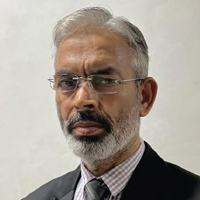
Atul Krishna Chaturvedi
Mr. Atul Krishna Chaturvedi is a senior quality and management systems consultant with 26+ years' experience across diverse industries. A certi?ed lead auditor for multiple ISO standards and SA 8000, he has led 350+ client engagements, delivered 100+ trainings, and specializes in operational excellence, system implementation, and organizational improvement.
Owned by: Institute of Directors, India
Disclaimer: The opinions expressed in the articles/ stories are the personal opinions of the author. IOD/ Editor is not responsible for the accuracy, completeness, suitability, or validity of any information in those articles. The information, facts or opinions expressed in the articles/ speeches do not reflect the views of IOD/ Editor and IOD/ Editor does not assume any responsibility or liability for the same.