 Quick Links
 Connect us

 Directors Databank (Empannel Yourself)
 Become a
  Become a
  Blog
Blog
 Become an Awards Assessor
 Publications
 Contact Us







IOD Interview - Educating Leaders for a Better Tomorrow
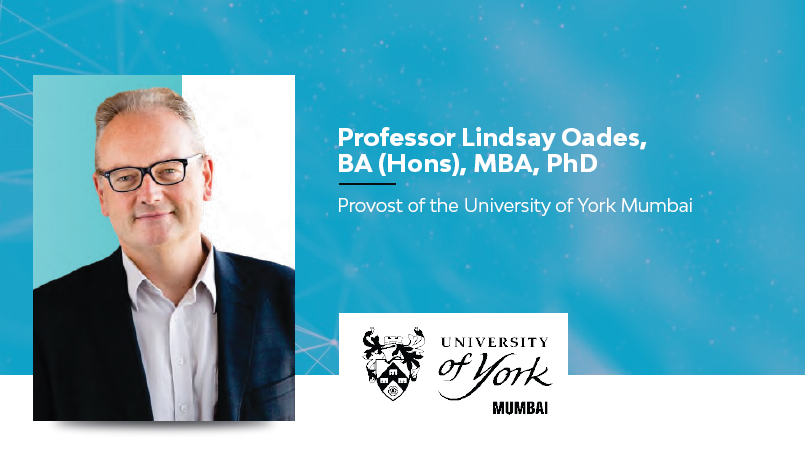
By- Institute of Directors | Authored by- Professor Lindsay Oades, BA (Hons), MBA, PhD
Jun 12, 2026

The University of York Mumbai's vision for ethical leadership, sustainable business, and creating long-term value for society
The idea of a 'Good Society' is both aspirational and deeply relevant in today's world. How do you define a Good Society, and what role can corporations play in shaping it?
A 'Good Society' is one that creates the conditions for people, organisations, and communities to flourish over the long term. Flourishing here refers to the optimal process of realizing potential over time, not an end point. It balances prosperity, opportunity, social cohesion, and environmental stewardship. Corporations help shape such a society through innovation, good work, responsible governance, and investments that create lasting value for both shareholders and society. It is a society of people and their environment, not solely and economy. It includes the economy, but is more than an economy.
The University of York Mumbai combines global academic standards with local relevance, offering interdisciplinary learning, industry collaboration, international exposure, and opportunities for students to address complex business and societal challenges.
CSR and ESG have evolved from optional initiatives to strategic imperatives. What distinguishes organisations that genuinely integrate responsibility into their culture?
Responsibility can be economic legal, ethical, social, human or environmental. Organisations that genuinely embrace a holistic approach to responsibility integrate these principles into their governance frameworks, risk management practices, talent development strategies, and capital allocation decisions. Sophisticated organisations and their leaders increasingly recognise that these responsibilities are not competing objectives but interconnected elements of sustainable success.
How can businesses balance commercial success with creating meaningful social impact and improving community at large?
The strongest organisations recognise that commercial success and social impact are mutually reinforcing. By creating good work, investing in people, supporting communities, and addressing real societal challenges, businesses strengthen resilience, attract talent, and build enduring competitive advantage. Sustainable profitability is often the outcome of sustainable value creation. This requires leaders to be systems thinkers, examining the ecosystem within which their organisation exists, gives to and takes from. In the same way the purpose of a human is not to breathe but requires breathing to survive, the purpose of an organization is not profit, but it requires profitability to survive. An organisation that involves good work and a social purpose contributes to a good society. Good has an ethical meaning here.
The innovative attitude behind “jugaad” in Mumbai, meets the pragmatism and stoic optimism of Yorkshire.
How can ESG-led leadership help organisations remain resilient and future-ready?
ESG leadership integrates sustainability, ethics, and responsible business practices into strategy, operations, and culture and for many this broadens the boardroom lens. This broader lens, strengthens strategic foresight, improves risk management, builds trust, and enables organisations to navigate uncertainty and be more adaptable through a greater variety of options. Resilience involves diversity of options under hardship and being able to continue on the overall trajectory despite obstacles and setbacks. The human element strong workplace wellbeing and a sense that the organisation is doing good work, by definition means that the workforce will be more adaptable as they are functioning better. The leadership however will need to enable sufficient autonomy for staff to exhibit their adaptability, which involves trust.
How is the University of York Mumbai integrating sustainability, ethics, and social responsibility into its academic and leadership philosophy?
The University of York Mumbai, as part of the University of York approach to public good places sustainability, ethics and social responsibility as central to its operations. We are doing this in three key ways:
• Firstly, within the THRIVE education model of the University of York Mumbai, all of our education programs are designed to assist students with the capabilities to contribute to a good society.
• Secondly, we are developing an Institute for Good Society, which is our key research and policy platform to emphasize these approaches. We are seeking to take research strengths from the University of York, and develop relevant research programs that are useful for Mumbai and India. This will include issues such as air quality, water quality, safe autonomy of technology and urban sustainability.
• Thirdly, in terms of people and community, we are developing the Good Work approach, the desired approach to work, people and culture of both our staff and students. Work should feel purposeful and people need a sense of belonging and autonomy.
Why establish a University of York campus in Mumbai, and what opportunities will it provide?
India's demographic dividend, economic dynamism, and educational ambitions make it a natural location for University of York. The University of York Mumbai combines global academic standards with local relevance, offering interdisciplinary learning, industry collaboration, international exposure, and opportunities for students to address complex business and societal challenges in one of the world's most exciting economies and cultural locations. The innovative attitude behind “jugaad” in Mumbai, meets the pragmatism and stoic optimism of Yorkshire.
What qualities should the next generation of corporate leaders cultivate?
Future leaders will need technical expertise, ethical judgement, cultural intelligence, adaptability, and the capacity to lead through complexity. Above all, they should understand that leadership is a form of stewardship. Sustainable success comes from creating good work and generating value for organisations, communities, and society alike.
Strong leaders will cultivate good work in organsiations towards good society. “Good” has a deeper ethical meaning here, including but beyond profitability.
 Back to Home
Author

Professor Lindsay Oades, BA (Hons), MBA, PhD
He is the Provost of the University of York Mumbai and a globally recognised expert in wellbeing education, wellbeing psychology, leadership, and systems transformation. He is the founder of Wellbeing Literacy and the pioneer of Thriveability Theory, a transdisciplinary framework for sustainable human flourishing. A trusted advisor to governments, corporations, and international institutions, he has led impactful initiatives that align policy, culture, and performance. Professor Oades has published over 175 peer-reviewed scholarly works, including seven books, and has delivered invited lectures in 18 countries. He received an Australian Government Citation for Outstanding Contributions to Student Learning and served as a Coordinating Lead Author for UNESCO's International Science and Evidence-Based Assessment of Education. Most recently, he was honoured with the 2025 International Positive Psychology Association Positive Education Impact – Researcher Award for his contributions to learning and wellbeing.
Owned by: Institute of Directors, India
Disclaimer: The opinions expressed in the articles/ stories are the personal opinions of the author. IOD/ Editor is not responsible for the accuracy, completeness, suitability, or validity of any information in those articles. The information, facts or opinions expressed in the articles/ speeches do not reflect the views of IOD/ Editor and IOD/ Editor does not assume any responsibility or liability for the same.