 Quick Links
 Connect us

 Directors Databank (Empannel Yourself)
 Become a
  Become a
  Blog
Blog
 Become an Awards Assessor
 Publications
 Contact Us







Rethinking the 3Rs in the Boardroom: Risk, Resources and Responsibility for Building Disaster & Climate Resilience
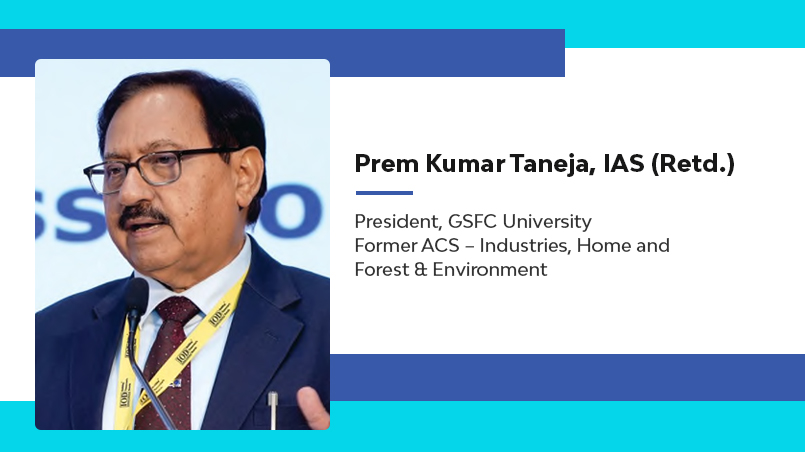
By- Institute of Directors | Authored by- Mr. Prem Kumar Taneja, IAS (Retd.)
Aug 12, 2026

Green finance and sustainable capital allocation are, to my mind, among the most critical drivers of the global energy transition. I believe capital remains central to achieving meaningful progress, and that aligning financial resources with sustainability objectives has the potential to create transformative outcomes. Drawing upon my own experience across the chemical, power, and energy sectors, I would say that industries must intensify their efforts to integrate environmental considerations into strategic decision making. It is important that we develop effective boardroom strategies that prioritise sustainable investments and responsible governance.
Indeed, the topic before us today is board strategy for sustainable investment. The board, fundamentally, is the body that takes policy decisions, and whether sustainable investment and climate-aligned capital are being discussed at the board level is what truly matters. I do believe that, over the last couple of years, things have started moving in the right direction. Having been associated with the boards of prominent companies for about twenty-five years, I can say that these subjects were simply not part of our discussions in the earlier years. It is only in the last five to ten years that sustainability, climate, and responsible investment have become integral to boardroom discourse.
What, then, are the board's responsibilities?
Independent directors certainly have a role to play, but every director must be equally vigilant in keeping sight of the company's overall objective.
Are we truly doing that?
I believe things are improving, and that is certainly a welcome sign. However, effective governance requires more than policy discussions; it demands that sustainability be translated into practical decisions, operational improvements, and long-term investments. In my own professional journey, I have been fortunate to witness several such examples.
I often wonder whether terminologies like 'circular business' or 'extended producer responsibility' were even part of our vocabulary in earlier years. They were not, and yet, despite that, we were already doing something in that direction, which I would like to share with you now. My understanding of Extended Producer Responsibility, or EPR as it is now termed, is that it is the primary responsibility of a producer to ensure that everything, from order to cash, complies with the standards that keep our environment safe and sustainable. An EPR framework already exists in India today, but many of its underlying principles were being practised well before the terminology became widely recognised.
Way back in 2001 and 2002, when I was with GSFC, we undertook certain initiatives relating to the environment. One of these involved blending rock phosphate sourced from a nearby area called Udaipur rather than importing it. The challenge, largely, is that people are often reluctant to embrace change, and technical people, too, have their limitations, sometimes being a little hesitant about adopting something new. But we went ahead. The quality of the product improved, and we reaped considerable benefits. This, at its core, is about resource management. If the resource is available next door, why look abroad for it? Circular business has become the order of the day for many companies because they have recognised that sustainability and profitability need not be mutually exclusive.
Circular business has become the order of the day for many companies because they have recognised that sustainability and profitability need not be mutually exclusive.
When I was with GACL, we placed considerable emphasis on energy minimisation by replacing mercury cells with membrane cells. Looking back, these initiatives may not have been described as sustainability projects, yet they reflected exactly the kind of thinking that sustainability now demands. They demonstrate that responsible resource management and technological innovation have always had the potential to create long-term environmental and business value.
There is also a concept of double materiality, of examining material at every single stage so as to extract the maximum value from it.
In recent times, we keep hearing terminologies like 'net zero' and 'zero discharge'. I firmly believe that these concepts must become an integral part of our processes. They are no longer merely environmental aspirations; they represent strategic business priorities that influence investment decisions, operational efficiency, and long-term competitiveness.
Seen in this light, sustainable investment is not simply about allocating financial resources. It is equally about ensuring that capital is directed towards building businesses that are resilient, resource-efficient, and capable of creating lasting value. That, ultimately, is where green finance and good governance converge.
The evolution towards sustainable business practices has also been accompanied by significant changes in the way organisations approach finance. Green finance instruments are becoming increasingly common, reflecting a growing recognition that capital must be channelled towards projects that create both economic and environmental value. A case in point is the innovative funding raised by the Vadodara Municipal Corporation just two years ago. My university is also based in Baroda, and one of our colleagues was closely involved in this initiative. The Corporation issued a green climate bond to mobilise one hundred crore rupees for green projects. The issue was oversubscribed fourteen times, and the funding involved contributions from the Government of India, the Government of Gujarat, and the people of Baroda themselves. There are quite a few agencies now working in this sector, actively supporting the green transition.
As encouraging as these developments are, the real question is whether the decisions taken by companies are being adequately overseen by their boards?
Whether we allocate capital based on robust, measurable sustainability outcomes is something we all need to examine closely, but there is no doubt that meaningful progress has begun.
I can point to certain examples from my own experience. I was serving on the Board of Deepak Phenolics, where I also chaired the Sustainability, or ESG, Committee. We began working on precisely this question: How should we approach the transition?
When I weigh short-term goals against long-term goals, I firmly believe the long-term goals are far more compelling. Unfortunately, many continue to focus only on the top line and the bottom line in the short term. My own view is simple: do not look at the short term; look at the long term. In my experience at Gujarat Alkalies, the Gujarat Power sector, and Gujarat State Fertilizers and Chemicals, we consistently adopted the long-term perspective, and in doing so, we were able to overcome significant challenges.
This, then, is the very essence of green financing. It is not merely about mobilising capital but about investing with foresight, resilience, and a long-term vision. Yet, no discussion on sustainable finance can be complete without recognising that every investment decision must also be accompanied by an equally rigorous assessment of risk.
This brings me to what I believe is an equally important aspect of board governance: Risk Assessment.
Do we have a robust mechanism in place to assess risk, particularly from the standpoint of green financing and green instruments? Whether the board possesses the capability to assess risk, and understands its exposure to various kinds of risk, is a matter of real significance.
Sustainable investment cannot succeed unless boards are equally equipped to identify emerging risks, mitigate them effectively, and build resilience into the organisation's long-term strategy. It is in this context that I would like to touch upon the subject of disaster management. Personally, I do not believe the term urban disaster management is quite appropriate; it should rightly be termed Disaster Risk Management.
Unfortunately, the word 'risk' is often missing from the conversation. This is precisely where our emphasis must lie; on risk assessment, risk mitigation, and resilience. Boards must build the capacity to do this well. I am not certain whether adequate capacity-building initiatives are currently underway, but there is no denying that risk today manifests itself in many different forms.
Disaster management, disaster risk management, and resilience are, in fact, closely interconnected. GSFC University, with which I am associated, is a CSR initiative of GSFC, a company promoted by the Government of Gujarat, and I have been fortunate to remain associated with this industry for a long time. Through this experience, I have come to appreciate that there is a meaningful distinction between disaster management and disaster risk management. There is, in truth, no such thing as a "natural" disaster; every disaster is, at its root, the result of man-made actions. We keep naming nature as the culprit, but if nature is turning against us, it is because we have made it behave that way, or because we have failed to take adequate precautions to prevent disaster from striking and making victims of us.
I mentioned earlier that I would return to this theme because it connects directly with how boards think about risk.
Three international frameworks need to be considered together in this regard:
1. The Sustainable Development Goals
2. The Paris Agreement, and
3. The Sendai Framework for Disaster Risk Reduction.
These frameworks are not isolated policy instruments; together, they provide a comprehensive roadmap for integrating sustainability, climate action, and resilience into governance and strategic decision-making.
Recognising this reality has prompted many companies to rethink the way they manage risk. Increasingly, organisations are adopting an outside-in, inside-out approach to minimise risk, while enterprise risk management has emerged as a discipline in its own right, encouraging companies to look at the enterprise as a whole rather than in fragments. At the same time, considerable effort is now being devoted to strengthening oversight of sustainability disclosures. ESG norms are applicable to the top one thousand companies, and a substantial body of regulation has emerged around this, including BRSR and third-party assurance requirements.
Ultimately, however, regulations alone are not enough. What matters most, above all, is that disclosures must carry truth within them; they must be accurate. There is something known as the reputational equity of an organisation, and if we are to build and sustain that reputation, our disclosures must be genuinely correct and capable of withstanding independent, third-party assurance.
One further consideration in strengthening green financing, risk governance, and resilience is the need to link performance with financial outcomes and incentives. This is now being actively pursued by several organisations. The Deepak Group, for instance, has introduced performance-linked ESOPs, and I am confident others are following suit as well. This is drawn from my own experience, but I have little doubt that many organisations are moving in the same direction as they seek to embed sustainability into their broader governance frameworks.
What I would most like to see is the transition to what I would call a Risk and Resilience Economy. It is not an easy process, but there are, fortunately, a good number of enablers within the ecosystem today that can help us get there.
If boards continue to strengthen sustainable capital allocation, embrace circularity, build robust risk governance, and place resilience at the centre of strategic decision-making, I believe we will be far better positioned not only to navigate future challenges but also to create enduring value for businesses, society, and the environment.
 Back to Home
Author
Mr. Prem Kumar Taneja, IAS (Retd.)
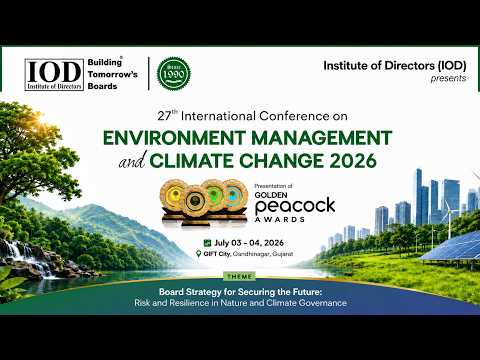
President, GSFC University, Former ACS – Industries, Home and Forest & Environment, during the 27th International Conference on Environment Management & Climate Change & Presentation of the Golden Peacock Awards, held on July 03, 2026 at the Radisson GIFT City Club, Gandhinagar, Gujarat.
Owned by: Institute of Directors, India
Disclaimer: The opinions expressed in the articles/ stories are the personal opinions of the author. IOD/ Editor is not responsible for the accuracy, completeness, suitability, or validity of any information in those articles. The information, facts or opinions expressed in the articles/ speeches do not reflect the views of IOD/ Editor and IOD/ Editor does not assume any responsibility or liability for the same.