 Quick Links
 Connect us

 Directors Databank (Empannel Yourself)
 Become a
  Become a
  Blog
Blog
 Become an Awards Assessor
 Publications
 Contact Us







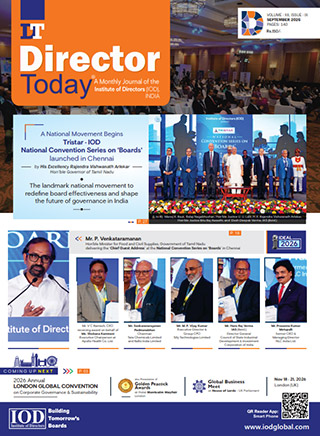
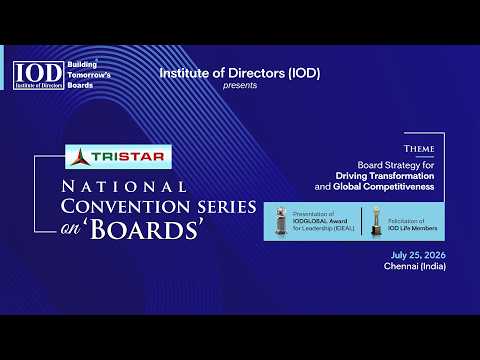
A Report on National Convention Series on Boards Chennai, 2026

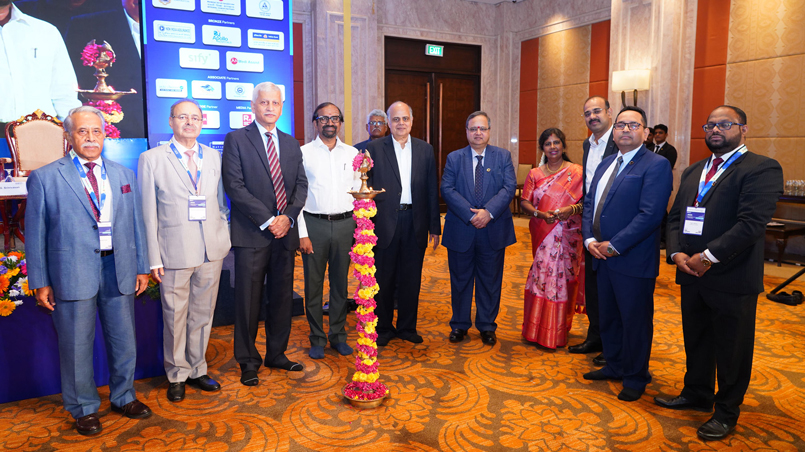
To formally commence this crucial national endeavour, the Institute of Directors (IOD), on July 25, 2026, under the theme "Board Strategy for Driving Transformation and Global Competitiveness," was hosted where India's boardrooms were handed a blunt verdict: The Old Playbook is Over.
What emerged across the plenary sessions was less a checklist than a mandate. Boards were told to stop treating governance as a statutory box to tick and start treating it as the architecture of long-term value. Independent Directors were urged to unlearn before they could lead.
This report captures the deliberations of board members, senior executives, policymakers and corporate leaders, all wrestling with the same question, “What does it take to build a board that doesn't just survive disruption, but directs it?”
The Convention also celebrated four individuals whose extraordinary contributions and commitment to good governance in their respective sectors set an example for the generation to come. IOD was proud and honoured to present them with the coveted IDEAL Award, featured on page 45-49, alongside the felicitation of IOD Life Members.
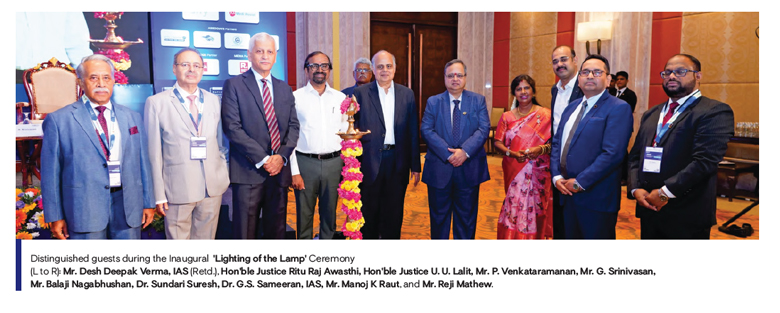
PLENARY SESSION – I
INAUGURAL SESSION
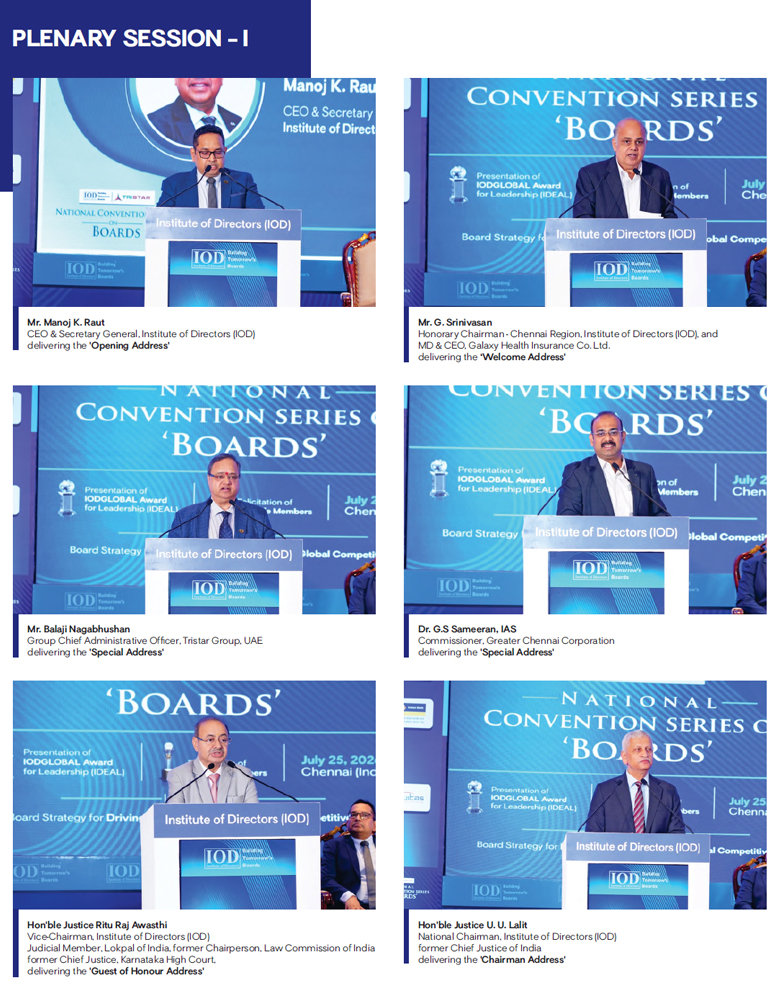
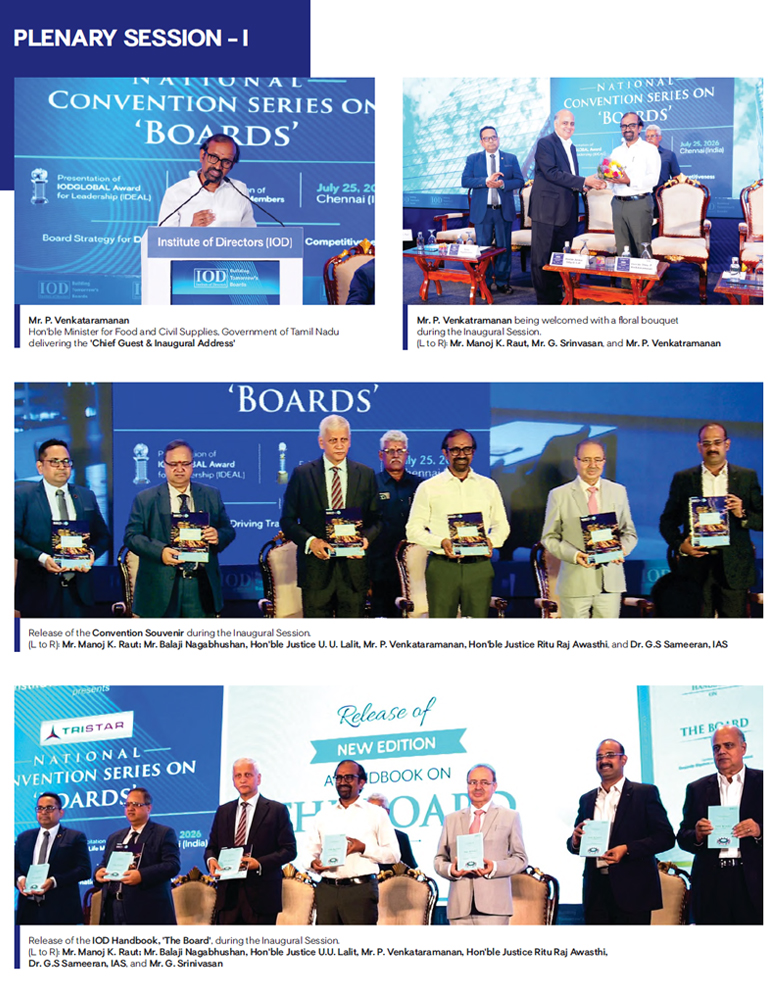
The 'Opening Address' of the convention was delivered by:
Mr. Manoj K. Raut
CEO & Secretary General
Institute of Directors (IOD)
Mr. Raut welcomed the distinguished special guests, esteemed speakers and delegates, emphasising that the gathering was not merely the inauguration of another National Conference by IOD, but the start of a National Movement recognising that the future of organisations would no longer be determined solely by markets, but increasingly by boardrooms. He observed that the world was at a defining moment, with AI transforming industries, cyber risks escalating, climate change reshaping business models, supply chains being reconfigured and geopolitical alignments shifting. At the same time, capital was becoming more cautious, stakeholders were becoming more demanding and “Trust” had emerged as the world's most valuable corporate asset. Against this backdrop, Mr. Raut noted that boards must move beyond conventional questions of survival and ask how they could anticipate what was coming next. He described volatility as the new reality, with opportunities, risks and investment decisions ultimately converging in the boardroom. He further stressed that Independent Directors were expected not merely to ensure compliance, but to challenge, guide and anticipate, create long-term value and build institutions that would outlive individuals. He concluded that good corporate governance was not merely a statutory obligation, but was about building trust.
The 'Welcome Address' of the convention was delivered by:
Mr. G. Srinivasan
Honorary Chairman - Chennai Region
Institute of Directors (IOD), and MD & CEO, Galaxy Health Insurance Co. Ltd.
Mr. Srinivasan expressed the Chennai Region's pleasure at hosting the gathering on such a timely theme. He noted that Tamil Nadu had emerged as “a happening state” and that Chennai, as a highly industrialised city, was making a significant contribution to India's growth and prosperity. He observed that India remained one of the fastest-growing economies despite challenging global headwinds, supported by economic reforms, strong domestic consumption, demographic advantages, skilled manpower, digital transformation and infrastructure development. While geopolitical tensions, rising crude oil prices, the growth of Artificial Intelligence, cybersecurity threats and increasing protectionism presented new challenges, he emphasised that India was managing these pressures with resilience. Further highlighting the role of corporate boards, he stated that boards played a very vital role in driving the strategy for growth, competitiveness and prosperity. He urged boards to remain agile, anticipate emerging risks and capitalise on new opportunities. He further stressed the importance of introspection and annual board evaluations, describing them as a very important tool available to boards. He concluded by urging directors to view board performance as an investment in governance and leadership.
The 'Special Address' was delivered by:
Mr. Balaji Nagabhushan
Group Chief Administrative Officer
Tristar Group, UAE
Mr. Nagabhushan spoke on behalf of the Tristar Group as Title Partner of the prestigious National Convention organised by the Institute of Directors, India. He expressed his privilege and reaffirmed Tristar's commitment to visionary leadership and sound governance. He noted that organisations were built not merely through operational excellence, but through visionary leadership, sound governance and a culture that embraced change with responsibility. Drawing on Tristar's experience as a global integrated logistics and energy company, he emphasised that resilient governance enabled organisations to navigate uncertainty, seize opportunities and create enduring value. In an increasingly interconnected environment shaped by geopolitical shifts, evolving supply chains, digitalisation and sustainability expectations, he said boards must become architects of strategy, catalysts of innovation and custodians of long-term stakeholder trust. He also highlighted the human dimension of leadership, underscoring integrity, constructive dialogue and diverse perspectives.
This was followed by a 'Special Address' delivered by:
Dr. G.S Sameeran, IAS
Commissioner
Greater Chennai Corporation
Dr. Sameeran welcomed everyone to the convention and noted IOD's role in marking Chennai on the global map by hosting the convention there. He urged everyone present to unlearn and learn through the discourses that would be held there. He noted that leaders should be equipped for adaptability in today's challenging world and that, for this, they should have the quality to unlearn and start afresh. He cited his experience of being a doctor by profession and becoming a civil servant, explaining how he had also had to use the process of learning and unlearning to become a better leader by leaving behind prejudices. At the same time, he noted that there was a whole lot of opportunity for cross-learning and shared learning in this kind of national conference and for embracing uncertainty. There would be tangible outcomes and failures, but participants should have the mentality to accept these failures and setbacks so that they could lead boards towards a future-ready situation.
The 'Guest of Honour Address' was delivered by:
Hon'ble Justice Ritu Raj Awasthi
Vice-Chairman, Institute of Directors (IOD)
Judicial Member, Lokpal of India
former Chairperson, Law Commission of India
former Chief Justice, Karnataka High Court
Justice Awasthi observed that boards were navigating technological disruption, geopolitical uncertainty, climate challenges, evolving stakeholder expectations and regulatory complexity. In this uncertain environment, governance was a foundation of resilience, credibility and sustainable growth, while directors had become trustees of public confidence and architects of long-term value. Drawing on his judicial experience, he emphasised that institutions flourished when guided by integrity, accountability, transparency and adherence to the rule of law. He stressed that while law provided the framework, governance determined institutional quality. He further highlighted the growing importance of ESG, Artificial Intelligence, cybersecurity and digital technologies, urging boards to treat technology as a boardroom priority. He also underscored the vital role of independent directors in exercising objectivity and asking difficult questions. He urged Indian boardrooms to become global benchmarks of integrity, innovation, inclusiveness and responsible leadership while contributing to both organisational success and national development.
The 'Chairman Address' was delivered by:
Hon'ble Justice U. U. Lalit
National Chairman, Institute of Directors (IOD)
former Chief Justice of India
Justice Lalit reflected on his more than four decades of his career in law, observing that it had largely involved finding faults and fixing liabilities. However, his three years at IOD had offered a different perspective, teaching him to see the positives of everything and recognise their contribution to societal development. He highlighted the transformative significance of the 1990s in India's economic and social development, referring to economic globalisation and the landmark judicial interventions that strengthened affirmative action and established education as a fundamental right for children. He noted that India's young population represented both significant aspirations and potential, while emphasising the importance of visionary leadership. Drawing an analogy with Winston Churchill, he observed that it was that vision and leadership of one person which turned the tables. He stressed that board-level decisions on corporate governance had implications extending beyond individual organisations to the country's economic welfare. He concluded by urging delegates to use the convention to “churn ideas” and strengthen corporate governance while wishing IOD continued success.
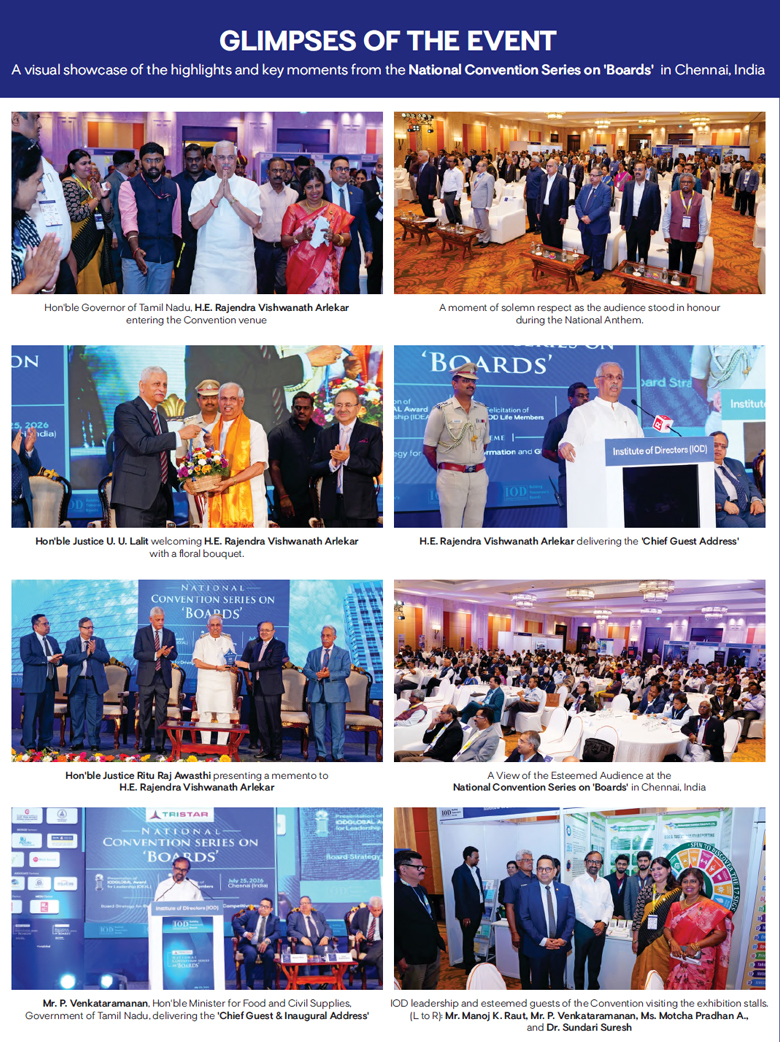
The 'Chief Guest & Inaugural Address' was delivered by:
Mr. P. Venkataramanan
Hon'ble Minister for Food and Civil Supplies Government of Tamil Nadu
Mr. Venkatramanan commended the Institute of Directors for its contribution to strengthening corporate governance in India and welcomed the inaugural National Convention on 'Boards' in Chennai. He emphasised that boards had to provide strategic leadership capable of anticipating change, managing complexity and inspiring confidence. Highlighting the relationship between governance and economic growth, he observed that governance built trust and trust attracted investment. He further noted that investments created innovation, which drove competitiveness and ultimately prosperity. The Hon'ble Minister stressed that integrity, accountability and transparency were fundamental to both public and corporate governance. While technology offered unprecedented opportunities, he cautioned that innovation without ethics creates uncertainty and technology without accountability creates distrust. He concluded that successful leadership in the digital era had to balance innovation with human values, inclusion and public purpose.
This was followed by the release of Convention Souvenir and the IOD Handbook for Directors - 'The Board', by the Distinguished Speakers of the Inaugural Session.
PLENARY SESSION – II
BUILDING HIGH-PERFORMANCE BOARDS FOR AN ERA OF TRANSFORMATION
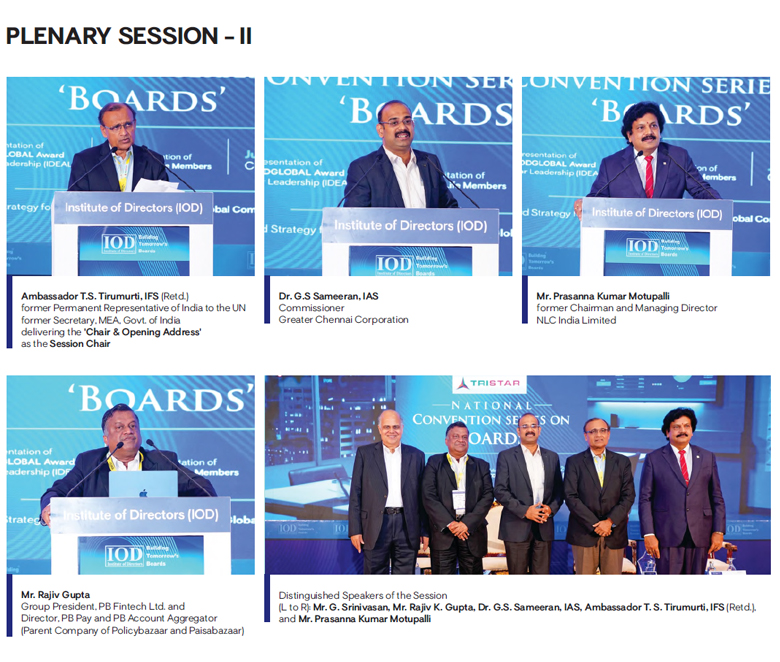
The 'Opening Address’ was delivered by the Chair of the session:
Ambassador T.S. Tirumurti, IFS (Retd.)
former Permanent Representative of India to the UN former Secretary, MEA, Government of India
Ambassador Tirumurti reflected on geopolitical and geo-economic disruptions, he highlighted the Iran War and the wider instability caused by conflicts, fragmented economies and disrupted supply chains. He emphasised that these developments were not distant events, as they affected energy prices, shipping routes, insurance costs, technology access, commodity prices, and investor confidence. He noted that India had weathered the Iranian crisis effectively and argued that strategic autonomy had served the country well. Describing strategic autonomy as the creation of space by countries for independent decision-making in accordance with their national interests, he stressed that it protected not only India's foreign policy options but also its economic and technological interests. He further advocated multi-alignment, supply-chain diversification and domestic capacity-building. While concluding, he observed that geopolitics increasingly shaped economy and technological outcomes.
The Session consisted of the following Distinguished Speakers:
1. Dr. G.S Sameeran, IAS
Commissioner
Greater Chennai Corporation
2. Mr. Prasanna Kumar Motupalli
former Chairman and Managing Director
NLC India Limited
3. Mr. Rajiv Gupta
Group President, PB Fintech Ltd and Director, PB Pay and PB Account Aggregator
(Parent Company of Policybazaar and Paisabazaar)
Dr. Sameeran reflected on the importance of “unlearning” and shared his experience of leading the Deep-Sea Fishing project in Rameswaram. As a medical graduate with no background in fisheries, engineering or boat building, he initially approached the assignment as an opportunity to learn. However, when fishermen did not respond to the government's supply-driven scheme, he recognised that it was not a demand-driven project. He spent eight months engaging directly with fishermen, understanding their challenges and redesigning the scheme with their inputs. This resulted in a new fishing-boat model developed with Cochin Shipyard, while also highlighting the need to address livelihoods, skills and risk capacity. Although the scheme was not an immediate success, he described it as a great learning experience in understanding failure, course correction and policy design. Turning to Chennai's development, he highlighted opportunities for private-sector collaboration in area-based development, multimodal mobility, blue-grid infrastructure, asset monetisation, waste-to-energy and EV charging, and urged stakeholders to think beyond the compound walls and invited industry participation in shaping Chennai's future.
Mr. Motupalli emphasised India's ambition to become a developed nation by 2047, achieve energy independence by 2047 and reach net zero by 2070. He noted that India's youthful population and demographic dividend were significant strengths, but achieving these goals would require all-round improvement across all sectors. Boards, he argued, had to move beyond statutory compliance towards anticipating risks, embracing technology, strengthening ESG and building resilience. Good governance created trust, which attracted investment and built resilience, he observed. He further called for greater cognitive diversity on boards to prevent blind spots and urged directors to develop stronger technological and cybersecurity awareness. Boards should also adopt a predictive rather than reactive approach and invest in human capabilities. Drawing lessons from Indian traditions, he highlighted the importance of collective purpose, agility and adaptability. Above all, he emphasised a 'people first approach', concluding: “Only people create institutions.” He urged boards to inspire transformation, encourage innovation and lead change.
Mr. Gupta identified three major challenges for India; financial literacy, trust, and awareness of long-term financial security. He stressed that 'trust' was the real currency and urged governments, companies and boards to promote financial literacy across the country. With longevity increasing, he noted that today's forty-year-olds had to prepare for 25–30 years beyond retirement through appropriate insurance and income planning. Turning to corporate governance, he observed that boards had to evolve from oversight to strategic foresight. Boards also had to build resilience, protect data and continually earn the confidence of stakeholders. He emphasised that India's digital infrastructure and innovation capabilities provided a strong foundation for global competitiveness. While concluding, he urged boards to ask three questions: “What should we stop doing? What should we start doing? And what must we protect at all costs?”
PLENARY SESSION – III
GLOBAL GROWTH, INNOVATION & COMPETITIVE ADVANTAGE IN THE NEW ECONOMY
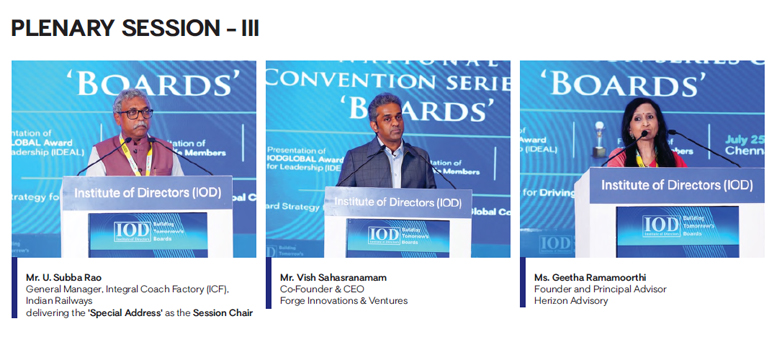
The Session was chaired by:
Mr. U. Subba Rao
General Manager, Integral Coach Factory (ICF)
Indian Railways
Mr. Rao reflected on the profound transformation reshaping industries and emphasised that traditional sources of advantage, such as scale, capital and physical assets, were no longer sufficient. In the new economy, success would increasingly depend on technology, innovation, collaboration and the ability to build strong ecosystems. He observed that the future of competition was increasingly the competition between ecosystems, where organisations collaborated, shared knowledge and combined complementary strengths. Citing the example of the Vande Bharat train, he noted that its success was not the achievement of a single institution but the outcome of an ecosystem involving designers, engineers, technology providers, research institutions and skilled suppliers. Mr. Rao stressed that partnerships should move beyond transactional relationships towards co-creating value and accelerating innovation. He further remarked that innovation was no longer an option; it was a necessity, and that the future would belong to organisations that learned fastest, innovated continuously, collaborated intelligently and adapted decisively.
The Session consisted of the following Distinguished Speakers:
1. Mr. Vish Sahasranamam
Co-Founder & CEO
Forge Innovations & Ventures
2. Ms. Geetha Ramamoorthi
Founder and Principal Advisor Herizon Advisory
3. Mr. George K John
Executive Director
ESAF Small Finance Bank
4. Mr. Kanakasabapathi Subramanian
Senior Vice President
Ashok Leyland Limited
Mr. Sahasranamam emphasised on the changing nature of competitive advantage and argued that companies must increasingly become technology-driven businesses, regardless of their sector. Traditional advantages such as scale, capital, talent and distribution, he noted, now offered only temporary benefits. He urged boards to view start-ups as strategic technology, innovation and growth partners rather than merely external vendors. India, he observed, was uniquely positioned to innovate at scale, creating significant opportunities for industrial transformation through AI, automation, robotics and other emerging technologies. Drawing on his experience with open innovation, he advocated an integrated approach combining corporate strategy, start-up acceleration and corporate venture capital. Such initiatives, he stressed, must be governed by the board from the top down rather than pursued through isolated activities. Ultimately, boards must move from “innovation theatre” to a structured “growth architecture”. Their responsibility, he concluded, was no longer simply to safeguard the present, but to ensure that organisations were future-proofed.
Ms. Ramamoorthi centred her address on global growth, innovation and competitive advantage in the new economy, questioning whether boards introspected deeply enough on these matters. Four companies were cited as examples of organisations whose boards had the courage to make bold strategic moves far beyond what anyone could imagine and before change became inevitable. They were Microsoft, Adobe, Tata Motors and Reliance Jio. She further emphasised that boards must guide international expansion, build collaborative ecosystems and reimagine business models in an era of AI and disruption. India's position as a global innovation hub, with 1.5 million engineering graduates annually, presented unprecedented opportunities, yet realising they depended on visionary boards that saw uncertainty not simply as a risk to be managed but as an opportunity to be seized.
Mr. John argued that competitive advantage was increasingly temporary, making the ability to continuously transform and innovate the real strategic advantage. He urged boards to shift from asking, “Are you compliant?” to the more forward-looking question, “Are we future-ready?” and ultimately, “Can we reinvent ourselves before the market forces us to?” Drawing on ESAF Bank's Mission 2030, he highlighted the importance of aligning digital transformation with organisational purpose and social impact. He stressed that strategic partnerships must strengthen long-term institutional advantage and described the future board as a “Chief Transformation Architect”. He further identified five forms of capital essential for resilience, noting that they were not competing forces but mutually reinforcing drivers of sustainable value.
Mr. Subramanian emphasised on real-life stories and demonstrated why innovation was super critical for India, and especially for us today. He described India as “the biggest story” in the world, highlighting its transformation into a software powerhouse and a global pharmaceutical leader. Drawing lessons from Formula One's 'Pit Stop,' he stressed on the power of teamwork, noting that exceptional performance came from focused collaboration. Citing the development of the SR-71 Blackbird, he highlighted how seemingly impossible engineering challenges could be transformed through innovation. The story of Dyson's 5,127 prototypes demonstrated another essential quality of perseverance. He urged the boards to balance short-term returns with investment in ambitious ‘moon–shots’ and unconventional ideas. Reflecting on emerging technologies, he argued that even seemingly impossible problems could have solutions, stating, “There is always a solution.” He concluded by urging organisations to rethink conventional approaches, embrace technological disruption and pursue ambitious innovation, using challenges as catalysts for transformation.
PLENARY SESSION – IV
BOARD STRATEGY FOR INDIA'S MOBILITY TRANSFORMATION: CLEAN MOBILITY, SCALE AND GLOBAL COMPETITIVENESS
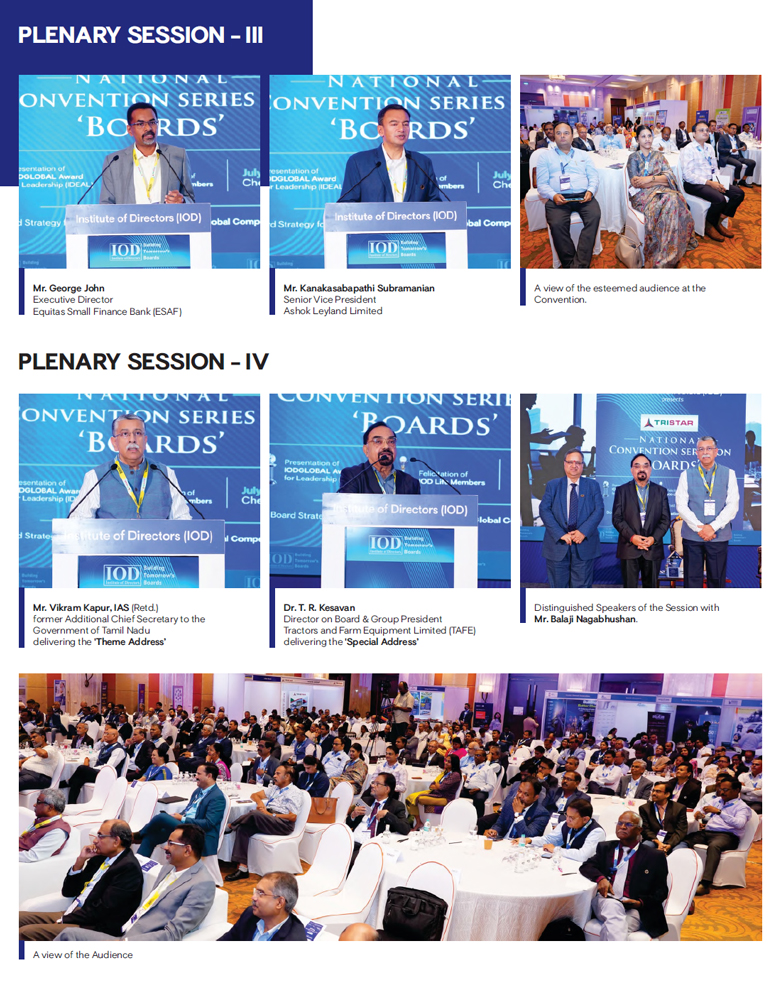
The 'Theme Address' of the session was delivered by:
Mr. Vikram Kapur, IAS (Retd.)
former Additional Chief Secretary
Government of Tamil Nadu
Mr. Kapur identified four converging forces in global mobility transformation: energy transition from fossil fuels to renewables, digital transformation, surging global manufacturing growth and worldwide supply chain realignment. While India had traditionally been viewed as a large automotive market, he argued that mobility was now evolving into an integrated ecosystem. The central question, he posed, was whether India would simply remain a participant in this transformation or emerge as one of the defining global mobility hubs of this century. He highlighted India's competitive advantages at scale, cost competitiveness, engineering talent, policy support and a mature automotive ecosystem. It was scale that drove investment. It was scale that drove innovation. It was scale that drove cost reduction, he emphasised, citing the rapid growth of two and three-wheelers as evidence. He concluded with three strategic imperatives: scale, innovation and integration.
The 'Special Address' of the session was delivered by:
Dr. T. R. Kesavan
Director on Board & Group President
Tractors and Farm Equipment Limited (TAFE)
Dr. Kesavan sought to add considerations regarding what the industry would expect from the government, and vice versa, so that India might take the lead in global mobility.
He described the present moment as a once-in-a-generation opportunity, warning that if India lost this lead, it would forfeit gains long pursued. The most important aspect, he argued, for both government and the private sector was to capture all points raised by the preceding speaker, while introducing fresh thought processes. To transform India into a global mobility hub, he proposed some key metrics like vehicle exports, export value, global market share and manufacturing capacity. He stressed that domestic demand must be created first, noting that India's successful Indian operation always depends upon a large Indian market to enable us to catapult into the export market. He identified the chief obstacle as short-term political horizons, urging a 15-year policy framework insulated from electoral cycles. “Politics is kept different from industry, politics is kept different from technology,” he noted of the US model, advocating similar separation in India. Finally, he called for heightened focus on skill development, semiconductor independence, software-defined vehicles and rigorous testing and certification before concluding his remarks.
PLENARY SESSION – V
BOARD'S MANDATE ON SUSTAINABILITY, ESG & CLIMATE LEADERSHIP AS STRATEGIC IMPERATIVES
The Session was chaired by:
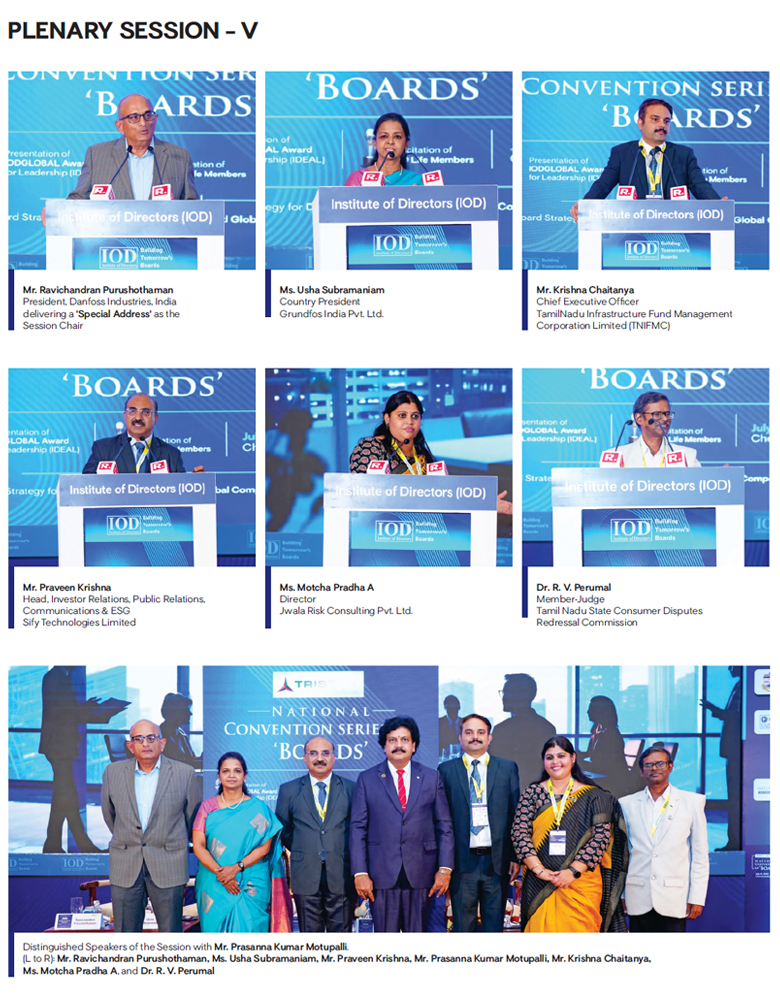
Mr. Ravichandran Purushothaman
President
Danfoss Industries, India
Mr. Purushothaman emphasised that sustainability was no longer a separate initiative but was embedded in the core of the business, with a strong focus on energy efficiency and electrification. Since 2018, the company had measured Scope 1, 2 and 3 emissions across its facilities, finding that Scope 1 and 2 accounted for just under 2 per cent, while Scope 3 contributed nearly 98 per cent of carbon emissions. Remarkably, despite doubling its turnover from €5.5 billion to €11 billion and increasing its global workforce from 26,000 to 42,000, the company had reduced carbon emissions by 51 per cent over five to six years. For Mr. Purushothaman, the lesson was clear, “Data speaks the real truth.” At the Oragadam campus, digitisation had reduced water consumption from 106 to 37 kilolitres per person daily. A green building, despite an initial 11 to 12 per cent additional cost, achieved payback in three years instead of six. As he put it, “Partnership is the new leadership,” urging boards to build strong business cases, act on data and accelerate execution.
1. Ms. Usha Subramaniam
Country President
Grundfos India Pvt. Ltd.
2. Mr. Krishna Chaitanya
Chief Executive Officer
TamilNadu Infrastructure Fund Management Corporation Limited (TNIFMC)
3. Mr. Praveen Krishna
Head, Investor Relations, Public Relations, Communications & ESG
Sify Technologies Limited
4. Ms. Motcha Pradha A
Director
Jwala Risk Consulting Pvt. Ltd.
5. Dr. R.V. Perumal
Member - Judge
Tamil Nadu State Consumer Disputes Redressal Commission
Ms. Subramanian observed that over the past 10 to 20 years, sustainability and ESG had moved from being merely “aspirational” or “good to have” to becoming central to business performance. She noted that sustainability now had a direct bearing on the bottom line and could become a source of differentiation. She warned that around 5 per cent of GDP was already exposed to climate risk, while 93 per cent of MSMEs lacked adequate ESG measures. She urged boards to see sustainability not simply as a reporting requirement, but as part of strategic and growth conversations, with capital allocated, C-suite ownership assigned and executive incentives linked to sustainability performance. Companies that endured, she remarked, were those able to adapt, adding that the choices boards made on sustainability today would influence tomorrow's growth and help secure their long-term future.
Mr. Chaitanya highlighted the launch of the world's first sub-national climate fund. He outlined ambitious targets, including raising 250 million dollars, offsetting 25 million tonnes of carbon dioxide and recycling 2.5 million tonnes of wastewater and plastic. Reflecting on the move away from carbon-intensive assets, he presented a simple philosophy: “Values drive value.” To bring this principle to life, he described a proprietary impact investment model that placed corporate governance, environmental stewardship and community welfare alongside financial returns. Illustrating the approach at scale, he highlighted the creation of 40,000 beds across 55 locations for women's rental housing, the largest initiative of its kind in emerging markets. Rejecting 40 per cent of potential deals over sustainability concerns, he reaffirmed the importance of strict oversight, concluding that “governance, as well as sustainability, is what we try” to enforce across every portfolio board.
Mr. Krishna, describing himself as a practitioner rather than a strategist, outlined Sify Technologies' bottom-up approach to sustainability, emphasising that technology was the backbone of its operations. He drew a clear distinction between sustainability, which he placed at a strategic level, and ESG, which he viewed as operating at the metrics level. He noted that Sify's sustainability efforts had started late, prompting the board to mandate organised data collection rather than pursuing fragmented metrics. The business now operated on six premises: zero availability incidents, zero resilience risks, zero security incidents, zero safety incidents, zero defects and zero carbon footprint. Addressing current concerns, he highlighted the proliferation of over 600 global standards, with Sify itself tracking 53. He warned that manual reporting could foster greenwashing, whereas data did not lie, making alignment with verifiable information essential. He concluded by pointing to tangible stakeholder benefits: a 43 per cent growth in community goodwill around data centres, no regulatory blowback, employee-driven milestones, investor confidence through public data and enduring client loyalty, with one client remaining for 26 years.
Ms. Pradha A observed that audiences were often bombarded with explanations of what sustainability was, what ESG meant and what data-heavy metrics showed. She therefore offered a parable about a prosperous king whose unchecked industrial greed exhausted resources and polluted the kingdom, until his ministry, citizens and Padma awardees such as Shri Devaki Amma restored the ecosystem through renewable energy and backward integration. Drawing on biomimicry, she likened the elephant to the forest's Google map, the bear to its fire brigade and the owl to a model of observation for organisational learning. She argued that although ESG comprised non-financial parameters, it now influenced economic growth, listings and India's path to a Panchamrit Bharat by 2070. Citing the Chanakyaniti, “You protect the nature, the nature protects you”, she urged industrial symbiosis modelled on self-sustaining forests, noting Greater Chennai Corporation's micro-forest and climate-action initiatives.
Dr. Perumal addressed the assembly on corporate governance and highlighted the crucial shift from operational oversight to board-level accountability for environmental, social and governance (ESG) responsibilities. Drawing on his background in engineering, judicial service and sustainability, he emphasised that legal disputes often stemmed from faulty boardroom assumptions rather than technical failures alone. He observed that the Indian judicial framework had steadily evolved from asking who caused the pollution to asking who governs this risk. When environmental failures occurred, courts scrutinised board decisions rather than technical execution alone. He noted that the judge never asks, 'Who was the environmental engineer?' He asks, 'What did the board do?' Concluding with a call for proactive leadership, he urged directors to move beyond mere compliance metrics. He stressed that companies rarely fail because they don't have ESG reports; they fail because they mistake reporting for governance, calling on boards to build enduring, trustworthy institutions.
PLENARY SESSION – VI
BOARD GOVERNANCE FOR THE DIGITAL ENTERPRISE: AI, DATA AND RISK
The Session was chaired by:
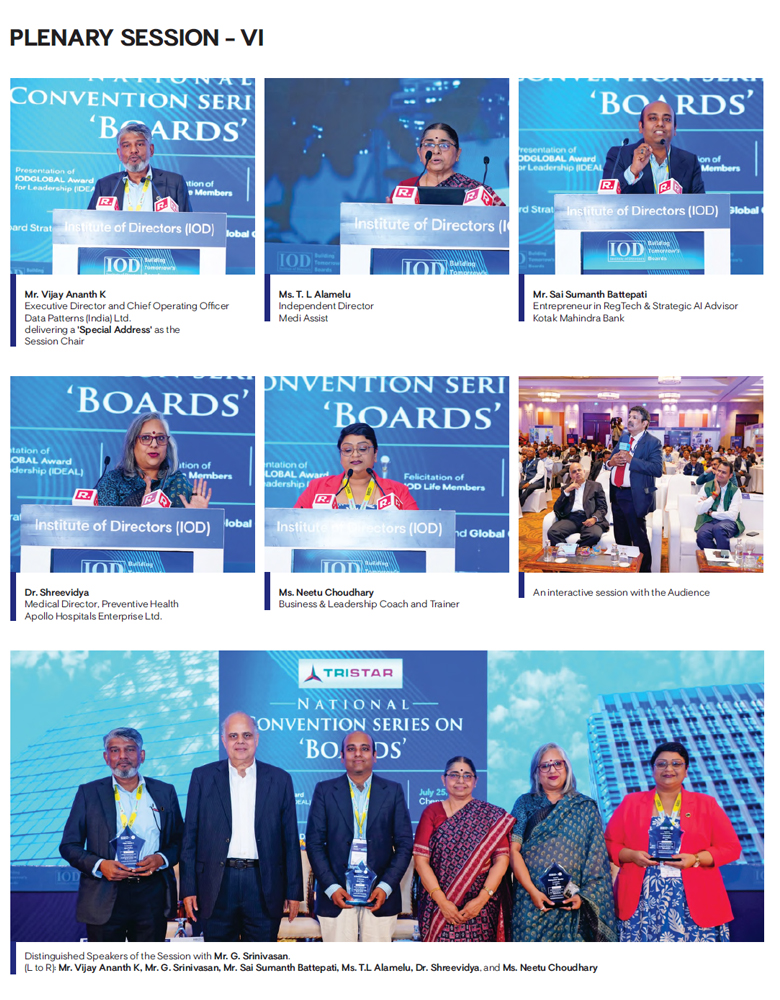
Mr. Vijay Ananth K
Executive Director and Chief Operating Officer
Data Patterns (India) Limited
Mr. Ananth K described his company as a “well-kept secret by India”, a 40-year-old firm responsible for pioneering indigenous technologies, including automated launch pad countdown systems and BrahMos missile launchers used in Akshandhu. He noted that while India focused on services, Data Patterns had been building products to serve our nation, nurtured by DRDO, ARDO and similar organisations. He attributed India's failure to reach its pinnacle, or possible potential capabilities, to historical invasions, policy paralysis and conservative boardrooms focused on governance and fault-finding rather than growth. He distinguished AI from automation and machine learning, likening AI to an intelligent human being, a kind of situation where it was like a professor with an interest in knowledge. He predicted AI would become “dead cheap,” transforming accessibility and impact, particularly in medicine, where certifying AI outputs remained critical. He concluded with a call to action: “AI is there. AI is going to rule. AI is going to change. It is up to the board to reinvent the company. It is up to the directors to reinvent themselves. It is up to all of us to make our country great again.”
The Session had the following Distinguished Speakers:
1. Ms. T.L Alamelu
Independent Director
Medi Assist
2. Mr. Sai Sumanth Battepati
Entrepreneur in RegTech & Strategic AI Advisor Kotak Mahindra Bank
3. Dr. Shreevidya
Medical Director, Preventive Health
Apollo Hospitals Enterprise Limited
4. Ms. Neetu Choudhary
Business & Leadership Coach and Trainer
Ms. Alamelu highlighted how flawed AI systems could expose organisations to significant legal and reputational risks. Cases involving Amazon's biased recruitment tool, UnitedHealthcare's disputed healthcare algorithm and Air Canada's chatbot illustrated the dangers of unchecked AI. Regulators, she warned, increasingly believed that “your bot is you”, making companies accountable for AI-driven decisions in an increasingly complex environment. Boards must therefore ask more searching questions like, “Why are we adopting this technology?” and “Can we trust and explain AI decisions?” Effective AI governance, she concluded, rested on five pillars: policy and ethics, human oversight, model governance, monitoring, and audit and compliance while ensuring that technology became a strategic asset that strengthened growth, resilience and stakeholder trust.
Mr. Battepati addressed the gathering on how artificial intelligence was reshaping professional landscapes. He described automated capability as intelligence becoming a utility, much like electricity or water. Highlighting both its vast potential and acute risks, he illustrated how modern tools were democratising complex engineering tasks for anyone with a standard consumer laptop. However, he cautioned that rapid adoption without oversight could breed severe corporate liability, citing instances of hallucinated reports, financial deep-fakes and system exploits. Demonstrating that technological power could not replace human critical thinking, Mr. Battepati noted that while generative models made basic capability cheap, what was not becoming cheap was the destination and the judgement, which was becoming premium. To navigate these dual forces safely, he urged corporate boards to establish robust governance frameworks, policy guidelines and tracking mechanisms.
Dr. Shreevidya challenged the role of artificial intelligence in healthcare, urging corporate leaders to prioritise rigorous oversight over blind adoption. Drawing from four decades of clinical data, she highlighted breakthrough predictive models such as “AI-CVD,” which were capable of identifying asymptomatic cardiovascular risks and early-stage prediabetes long before traditional tests detected them. However, she cautioned that deploying AI where the stakes were clinical introduced severe regulatory and ethical risks if left unchecked. Emphasising that medical systems must not let technology act without oversight, she asked, “What are we standing for? We're standing for audit, validation and accountability.” To safely bridge clinical innovation and corporate strategy, she outlined five critical questions every board must ask, stressing that human oversight remained non-negotiable. Reaffirming the doctor's ultimate responsibility, Dr. Shreevidya concluded, “The AI informs the physician, the physician decides, and is answerable.” Ultimately, responsible AI was not a hindrance, but the necessary price of true value.
Ms. Choudhary argued that governance must see the things, scale, and prevent from anything going wrong, yet in the digital age boards must manage something they cannot see. Three episodes exposed these blind spots. Knight Capital, Wall Street's largest market maker, left one code fragment on a server; on 1 August 2012, within 45 minutes of the open, 4 million transactions across 154 stocks (397 million shares) drove its share price down 70 per cent in two days, requiring a $400 million rescue. Zillow's Facebook-based home-buying algorithm, running “on autopilot”, overvalued properties in mid-2021, amassing 7,000 homes and a $500 million loss before the business line was closed and staff cut. A third case concerned accountability where regulators in British Columbia held that anyone who answers on your behalf, it is your entity, so if it is on your behalf, you are responsible. Her address concluded by urging boards to pinpoint the process, scrutinize the entire process and ensure a system and a process in place.
IODGLOBAL FELICITATION CEREMONY & BANQUET
PRESENTATION OF IDEAL 2026 & FELICITATION OF IOD LIFE MEMBERS
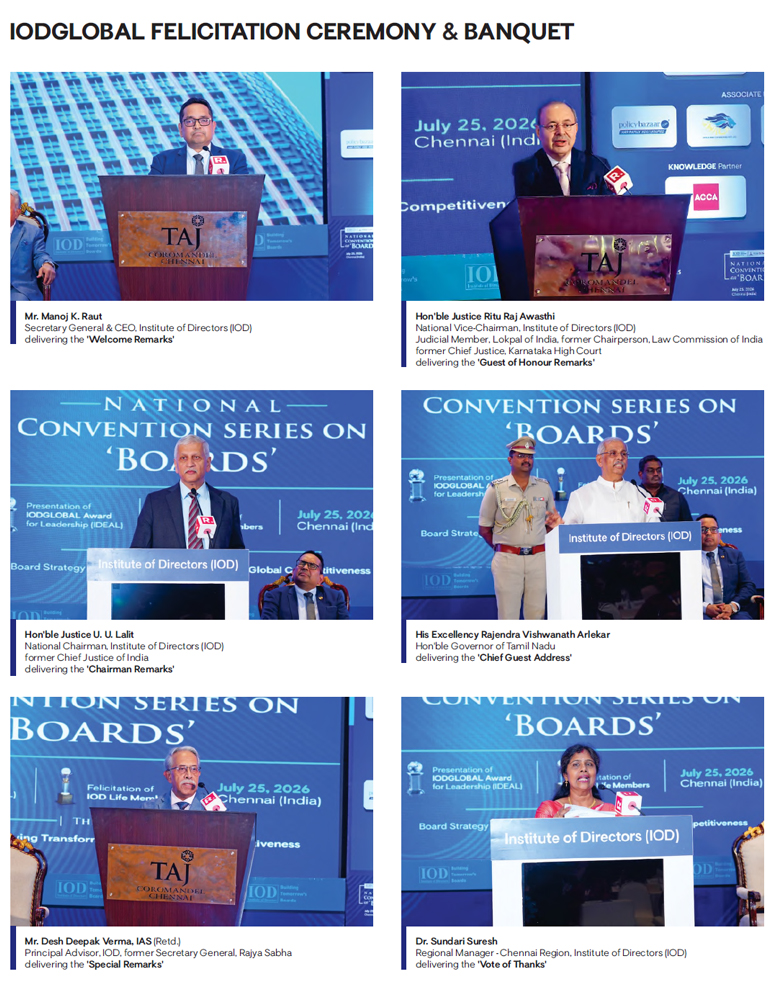
The 'Welcome Remarks' were delivered by:
Mr. Manoj K. Raut
CEO & Secretary General
Institute of Directors (IOD)
Mr. Raut described the evening as far more than an award ceremony, calling it a celebration of leadership, institutions, integrity and, above all, a celebration of the people who vitally save the future for the boardroom. Reflecting on the day's convention discussions on transformation, competitiveness, sustainability, AI innovation and governance, he reaffirmed that great companies are not built by brilliant strategies; they are built by enlightened boards. He highlighted the launch of IOD's National Convention Series on 'Boards' as a landmark initiative travelling across India to create a vibrant platform where our IOD’s global boardroom communities will come together to deliberate and debate how to save the future of Indian boardrooms. He thanked Tristar Group, UAE, for this visionary partnership. He expressed deep gratitude to His Excellency, the Governor of Tamil Nadu, whose presence had elevated the occasion to a truly memorable milestone in the history of IOD. He further extended a warm welcome to new Life Members, describing life membership as a lifelong commitment to offer excellence in corporate governance, ethical leadership, responsible stewardship and, above all, nation-building.
The 'Guest of Honour Remarks' were delivered by:
Hon'ble Justice Ritu Raj Awasthi
Vice-Chairman, Institute of Directors (IOD)
Judicial Member, Lokpal of India
former Chairperson, Law Commission of India
former Chief Justice, Karnataka High Court
Justice Awasthi began by congratulating all the awardees and commending the Honourable Governor's very inspiring and encouraging speech. He encouraged all participants at the convention to act in the national interest and help the country become a paradise. In this endeavour, he noted that industries and corporates can do a lot. While acknowledging everyone present there and their efforts, as well as the IOD's effort in always delivering significant conventions, Justice Awasthi looks forward to more such conventions where continuous discourse on Good Governance is held.
The 'Chairman Remarks' were delivered by:
Hon'ble Justice U. U. Lalit
National Chairman, Institute of Directors (IOD)
former Chief Justice of India
Justice Lalit reflected on the proceedings of the day and highlighted a key observation made by a panel member, “historically, boards of directors acted merely as corporate watchdogs focused on strict regulatory compliance. However, modern boards must look beyond simple adherence to rules and become future-ready.” To illustrate this, Justice lalit pointed to a once-dominant mobile manufacturer that was blindsided by the smartphone revolution. He also noted that, success breeds complacency. Though fully compliant and vastly successful, the company failed to adapt swiftly to technological shifts and ultimately collapsed. Such insights, he noted, underscored the immense value of platforms like this convention. Though an outsider to industry, he found the sessions deeply educational, emphasizing that true corporate governance demands continuous self-reflection and proactive adaptation rather than passive oversight. Expressing pride in being associated with the organisation, he concluded with sincere gratitude to the audience.
The 'Chief Guest Address' was delivered by:
His Excellency Rajendra Vishwanath Arlekar
Hon'ble Governor of Tamil Nadu
H. E. Arlekar described the occasion as distinct, given the audience's deep ties to corporate and business houses across education, manufacturing, trading and other sectors. Turning to broader themes, he observed that industry was not new to India, noting that we had been industrious for many, many centuries and millennia, though modern industrialisation had drawn heavily from Western models. He argued that India must develop its own measures and atmosphere, rooted in indigenous thinking, if GDP growth were to hold meaning. Drawing on his experience as an Independent Director at Indian Oil Corporation, he noted that board-level enthusiasm often failed to percolate downwards in public sector undertakings, whereas private entrepreneurs replicated decisions more effectively throughout their organisations. He invoked the vision of Viksit Bharat by the year 2047, urging every director and enterprise to decide their contribution towards this national dream. Referencing the Mahabharata's Udyog Parva, he distinguished between the Indian concept of “Shubha Labha” (sacred profit) and the Western pursuit of “Shuddha Labha” (profit alone), asserting that India's moral grounding in Shubha Labha had enabled it to stand tall in the world economy. He urged the audience to be vocal for local, questioning whether reliance on foreign brands strengthened the rupee. He concluded by calling on directors to move beyond boardrooms, engaging manufacturers, traders and retailers to instigate them, provoke them and enlighten them towards our economy.
The 'Special Remarks' were presented by:
Mr. Desh Deepak Verma, IAS (Retd.)
Principal Advisor, Institute of Directors (IOD)
former Secretary-General, Rajya Sabha
Mr. Verma, asserted that the heart of transformation lies in one critical capability, the ability to anticipate change. While citing drones outwitting superior missile systems, the pandemic's swift normalisation of 60% work from home and digital payments displacing cash as evidence that change was not linear, it was exponential. He warned that complacency in large firms mimicked bureaucracy, causing missed signals on SMRs, hydrogen and other advances, while slow adoption inhibit the progress and the growth of the country, leaders, he argued, must cultivate global awareness, agility and pre-emptive talent strategies, for the true measure of leadership is not just short-term success, but the ability to build resilient, forward-looking institutions. Quoting that, “the best way to predict the future is to create it”, he urged India to lead the transformation by 2047 rather than merely respond, lest the nation forfeit its victory.
This was followed by the Felicitation of IODGlobal Driving Excellence Award for Leadership (IDEAL) Awards 2026 & Acceptance Remarks by:
1. Ms. Shobana Kamineni
Executive Chairperson
Apollo Health Co. Ltd.
2. Mr. Sankaranarayanan Padmanabhan
Chairman
Tata Chemicals Limited & Rallis India Limited
3. Mr. M. P. Vijay Kumar
Executive Director & Group CFO
Sify Technologies Limited
4. Mr. Hans Raj Verma, IAS (Retd.)
Director General
Council of States Industrial Development & Investment Corporations of India (COSIDICI)
5. Mr. Prasanna Kumar Motupalli
former Chairman & Managing Director NLC India Limited
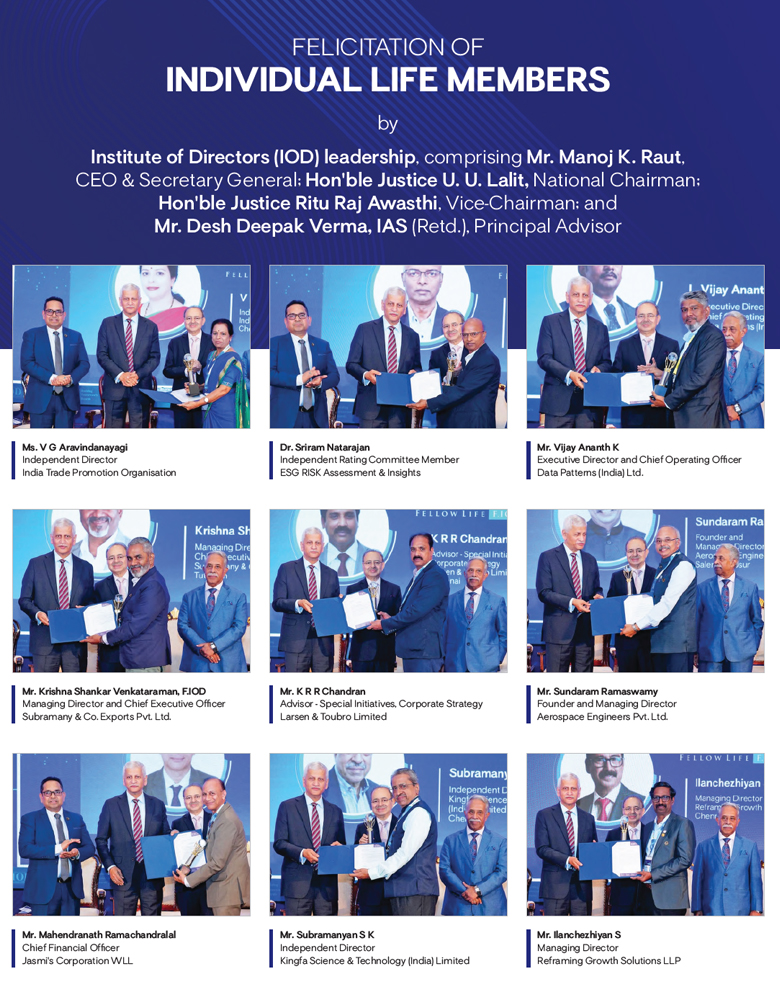
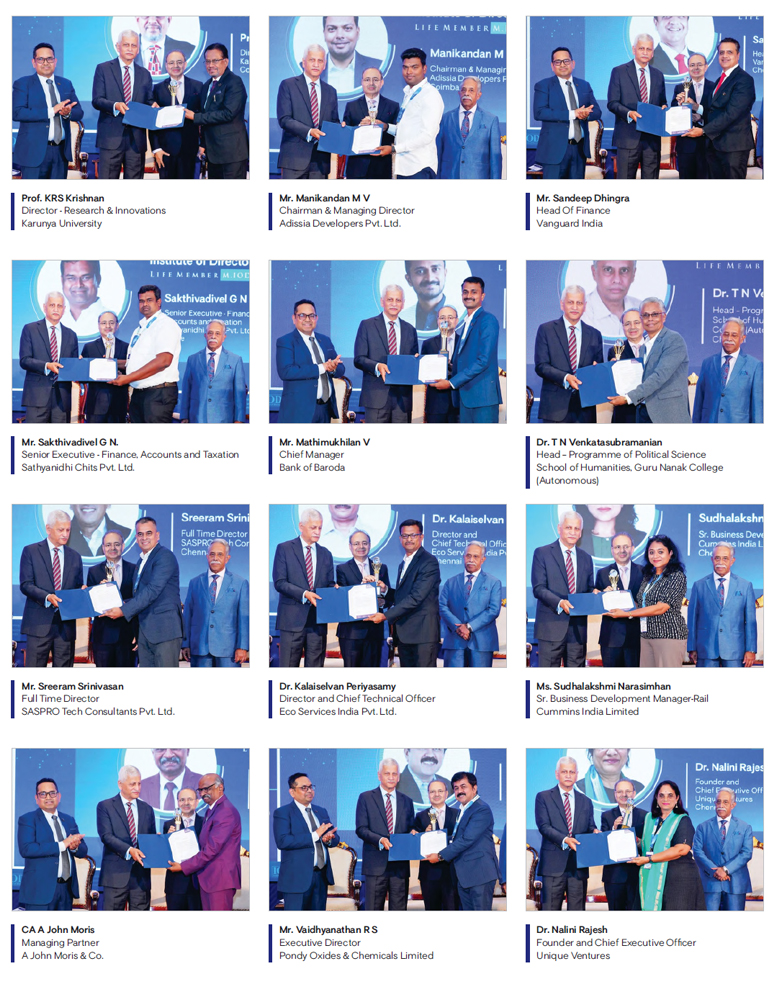
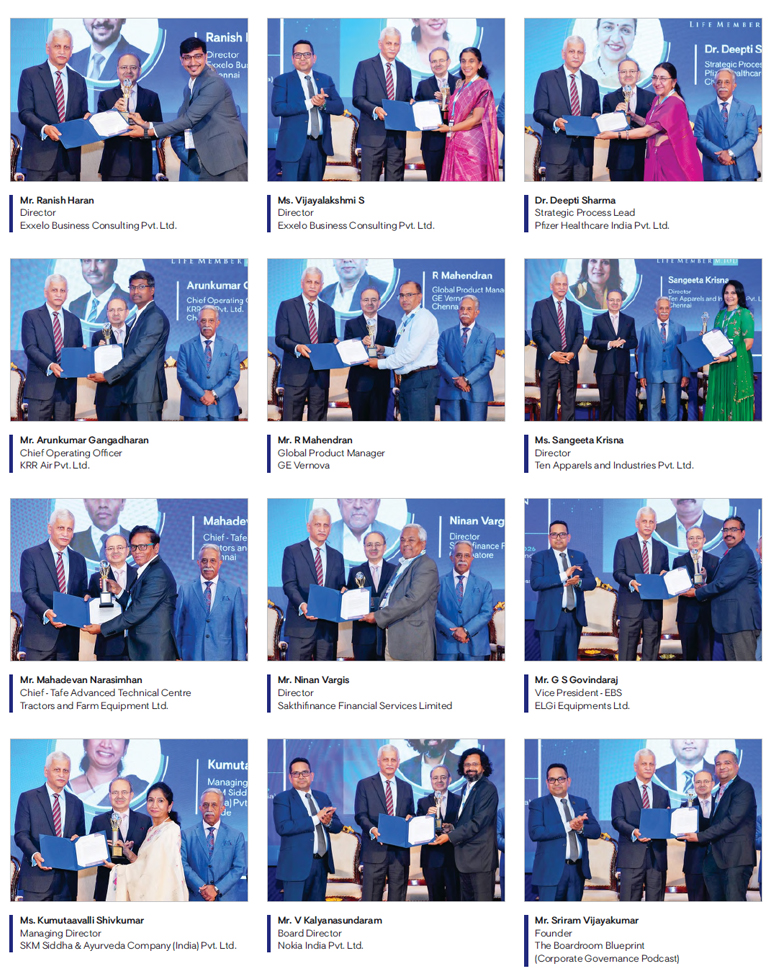
This was followed by the Felicitation of the new IOD Life Members from Tamil Nadu Region (April 2024 – June 2026), which has been featured from page no. 50–52
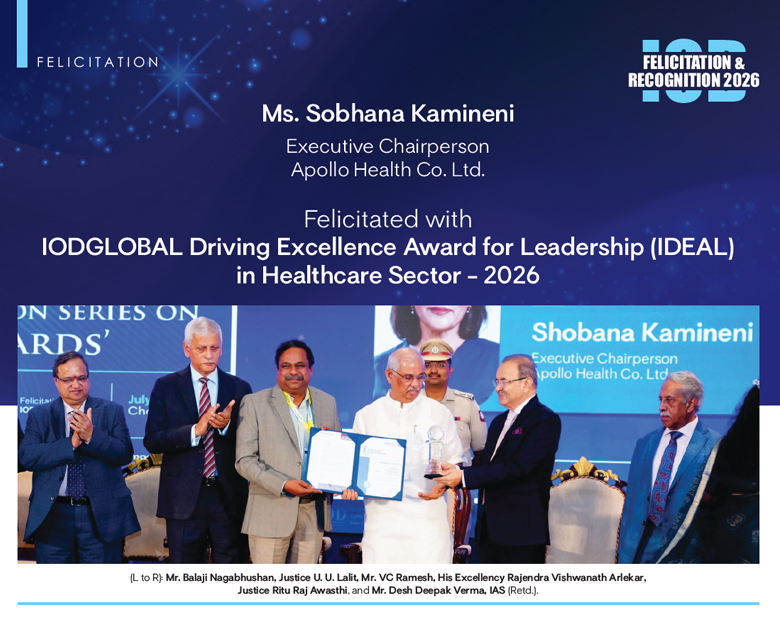
Ms. Sobhana Kamineni is a Promoter Director of Apollo Hospitals Enterprise Limited and Executive Chairperson of Apollo Health Co. Ltd. She has spearheaded three of the largest verticals within Apollo Group and the leadership of India's largest integrated digital healthcare platform, Apollo 24/7. She oversees the Apollo Pharmacy, comprising of 7500+ stores nationwide and was also the founder and chairperson of Apollo Munich Health Insurance and notably, she pioneered the establishment of a “Biobank,” recognized by TIME Magazine among the top 10 ideas of the decade in Life Sciences.
She was the first female President of the Confederation of Indian Industry (CII)in over a century and previously also served on the board and audit committee of the Foundation of Innovative New Diagnostics (FIND) and founded 'Billion Hearts Beating', an NGO promoting heart disease prevention in India. Additionally, she held roles at the World Economic Forum (WEF), advocating for India's skill development and preparedness for the Fourth Industrial Revolution. Her achievements earned her prestigious awards, including the Women Economic Forum's 'Businesswoman of the Decade' and honorary doctorates from Bryant University, USA, and BML Munjal University, India.
Mr. V C Ramesh, CEO – Healthcare Business Projects, Apollo Hospitals Enterprise Limited, accepted the honor on her behalf.
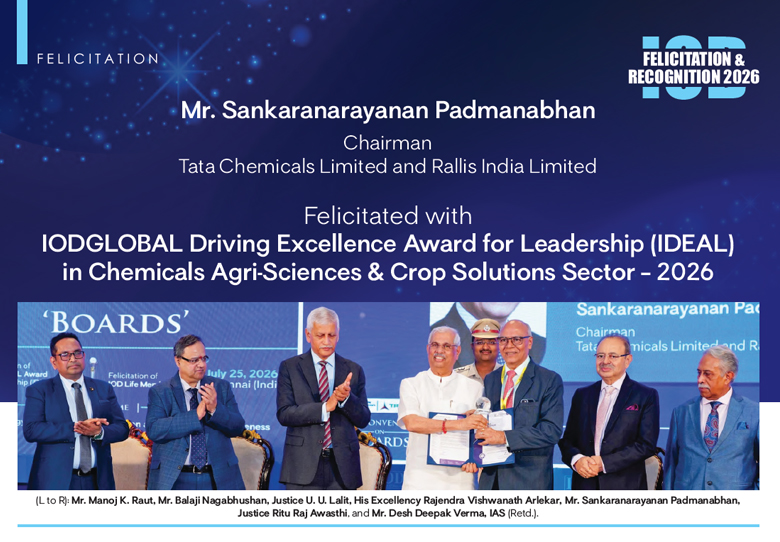
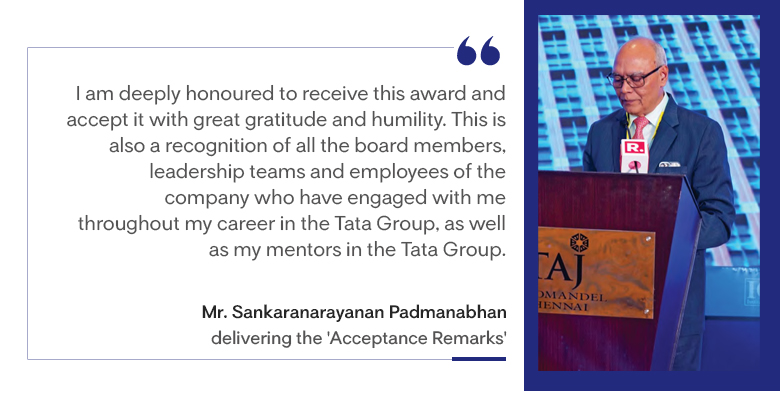
Mr. Sankaranarayanan Padmanabhan is the Chairman of the Board of Tata Chemicals Limited and Rallis India Ltd., and serves on the Boards of the Associated Building Company Limited and the Malcolm Baldrige Foundation. He is also a member of the Governing Council of the Tata Affirmative Action Programme, the Advisory Committee of the Centre for Wisdom in Leadership at SP Jain Institute of Management and Research, and a Trustee of the AI-171 memorial and Welfare Trust. A Tata Group veteran Mr. Padmanabhushan retired from Tata Sons in 2023 after an illustrious 43-year career. As Chairman of the Tata business Excellence Group, he led enterprise-wide initiatives to enhance performance through diagnostics, benchmarking, and best practices. Earlier, he served as Group Chief Human Resources Officer at Tata Sons, Executive Director-Operations at Tata Power, and Executive Director at TCS, where he held several leadership roles, including HR Head. He also founded the TCS-Singapore Airlines joint venture and played a pivotal role in the landmark US$1 billion TCS IPO. A Gold Medalist and Distinguished Alumnus of both IIM Bangalore and PSG Collage of Technology, he has also completed the Advanced Management Program at Harvard Business School.
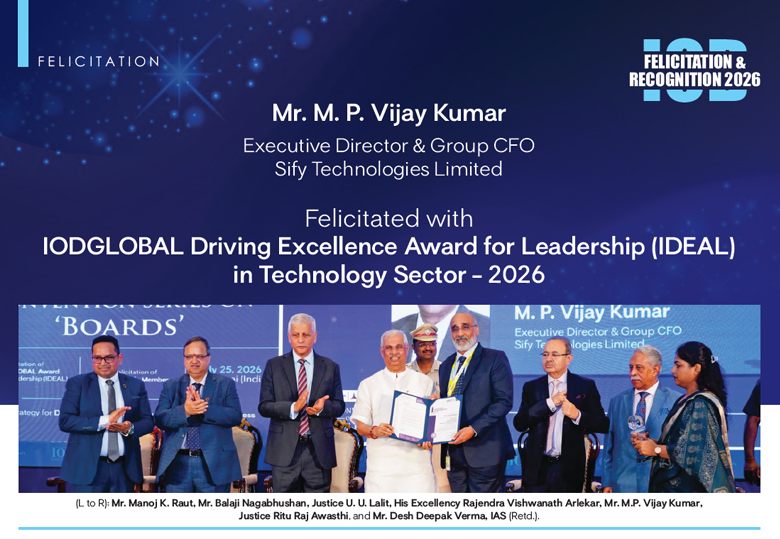
Mr. M. P. Vijay Kumar, is a Chartered Accountant, Cost Accountant and Company Secretary by training and the Executive Director and Group CFO of Sify Technologies. Mr. Kumar is also and Independent Director on the Boards of Heritage Foods Limited, ONGC Petro additions Limited and Chairman of Geojit Investments Limited. He earlier served as Independent Director and Chairman of the Audit Committee of Life Insurance Corporation of India (LIC) and Thejo Engineering Limited, Mr. Kumar serves as a Member of the IFRS Advisory Council of the IFRS Foundation, London, Council Member of the Institute of Chartered Accountants of India (2016-2022). Mr. Kumar's early professional engagements include being a Partner at Chartered Accountants' firm, Yoganandh & Ram. Prior to that, he headed the Investment banking portfolio in addition to being Company Secretary of Sundaram Finance Services Ltd., Chennai, the Investment Banking arm of Sundaram Finance limited.


Mr. Hans Raj Verma, IAS (Retd.) is a distinguished bureaucrat with nearly four decades of public service, including 38 years in the Indian Administrative Services and an extensive expertise in governance, public policy, infrastructure, MSME Development, energy, environmental sustainability, and strategic administration. Currently serving as the Director General of COSIDICI and Chairman of ITCOT, he is spearheading initiatives to strengthen MSMEs through innovative financing, renewable transition, sustainability strategies, and industrial development, while leading ITCOT's transition transformation into a nationally reputed consultancy with significant achievements in infrastructure, renewable energy, digital education, and public-private partnerships. During his illustrious IAS career, he held key positions including Secretary to the Governor of Tamil Nadu and Secretary of Rural Development, Environment & Forests, IT, MSME, and Special Programme Initiative, besides chairing TNEB, TEDA, TIDCO, TIIC, SIDCO, ELCOT, TASMAC, TITAN Industries, and other leading institutions. He also serves on several national boards and committees contributing to ESG, higher education, cybersecurity, biodiversity, sustainable finance, and India's net-zero and industrial growth agenda.


Mr. Prasanna Kumar Motupalli is a distinguished public sector leader and former Chairman and Managing Director of NLC India Limited (NLCIL), a Navratna Central Public Sector Enterprise under the Ministry of Coal. With over three decades of experience across coal and lignite mining, thermal and renewable power generation, fuel supply chain management, project execution and strategic leadership, he has held key positions at NTPC, GSECL and NLCIL.
A Gold Medallist in Mechanical Engineering from Bapatla Engineering College, Mr. Motupalli holds an MBA in Operations Management and specialisation diplomas in Marketing, Human Resources and Financial Management from NIT Trichy. He is also a Certified Portfolio Director (IPMA Level A), Certified Energy Auditor and Certified Energy Manager. Since assuming charge at NLCIL in January 2023, he has spearheaded significant organisational growth. In FY 2025–26, NLCIL recorded its highest-ever financial performance, with revenue from operations of C17,490 crore, EBITDA of C7,475 crore and PAT of C3,769 crore. Under his leadership, the organisation has also strengthened its renewable energy portfolio, financial resilience and sustainability-focused growth strategy.

The 'Vote of Thanks' was delivered by:
Dr. Sundari Suresh
Regional Manager - Chennai Region
Institute of Directors (IOD)
Dr. Suresh extended appreciation to distinguished guests, speakers and sponsors, including title sponsor Tristar, acknowledging their role in transforming the convention into an exceptional platform for corporate excellence. He further commended the delegates, national leadership, organising committees and backend teams whose efforts ensured the event's grand success. Concluding her address, she emphasised that governance extended beyond rule-following, stating, good governance is not merely about compliance. It is about creating enduring value, building public trust and leaving institutions stronger than we found them. She invoked Peter Drucker's maxim, reminding attendees that whilst management is doing things right, true leadership is doing the right things.
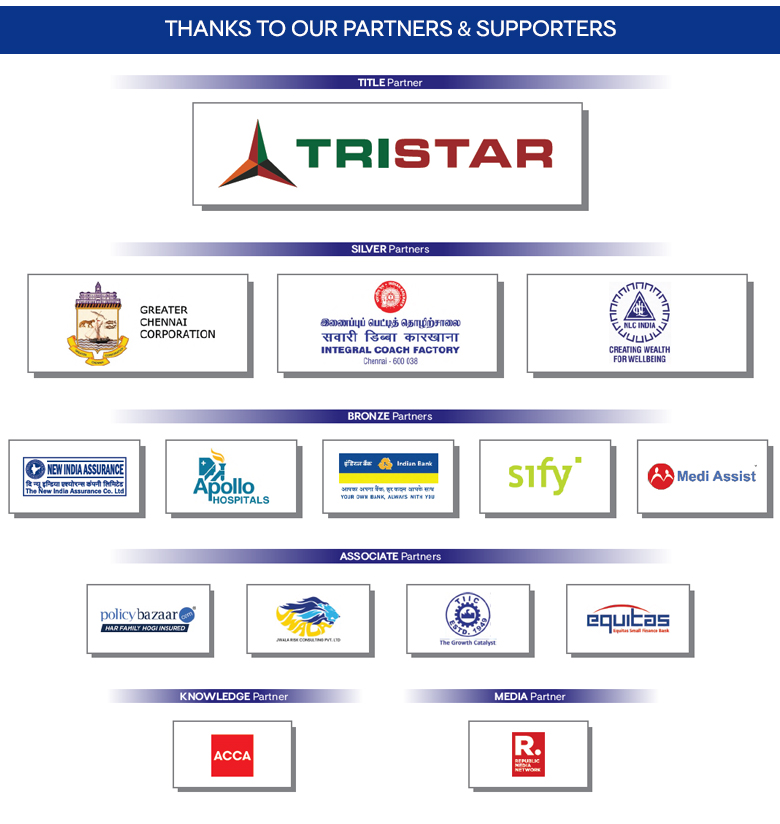
The Institute of Directors (IOD) expresses its sincere gratitude towards all its partners:
Our TITLE Partner: Tristar Group, UAE
Our SILVER Partners:
1. Greater Chennai Corporation
2. Integral Coach Factory (ICF)
3. NLC India Limited
Our BRONZE Partners:
1. New India Assurance
2. Indian Bank
3. Sify Technologies Limited
4. Medi Assist
5. Apollo Hospitals Enterprise Limited
Our ASSOCIATE Partners:
1. Policybazaar
2. Tamilnadu Industrial Investment Corporation (TIIC)
3. Jwala Risk Consulting Pvt. Ltd.
4. Equitas Small Finance Bank (ESAF)
Our MEDIA Partner: Republic Media Network
Our KNOWLEDGE Partner: Association of Chartered Certified Accountants (ACCA)
This report was compiled by:
Ms. Violina Das
Assistant Editor – Director Today, and
Assistant Manager – Communications
Board Research & Advisory
Institute of Directors (IOD)
 Back to Home
Author
Institute of Directors India
Bringing a Silent Revolution through the Boardroom
Institute of Directors (IOD) is an apex national association of Corporate Directors under the India's 'Societies Registration Act XXI of 1860'. Currently it is associated with over 31,000 senior executives from Govt, PSU and Private organizations of India and abroad.
Owned by: Institute of Directors, India
Disclaimer: The opinions expressed in the articles/ stories are the personal opinions of the author. IOD/ Editor is not responsible for the accuracy, completeness, suitability, or validity of any information in those articles. The information, facts or opinions expressed in the articles/ speeches do not reflect the views of IOD/ Editor and IOD/ Editor does not assume any responsibility or liability for the same.